proomt

Search

Search posts, papers, and topics

All posts

Google Cloud BlogEduardo Mattos Duarte5 min readintermediate

M4N VM family, now GA: Highest per-core IOPS and throughput for I/O and memory-bound workloads

Summary

Google Cloud’s GA‑available M4N VM family pairs 5th‑gen Intel Xeon CPUs with Google’s custom Titanium offload to deliver up to 1 M IOPS, 25 GiB/s block‑storage throughput, 400 Gbps VM‑to‑VM bandwidth, and a 26 GB/vCPU memory ratio (up to 5.9 TiB RAM). The design targets memory‑bound, I/O‑intensive workloads (Oracle, SAP HANA, vector search, real‑time analytics) and claims >20 % TCO reduction for…

  • M4N offers the highest per‑core IOPS and storage throughput among cloud VMs: 1 M IOPS and 25 GiB/s when using Hyperdisk Extreme.
  • Memory‑to‑vCPU ratio reaches 26.57 GB per vCPU, with up to 5,952 GB DDR5 RAM in a single VM.
  • Network performance includes up to 400 Gbps aggregate VM‑to‑VM bandwidth (50 Gbps single‑flow) and 200 Gbps internet egress.
  • Built on 5th‑gen Intel Xeon Scalable CPUs plus Google’s custom Titanium offload architecture to reduce I/O bottlenecks.

Many enterprise databases and analytics workloads are forced to over‑provision vCPUs to meet RAM and storage bandwidth needs, inflating software licensing and cloud costs. By delivering a high memory‑to‑core ratio together with record‑breaking I/O and network bandwidth, M4N lets customers keep core…

5/10
Related reading

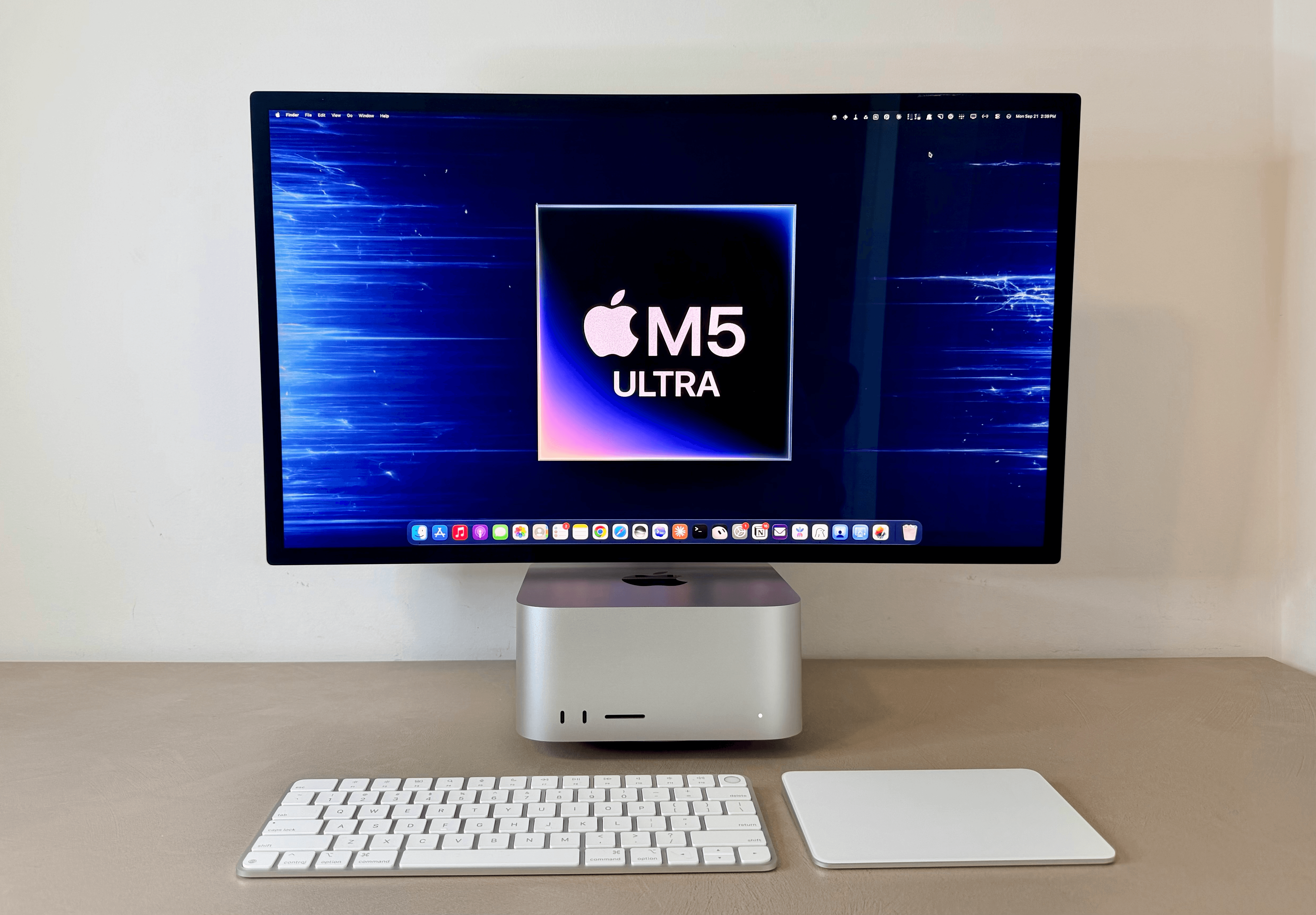
  1. M5 Ultra Mac Studio Review

    The M5 Ultra Mac Studio (256 GB RAM) uses a quad‑die M5 Max architecture with an 80‑core GPU and 1.2 TB/s memory bandwidth, delivering ~70 % faster prompt‑to‑first‑token and token‑generation rates than the M3 Ultra. In the author’s tests Qwen3.8‑Flash‑Next hits 100 tokens/s on short prompts and 60‑85 tokens/s with 64‑256 KB context, making local AI agents (Open Minis, Hermes, Codex) feel snappy a…

    Hacker News front pagemacstories.net39 minHN191174
  2. SiliconBench: Speed, Memory, and Fidelity for LLM Serving on Unified-Memory Desktops

    SiliconBench benchmarks nine Apple‑Silicon LLM serving engines on unified‑memory desktops, measuring speed, memory usage, and output fidelity across Qwen3, Qwen3.5, and Gemma‑4 models. It finds vllm‑metal doubles throughput at modest concurrency, memory budgets often fail to preserve headroom, and only three stacks satisfy all fidelity and model‑coverage requirements, with tensor‑parallel scaling…

    Hugging Face Daily Papersarxiv.org1 minpaper
  3. Vectorized and performance-portable Quicksort (2022)

    Google’s Highway library now includes a fully portable SIMD‑vectorized quicksort that runs 9‑19× faster than C++ std::sort. By using compress‑store (or permute‑based emulation) for partitioning, the same C++ code targets AVX2, AVX‑512, NEON, SVE and RISC‑V V. Benchmarks show 0.5 GB/s on an Apple M1 and >1 GB/s on a 3 GHz Skylake, beating prior architecture‑specific sorts. The implementation and a…

    Hacker News front pagegoogleblog.com3 minHN460142
  4. From Megawatts to Tokens: How NVIDIA Maximizes AI Factory Production

    NVIDIA’s DSX platform lets AI data‑centers shift workloads in response to grid signals, squeezing ~24% more token throughput (4 M→5 M tps) and ~23% better performance‑per‑watt on a fixed megawatt budget. The first production demo used Emerald AI’s Conductor to drop a 4 MW load to 3 MW in under a minute without interrupting high‑priority jobs. DSX MaxLPS reallocates headroom across HGX B200 server…

    Nvidianvidia.com5 min
  5. Accelerating the borderless Lakehouse: Announcing preview of cross-cloud caching

    Google Cloud previewed cross‑cloud caching for its Borderless Lakehouse. The feature caches sub‑file Parquet blocks in Google Cloud, encrypts them with GMEK, isolates cache per tenant/region, and validates freshness via metadata checks. In tests it can reduce cross‑cloud data transfer to <5% of the original size, lowering query latency and cost for Iceberg tables stored in other clouds. BigQuery…

    Google Cloud Bloggoogle.com3 minrelease