proomt

Search

Search posts, papers, and topics

All posts

Zapier EngineeringSara J. Nguyen14 min readintermediate

What is content engineering?

Summary

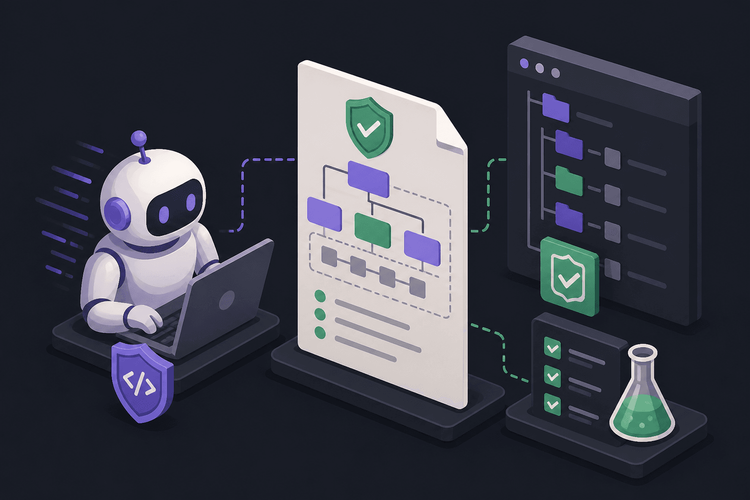
Content engineering is the practice of building technical systems—knowledge bases, templates, automation, and AI guardrails—that turn scattered information into repeatable, on‑brand content workflows. By giving AI reliable context and reusable modules, teams cut rework (Zapier’s survey shows 97% spend ~4.5 h/week fixing AI drafts) and keep large‑scale content consistent.

  • Content engineering adds structured knowledge bases, templates, and AI guardrails to make content creation repeatable and on‑brand.
  • A curated source‑of‑truth and metadata dramatically reduces AI hallucinations; Zapier’s survey found 97% of users spend ~4.5 h/week cleaning AI output.
  • Reusable modules (e.g., customer‑story blocks) let the same approved data flow to landing pages, sales decks, and emails without duplication.
  • Automation and governance (routing, approvals, performance intelligence) keep the workflow moving and ensure legal/brand compliance.

Teams scaling content production need systematic, AI‑aware workflows to keep output accurate, on‑brand, and low‑maintenance.

6/10


Related reading

  1. From Individual Experiments to a Shared AI Practice: How Avant Scaled AI-Assisted Engineering

    Avant replaced many personal AI‑assistant setups with a single, organization‑wide Claude Code configuration that embeds the company’s coding standards, project‑tracking links, and documentation. Treated as an internal product, the setup is versioned, owned by delivery engineers, and iteratively improved. The shared tool speeds routine tasks (scaffolding, tests, migrations, docs) and enforces cons…

    Moove-itqubika.com2 min
  2. Podcast: Signals and Levers: Building Thriving Engineering Organizations

    The podcast explains how systems thinking helps leaders grasp the complex, adaptive nature of software delivery, especially as AI rollouts amplify bottlenecks. It also outlines cultural "levers"—choices that shape unwritten rules—to build sustainable, fun engineering teams.

    InfoQinfoq.com31 mintalk
  3. One to More, More to One: Category-Aware Iterative Expert Training for Software Engineering Agents

    The authors propose a category‑aware expert‑training loop (RRE) and a multi‑teacher on‑policy distillation (MOPD) to improve software‑engineering agents across heterogeneous task categories. On Pro‑618 and SWE‑bench Multilingual the final student model reaches 58.04% and 59.00% resolution, 5.39 and 2.78 points above the base.

    Hugging Face Daily Papersarxiv.org1 minpaper
  4. The “cool new stuff” trap

    The author attempted to use an AI agent to convert STL files into editable CAD, but discovered that rigorous validation and objective measurement of output quality were far more effective. The project succeeded by focusing on generating and inspecting candidates against clear metrics, rather than relying on the agent's 'cleverness'.

    Temporaltemporal.io5 min