proomt

Search

Search posts, papers, and topics

New

  1. Don't Mask the Environment: Observation Supervision Changes How Agents Explore Under RL

    ActObs is a supervised fine-tuning method that trains agents to predict both actions and environmental observations from trajectories. This joint supervision improves subsequent reinforcement learning performance, leading to better exploration and task completion on benchmarks like Terminal-Bench 2.0 and aider-polyglot.

    Hugging Face Daily Papersarxiv.org1 minpaper
  2. pgAdmin 4 v9.18 Released

    pgAdmin 4 v9.18 adds a VS‑Code‑style Object Explorer toggle, tightens CSP defaults, and patches five CVEs (auth bypass, argument/connection‑string injection, TOCTOU file write, LLM redirect, empty username import). It also fixes numerous UI bugs, schema‑diff regressions, and updates dependencies. Windows/macOS installers, Docker, RPM/DEB, and a Python wheel are shipped.

    PostgreSQLpostgresql.org4 minrelease
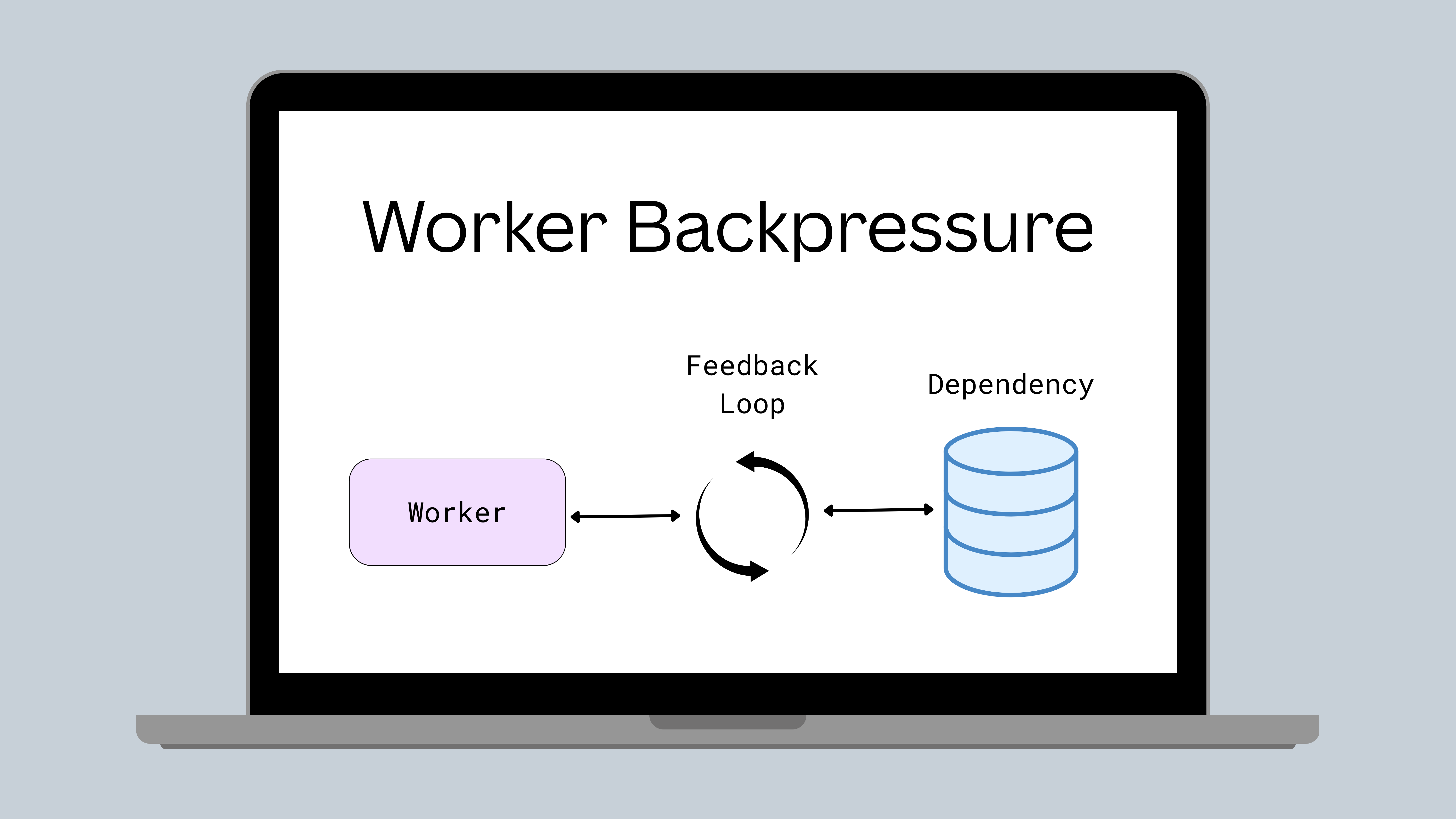
  3. Worker Backpressure (Part 1)

    Canva added a lightweight, local backpressure loop to its queue worker library that monitors per‑message success/failure, computes a backoff factor against a configurable failure‑rate set‑point, and throttles the worker’s concurrency. In two real incidents the mechanism kept failure rates under 2 % fleet‑wide, limited DLQ growth to a handful of messages, and maintained throughput without manual i…

    Canvacanva.dev10 min
  4. UFO: Chain-of-Evaluation for Omni-Condition Alignment in Multi-Modal Image Generation

    UFO introduces an Atomized Chain‑of‑Evaluation (AEU) framework that breaks omni‑condition alignment in multi‑modal image generation into a sequential set of fine‑grained checks, achieving a 15.25 % boost in correlation with human judgments. The authors also release UFO‑Bench, a benchmark for testing how well models satisfy combined textual and visual conditions.

    Hugging Face Daily Papersarxiv.org1 minpaper

  5. How we AI-updated 1,138 Error-code Docs Pages

    Twilio built a two‑phase pipeline that first scores each error‑code doc with a deterministic script, then feeds only low‑scoring pages to an LLM (gpt‑5.4) using a strict prompt. The model’s diff is applied via git, linted, and opened as a PR for a reviewer. In 12 weeks they updated 1,138 pages (≈34.6 s/page) with a human reviewing every change, cutting manual effort from an estimated 18 k hours a…

    Twiliotwilio.com11 min
  6. Android 17 Without the Last-Minute Scramble

    CodeName One prepared for Android 17 (API 37) by addressing platform changes proactively, including fixing version number parsing and implementing the new system-rendered location button. They also added robust PEM key parsing and explicit task removal to simplify common security operations for app developers.

    CodeName Onecodenameone.com8 min
  7. When2Think: Learning Difficulty-Aware Length Control for Efficient Hybrid Reasoning Models

    When2Think introduces a post‑training framework that lets a large reasoning model decide per‑instance how much reasoning depth to allocate, using difficulty‑aware reward shaping (IDAC) and verifier rewards. It cuts token usage by ~28% while boosting Pass@3 by 10% on AIME24 and reaches 40% Pass@3 on AIME25, outperforming compression and routing baselines.

    Hugging Face Daily Papersarxiv.org1 minpaper
  8. SaaS platforms are surging despite the SaaSpocalypse

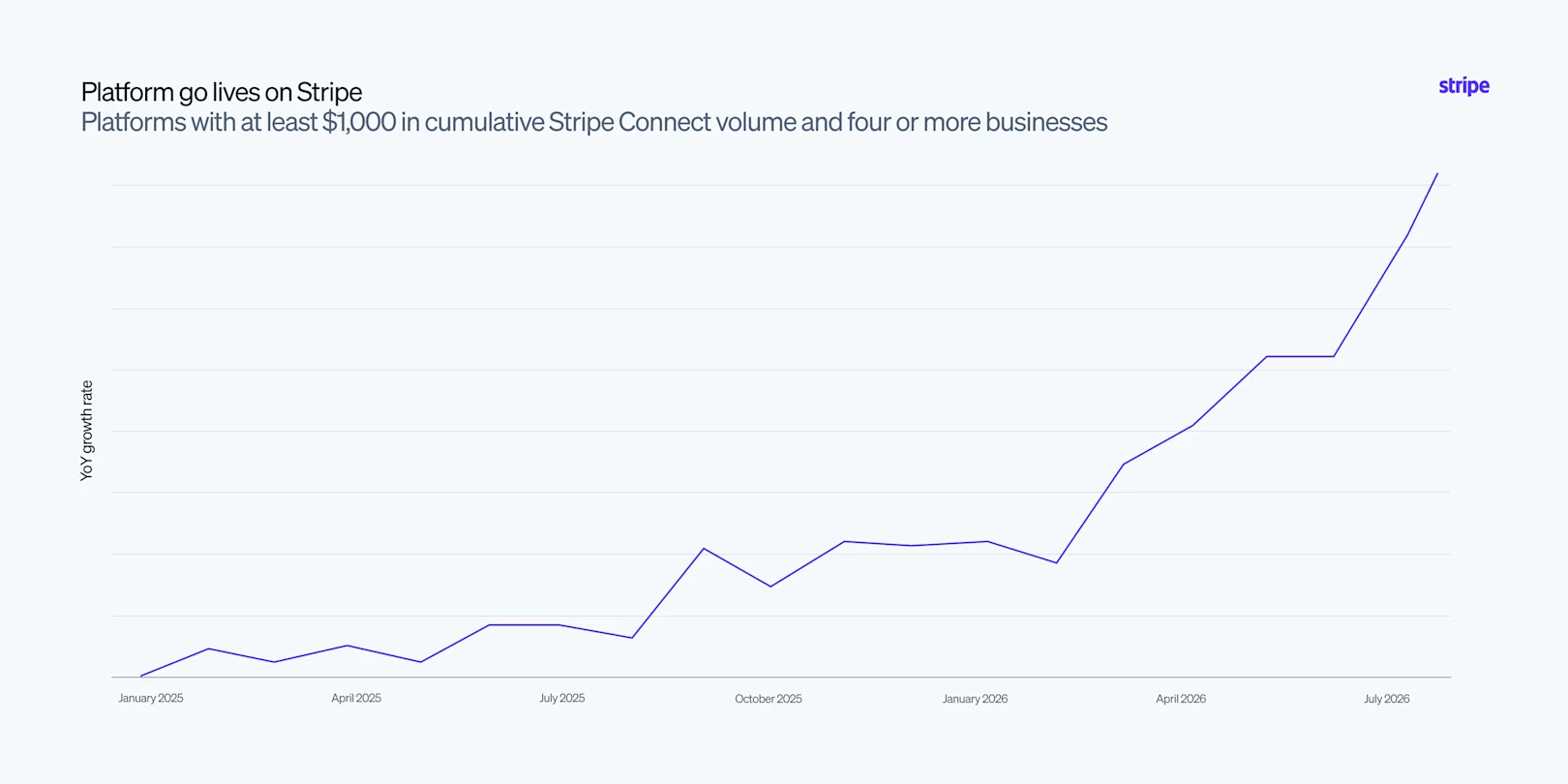
    New SaaS platforms are experiencing a significant boom on Stripe, with new businesses up over 180% year-over-year, defying earlier market fears of a 'SaaSpocalypse'. These platforms differentiate by embedding deep industry knowledge and integrating core workflows, with AI accelerating their development and enhancing offerings.

    Stripestripe.com3 min
  9. In Meetings, Raise Hands Before Reading

    The article argues that starting meetings with everyone’s hand raised and lowering it when finished (counting down) gives facilitators a clear signal of who still needs time, unlike the opposite approach that counts up. Counting down avoids miscounts, reduces failure modes, and leaves a clean hand‑down state for post‑reading discussion.

    Daniel Doubrovkine (dB.)dblock.org3 min
  10. WeVisDoc: From Coverage to Capability for Robust End-to-End Document Parsing

    WeVisDoc introduces a two‑stage data‑centric pipeline for end‑to‑end document parsing. Stage I expands coverage using heterogeneous data and structure‑preserving degradations. Stage II probes the Stage I model with a held‑out set, clusters residual errors, and directs targeted data creation and token‑budget reallocation. The 4‑billion‑parameter model reaches 95.38 Overall on OmniDocBench v1.6 and…

    Hugging Face Daily Papersarxiv.org1 minpaper

  11. VākQA: A Benchmark and Evaluation Study for Telugu Spoken Factoid Question Answering

    The authors present VākQA, a 2,001‑question spoken factoid QA benchmark for Telugu with audio, transcriptions, and human‑verified answers, and they validate automatic evaluation methods against human ratings. Using this setup they show that translation loses cultural nuance, ASR errors alter meaning, and cascaded ASR‑MT errors degrade model performance.

    Hugging Face Daily Papersarxiv.org1 minpaper

  12. Learning Foresight without Explicit Trajectories for 3D Diffusion Policies

    This paper introduces Movement Trend Guidance (MTG), a method to provide foresight to 3D diffusion policies for robotic manipulation without explicit trajectory planning. MTG learns a compact latent representation of interaction evolution, significantly improving performance on various benchmarks with minimal parameter overhead.

    Hugging Face Daily Papersarxiv.org1 minpaper

  13. DeformSmith: Physics Harness-Guided Hierarchical Generation of Deformable Assets for Robot Manipulation

    DeformSmith is a framework that generates physically plausible deformable assets for robot manipulation from a text prompt or a single image, using a hierarchical construction process guided by a shared physics harness. It outperforms prior baselines in visual fidelity and physical realism while also producing interaction data for downstream tasks.

    Hugging Face Daily Papersarxiv.org1 minpaper
  14. JEPA-Anything: Learning Predictive Models across Different Worlds

    JEPA-Anything extends joint‑embedding predictive architectures with orthogonal predictive factorization, letting a single model learn complementary latent factors that can be recombined for prediction across disparate domains. The paper shows consistent performance gains on ten dynamics tasks, molecular simulations, and clinical event forecasting, plus experimental validation of a biologically‑de…

    Hugging Face Daily Papersarxiv.org1 minpaper
  15. Geometry of Values: Task Vector Composition for Ethical Preference Alignment in Language Models

    The authors release a 12k‑instance multilingual dilemma dataset (English + Hindi, Arabic, Spanish, Chinese) covering three pairwise value conflicts (Honesty‑Justice, Justice‑Autonomy, Autonomy‑Honesty). Benchmarking GPT‑5‑mini shows a consistent Honesty‑over‑Autonomy bias across languages. Llama‑3.2‑1/3B models exhibit a first‑option bias that can be eliminated (>98% accuracy) via plain fine‑tuni…

    Hugging Face Daily Papersarxiv.org1 minpaper
  16. VABench: Measuring Embodied Spatial Intelligence through Visual Demonstrations, Active Perception, and Metric Control

    VA‑Bench is a new benchmark that evaluates general‑purpose multimodal LLMs on the full observe‑reason‑act‑revise loop in embodied robotics, using RGB demonstrations, active camera control, and metric Cartesian commands. The best model reaches 53.9% average task success, showing active perception helps but long‑horizon tasks remain unsolved.

    Hugging Face Daily Papersarxiv.org1 minpaper
  17. When AI Reviews Train AI Reviewers: Scientific-Judgment Collapse and Mitigation

    The authors show that training LLM reviewers on synthetic reviews leads to a compression of rating distributions and loss of semantic diversity, a phenomenon they call scientific-judgment collapse. They mitigate it with TrustReviewer, which uses curated training data and activation steering to preserve judgment diversity.

    Hugging Face Daily Papersarxiv.org1 minpaper
  18. DeepSeek-V4.1-Flash: Pushing the Limits of KV Cache Compression

    DeepSeek‑V4.1‑Flash is a 552B‑parameter multimodal Mixture‑of‑Experts LLM that supports up to 1 M‑token contexts while slashing KV‑cache memory to 890 bytes/token (≈¼ of its predecessor) via cross‑layer reuse (CSA2) and FP4 quantisation, plus a SWA‑Bounded Replay scheme that cuts persistent cache to 1/8. The Causal Encoder‑Decoder design halves prefill compute (8B vs 16B active parameters) and th…

    Hugging Face Daily Papersarxiv.org3 minpaperHN12710
  19. Self-Evolving Search Index

    The paper introduces SELF-INDEX, a framework that lets a search index automatically diagnose retrieval failures, revise its keys, and validate changes, using a query simulator to anticipate future queries. Experiments show consistent gains across corpora and downstream LLM agents.

    Hugging Face Daily Papersarxiv.org1 minpaper
  20. Region-Level Policy Optimization for Fine-grained MLLM Perception

    Vision‑RL2 trains a lightweight proposal network via region‑level reinforcement learning to select high‑resolution evidence for multimodal LLMs, allowing coarse‑resolution localization and fine‑resolution recognition. Across six fine‑grained vision benchmarks it reduces visual token count by ~4× while matching or surpassing full‑resolution accuracy.

    Hugging Face Daily Papersarxiv.org1 minpaper
  21. Training-Adaptive Convolutional Sparse Coding via Information Bottleneck for Robust Visual Representation

    This paper introduces a training-adaptive Convolutional Sparse Coding (CSC) framework where the sparsity coefficient is learned end-to-end via FISTA unfolding. It uses an information bottleneck perspective to balance representation compression and content preservation, showing improved robustness to input perturbations on CIFAR and ImageNet.

    Hugging Face Daily Papersarxiv.org1 minpaper
  22. Refinement Is Inherently Editable: Training-Free Prompt-to-Prompt Image Editing with Generative Refinement Network

    RefineEdit is a training‑free framework that edits images by refining binary image codes through a generative refinement network, using probability differences to pick edit locations. It outperforms prior methods on background preservation and CLIP scores across nine editing categories without extra training or masks.

    Hugging Face Daily Papersarxiv.org1 minpaper