proomt

Search

Search posts, papers, and topics

All posts

PlanetScalePatrick Reynolds2 min readintermediate
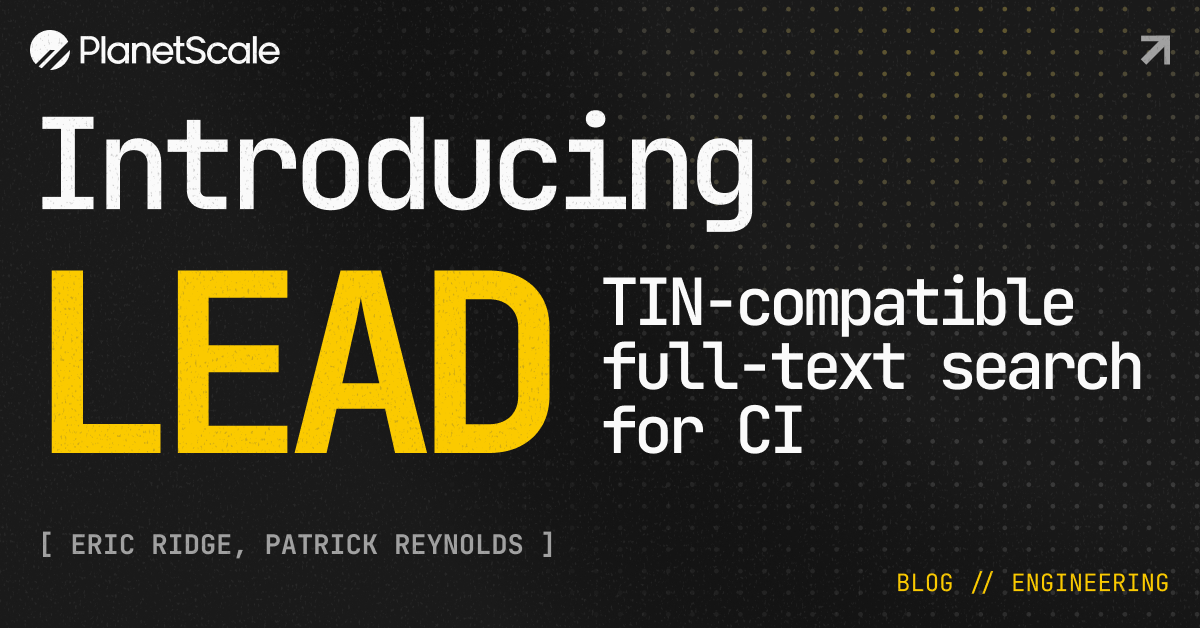
Introducing Lead: TIN-compatible full-text search for CI

Summary

Lead is a Postgres full‑text search extension compatible with TIN, intended for CI and testing environments. It offers the same SQL and TINQL features but runs as a full table scan, making it orders of magnitude slower, so it’s only practical for small datasets.

  • Lead mirrors TIN's SQL and TINQL API, so existing code works unchanged.
  • All writes (CREATE INDEX, INSERT, UPDATE, DELETE) are ACID‑compliant and visible within the same transaction.
  • Searches are full table scans; a 8 GB Wikipedia index takes ~4 min per query versus TIN's 2 ms.
  • Suitable for CI, dev, and staging where tables stay under a few megabytes.

Teams that need deterministic search behavior in CI pipelines should use Lead instead of TIN.

6/10
Related reading

  1. Introducing TIN: full-text search for Postgres

    PlanetScale’s TIN is a new PostgreSQL extension that implements a full‑text search index supporting Boolean, phrase, span, fuzzy, wildcard, regex, case/accent folding, COUNT(*) and BM25 top‑k queries. In a suite of benchmarks on an i7i.8xlarge EC2 instance (8 vCPU, 32 GB RAM), TIN built in 8 min 10 s (50.7 GB index) and outperformed ParadeDB, pg_textsearch and the built‑in GIN index by large marg…

    PlanetScaleplanetscale.com15 minHN20175
  2. Announcing Native BM25 Ranking in AlloyDB and Cloud SQL

    Google Cloud adds native BM25 ranking to AlloyDB and Cloud SQL (PostgreSQL 17+) via the open‑source pg_textsearch extension, letting you run keyword‑based full‑text search inside the database. This removes the need for a separate search backend and, on AlloyDB, speeds up vector queries up to 10×.

    Google Cloud Bloggoogle.com2 min
  3. pgAssistant 3.8.0 : continuous improvement loop for Postgres

    pgAssistant 3.8.0 expands from a tuning advisor to a continuous PostgreSQL improvement platform, adding a Collector that records historical workload and environment data. It lets teams run an Observe‑Diagnose‑Prioritize‑Plan‑Implement‑Measure loop, compare consecutive snapshots, and measure the impact of applied recommendations.

    PostgreSQLpostgresql.org1 minrelease
  4. How LLMs Can Find a Needle in a Haystack

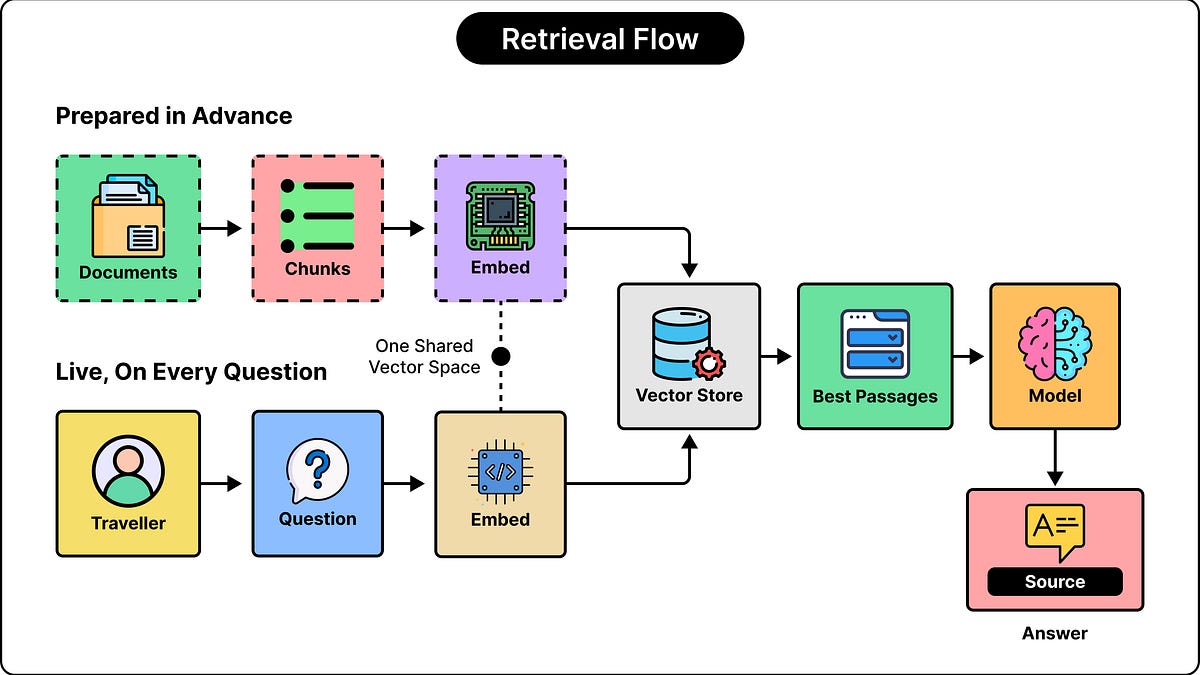
    The post explains how retrieval‑augmented generation (RAG) lets LLM‑based assistants answer questions from private corpora. It covers chunking documents into passages, embedding queries and chunks, similarity metrics, and the trade‑offs of different vector indexes (flat, IVF, HNSW). The focus is on practical design choices rather than new research.

    ByteByteGobytebytego.com12 min
  5. Article: Your Next DSL Author Is a Language Model

    Typed Domain Grounding (TDG) embeds a DSL inside a mainstream language the LLM already knows (e.g., Kotlin) and uses the host compiler as an oracle. The author describes five building blocks—embedding, choosing a host language with high training‑data frequency, compiler‑driven type safety, a generate‑compile‑repair loop, and an on‑demand teaching tool—and shows measured results from kUML, a Kotli…

    InfoQinfoq.com18 min