proomt

Search

Search posts, papers, and topics

All posts

Nordic APIsJ Simpson6 min readintro
6 Ways Traditional API Design Has Changed Forever

Summary

API design is shifting from human‑centric, resource‑based REST toward machine‑friendly, capability‑oriented interfaces as AI agents become major consumers. This drives changes in rate limiting, just‑in‑time security, system‑wide reliability, and regulatory compliance.

  • Design for machines: bundle assets and provide context so AI agents can use APIs without extensive orchestration.
  • Support multiple consumer types; customize rate‑limiting and authorization per consumer profile.
  • Replace noun‑based resource endpoints with capability/verb endpoints that expose business functions directly.
  • Adopt zero‑trust, short‑lived tokens and fine‑grained, just‑in‑time authorization for autonomous AI agents.

API architects and platform engineers must adapt because AI agents and complex service dependencies are reshaping reliability, security, and compliance requirements.

5/10
Related reading

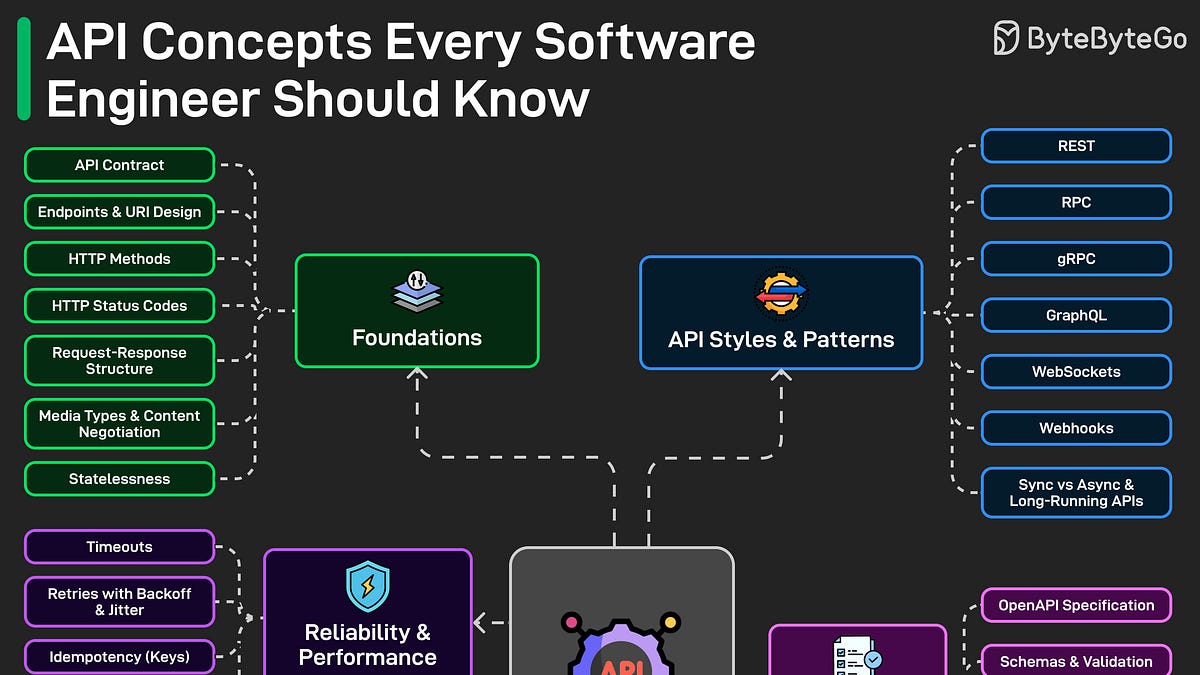
  1. EP226: API Concepts Every Software Engineer Should Know

    This article outlines essential API design considerations, covering HTTP fundamentals, architectural styles like REST and GraphQL, and critical aspects such as naming, versioning, security, and reliability. It serves as a high-level checklist for engineers designing or consuming APIs.

    ByteByteGobytebytego.com5 min
  2. Introducing Our New Dropbox API Documentation

    Dropbox launched a revamped API documentation site with interactive request testing, an embedded AI assistant, and a new Model Context Protocol for connecting external AI tools. The UI is unified, searchable, and includes full request/response schemas.

    Dropboxdropbox.tech2 min
  3. Designer-RSI: Evolving Procedural Memory from User Traffic for Agentic Graphic Design

    The paper introduces Designer‑RSI, a continual‑adaptation system that couples a frozen design‑software‑controlling LLM with an external procedural memory of natural‑language design skills. Over five adaptation rounds on real user briefs, the memory grows from 76 to 139 procedures and lifts execution success from 72.7% to 99.3%, showing that skill accumulation and selective replay can dramatically…

    Hugging Face Daily Papersarxiv.org1 minpaper
  4. From Individual Experiments to a Shared AI Practice: How Avant Scaled AI-Assisted Engineering

    Avant replaced many personal AI‑assistant setups with a single, organization‑wide Claude Code configuration that embeds the company’s coding standards, project‑tracking links, and documentation. Treated as an internal product, the setup is versioned, owned by delivery engineers, and iteratively improved. The shared tool speeds routine tasks (scaffolding, tests, migrations, docs) and enforces cons…

    Moove-itqubika.com2 min
  5. What four people at Hostinger actually do with AI all day (and what happens when you have an agentic beef)

    Hostinger staff use custom AI agents to automate daily tasks—from code reviews to influencer lead sourcing—shifting their work from doing the work to managing the agents. Building reliable “harnesses” (prompt contexts, constraints) consumes most of the engineering effort, and agents still hallucinate, repeat work, or suggest unsafe fixes, so human oversight remains essential.

    Hostingerhostinger.com8 min