Related reading
Article: Beyond Relevance: A Governance-First Architecture for Enterprise Personalization
The article proposes a governance‑first architecture for enterprise personalization, where policy‑driven steps (memory, journey graph, AI routing, scoring, trust checks, outcome simulation) shape the recommendation before it is returned. A reference FastAPI implementation demonstrates the pattern with external YAML policies and optional LLM assistance.
InfoQinfoq.com19 minThe future of practice: Enabling teachers to create learning interactives with generative UI
Google Research demonstrates a generative‑UI system that lets teachers author interactive, game‑style learning modules. The pipeline uses pedagogical guardrails, iterative self‑correcting loops (including automated solvability checks), and teacher vetting. A pilot library of 30+ STEM interactives is publicly available, and early teacher studies report good‑to‑excellent ratings.
Google Researchresearch.google8 minHN4Understand the top paths users take to convert or drop off with Journey Paths
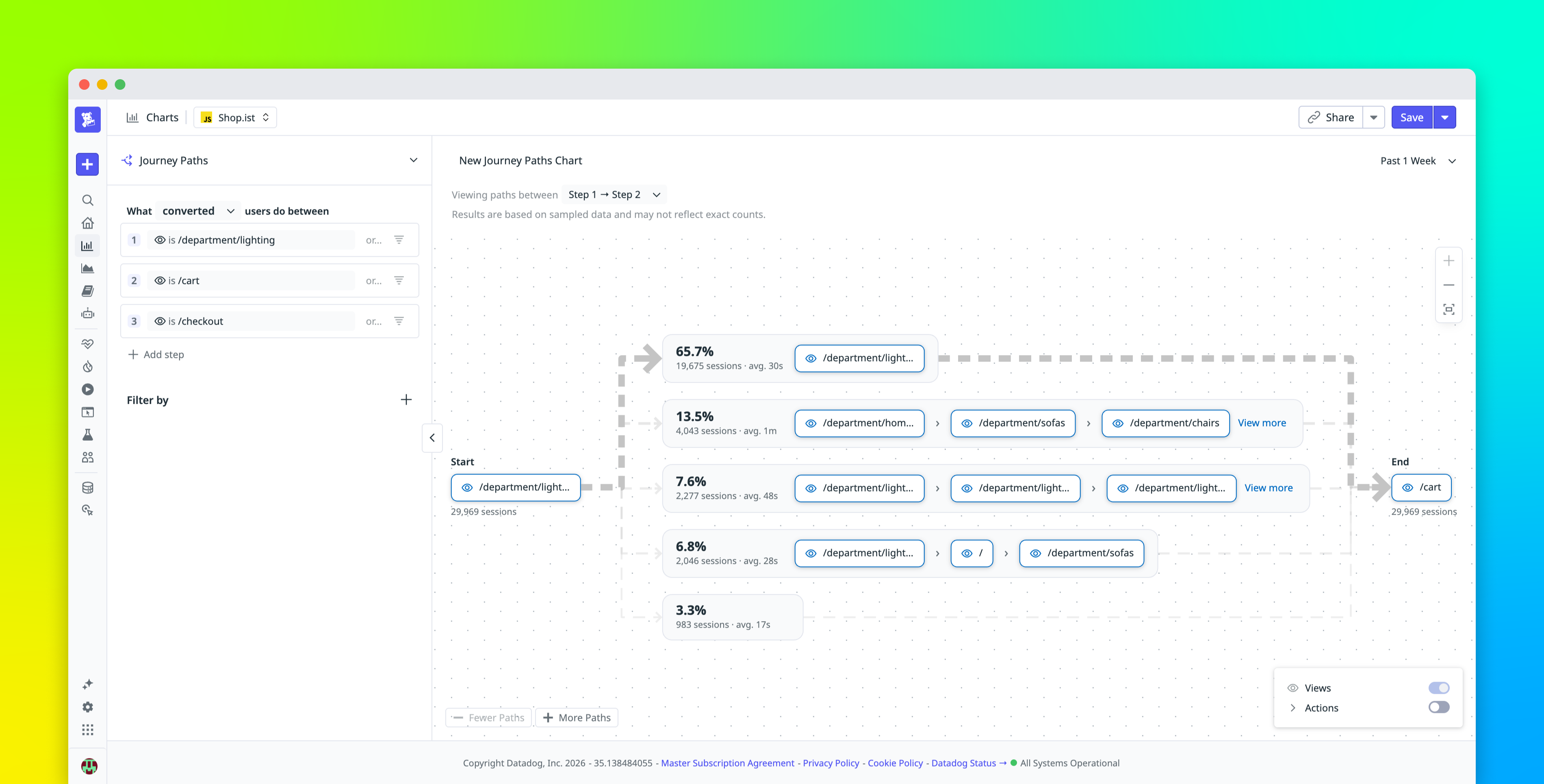
Datadog’s Journey Paths visualizes the most common sequences users follow through a defined flow, letting you rank converted vs. dropped‑off paths, spot detours or dead ends, and drill into the underlying user segments with Conversion Analysis, Session Replay, and RUM. It’s a UI‑level feature that augments funnel percentages with concrete path data, but the post offers no implementation details o…
Datadogdatadoghq.com4 minArticle: Your Next DSL Author Is a Language Model
Typed Domain Grounding (TDG) embeds a DSL inside a mainstream language the LLM already knows (e.g., Kotlin) and uses the host compiler as an oracle. The author describes five building blocks—embedding, choosing a host language with high training‑data frequency, compiler‑driven type safety, a generate‑compile‑repair loop, and an on‑demand teaching tool—and shows measured results from kUML, a Kotli…
InfoQinfoq.com18 minHow to Review AI-Generated Python Code Efficiently
A practical five‑step workflow for reviewing AI‑generated Python code, covering intent clarification, automated quality checks (linters, type checkers, security scanners, tests), risk‑first manual reading, a checklist of common AI mistakes, and fix‑verify loops, plus a ready‑to‑use dev‑environment setup.
Real Pythonrealpython.com26 minWorkflow or agent? What building QAradar taught us
Deezer built QAradar, a workflow‑driven Slack‑bot that lets developers discover and run the exact automated tests covering their feature. By pre‑generating a clean test catalog and keeping the LLM in a fixed four‑step workflow, they avoided the complexity and cost of a full‑blown agent while dramatically reducing knowledge silos and friction for QA and developers.
Deezermedium.com6 min