proomt

Search

Search posts, papers, and topics

All posts

Google Research8 min readintermediate

The future of practice: Enabling teachers to create learning interactives with generative UI

Summary

Google Research demonstrates a generative‑UI system that lets teachers author interactive, game‑style learning modules. The pipeline uses pedagogical guardrails, iterative self‑correcting loops (including automated solvability checks), and teacher vetting. A pilot library of 30+ STEM interactives is publicly available, and early teacher studies report good‑to‑excellent ratings.

  • Generative UI (GenUI) is repurposed for education: AI builds full interactive simulations from a teacher‑provided topic and objectives.
  • Design guardrails enforce curriculum alignment, progressive difficulty, factual accuracy, and scaffolded hints/feedback.
  • Self‑correcting generation loops run automated UI tests (e.g., Chrome‑based solvability checks) and visual quality checks before human approval.
  • 30+ STEM interactives (physics, chemistry, biology, math) have been generated, reviewed, and released via a public library for Google Workspace for Education users.

If the workflow scales, teachers could rapidly produce custom, high‑quality interactive content without programming, potentially closing the gap between passive digital textbooks and active, inquiry‑based learning at scale.

6/10

Related reading

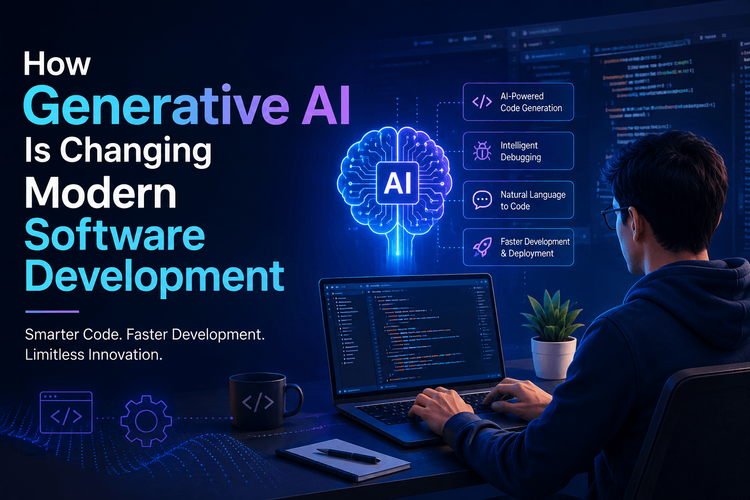
  1. How Generative AI Is Changing Modern Software Development

    Generative AI tools can assist developers by producing code snippets, tests, documentation, and debugging hints, but their output must be reviewed and validated. Engineers should adopt prompt‑writing skills and maintain core software‑engineering expertise to use AI safely and productively.

    SitePointsitepoint.com4 min
  2. ScienceBuddy: Recursive-in-Recursive Self-Improvement for Interactive Scientific Agents

    ScienceBuddy is an interactive workspace that converts researcher prompts, feedback, and execution traces into continual‑learning tasks for AI agents. It introduces a "recursive‑in‑recursive" self‑improvement loop that alternates harness refinement and model training, and showcases case studies across four scientific task families.

    Hugging Face Daily Papersarxiv.org1 minpaperHN2
  3. Zing-0.5: Toward Playable Worlds with Real-Time Joint Action and Text Control

    Zing‑0.5 is a 5 B autoregressive world model that lets users control generated environments in real time using both keyboard actions and text prompts. The paper introduces unified action‑text conditioning, segment‑level teacher distillation, and a low‑cost streaming inference pipeline that runs at 24 FPS (832×480) for about $0.009 per minute, achieving 81 % overall and 88.5 % consistency on a nav…

    Hugging Face Daily Papersarxiv.org1 minpaper
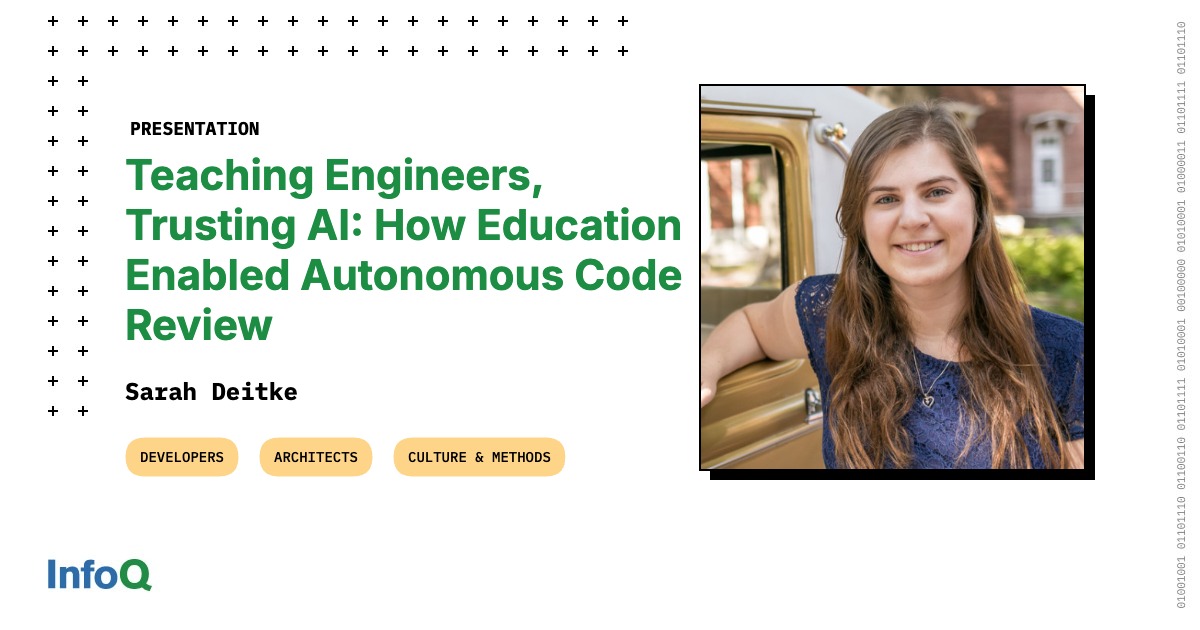
  4. Presentation: Teaching Engineers, Trusting AI: How Education Enabled Autonomous Code Review

    Duolingo’s DevEx AI team built a program of AI‑literacy workshops, observability dashboards, office‑hours, and vendor partnerships to get engineers comfortable with LLM‑based tools. With that foundation they launched a PR‑risk‑assessment bot that auto‑approves low‑risk pull requests, cutting review bottlenecks while keeping defect rates flat.

    InfoQinfoq.com24 mintalk