proomt

Search

Search posts, papers, and topics

All posts

Amazon ScienceImen Grida Ben Yahya, Nameet Dutia8 min readintermediate

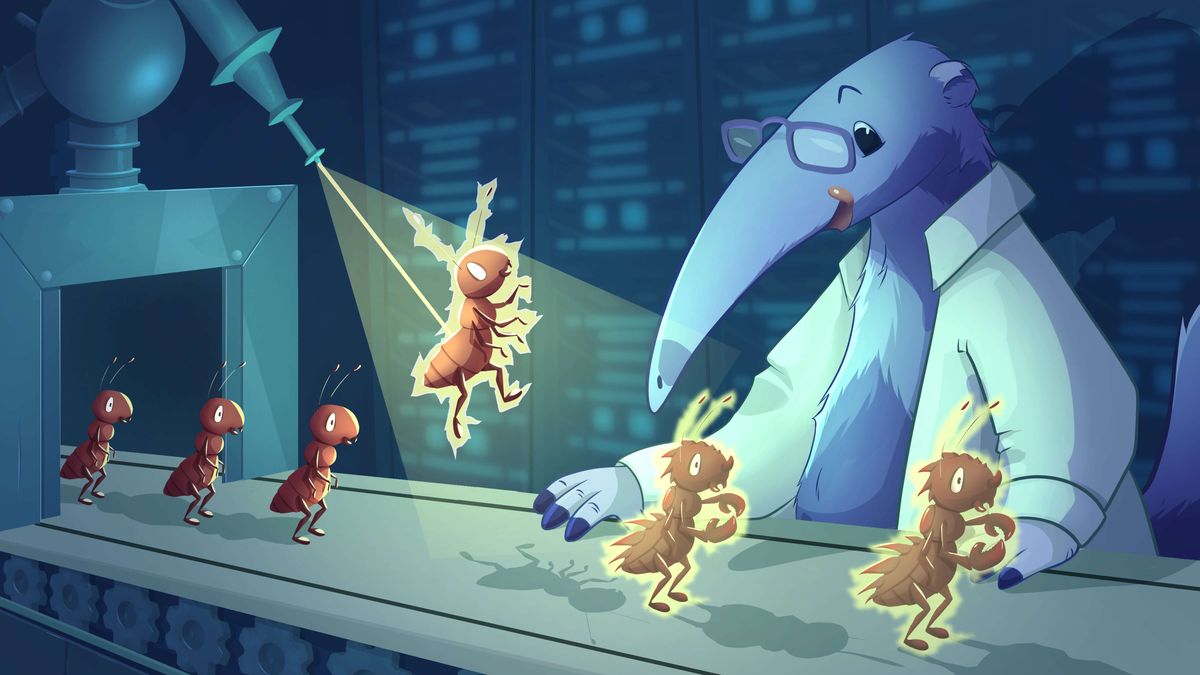
Graph-centric agentic intelligence

Summary

The article describes a digital‑twin graph of a network combined with an agentic AI layer that runs a cascaded graph‑algorithm pipeline to pinpoint root causes of failures in minutes, showing 95% fault‑localization accuracy under 30 seconds.

  • Model the network as a continuously synchronized graph (digital twin) ingesting devices, links, alarms, and KPIs.
  • Apply a three‑stage cascade: decompose into subgraphs, cluster with Louvain/label propagation, then compute alarm‑conditioned centrality (personalized PageRank, degree, closeness).
  • An agentic orchestration layer selects the appropriate algorithm suite based on topology type and incident complexity, falling back to knowledge‑base matches.
  • Demo with NTT DOCOMO achieved root‑cause identification in minutes, with Bayesian fault localization reaching 95% accuracy in under 30 s.

Network reliability engineers and NOC teams should care because it shows how to automate complex root‑cause analysis using graph‑centric AI, reducing mean‑time‑to‑repair.

6/10
Related reading

  1. Changing the game: How Google uses agentic AI to secure hundreds of millions of lines of code

    Google’s AI & Infrastructure team built an agentic pipeline (Mantis) that runs pre‑submit AI‑driven scans on every code check‑in, validates findings with a fast triage agent (AST + call‑graph analysis) achieving >92% precision in <1 min, then auto‑generates fixes via a bug‑fix agent. Localized threat models and a two‑step scan cut false‑positives to ~3% and prevent hundreds of vulnerabilities eac…

    Google Cloud Bloggoogle.com4 min
  2. Scaling Telco Autonomy: Leveraging GNNs with Distributed GraphFlow

    Google Cloud’s blog introduces Distributed GraphFlow (DGF), an open‑source Python library for building and scaling Graph Neural Networks (GNNs) on a Spanner‑backed digital twin of telecom networks. The post outlines the three‑layer architecture (digital twin on Spanner Graph, ML layer with DGF, AI agents) and highlights DGF’s high‑level API (5‑line example) and low‑level primitives, but provides…

    Google Cloud Bloggoogle.com3 min
  3. Agentic Skill Decay

    Addy Osmani warns that AI agents can short‑circuit the hands‑on practice (“reps”) that builds deep expertise and judgment. He recommends deliberately inserting hypothesis‑forming, “why” questioning, diff inspection, failure prediction, and occasional manual coding into the workflow, especially for junior engineers. A 2026 Anthropic study showed junior developers using AI scored 17 % lower on a fo…

    Addy Osmaniaddyosmani.com16 min
  4. Why we taught agents to break distributed safety properties

    The post introduces an Antithesis skill that lets AI agents perform mutation testing on distributed systems, injecting subtle bugs to check whether generated test suites can falsify safety properties. Using rqlite, the agents ran ~24 hours of tests, falsified 11 of 13 properties, and uncovered three real upstream bugs, demonstrating the technique’s practical value.

    Antithesisantithesis.com7 minHN3
  5. Agentic coding in the enterprise: Is your pipeline ready?

    Agentic coding lets AI agents write, test, and submit code autonomously, shifting the bottleneck from writing to governing code in production. Enterprises face rising failures, unclear ownership, growing costs, and weakened controls, which require a unified pipeline visibility layer.

    Codeshipcloudbees.com6 min