proomt

Search

Search posts, papers, and topics

All posts

TimescaleNanoHertz Communications8 min readintermediate
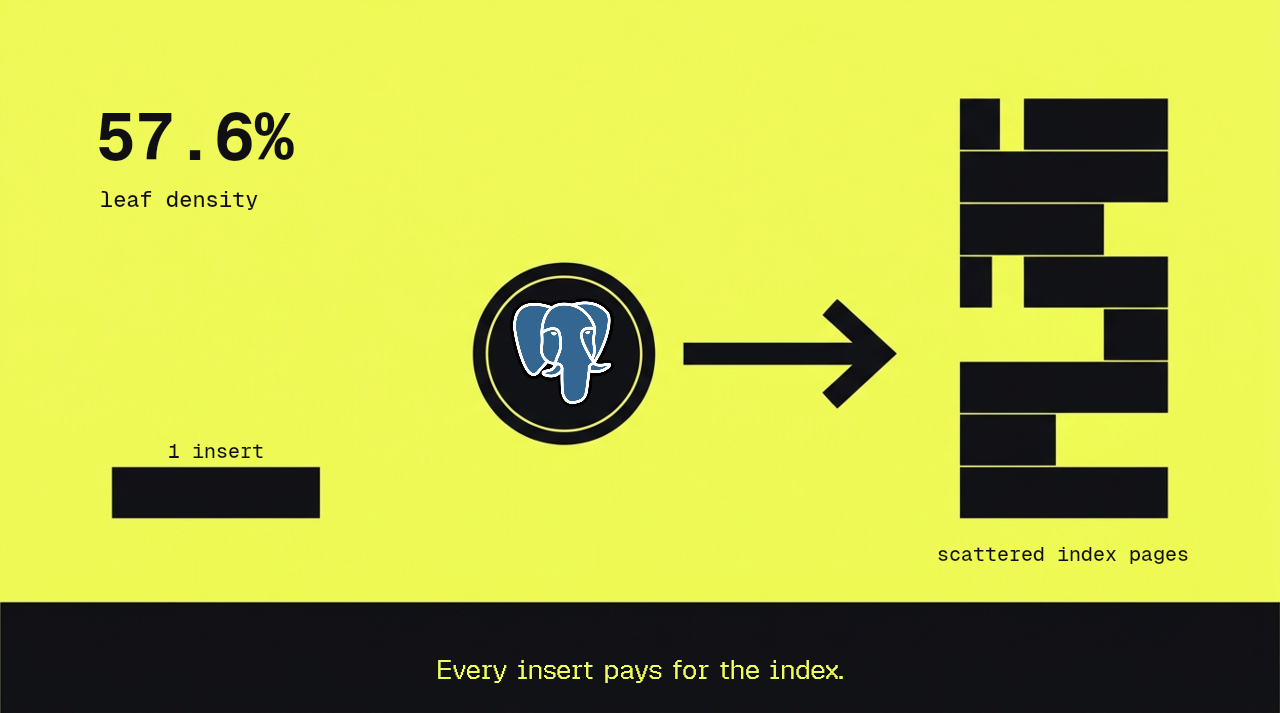
Knowing When Your Composite Index Earns Its Write Cost

Summary

This guide explains how to evaluate the trade-off of adding a composite index in PostgreSQL by quantifying its read benefits and write costs. It provides a method to measure the impact on ingest throughput and decide if the index earns its overhead based on your system's peak ingest ceiling.

  • Indexes incur a silent write cost per insert, compounding over time, which is not visible in `EXPLAIN` output.
  • A composite index only benefits queries that start with its leading column; otherwise, it's pure write cost.
  • Measure read benefits using `EXPLAIN (ANALYZE, BUFFERS)` to get stable buffer counts, not timings.
  • Measure write cost by benchmarking ingest rates with and without the index on a production-sized dataset.

Engineers and DBAs managing high-volume PostgreSQL databases should care to make informed decisions about indexing, preventing silent performance degradation and optimizing resource usage.

7/10

Related reading

  1. pgAssistant 3.8.0 : continuous improvement loop for Postgres

    pgAssistant 3.8.0 expands from a tuning advisor to a continuous PostgreSQL improvement platform, adding a Collector that records historical workload and environment data. It lets teams run an Observe‑Diagnose‑Prioritize‑Plan‑Implement‑Measure loop, compare consecutive snapshots, and measure the impact of applied recommendations.

    PostgreSQLpostgresql.org1 minrelease
  2. Introducing TIN: full-text search for Postgres

    PlanetScale’s TIN is a new PostgreSQL extension that implements a full‑text search index supporting Boolean, phrase, span, fuzzy, wildcard, regex, case/accent folding, COUNT(*) and BM25 top‑k queries. In a suite of benchmarks on an i7i.8xlarge EC2 instance (8 vCPU, 32 GB RAM), TIN built in 8 min 10 s (50.7 GB index) and outperformed ParadeDB, pg_textsearch and the built‑in GIN index by large marg…

    PlanetScaleplanetscale.com15 minHN20175
  3. Use Curiosity, Craft, and Care to Decide What AI Should Write

    The post proposes a three‑principle framework—Curiosity, Craft, and Care—to decide how much AI should author each artifact in a software development workflow. It argues that AI can be used aggressively for exploratory, disposable outputs (Curiosity) but should be limited for artifacts that commit the team to decisions (Craft) and for communications that require personal ownership (Care). The auth…

    Atomic Objectatomicobject.com4 min
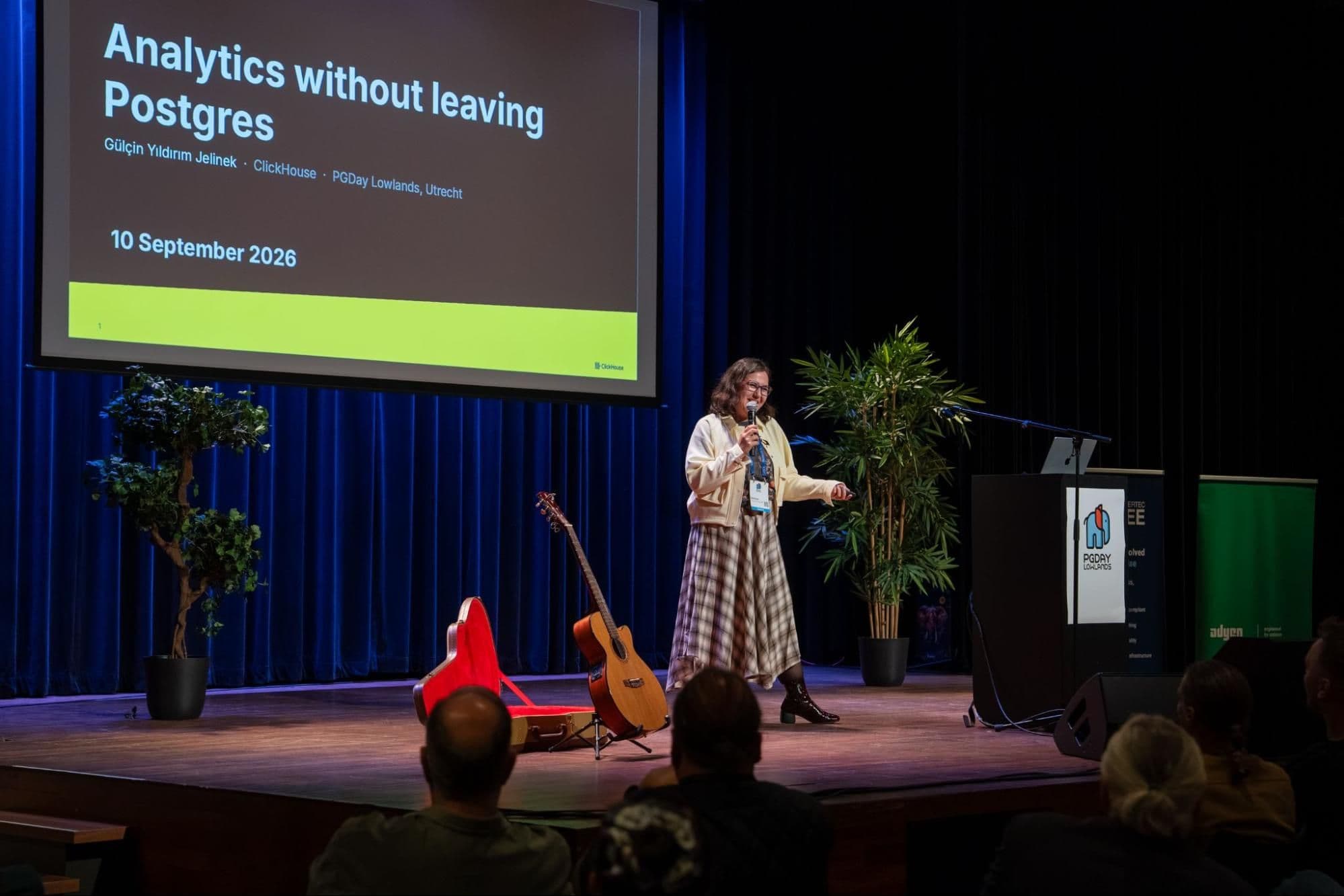
  4. Postgres week in the Netherlands: PGDay Lowlands & Percona Live 2026

    The author recaps two Dutch conferences where they presented ClickHouse‑Postgres extensions and discussed PostgreSQL 19 monitoring enhancements. The post explains how pg_clickhouse provides transparent query push‑down to ClickHouse and how pg_stat_ch streams per‑query metrics, plus new logging defaults and system views in PG 19.

    ClickHouseclickhouse.com7 min