proomt

Search

Search posts, papers, and topics

All posts

SitePointNaveed Wali Khan10 min readintermediate

MiniCPM5-2B Ranks First Among Open-Weight Models Under 4B

Summary

MiniCPM5-2B, a 2.6 B‑parameter dense Llama‑style model, tops the Artificial Analysis GDPval‑AA v2 benchmark (831 Elo) and sits on the Pareto frontier of the Intelligence Index v4.2 despite being far smaller than competing models. The post breaks down its capability density, token‑cost efficiency, architecture, and three‑stage training (SFT, RL, on‑policy distillation) to explain why it outperform…

  • MiniCPM5-2B scores 831 Elo on GDPval‑AA v2, ranking first among open‑weight models under 4 B parameters.
  • On Intelligence Index v4.2 it sits on the Pareto frontier with a score of 15, comparable to models 3‑12 B times larger.
  • Capability density analysis shows the frontier doubling roughly every 3.5 months, though MiniCPM5‑2B is a post‑trained outlier.
  • Model architecture: 42‑layer dense causal LM, grouped‑query attention (16 Q heads, 2 KV heads), 131k context, ~5 GB BF16 memory.

Engineers selecting local LLMs need to understand how a small model can match or exceed larger peers on real‑world tasks and the trade‑offs in token cost and training complexity.

6/10
Related reading

  1. M5 Ultra Mac Studio Review

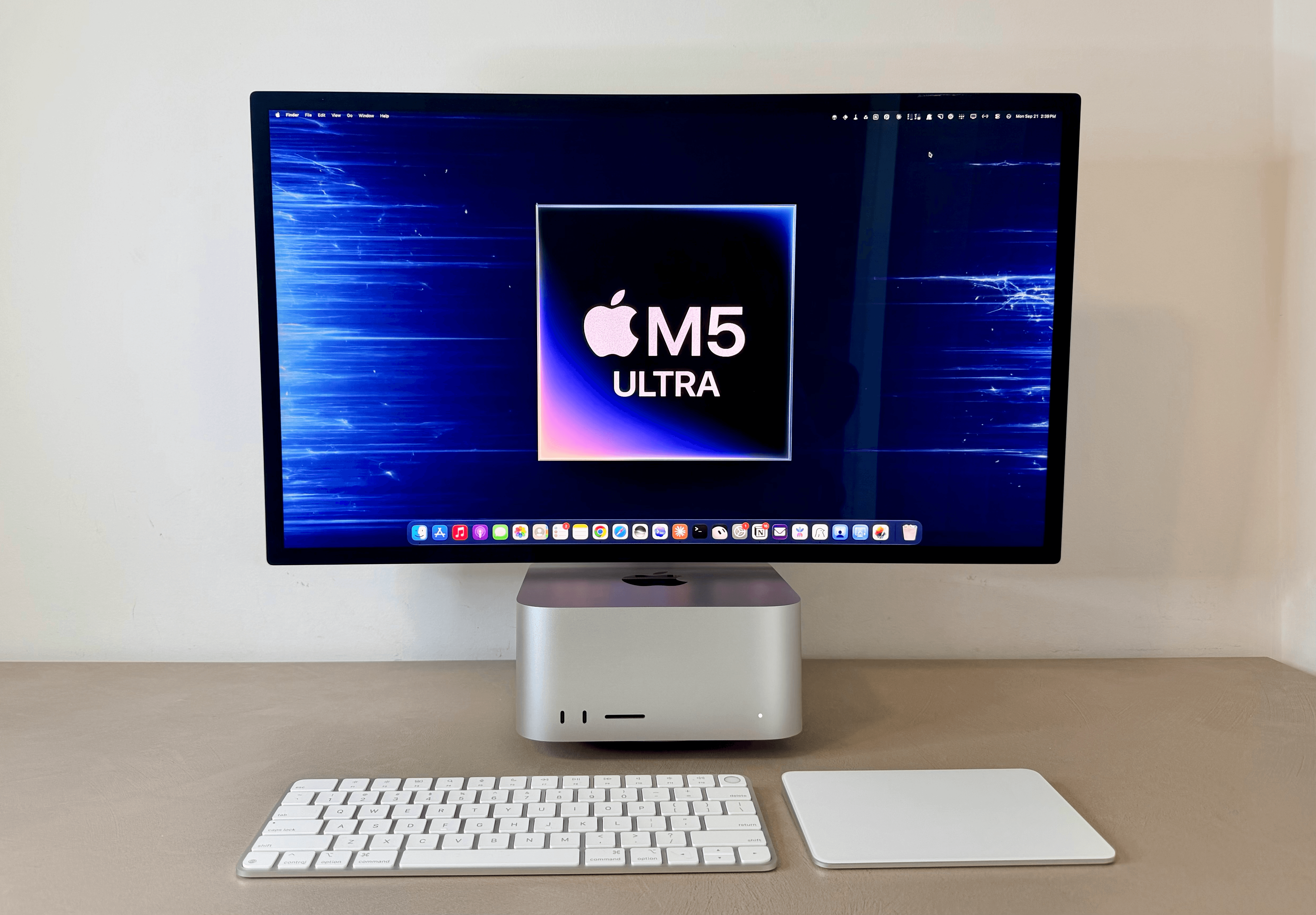
    The M5 Ultra Mac Studio (256 GB RAM) uses a quad‑die M5 Max architecture with an 80‑core GPU and 1.2 TB/s memory bandwidth, delivering ~70 % faster prompt‑to‑first‑token and token‑generation rates than the M3 Ultra. In the author’s tests Qwen3.8‑Flash‑Next hits 100 tokens/s on short prompts and 60‑85 tokens/s with 64‑256 KB context, making local AI agents (Open Minis, Hermes, Codex) feel snappy a…

    Hacker News front pagemacstories.net39 minHN191174
  2. SiliconBench: Speed, Memory, and Fidelity for LLM Serving on Unified-Memory Desktops

    SiliconBench benchmarks nine Apple‑Silicon LLM serving engines on unified‑memory desktops, measuring speed, memory usage, and output fidelity across Qwen3, Qwen3.5, and Gemma‑4 models. It finds vllm‑metal doubles throughput at modest concurrency, memory budgets often fail to preserve headroom, and only three stacks satisfy all fidelity and model‑coverage requirements, with tensor‑parallel scaling…

    Hugging Face Daily Papersarxiv.org1 minpaper
  3. Open-weight models take 56% of token volume, Astra doubles Fable 5.1 spend

    Vercel’s September AI Gateway Production Index shows open‑weight models processing 56% of token volume (up from 7% in Dec 2025) while accounting for only 14% of spend. Token price fell 23.2% month‑over‑month. Anthropic’s Opus 5 captured 22.5% of spend, overtaking Fable 5 which dropped to 4.9%. OpenAI’s new GPT‑6 Astra grabbed ~7.7% of total gateway spend in its first 12 days, more than double Ant…

    Vercelvercel.com6 minHN2
  4. GLM 5.3 FlashX now available on AI Gateway

    Vercel AI Gateway now offers the GLM‑5.3‑FlashX model, a fast (~200 tps) multimodal coding LLM. The post includes a TypeScript streaming example, notes the model’s fit for coding agents and interactive tools, and lists AI Gateway features (unified API, usage tracking, retries/failover, custom reporting, key budgets, routing rules) with no platform fee.

    Vercelvercel.com1 minrelease
  5. Training a 4B model to produce 81% faster query plans than Postgres

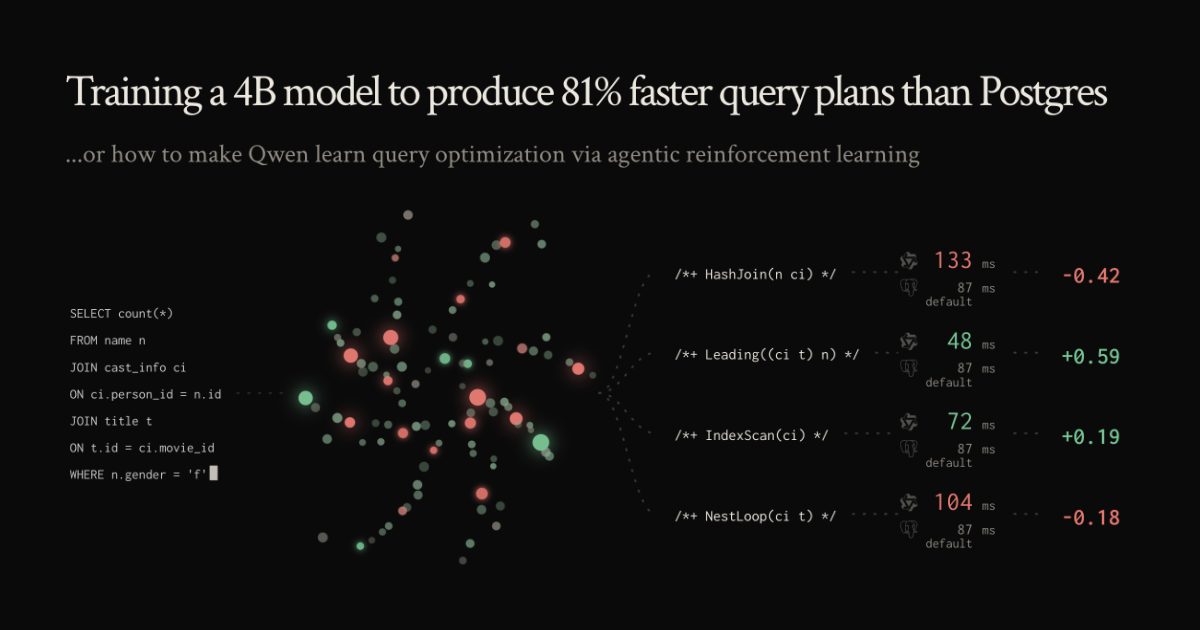
    A 4‑billion‑parameter open‑weight LLM, fine‑tuned with supervised learning and a custom RL loop, learns to emit PostgreSQL join plans that cut query latency by 44.7 % on a 113‑query benchmark. The author built a low‑noise measurement harness, a GRPO‑style reward function, and ran off‑policy distillation from ~500 GPT‑6‑style trajectories, demonstrating that a modest model can outperform Postgres’…

    Hacker News front pagerohanbansal.com51 minHN692143