proomt

Search

Search posts, papers, and topics

All posts

Hacker News front pageElizabeth Goodman11 min readintermediate

Nvidia announces native GPU programming in Rust

Summary

NVIDIA released CUDA‑Rust, letting you write GPU kernels directly in Rust and compile to PTX. Two programming models are supported: the traditional SIMT model via the `cuda-oxide` backend (nightly Rust, custom codegen) and the newer Tile model via `cutile‑rs` (stable Rust, JIT‑compiled Tile IR). Both provide Rust‑typed safety guarantees (e.g., `DisjointSlice`, tensor partitioning) and simple Carg…

  • CUDA‑Rust enables native Rust kernels, removing the need for C++/Python wrappers.
  • SIMT track (`cuda-oxide`) uses a custom rustc backend, requires nightly, LLVM, and explicit launch contracts for safety.
  • Tile track (`cutile‑rs`) works on stable Rust, leverages CUDA Tile IR, and uses tensor partitioning to express exclusive mutable access.
  • Safety is enforced via Rust types (`DisjointSlice`, `Tensor` partitions) and compile‑time launch contracts that validate grid dimensions against device limits.

Rust’s compile‑time guarantees can eliminate whole classes of GPU bugs (out‑of‑bounds, data races) while retaining performance. Native Rust kernels simplify the toolchain for teams already using Rust for drivers and AI infrastructure, and the Tile model abstracts away architecture‑specific launch p…

6/10

Related reading

  1. Migrating the GitHub Copilot runtime to Rust, using Copilot

    The Copilot agent runtime was rewritten from a 130‑k‑line TypeScript/Node.js codebase into a native Rust library (~830 k lines of Rust) to reduce startup latency, memory use, and improve reliability. The migration was done incrementally (in‑place) across 128 PRs, with AI‑generated code handling most of the work. The new runtime exposes a C ABI for in‑process embedding by all six Copilot SDK langu…

    GitHub Oldgithub.blog65 minHN188
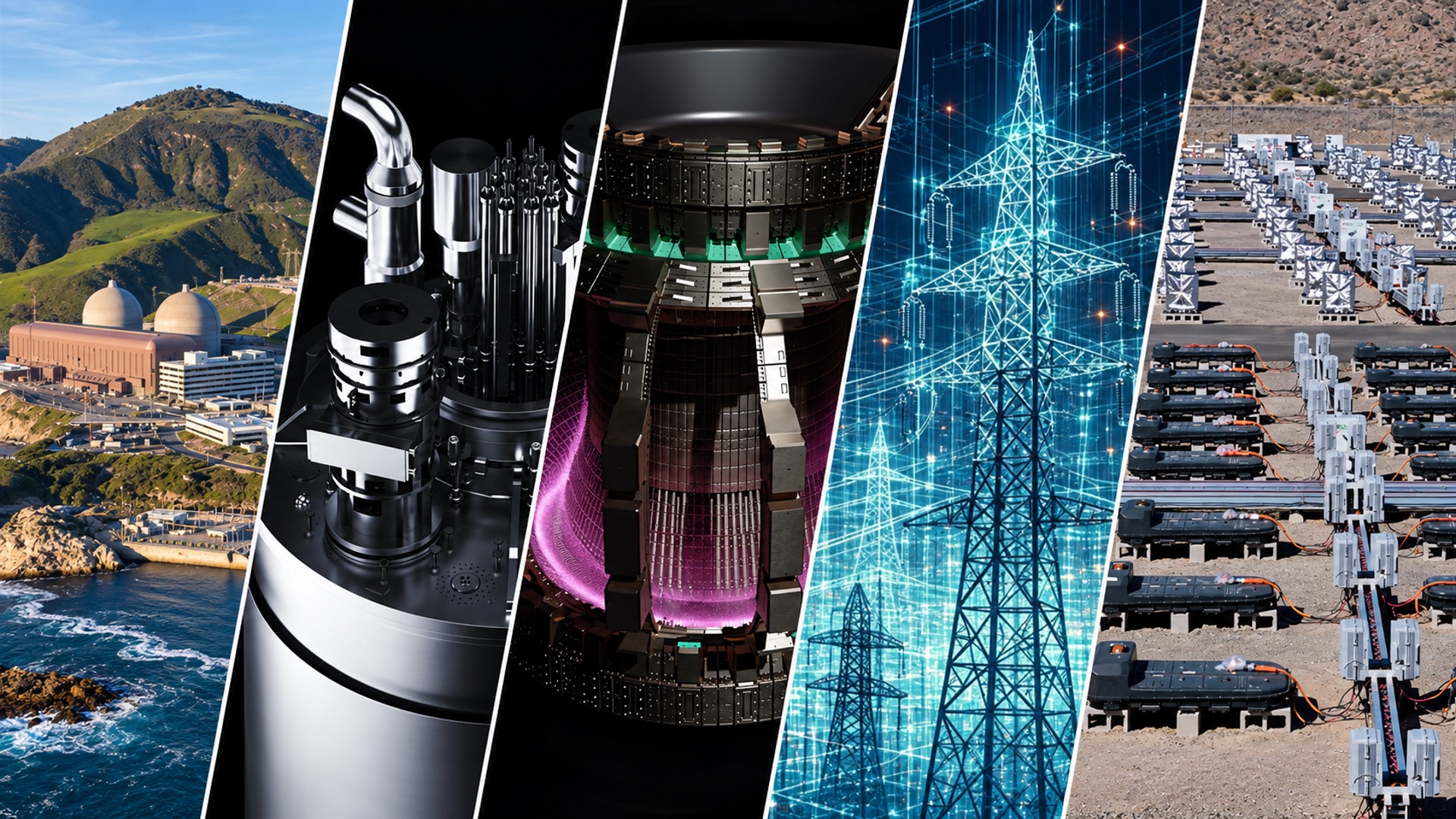
  2. 5 Companies Using NVIDIA AI for Clean Energy

    Nvidia’s blog spotlights five companies that are using Nvidia AI platforms to accelerate clean‑energy projects—from grid interconnection and nuclear plant operations to off‑grid AI data‑center power, advanced reactors, and fusion tokamaks. The article is a marketing summary and provides few technical details.

    Nvidianvidia.com4 min
  3. NVIDIA Vera Rubin NVL72 Delivers Leading Performance in MLPerf Inference v6.1 Debut

    NVIDIA’s Vera Rubin NVL72 AI inference system shows up to 3.7× higher throughput than the prior GB300 NVL72 on MLPerf v6.1 benchmarks (Qwen3‑VL, DeepSeek‑R1), achieves 99% scaling efficiency across 288 GPUs, and benefits from software optimizations (NVFP4 precision, kernel fusion, disaggregated serving). The post is a product announcement with concrete benchmark numbers but limited technical dept…

    Nvidianvidia.com4 min
  4. From Megawatts to Tokens: How NVIDIA Maximizes AI Factory Production

    NVIDIA’s DSX platform lets AI data‑centers shift workloads in response to grid signals, squeezing ~24% more token throughput (4 M→5 M tps) and ~23% better performance‑per‑watt on a fixed megawatt budget. The first production demo used Emerald AI’s Conductor to drop a 4 MW load to 3 MW in under a minute without interrupting high‑priority jobs. DSX MaxLPS reallocates headroom across HGX B200 server…

    Nvidianvidia.com5 min