proomt

Search

Search posts, papers, and topics

gpu

RSS
  1. 1

    Nvidia announces native GPU programming in Rust

    NVIDIA released CUDA‑Rust, letting you write GPU kernels directly in Rust and compile to PTX. Two programming models are supported: the traditional SIMT model via the `cuda-oxide` backend (nightly Rust, custom codegen) and the newer Tile model via `cutile‑rs` (stable Rust, JIT‑compiled Tile IR). Both provide Rust‑typed safety guarantees (e.g., `DisjointSlice`, tensor partitioning) and simple Carg…

    Hacker News front pagenvidia.com11 minHN961402
  2. 2

    Reverse-engineered Jev-like model

    Jevlike is an open‑source starter model that scores a list of text options in a single forward pass. It provides a minimal architecture (option queries, shared dot‑product scorer), synthetic data generation, training/evaluation CLI, and examples on Doom and chess. The repo supports a byte‑level encoder or a frozen Hugging‑Face encoder (e.g., Qwen2.5‑0.5B), runs on CPU/MPS/CUDA, and reports benchm…

    Hacker News front pagegithub.com4 minreleaseHN16224
  3. 3

    OpenJev

    OpenJev is a browser‑only demo that lets you load small LLM checkpoints (e.g., MiniCPM‑5 2B, Qwen3 0.6B) onto your GPU and compare two inference paths: reading raw logits for a set of options versus prompting the model to emit a JSON with option probabilities token‑by‑token. The page reports model sizes, download times, balanced accuracy on a few benchmarks, and wall‑clock timings measured with `…

    Hacker News front pageopenjev.com2 minreleaseHN709288
  4. 4

    Show HN: Mini-AGI – Dynamic continual learning model trained on 8GB VRAM

    mini-AGI is a byte‑level continual‑learning language model that fits on a single 8 GB GPU by paging expert weight files from disk. It uses two dense prelude blocks followed by a recurrent block applied up to 24 times per character, with adaptive depth (PonderNet halting) and per‑application top‑8 expert routing. The system maintains a RAM cache and a VRAM resident set, swaps experts based on dema…

    Hacker News front pagegithub.com20 minHN14525lobste.rs2
  5. 5

    Breaking the 1.58-bit Barrier for Ternary LLMs

    BITCOS is a distribution‑aware storage layout for ternary LLM weights that replaces the standard five‑trit packing. By storing a presence bitmap and a compact sign vector, it reduces the effective bits‑per‑weight to 2 − z (z = zero density), achieving as low as 1.485 b/w on sparse models. The authors provide AVX‑512, AVX2, and Xe2 GPU unpacking kernels and show up to 1.28× speedup in matrix‑vecto…

    Hacker News front pagearxiv.org1 minpaperHN24241
  6. 7

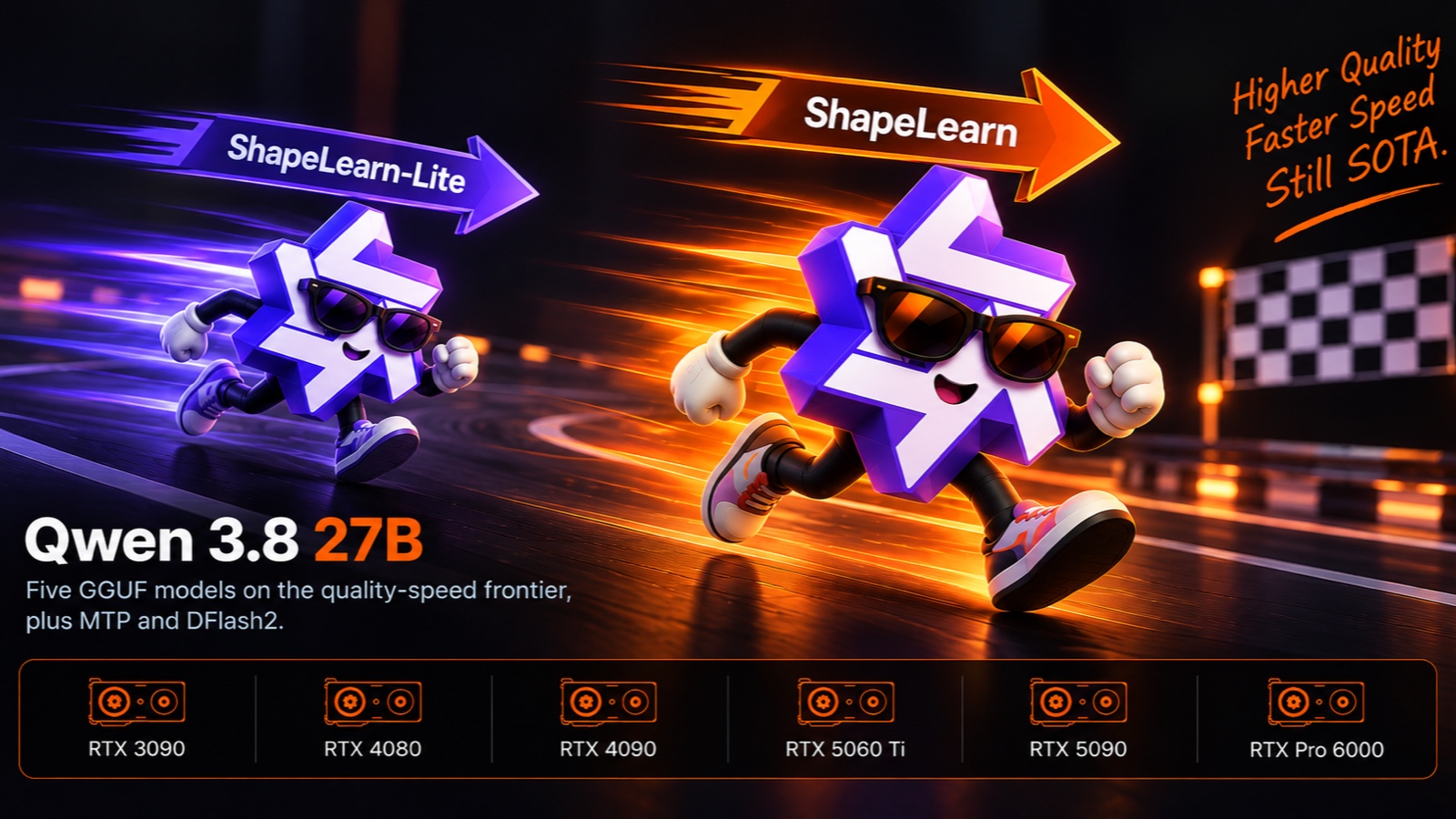
    Shapelearn Qwen 3.8 27B (13.1 GB VRAM)

    ByteShape releases full ShapeLearn quantizations for Qwen 3.8 27B, showing that their GPU‑specific GGUFs (GPU‑1…GPU‑5) dominate the quality‑throughput frontier across six GPUs, with GPU‑5 hitting 99.63 % of BF16 accuracy at 90 TPS on a 13.1 GB model. Speculative decoding (MTP, DFlash2) further boosts throughput, and the Lite set remains competitive.

    Hacker News front pagebyteshape.com17 minHN10439
  7. 9

    Accurate Models of AMD Matrix Cores

    The authors reverse‑engineer AMD’s CDNA matrix cores, build per‑architecture MATLAB models that match hardware bit‑for‑bit on 10 M random tests, and use them to compare AMD vs NVIDIA tensor‑core accuracy.

    Hacker News front pagearxiv.org2 minpaperHN7911
  8. 10

    Sample Count Is Not Enough: Candidate-Generation Strategy Shapes the Energy and Performance of LLM Test-Time Scaling

    Increasing the number of LLM candidates (N) improves reasoning accuracy, but the way those candidates are generated (batch size vs sequential calls) dramatically affects latency, GPU‑hours, and energy. On A100 GPUs, eight serial 1‑candidate calls consume ~5× more energy and take ~6× longer than a single 8‑candidate batched call, even though total candidate count is identical. The authors recommen…

    Hugging Face Daily Papersarxiv.org2 minpaper
  9. 11

    VC-Attention: Value Smoothing and Softmax Casting for Low-bit Attention

    VC-Attention introduces a training‑free low‑bit attention pipeline for diffusion transformers. It smooths value tensors via lightweight online clustering (V‑Smooth) and quantizes only the residual after subtracting block means, restoring the mean from the softmax row sum. It also replaces the FP32 softmax exponential with a fused FP8 cast (ExpCast‑FP8) that maps log‑scores directly to E4M3 probab…

    Hugging Face Daily Papersarxiv.org1 minpaper
  10. 13

    NVIDIA Vera Rubin NVL72 Delivers Leading Performance in MLPerf Inference v6.1 Debut

    NVIDIA’s Vera Rubin NVL72 AI inference system shows up to 3.7× higher throughput than the prior GB300 NVL72 on MLPerf v6.1 benchmarks (Qwen3‑VL, DeepSeek‑R1), achieves 99% scaling efficiency across 288 GPUs, and benefits from software optimizations (NVFP4 precision, kernel fusion, disaggregated serving). The post is a product announcement with concrete benchmark numbers but limited technical dept…

    Nvidianvidia.com4 min
  11. 14

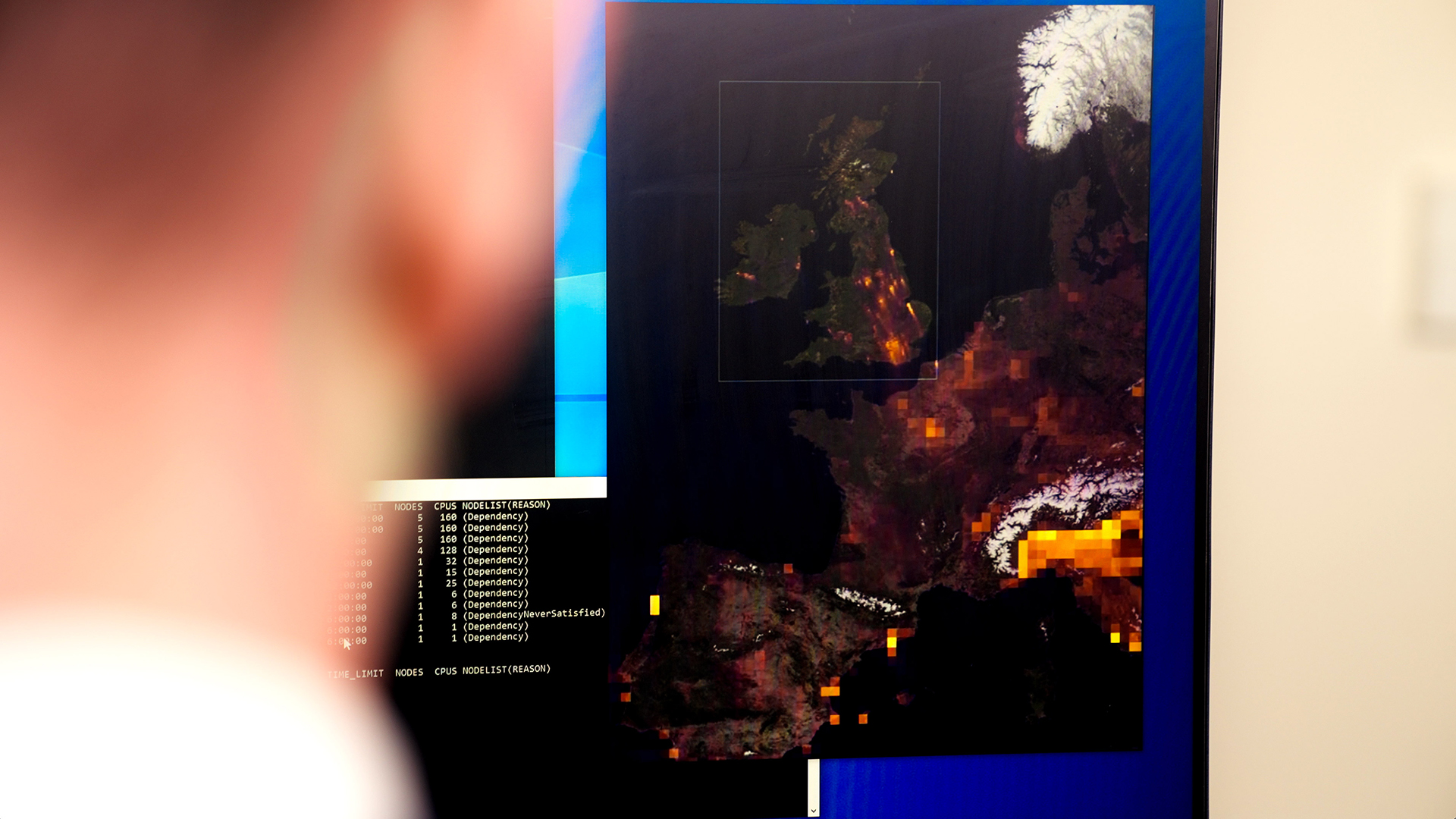
    University of Manchester Uses NVIDIA Earth-2 to Forecast Air Pollution Across the UK

    University of Manchester used NVIDIA Earth‑2 CorrDiff and StormCast generative models to downscale UK‑wide air‑pollution simulations. Training on the Isambard‑AI supercomputer (5,448 GH200 chips, 21 EFLOPS) took two days on an eight‑GPU node, producing a 2‑3 km resolution model. Inference runs on a desktop‑class DGX Spark, enabling rapid scenario forecasting and potential real‑time health alerts.…

    Nvidianvidia.com4 min
  12. 15

    From Megawatts to Tokens: How NVIDIA Maximizes AI Factory Production

    NVIDIA’s DSX platform lets AI data‑centers shift workloads in response to grid signals, squeezing ~24% more token throughput (4 M→5 M tps) and ~23% better performance‑per‑watt on a fixed megawatt budget. The first production demo used Emerald AI’s Conductor to drop a 4 MW load to 3 MW in under a minute without interrupting high‑priority jobs. DSX MaxLPS reallocates headroom across HGX B200 server…

    Nvidianvidia.com5 min
  13. 16

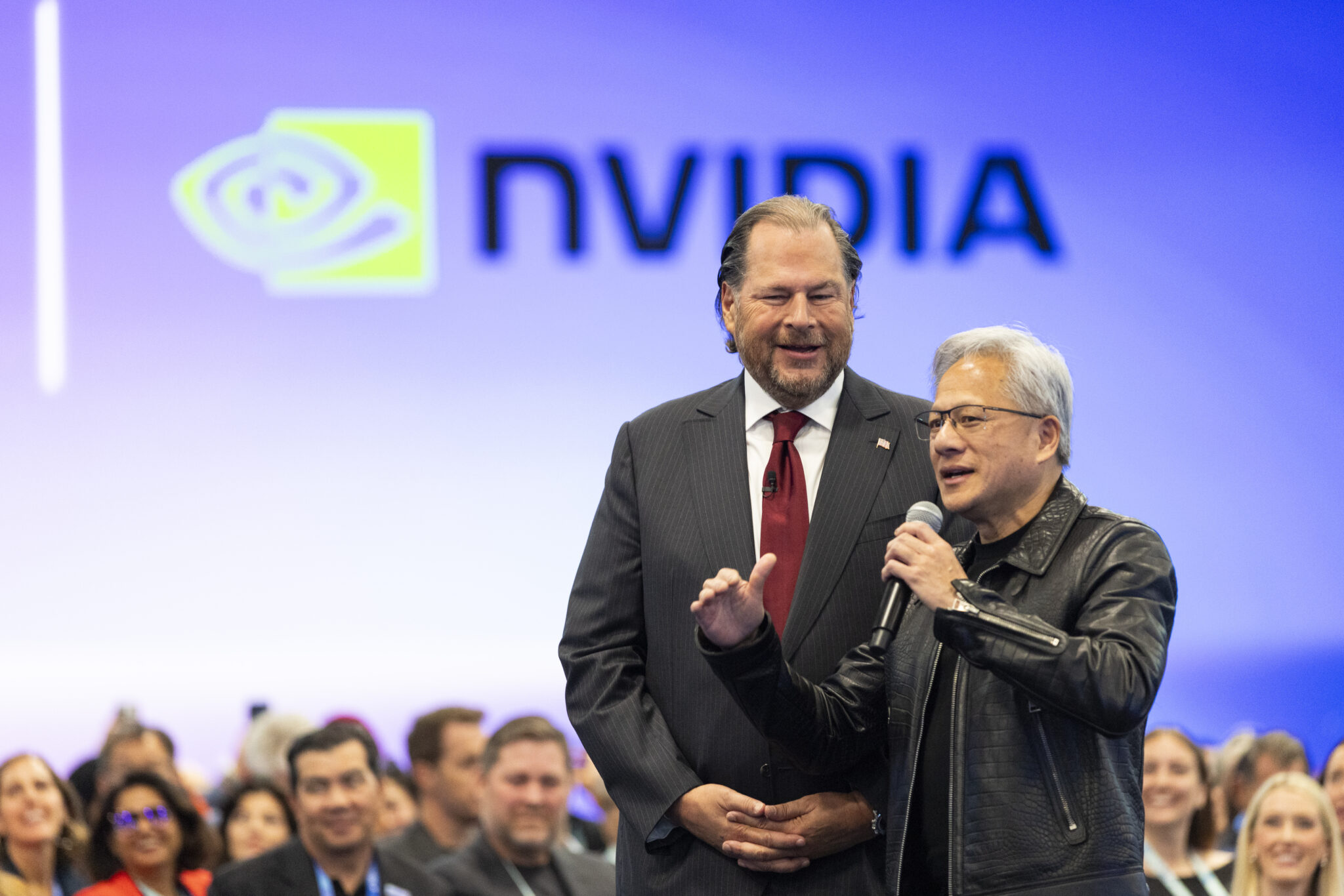
    ‘Now We Can Know Everything and Do Anything,’ Jensen Huang Says at Dreamforce

    Nvidia’s Jensen Huang announced Salesforce’s Koa, a CRM‑reasoning LLM built by fine‑tuning Nvidia Nemotron 3 Super on a synthetic, three‑decade‑spanning dataset. Koa uses supervised fine‑tuning plus RL (NeMo RL, Gym, AutoModel), covers 14+ industries, and claims 3× fewer errors on Salesforce’s CRM‑Bench versus leading models. It’s already in internal Slack agents and slated for limited customer p…

    Nvidianvidia.com3 min
  14. 17

    Microsoft Open-Sources TauGrid to Simplify AI Workload Management on Kubernetes

    Microsoft open‑sourced TauGrid, a Helm‑installable platform that bundles Kueue, KubeRay and other components to schedule, monitor and checkpoint AI workloads on GPU‑enabled Kubernetes clusters. Engineers define jobs in a simple `tau.yaml`, and TauGrid handles queuing, health checks, and observability, simplifying AI workload management.

    InfoQinfoq.com2 min
  15. 18

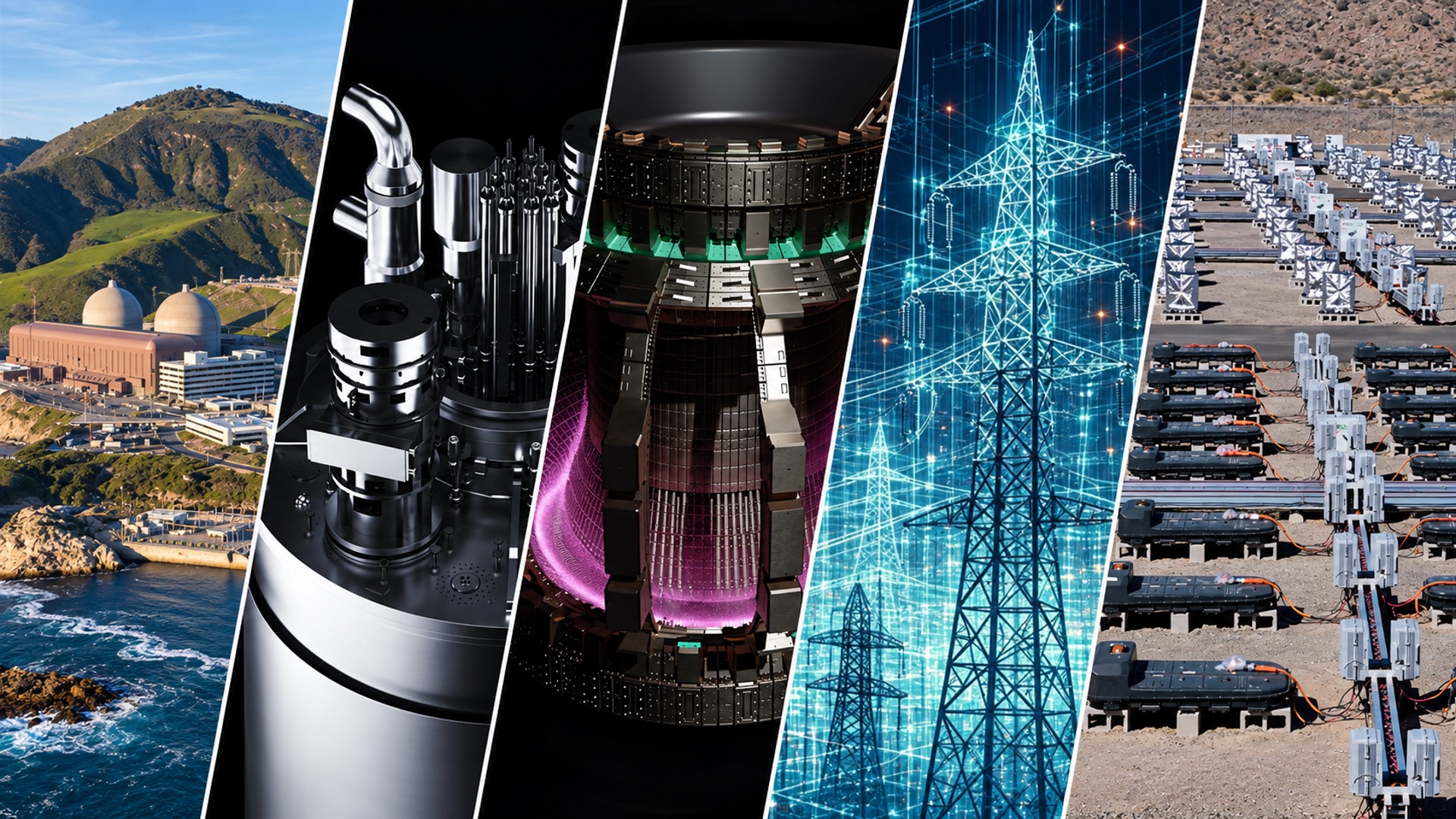
    5 Companies Using NVIDIA AI for Clean Energy

    Nvidia’s blog spotlights five companies that are using Nvidia AI platforms to accelerate clean‑energy projects—from grid interconnection and nuclear plant operations to off‑grid AI data‑center power, advanced reactors, and fusion tokamaks. The article is a marketing summary and provides few technical details.

    Nvidianvidia.com4 min