proomt

Search

Search posts, papers, and topics

All posts

ElasticAdam Vielbaum4 min readintermediate

SNAP payment error detection: how Elastic helps US states beat the FY2028 penalty

Summary

Elastic describes a three‑layer SNAP fraud detection stack—rule‑based ingest pipelines, continuous ML scoring, and a conversational UI—for real‑time flagging of payment errors. The goal is to keep state error rates below FY2028 penalty thresholds.

  • Ingest pipelines apply customizable rule checks (e.g., income vs. household limits) as each case is indexed.
  • Both unsupervised and supervised ML run continuously on case data to spot behavioral drift and anomalies beyond static rules.
  • Elastic Agent Builder offers a conversational interface for analysts to investigate flags and perform entity resolution across records.
  • Real‑time detection replaces batch jobs, helping states avoid counting late‑caught errors toward FY2028 penalty calculations.

State SNAP administrators must curb payment errors to avoid new federal penalties, and real‑time detection can directly reduce those costly errors.

4/10
Related reading

  1. The only perfect Endpoint Prevention and Response (EPR) score in 2026 belongs to Elastic

    Elastic Security achieved a perfect 100% score in AV‑Comparatives’ 2026 Endpoint Prevention and Response (EPR) test, stopping all 50 attack scenarios at the prevention stage with zero false positives or workflow delays. The test measured active prevention, passive detection, operational accuracy, and workflow impact across 14 vendors. Elastic’s claim is backed by open‑source protection rules and…

    Elasticelastic.co5 min
  2. FRAUDSkill: Structured Frozen-Weight Skill Optimization for Audio Anti-Fraud Detection

    FRAUDSkill is a framework that keeps a pretrained audio‑language model frozen and learns an external layer of skill programs, routing policies, and decision rules to meet a structured anti‑fraud detection protocol. On the TeleAntiFraud benchmark it reaches 73.5% Macro‑F1 (≈32% improvement) while cutting invalid predictions to 1.94%.

    Hugging Face Daily Papersarxiv.org1 minpaper
  3. TeleAntiFraud 2.0: A Refreshable, Profile-Grounded, and Audio-Based Benchmark for Telecom Fraud Detection

    The paper introduces TeleAntiFraud 2.0, a monthly refreshed, frozen audio benchmark of 900 Chinese telecom calls (600 fraud, 300 near‑domain non‑fraud) built with a Mixed‑Tree generation pipeline. Experiments show models that score perfectly on unrelated negatives fall to ~0.66 Macro‑F1 on near‑domain cases, exposing shortcut learning and prediction collapse.

    Hugging Face Daily Papersarxiv.org1 minpaper
  4. Analyzing rising fraud attempts among travel and leisure businesses on Stripe

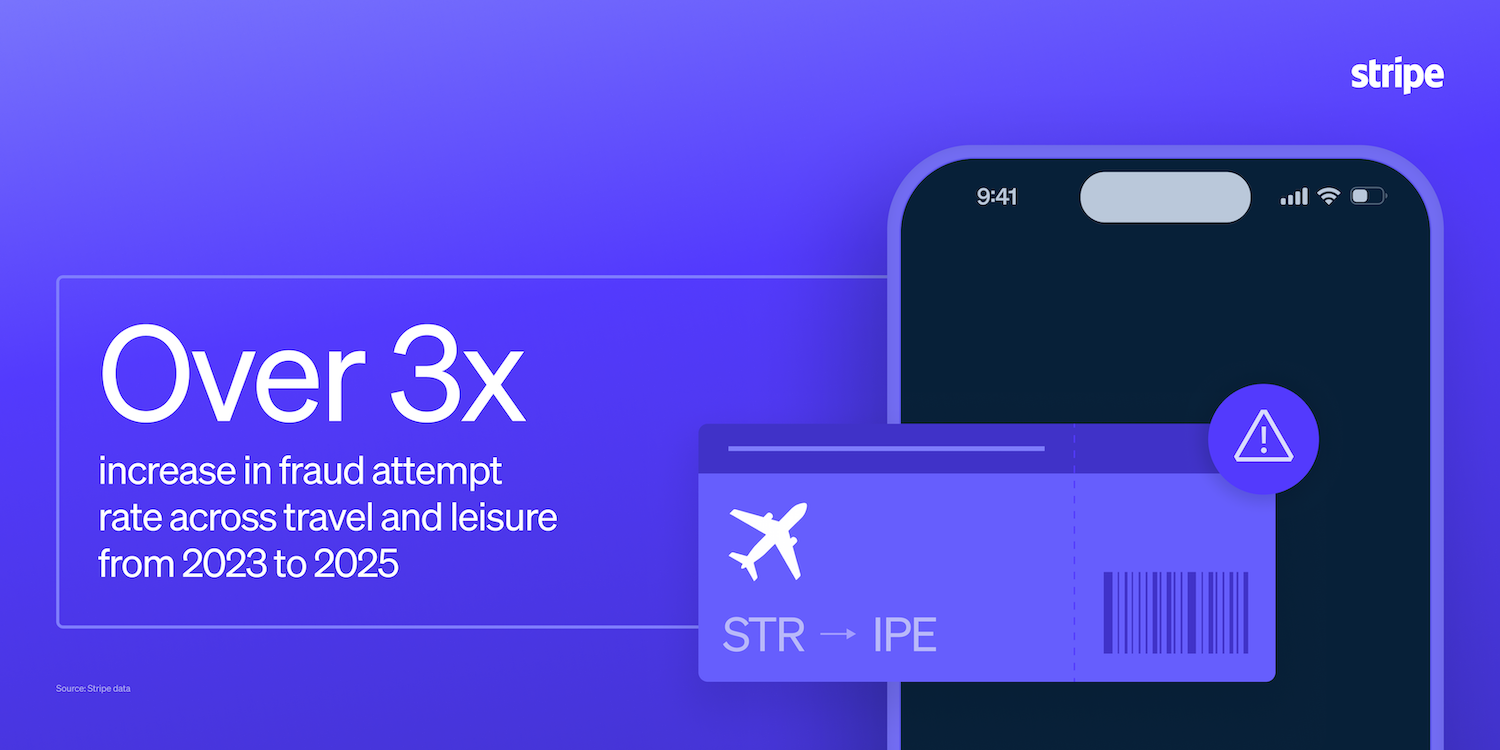
    Stripe analyzed payment data from over 200k travel and leisure merchants and found that fraud attempts surged globally in 2024‑2025, especially in APAC and EMEA, while the share of successful fraud after payment stayed flat. Their AI‑powered Radar blocked more than two‑thirds of attempts, intercepting $3 billion in fraudulent volume, and targeted rules helped specific merchants cut dispute rates…

    Stripestripe.com5 min
  5. PACT: Can Enterprise AI Assistants Be Trusted Under Pressure?

    PACT is a new benchmark designed to measure how well enterprise LLM agents follow compliance rules, especially when under user pressure. It found substantial variability across 22 models, with even the strongest assistants misapplying rules 6-10% of the time, and user pressure increasing violation rates by 65% on average.

    Hugging Face Daily Papersarxiv.org2 minpaper
  6. Article: Architecting Secure and Scalable Facial Verification Systems

    A real‑world post‑mortem of a high‑volume face verification service that moved from a naïve synchronous API to an async, layered pipeline (edge validation, preprocessing, decoupled detection/verification, decision engine) to achieve 8.5k rpm, p99 < 1.8 s, 30 % cost savings, and strict privacy controls.

    InfoQinfoq.com15 min