proomt

Search

Search posts, papers, and topics

All posts

SitePointTechPanda4 min readintro
How Generative AI Is Changing Modern Software Development

Summary

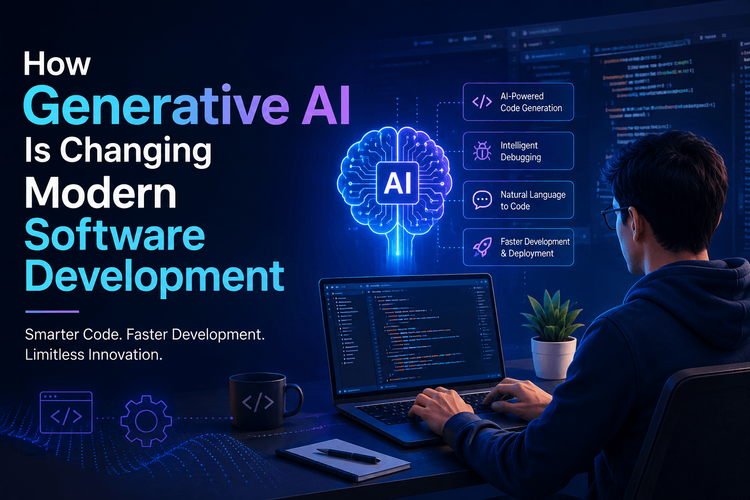
Generative AI tools can assist developers by producing code snippets, tests, documentation, and debugging hints, but their output must be reviewed and validated. Engineers should adopt prompt‑writing skills and maintain core software‑engineering expertise to use AI safely and productively.

  • AI can generate boilerplate code from natural‑language prompts, but the output usually needs review and refinement.
  • AI can explain error messages and suggest fixes, accelerating debugging while still requiring human validation.
  • AI can auto‑create unit‑test skeletons and mock data, reducing the manual effort of writing tests.
  • AI can draft documentation, README files, and pull‑request summaries, helping teams keep docs up‑to‑date.

Software engineers and engineering leaders should care because AI can boost productivity but also introduces new risks that require disciplined review.

4/10
Related reading

  1. How to Review AI-Generated Python Code Efficiently

    A practical five‑step workflow for reviewing AI‑generated Python code, covering intent clarification, automated quality checks (linters, type checkers, security scanners, tests), risk‑first manual reading, a checklist of common AI mistakes, and fix‑verify loops, plus a ready‑to‑use dev‑environment setup.

    Real Pythonrealpython.com26 min
  2. Should you read the code, is RAG dead, and did Skills kill MCP?

    The article debunks five common AI‑tool hot takes, arguing you still must read AI‑generated code, AI fluency matters in hiring, MCP and Skills serve different purposes, RAG remains useful, and needing fine‑tuning signals a messy codebase. It offers concrete rules for reviewing generated code and integrating AI components responsibly.

    GitHub Oldgithub.blog5 minHN3
  3. Presentation: Complexity and Creativity in Software Engineering

    Phillip Mortimer argues that AI‑generated code makes all software effectively "write‑only" due to volume, and proposes managing this by treating tests as the sole specification, automating code reviews with LLMs, and decoupling intent from implementation.

    InfoQinfoq.com28 mintalk
  4. Presentation: Teaching Engineers, Trusting AI: How Education Enabled Autonomous Code Review

    Duolingo’s DevEx AI team built a program of AI‑literacy workshops, observability dashboards, office‑hours, and vendor partnerships to get engineers comfortable with LLM‑based tools. With that foundation they launched a PR‑risk‑assessment bot that auto‑approves low‑risk pull requests, cutting review bottlenecks while keeping defect rates flat.

    InfoQinfoq.com24 mintalk
  5. Who Owns AI-Generated Code Failures?

    AI‑generated code breaks the traditional chain of ownership: developers merge PRs they didn’t write, reviewers approve logic they didn’t originate, and QA validates tests chosen by a model. A CloudBees survey shows 81% of firms see more production failures from AI code, and accountability often drifts upward to CTO/VP. The post argues role‑based accountability isn’t enough; you need end‑to‑end tr…

    Codeshipcloudbees.com4 min