proomt

Search

Search posts, papers, and topics

All posts

Vlad Mihalcea5 min readintermediate
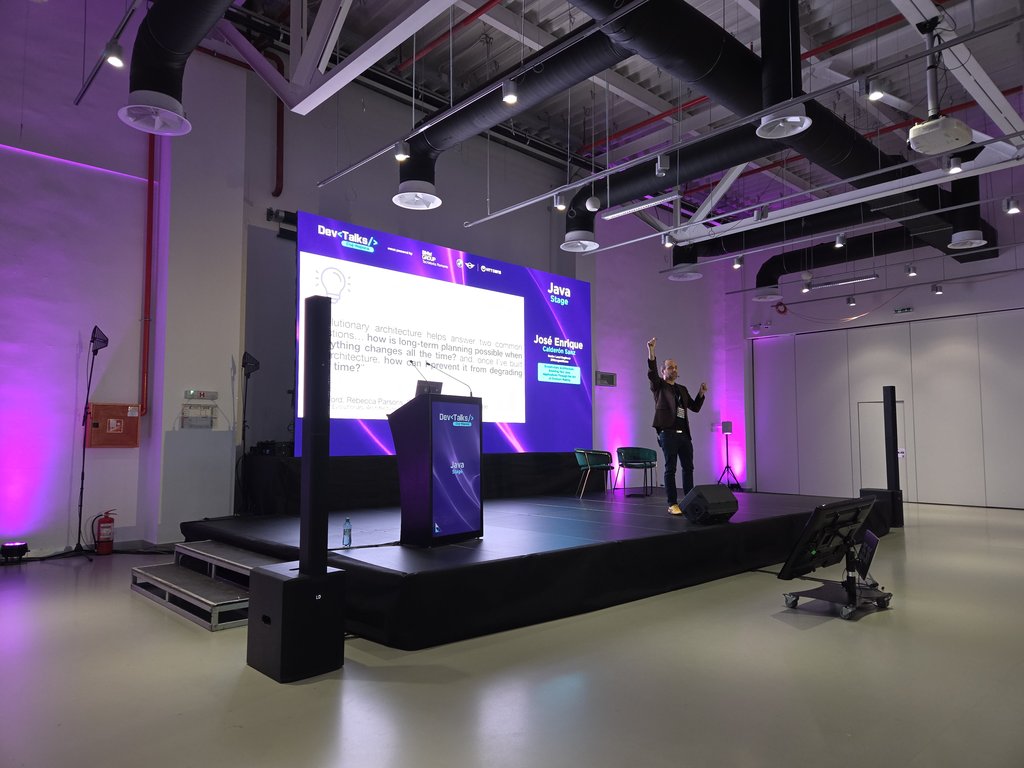
What I learned at DevTalks Cluj-Napoca 2026

Summary

This post recaps DevTalks Cluj-Napoca 2026, highlighting various Java sessions on topics like modular monoliths, Java upgrades, and error handling. It also summarizes a panel discussion on the impact of AI on Java software development, offering practical advice for engineers.

  • Great teamwork improves productivity on more activities than AI on specific tasks.
  • Manually writing tests adds determinism; AI-generated tests for AI-generated code may lead to hallucinations.
  • Expertise will be highly valuable as LLMs regress towards average quality, differentiating from generic output.
  • Speed up Maven builds significantly using parallel processing, Maven Daemon, and caching.

Software engineers interested in current Java trends, build optimization, and the practical implications of AI on development practices will find valuable insights.

6/10
Related reading

  1. Presentation: Teaching Engineers, Trusting AI: How Education Enabled Autonomous Code Review

    Duolingo’s DevEx AI team built a program of AI‑literacy workshops, observability dashboards, office‑hours, and vendor partnerships to get engineers comfortable with LLM‑based tools. With that foundation they launched a PR‑risk‑assessment bot that auto‑approves low‑risk pull requests, cutting review bottlenecks while keeping defect rates flat.

    InfoQinfoq.com24 mintalk
  2. Article: Your Next DSL Author Is a Language Model

    Typed Domain Grounding (TDG) embeds a DSL inside a mainstream language the LLM already knows (e.g., Kotlin) and uses the host compiler as an oracle. The author describes five building blocks—embedding, choosing a host language with high training‑data frequency, compiler‑driven type safety, a generate‑compile‑repair loop, and an on‑demand teaching tool—and shows measured results from kUML, a Kotli…

    InfoQinfoq.com18 min
  3. Evolving programming languages in the AI era

    This post explores how programming languages and their ecosystems might evolve as AI agents write more code, shifting focus from human ergonomics to agent-centric design. It proposes optimizing languages for stronger guarantees and developing agent-friendly tools like queryable program databases and programmatic runtime observability.

    Hacker News front pagedashbit.co9 minHN13798
  4. AI Skills with Matt Pocock

    Matt Pocock explains how he uses AI agents for software development, emphasizing "strategic programming" and guiding agents with "leading words" from classic engineering texts. He argues that this approach makes engineering fundamentals more critical than ever for creating agent-optimized codebases.

    The Pragmatic Engineerpragmaticengineer.com7 min
  5. The DevFest Community Workshop Experience: Building Real Agents Together

    Google’s DevFest Community Workshop introduced a “Workbench” format that emphasizes architectural mental models over copy‑paste code, guiding engineers to build long‑running, self‑evolving multi‑agent systems with the Agent Development Kit and Gemini Enterprise platforms. Attendees learned state‑separation, workflow pausing, and self‑patching pipelines, and the series will continue in five more c…

    Google Cloud Bloggoogle.com2 min
  6. 2026 in LLMs (so far)

    The post recaps 2026 LLM milestones, noting that Claude Opus 4.5 and GPT‑5.1 made coding agents reliable enough for daily use, sparking AI‑driven side projects and a surge of sandboxing and agent‑security discussions. The author reflects on "AI mania", personal experiments, and the cultural impact on engineers.

    Simon Willisonsimonwillison.net21 minHN5