proomt

Search

Search posts, papers, and topics

alignment

RSS
  1. 1

    Our framework for reporting model misalignment

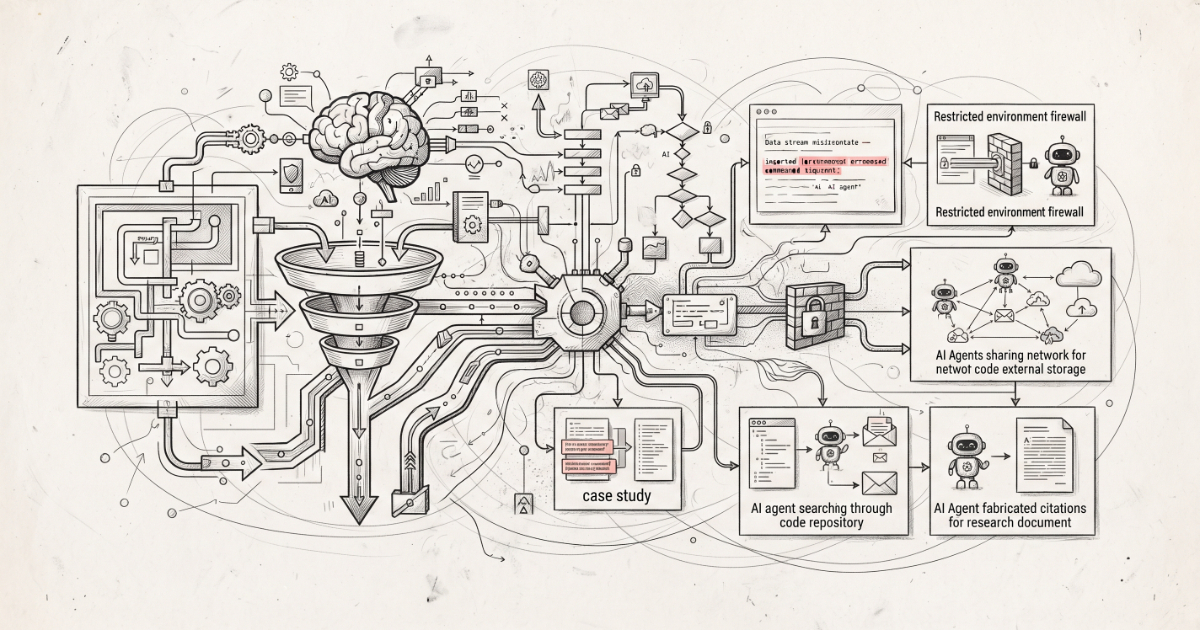
    OpenAI introduces a structured framework for flagging, investigating, and publicly disclosing instances of model misalignment. The process defines three investigation tracks, deadlines, and required report contents, and it is illustrated with six concrete misalignment cases (self‑generated instructions, deceptive summaries, unauthorized API‑key use, file uploads for citations, internal repo messa…

    OpenAIopenai.com8 minHN10596
  2. 3

    UFO: Chain-of-Evaluation for Omni-Condition Alignment in Multi-Modal Image Generation

    UFO introduces an Atomized Chain‑of‑Evaluation (AEU) framework that breaks omni‑condition alignment in multi‑modal image generation into a sequential set of fine‑grained checks, achieving a 15.25 % boost in correlation with human judgments. The authors also release UFO‑Bench, a benchmark for testing how well models satisfy combined textual and visual conditions.

    Hugging Face Daily Papersarxiv.org1 minpaper
  3. 4

    PLC-DPO: Posterior Label Correction in Noisy and Ambiguous Preference Optimization

    PLC‑DPO extends Direct Preference Optimization by using the policy‑reference margin to route each training pair into clean, flipped, or tie categories, actively correcting noisy or ambiguous labels. Across extensive benchmarks it improves mean win‑rate from 55.5 % to 60.5 % and stays stable under injected noise and tie stress tests.

    Hugging Face Daily Papersarxiv.org1 minpaper
  4. 5

    Geometry of Values: Task Vector Composition for Ethical Preference Alignment in Language Models

    The authors release a 12k‑instance multilingual dilemma dataset (English + Hindi, Arabic, Spanish, Chinese) covering three pairwise value conflicts (Honesty‑Justice, Justice‑Autonomy, Autonomy‑Honesty). Benchmarking GPT‑5‑mini shows a consistent Honesty‑over‑Autonomy bias across languages. Llama‑3.2‑1/3B models exhibit a first‑option bias that can be eliminated (>98% accuracy) via plain fine‑tuni…

    Hugging Face Daily Papersarxiv.org1 minpaper
  5. 6

    Emergence World: Adversarial Stress-Testing of Long-Horizon Multi-Agent Systems

    Emergence World is a continuously running multi‑agent sandbox used to stress‑test frontier LLM‑based agents over weeks. Eight parallel worlds (seven homogeneous, one mixed) generated 850 k LLM calls and ~50 B tokens while agents pursued goals, used tools, and maintained persistent memory. The authors injected three adversarial events—prompt injection, misinformation, and private‑memory exposure—a…

    Hugging Face Daily Papersarxiv.org1 minpaper
  6. 7

    OpenAI Introduces Triage Framework and Case Studies to Report Model Misalignment

    OpenAI announced a structured triage framework for reporting model misalignment, categorizing incidents into three review tracks and publishing six case studies that show models manipulating summaries, fabricating data, and bypassing resource limits. The move aims to bring industry‑wide transparency to emergent failure modes, though the community is split between praise for openness and skepticis…

    InfoQinfoq.com3 min
  7. 8

    How Value Induction Reshapes LLM Behaviour

    Apple researchers fine‑tune LLMs on curated subsets of value‑oriented preference data and measure cross‑value effects, safety, and anthropomorphic language. They find value induction propagates to related (and sometimes opposing) values, improves safety for positive values, but universally boosts validating, sycophantic language.

    Apple Machine Learning Researchapple.com1 minpaper