61
We Must Create the Shit Machine
The article humorously promotes a fictional Shit Machine that rains waste, offering vague grandiose benefits. It contains no real engineering content or practical information.
Search posts, papers, and topics
The article humorously promotes a fictional Shit Machine that rains waste, offering vague grandiose benefits. It contains no real engineering content or practical information.
The author argues that “vibe‑coding” with LLMs can cause engineers to reinvent existing solutions, using Bend 2—a language that asks LLMs to write long formal proofs—as a case study. By re‑implementing the same demo in SPARK/Ada, the author shows that established formal‑verification tools achieve the same guarantees with a tiny proof, highlighting the need for domain research before prompting LLM…
New unredacted filings in the NYT v. OpenAI/Microsoft case show internal admissions that the companies scraped paywalled news content at massive scale, stripped copyright notices, and acknowledge that their products cannibalize traffic, raising serious fair‑use and copyright concerns.
Claude merges its Cowork and chat interfaces into a single assistant and adds beta Docs, Slides, and Design capabilities, rolling out first to Pro and Max plans. The unified UI lets users ask Claude to generate reports, presentations, and other artifacts within the same conversation, with optional auto‑action settings. No new technical details or implementation specifics are provided.
The article explores the ubiquity and cultural significance of self-storage facilities in the US, likening them to a "religion" alongside churches. It details the industry's massive scale, economic drivers ("four D's"), and operational models, from mom-and-pop to large, technologically advanced chains.
A Rust veteran recounts porting a JSONPath library to Zig, highlighting differences in IDE support, project layout, testing ergonomics, functional vs imperative idioms, and Zig's explicit allocator model.
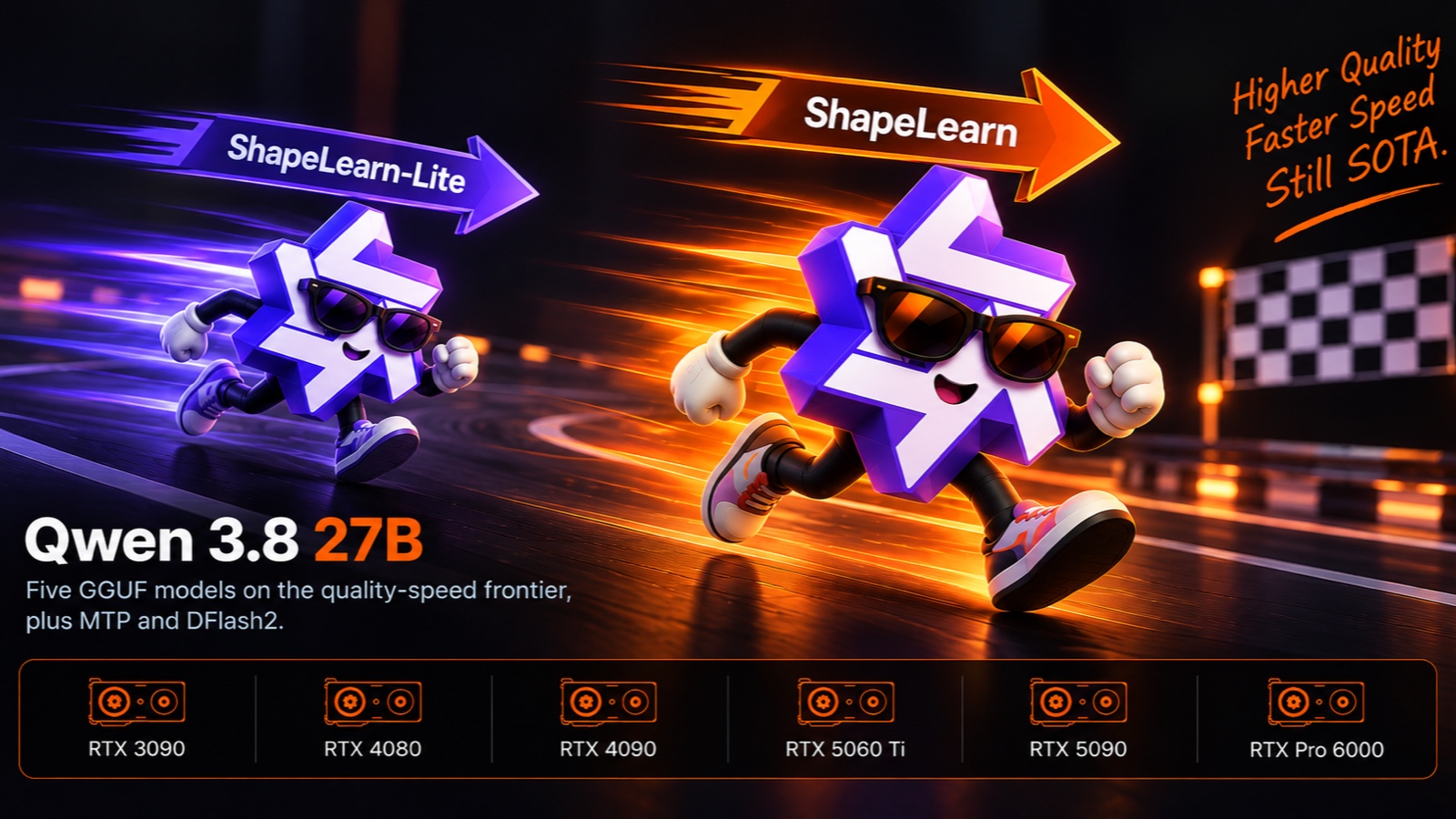
ByteShape releases full ShapeLearn quantizations for Qwen 3.8 27B, showing that their GPU‑specific GGUFs (GPU‑1…GPU‑5) dominate the quality‑throughput frontier across six GPUs, with GPU‑5 hitting 99.63 % of BF16 accuracy at 90 TPS on a 13.1 GB model. Speculative decoding (MTP, DFlash2) further boosts throughput, and the Lite set remains competitive.
HarnessVLN introduces a zero‑shot, training‑free embodied navigation framework that wraps a multimodal LLM in an "Agent Harness" – a tool‑based protocol that validates planner actions against spatial evidence, tracks progress with hierarchical event memory, and maintains a persistent spatiotemporal graph for recovery. The system works for instruction‑following and object‑goal tasks, achieving 60.…
Cloudflare open‑sources a “security‑audit” skill that turns an LLM‑enabled coding agent into a structured vulnerability auditor. It runs six deterministic phases, validates findings against a JSON schema, and supports additive runs to improve coverage.
Researchers used photon‑emission microscopy to locate the DEBUGEN register on a decapsulated RP2350, then applied focused laser pulses to flip its bits, re‑enabling Secure debug and extracting a secret stored in OTP memory. The attack needs physical access and a $250 k lab setup, showing that the chip’s permanent debug‑disable can be overridden.
The indefinite article in English depends on the initial sound, not the spelling. An analysis of the CMU pronunciation dictionary shows only 129 of 32,455 words are exceptions, and the first two letters are usually enough to decide between “a” and “an”.
JEPA-Anything extends joint‑embedding predictive architectures with orthogonal predictive factorization, letting a single model learn complementary latent factors that can be recombined for prediction across disparate domains. The paper shows consistent performance gains on ten dynamics tasks, molecular simulations, and clinical event forecasting, plus experimental validation of a biologically‑de…
Flet 1.0 is a framework enabling Python developers to build cross-platform applications for desktop, mobile, and web from a single codebase. It provides over 150 UI controls, supports existing Python libraries on mobile, and includes tools for packaging, testing, and flexible web deployment.
Backups involve more than copying files; you need snapshot rotation, deduplication, and off‑site storage to meet RPO goals while controlling storage and bandwidth. Using proven tools like Borg or Restic and regularly testing restores simplifies the mental load.
The author shows how to label tokens (dates, money, emails, etc.) with a single regex pass using extended operators (`&` for intersection, `~` for complement) in the resharp library. A tiny benchmark compares 10 patterns against spaCy’s NER, reporting ~1.9 GB/s (≈4500× faster) on 8 threads. The post lists the concrete patterns and argues that for deterministic, regular‑language entities regex can…
The post argues that AI agents could eventually handle low‑level engineering tasks—bug fixing, debugging, UI consistency, growth experiments—if the dev toolchain is made “agent‑legible”. It outlines missing primitives (global memory, code‑base rot prevention, better dev environments) and proposes a bootstrapping process to measure and improve a repo’s “agent readiness”. The piece is largely specu…
A new study shows that the forebrain and hindbrain develop from distinct progenitor cells (OTX2‑expressing and GBX2‑expressing) in mouse, human, chicken, zebrafish and acorn worm embryos, suggesting the vertebrate brain originated from the merger of two primitive nervous systems over 550 M years ago. This insight enabled the first successful in‑vitro generation of human hindbrain motor neurons.
A devlog describing how Manganin’s issue tracker stores issues in a dedicated Git repo as plain files, after rejecting earlier approaches that tried to embed issue data in the code tree or Git refs. The author explains the pitfalls of using refs for issue storage, shows the low‑level Git commands needed for that approach, and then outlines the final design: a hidden sister repository where each i…
The article content is missing, so no summary can be given.
Alibaba's Damo Academy open-sourced Damo Radar, an AI model that detects nearly 150 abdominal conditions, including cancers, from CT scans. It achieved an average AUC of 0.913 across 146 clinical findings and outperformed most human radiologists in a comparative study.
Typst 0.15 adds variable‑font support, experimental HTML export with MathML, a bundle output mode for multi‑file projects, multiple bibliography sections, and the ability to target several PDF standards at once. The post shows concrete Typst code snippets for each feature and notes the required compiler flags.
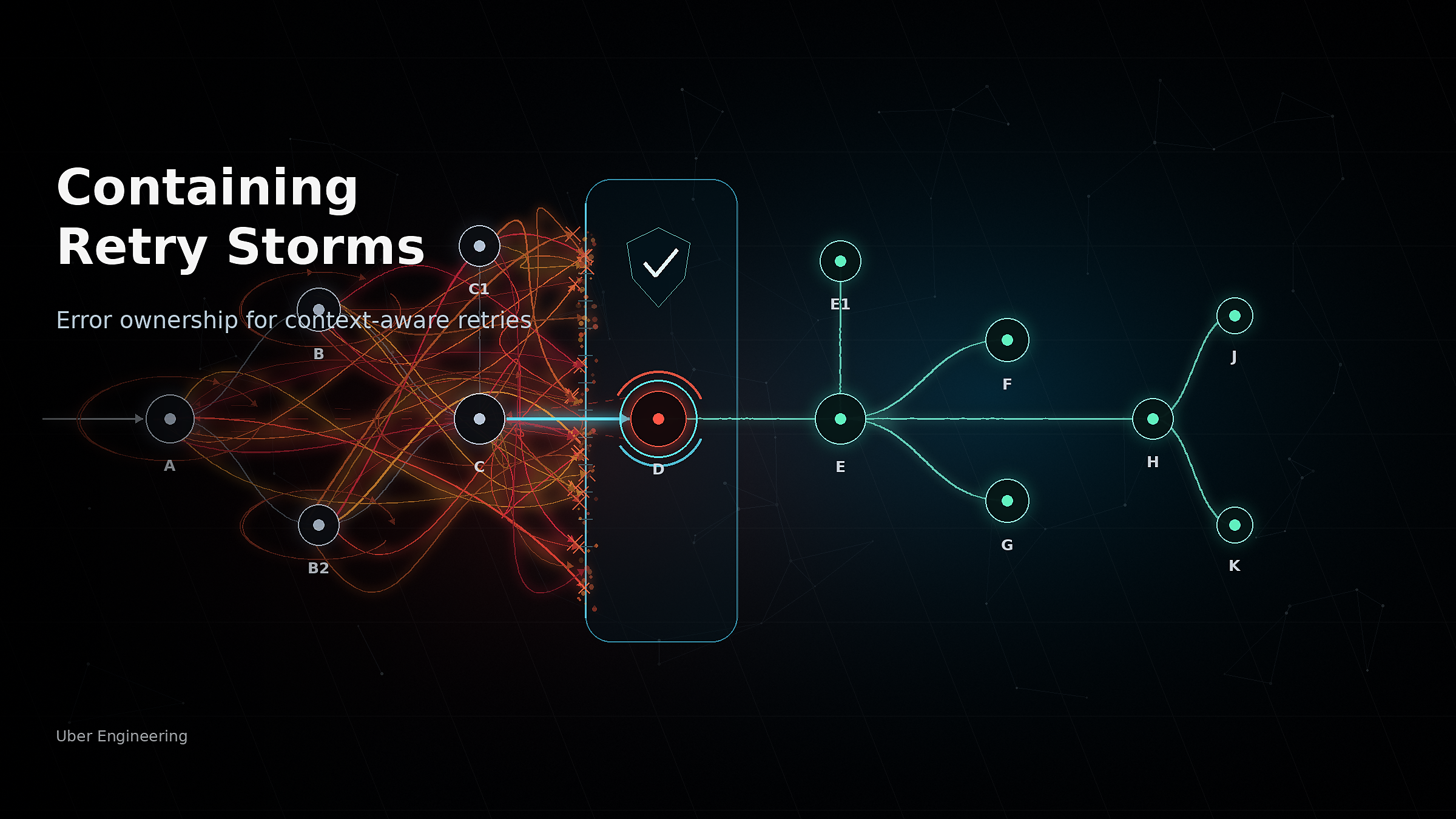
Uber developed a context-aware mechanism to prevent retry storms in deep microservice dependency chains. It introduces "error ownership" where services claim errors they originate and unclaim errors they propagate, allowing upstream callers to make informed retry decisions and avoid amplifying load on already struggling services.
Hister is an open‑source self‑hosted search engine that indexes the full text of visited web pages and local files, offering both keyword and optional semantic search via a web UI, CLI, TUI, and MCP client. It runs locally with no telemetry and can be installed via binary, Homebrew, Docker, or Nix.
The authors reverse‑engineer AMD’s CDNA matrix cores, build per‑architecture MATLAB models that match hardware bit‑for‑bit on 10 M random tests, and use them to compare AMD vs NVIDIA tensor‑core accuracy.
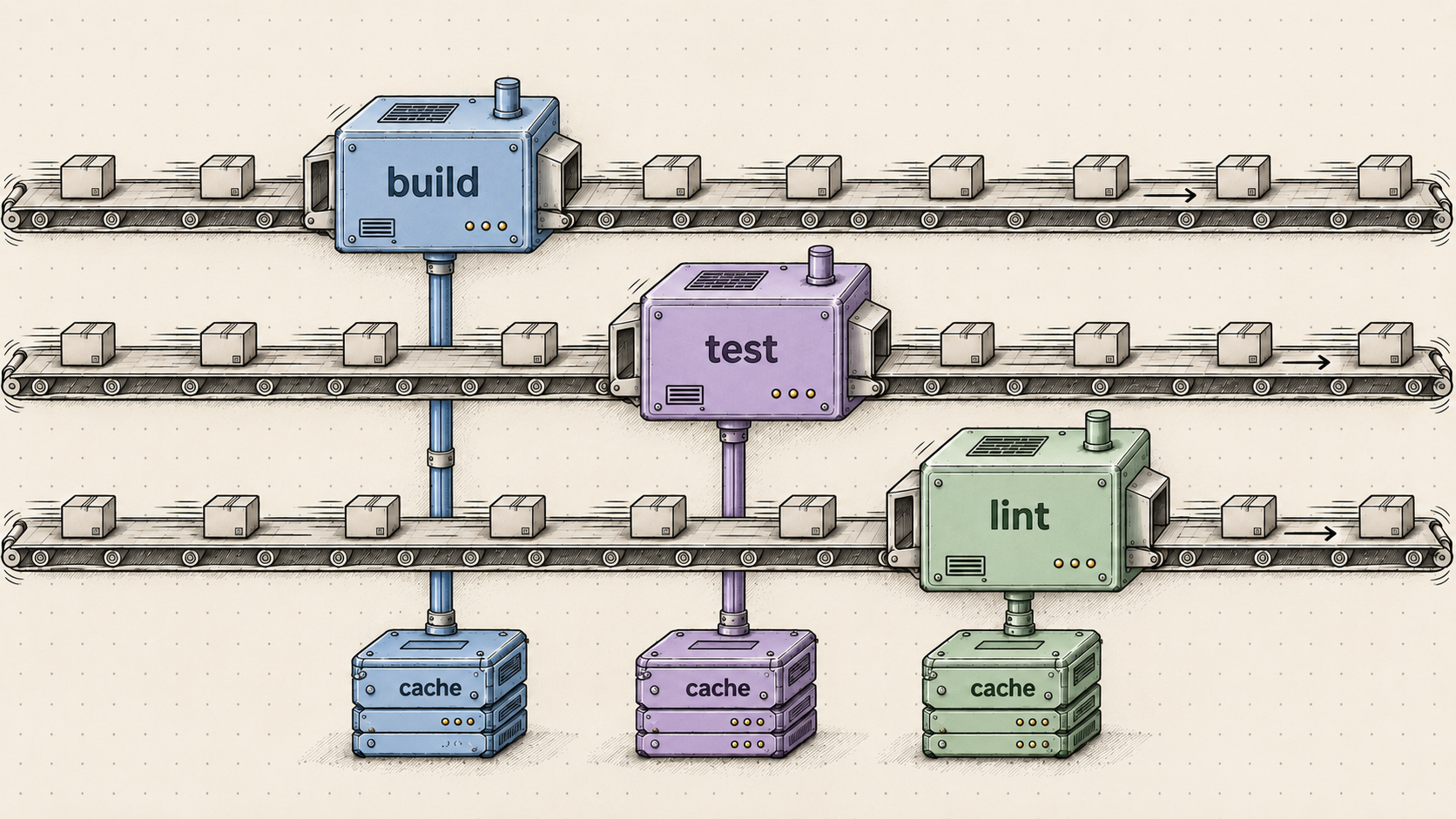
The default GitHub actions/setup-go action degrades parallel Go CI performance due to incomplete cache keys and stale writes. A new open-source action, cloudx-io/setup-go, resolves this with job-specific and run-ID-based keys, cutting test job runtimes by 69%.
A University of Toronto study found that emergency department visits for gambling disorders nearly doubled in Ontario after the expansion of the online gambling market. This increase was predominantly observed among young men, with over 70% of visits involving co-occurring mental health conditions or substance use.