proomt

Search

Search posts, papers, and topics

All posts

.NETDaniel Roth5 min readrelease notesintermediate
AG-UI Protocol now has a first-class .NET SDK

Summary

The AG-UI protocol standardizes how AI agents communicate with user interfaces by streaming typed events. A new .NET SDK allows any .NET service to natively produce and consume these AG-UI events, enabling seamless cross-language interoperability between agents and UIs.

  • AG-UI standardizes agent-user communication via streamed, typed events (e.g., RUN_STARTED, TEXT_MESSAGE_CONTENT) for agent lifecycle and state.
  • The .NET SDK enables any .NET service to act as an AG-UI server or client, integrating with the `Microsoft.Extensions.AI.IChatClient` abstraction.
  • It supports interoperability, allowing .NET backends to work with clients or agents built using TypeScript or Python SDKs.
  • The SDK handles protocol details, letting developers focus on agent logic, and supports various client surfaces (web, terminal, mobile).

Developers building AI agents in .NET can now easily standardize their agent-UI communication, enabling cross-language interoperability and flexible frontend integration without custom boilerplate.

6/10
Related reading

  1. Build Agentic UI with the new Blazor AI components

    The new experimental Blazor AI components provide building blocks for "Agentic UI," enabling developers to integrate AI agent interactions into Blazor applications. They offer components and a state model to render streamed agent output, tool calls, and shared application state.

    .NETmicrosoft.com11 min
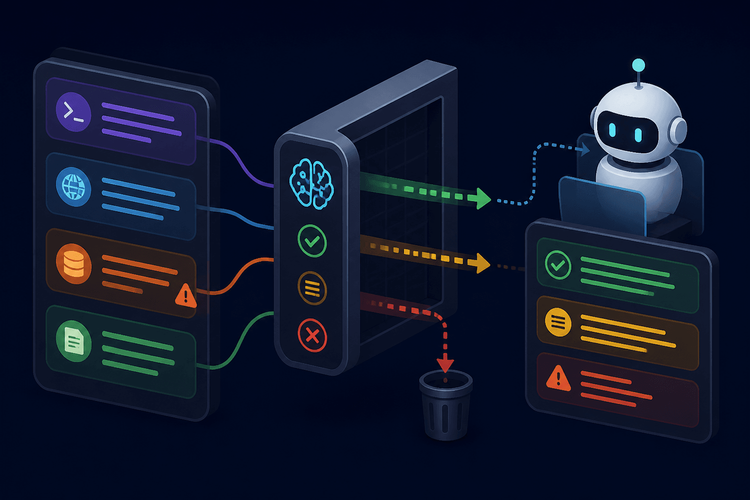
  2. Build a Typed Context Compaction Gate for AI Agents

    A step‑by‑step tutorial showing how to build a typed context‑compaction gate for AI agents in TypeScript using LangChain and Zod. It defines a discriminated‑union schema for keep/summarize/discard actions, implements a fast gpt‑4o‑mini classifier, validates decisions at runtime, and wires the gate as middleware in an agent loop, with testing and production‑grade tuning advice.

    SitePointsitepoint.com16 min
  3. Cloudflare Introduces the Agent Development Lifecycle to Replace Traditional SDLC

    Cloudflare’s Agent Development Lifecycle (ADLC) replaces the classic SDLC with an autonomous, event‑driven workflow system that lets AI agents handle code generation, testing, deployment, and maintenance. The platform builds on Cloudflare Workflows and the new @cloudflare/ci library to spin up containers, run headless browsers, and chain steps with caching and credential support. Observability is…

    InfoQinfoq.com2 min