SitePointTechPanda8 min readintermediate
**Data-Driven vs Event-Driven Architecture: How to Pick the Right One**
Summary
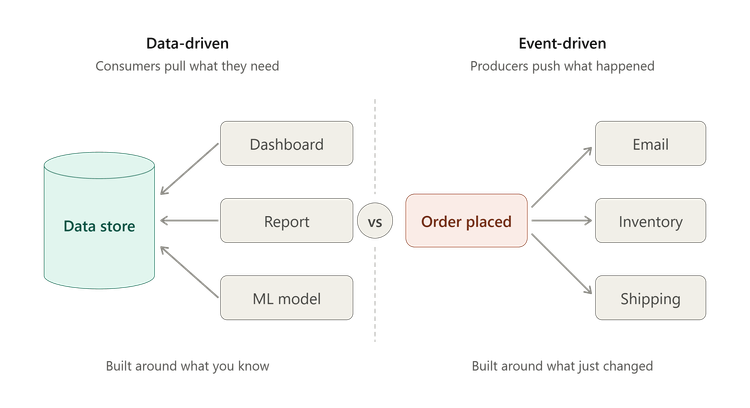
This article differentiates data-driven and event-driven architectures, explaining that data-driven focuses on state for analysis, while event-driven focuses on changes for real-time reactions. It provides clear use cases and trade-offs for each, emphasizing that they often complement each other in complex systems.
- Data-driven architecture centers on a shared data store for analysis and reporting, often using scheduled jobs or queries.
- Event-driven architecture reacts to "what just happened" via events, enabling real-time responses and loose coupling between services.
- Data-driven is simpler to start but can lead to bottlenecks; event-driven offers flexibility but adds complexity (e.g., debugging, consistency).
- Choose data-driven for analytics, ML, and simple apps; choose event-driven for real-time features, microservices, and complex workflows.
Engineers designing new systems or evolving existing ones need to understand these fundamental architectural patterns to make informed decisions about scalability, responsiveness, and complexity.
6/10