proomt

Search

Search posts, papers, and topics

All posts

LobstersMartin Fowler: 17 Sep 20262 min readintro

I Don't Like LLMs

Summary

Martin Fowler shares a personal, skeptical take on LLMs, noting their usefulness but criticizing their hallucinations, cultural bias, and the discomfort of interacting with them as if they were human.

  • LLMs can be helpful but often produce confident but incorrect answers (hallucinations).
  • The author worries about cultural and ethical biases embedded in LLMs from their creators.
  • He argues that avoiding LLMs is not practical; responsible use is required despite personal dislike.

Understanding the human‑centric concerns around LLMs helps teams anticipate trust, bias, and adoption challenges when integrating these models into software workflows.

3/10

Related reading

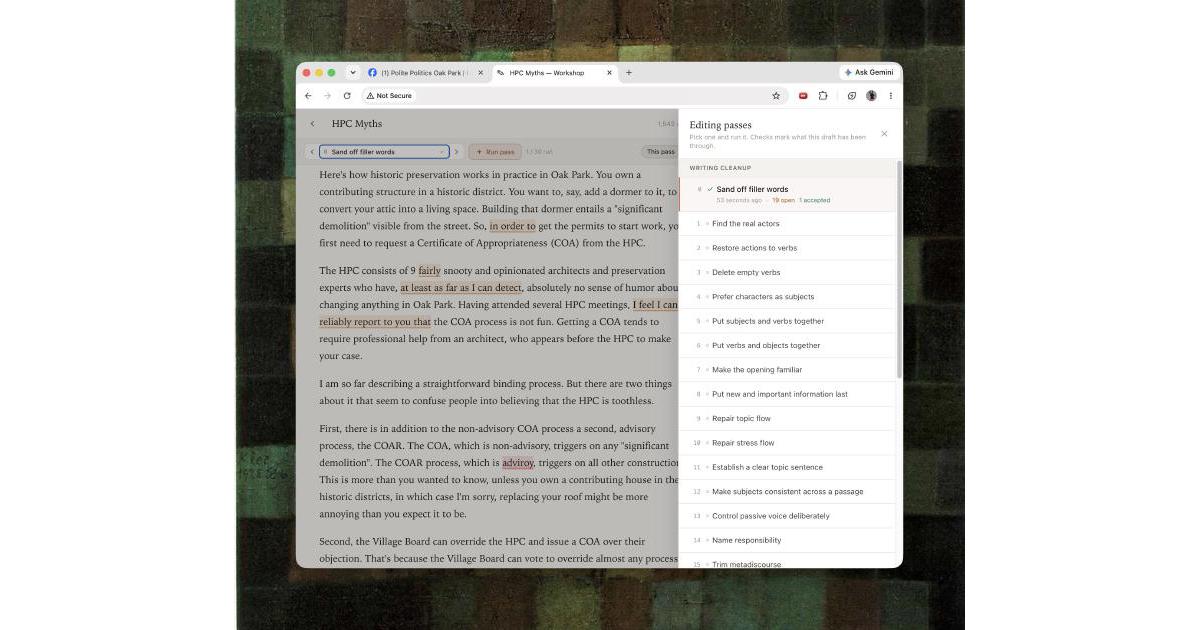
  1. How To Write With An LLM

    Simon Willison argues that LLMs should be used as copyeditors, not as writers, and proposes a strict rule never to reuse any phrase they suggest. He shares a prompt for building a personal LLM proofreading tool.

    Simon Willisonsimonwillison.net1 min
  2. How Value Induction Reshapes LLM Behaviour

    Apple researchers fine‑tune LLMs on curated subsets of value‑oriented preference data and measure cross‑value effects, safety, and anthropomorphic language. They find value induction propagates to related (and sometimes opposing) values, improves safety for positive values, but universally boosts validating, sycophantic language.

    Apple Machine Learning Researchapple.com1 minpaper
  3. Verifiable Social Reasoning for LLM Assistants

    The paper introduces Fuse, a multi‑agent simulation that gives LLM assistants a verifiable ground‑truth task for social reasoning by hiding a target agent’s motive and letting a user‑mediated conversation infer it. Experiments on 12 LLMs show user mediation makes reasoning harder, models are biased by user framing, need more detail than humans, and longer chats don’t always help.

    Hugging Face Daily Papersarxiv.org1 minpaper
  4. How to Write with an LLM

    The post proposes a two‑rule workflow for using LLMs as copy‑editors rather than ghostwriters: never adopt a phrase the model suggests, and block its encouragement feedback. It then shows how to automate iterative copy‑editing with a small Python/HTMX/Tailwind app and a set of concrete prompts.

    Hacker News front pagesockpuppet.org6 minHN712401