proomt

Search

Search posts, papers, and topics

All posts

DatadogDom Nguyen, Doug Gunter5 min readintermediate
Manage Cursor costs with Datadog Cloud Cost Management

Summary

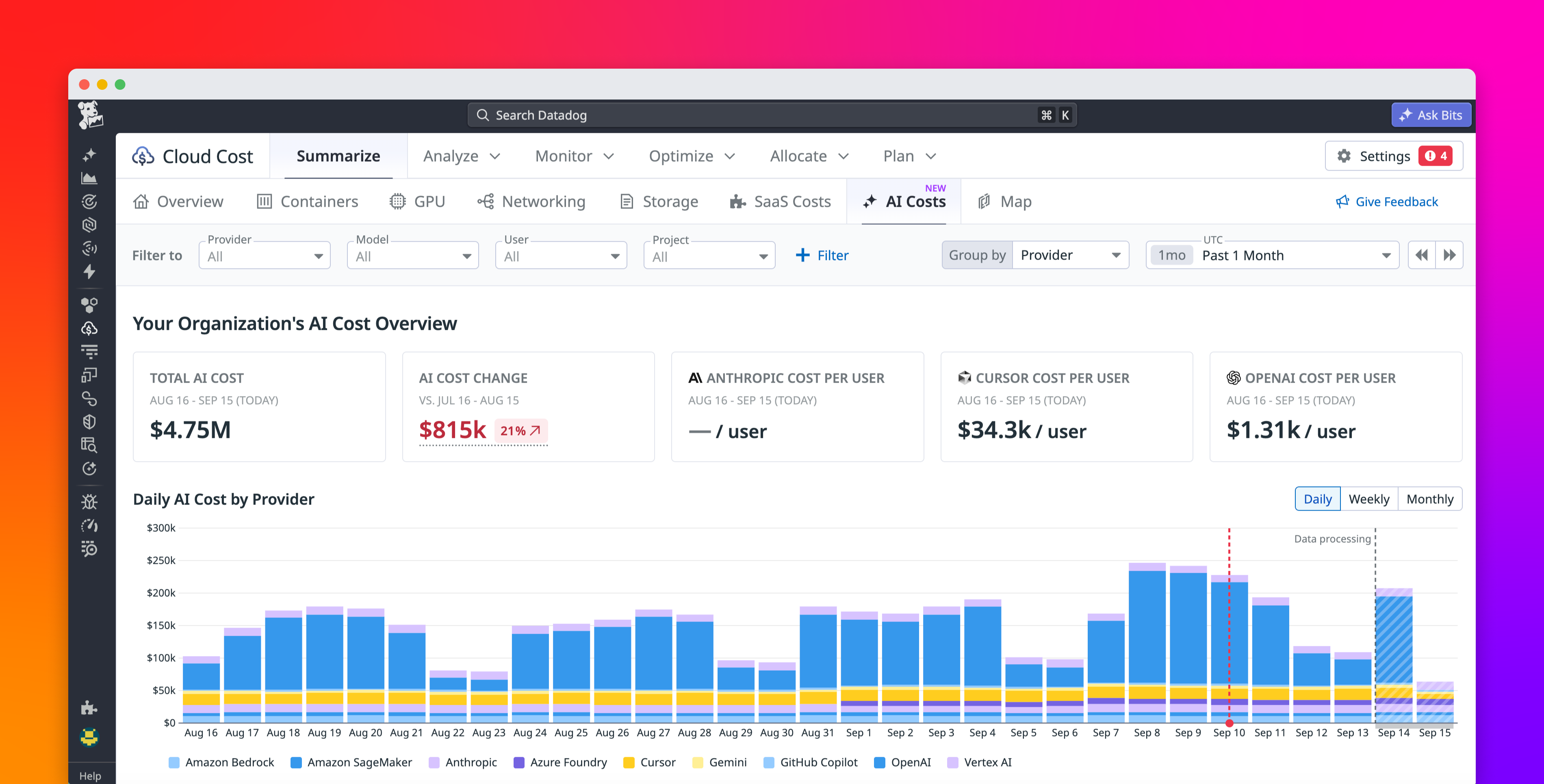
Datadog Cloud Cost Management now integrates Cursor AI‑coding usage, exposing per‑user, per‑model, and mode breakdowns, out‑of‑the‑box dashboards, anomaly detection, and budget/monitoring tools so FinOps can track and control AI coding spend alongside other cloud and SaaS costs.

  • Cursor costs appear in the AI Costs tab and can be filtered by model, user, Max Mode, headless mode, and billing group.
  • Pre‑built dashboard shows usage changes, budget consumption, efficiency metrics (acceptance rate, cost per accepted line, etc.).
  • Cost anomalies are automatically surfaced with duration, affected dimension, and expected vs actual spend; Bits chat can run root‑cause analysis.
  • Monitors and budgets can be created for total Cursor spend, specific billing groups, or Max Mode surcharges to prevent overruns.

AI‑coding assistants like Cursor are becoming a non‑trivial line item in engineering budgets. Without granular visibility, FinOps teams struggle to attribute spend, detect spikes, or optimize usage. Datadog’s integration surfaces the data needed to turn AI spend into a first‑class cost object, enab…

5/10
Related reading

  1. Grok 4.7

    xAI announced Grok 4.7, a new LLM for coding and knowledge work. The post claims it’s twice as fast and half the price of comparable models, and shows a CursorBench 4.0 chart with a 46.3 % “Extra High” score at $6.01 average cost per task. No architecture details, training data, or engineering rationale are provided.

    Hacker News front pagex.ai2 minreleaseHN519440
  2. From alert to resolution: Manage incidents with Bits Chat in Slack

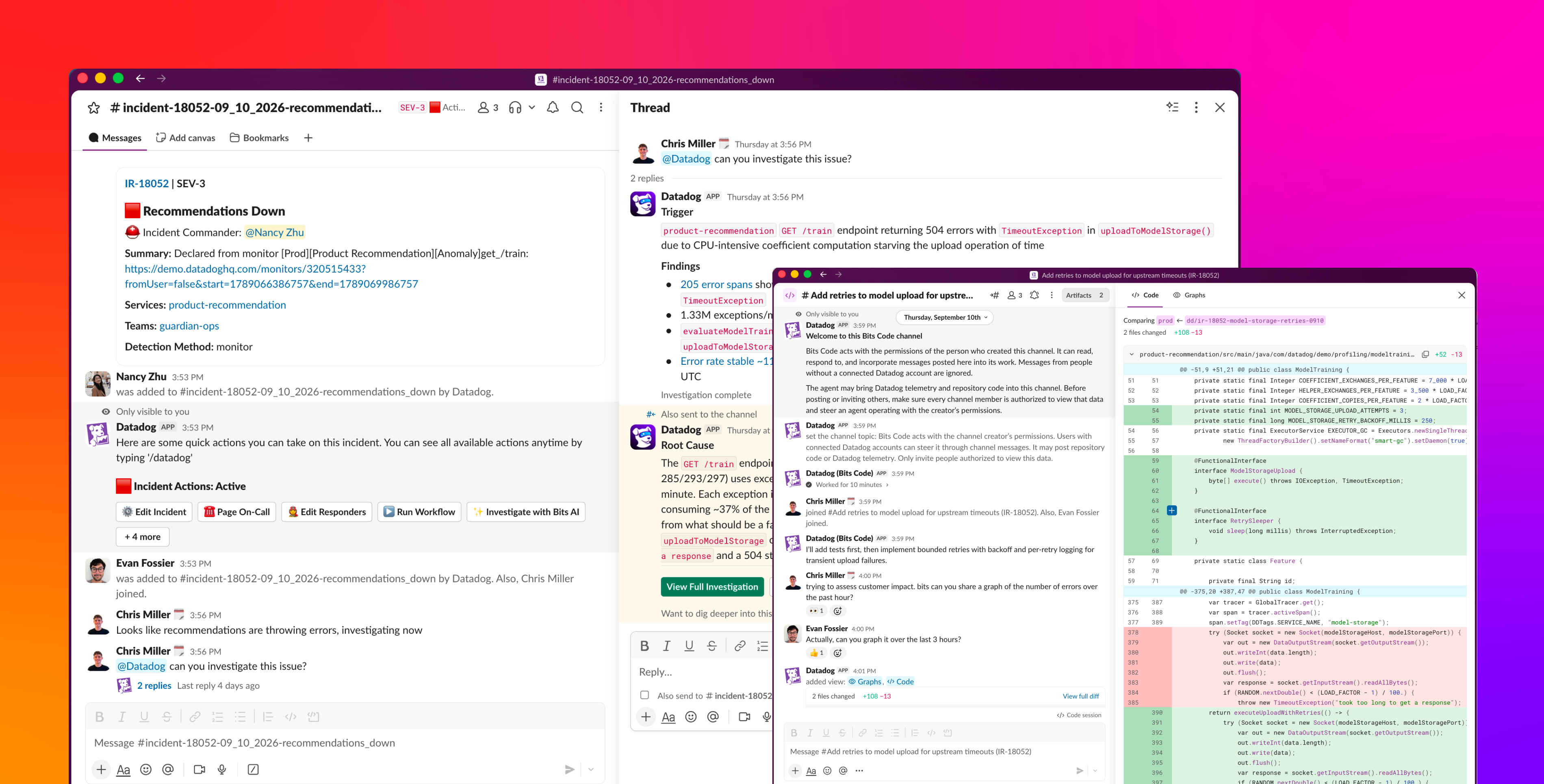
    Datadog’s Bits Chat adds a natural‑language interface to Slack, letting responders start investigations, get root‑cause analysis, generate code fixes, and close incidents without leaving the channel. The post walks through a sample e‑commerce outage to show the end‑to‑end workflow.

    Datadogdatadoghq.com4 min
  3. CloudBees vs Harness: Why Migration Isn't the Fix

    The article argues that Harness’s “free migration” offer hides significant downstream costs (training, pipeline rebuilds, compliance recertification) and that even after migration you still lack unified governance across heterogeneous CI/CD tools. CloudBees positions its Unify control plane as a tool‑agnostic layer that adds visibility, continuous governance, AI‑driven test selection, and hybrid…

    Codeshipcloudbees.com5 min
  4. Server Monitoring in the age of AI: What static thresholds miss and how adaptive monitoring fixes it?

    Static CPU/memory thresholds generate noise because workloads vary by time‑of‑day, day‑of‑week, and long‑term trends. Adaptive monitoring learns per‑server baselines (using simple ML on historic metrics) and creates dynamic thresholds plus anomaly alerts. ManageEngine OpManager’s Zia engine is presented as a turnkey AIOps solution that auto‑learns baselines, lets you set sensitivity, and adds ale…

    SitePointsitepoint.com6 min
  5. Blog: How to Build a DevOps Agent

    This blog walks through the open‑source DevOps Agent Kit, which lets Claude Code or Cursor act as a DevOps assistant by connecting to CloudBees Unify, Jira, and Slack via MCP servers and to GitHub via the CLI. It provides a repeatable setup (Docker, Node, env file) and seven slash commands for pipeline overview, triage, security, release readiness, flag management, CI health scoring, and Jira tic…

    Codeshipcloudbees.com10 min