proomt

Search

Search posts, papers, and topics

All posts

Stack OverflowPhoebe Sajor1 min readintro

The AI magic words

Summary

The Stack Overflow Podcast interview with Tim O'Reilly discusses books as knowledge interfaces, the concept of "magic words" for prompting AI, and the rising value of human curation. It offers high‑level observations but no concrete engineering guidance.

  • Tim O'Reilly frames books as user interfaces to knowledge, suggesting they shape how we interact with information.
  • He argues that carefully chosen "magic words" can coax better responses from AI models.
  • He claims human taste will become a scarce commodity as knowledge is commodified.

Engineers interested in prompt engineering and AI knowledge consumption should note the emphasis on phrasing and human curation as emerging factors.

2/10

Related reading

  1. Article: Your Next DSL Author Is a Language Model

    Typed Domain Grounding (TDG) embeds a DSL inside a mainstream language the LLM already knows (e.g., Kotlin) and uses the host compiler as an oracle. The author describes five building blocks—embedding, choosing a host language with high training‑data frequency, compiler‑driven type safety, a generate‑compile‑repair loop, and an on‑demand teaching tool—and shows measured results from kUML, a Kotli…

    InfoQinfoq.com18 min
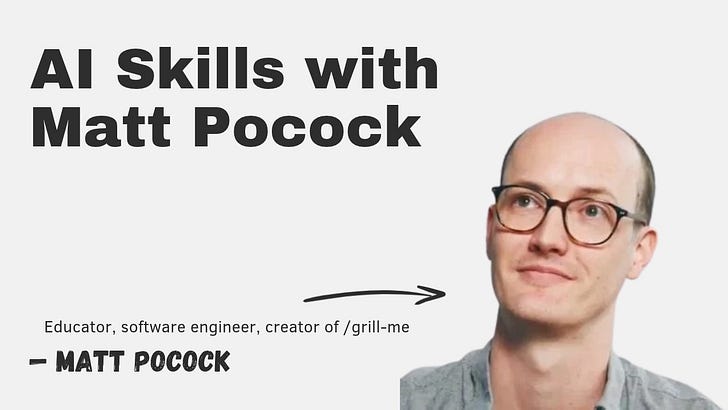
  2. AI Skills with Matt Pocock

    Matt Pocock explains how he uses AI agents for software development, emphasizing "strategic programming" and guiding agents with "leading words" from classic engineering texts. He argues that this approach makes engineering fundamentals more critical than ever for creating agent-optimized codebases.

    The Pragmatic Engineerpragmaticengineer.com7 min
  3. Article: Beyond Relevance: A Governance-First Architecture for Enterprise Personalization

    The article proposes a governance‑first architecture for enterprise personalization, where policy‑driven steps (memory, journey graph, AI routing, scoring, trust checks, outcome simulation) shape the recommendation before it is returned. A reference FastAPI implementation demonstrates the pattern with external YAML policies and optional LLM assistance.

    InfoQinfoq.com19 min
  4. Use Curiosity, Craft, and Care to Decide What AI Should Write

    The post proposes a three‑principle framework—Curiosity, Craft, and Care—to decide how much AI should author each artifact in a software development workflow. It argues that AI can be used aggressively for exploratory, disposable outputs (Curiosity) but should be limited for artifacts that commit the team to decisions (Craft) and for communications that require personal ownership (Care). The auth…

    Atomic Objectatomicobject.com4 min