proomt

Search

Search posts, papers, and topics

observability

RSS
  1. 61

    The Flaky Test Confession: “We All Know We’re Ignoring Test Failures”

    Flaky tests silently erode CI reliability, waste compute and developer time, and let real bugs slip into production. The post quantifies the cost (≈2.5 % of developer time, $5.67 per manual investigation vs $0.02 for auto‑rerun) and critiques common band‑aid approaches (retries, quarantine, manual triage). It argues that visibility—detecting flaky tests, predictive test selection, and automated t…

    Codeshipcloudbees.com5 min
  2. 63

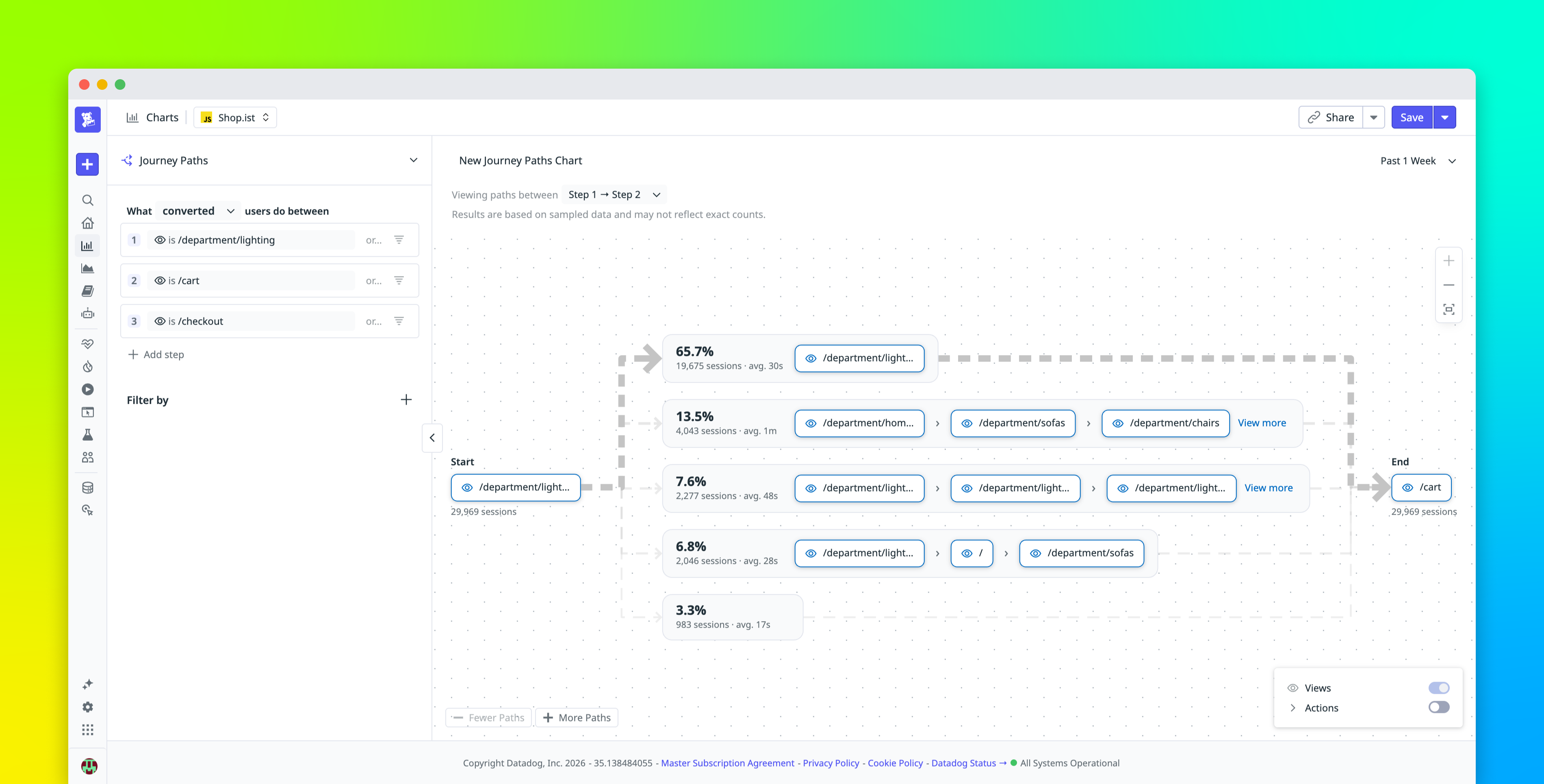
    Understand the top paths users take to convert or drop off with Journey Paths

    Datadog’s Journey Paths visualizes the most common sequences users follow through a defined flow, letting you rank converted vs. dropped‑off paths, spot detours or dead ends, and drill into the underlying user segments with Conversion Analysis, Session Replay, and RUM. It’s a UI‑level feature that augments funnel percentages with concrete path data, but the post offers no implementation details o…

    Datadogdatadoghq.com4 min
  3. 64

    Who Owns AI-Generated Code Failures?

    AI‑generated code breaks the traditional chain of ownership: developers merge PRs they didn’t write, reviewers approve logic they didn’t originate, and QA validates tests chosen by a model. A CloudBees survey shows 81% of firms see more production failures from AI code, and accountability often drifts upward to CTO/VP. The post argues role‑based accountability isn’t enough; you need end‑to‑end tr…

    Codeshipcloudbees.com4 min
  4. 65

    Health Check-up for Your Jenkins

    Kohsuke Kawaguchi outlines a few low‑effort ways to keep a Jenkins instance healthy: use jconsole to watch old‑gen heap usage, the Monitoring plugin (or Nagios) to record HTTP latency and queue length, inspect thread dumps for slow pages, and review the built‑in load chart to spot agent under‑/over‑utilisation.

    Codeshipcloudbees.com3 min
  5. 66

    Everything is green. Nothing is ready.

    CloudBees Unify is a control‑plane layer that aggregates data from existing CI/CD, security, and release tools to give a single delivery record. It claims to improve test efficiency (98 → 30 min) and enforce governance policies across pipelines, with an AI assistant for incident triage. The post is a product‑focused webinar recap with limited technical depth.

    Codeshipcloudbees.com5 min
  6. 68

    Deployments now show billable duration and CPU minutes

    Vercel added billable duration and CPU‑minutes metrics to deployment views (dashboard, `vc inspect`, and REST API). Billable duration = build + post‑build time rounded up to the next minute; CPU minutes = billable duration × vCPU count. CLI v59.23.1+ shows a breakdown (e.g., 5m 9s build, 3m 21s post‑build → 9 min billable → 270 CPU‑minutes on a 30 vCPU machine).

    Vercelvercel.com1 minrelease
  7. 69

    KubeCon + CloudNativeCon North America 2026: Your Week in Salt Lake City

    KubeCon + CloudNativeCon NA 2026 runs Nov 9‑12 in Salt Lake City, offering four days of keynotes, breakout sessions, maintainer tracks, and co‑located events covering Kubernetes, AI, observability, security, and platform engineering. In‑person attendance (All‑Access Pass) is needed for hands‑on ContribFests and CNCF‑hosted events; recordings will be posted later.

    CNCFcncf.io6 min
  8. 71

    Five CI Tools, One Control Plane: Finally Answer “What’s Going On?”

    CloudBees Unify is a control‑plane overlay that connects existing CI tools (GitHub Actions, Jenkins, GitLab, Bitbucket, CloudBees CI) to provide a single dashboard, centralized policy enforcement, audit trails, and artifact lineage without requiring migration of pipelines. The post outlines a 30‑60‑90‑day rollout plan and the expected benefits for platform teams.

    Codeshipcloudbees.com3 min
  9. 72

    Introducing AI First Responder: The Next Step in CloudBees’ AI Journey

    CloudBees announced AI First Responder (AIFR), an AI‑powered incident‑triage assistant that lives in Slack and leverages the CloudBees Unify control plane and its knowledge graph. AIFR claims to summarize logs, suggest root causes, and optionally trigger GitOps remediation, all while logging actions for governance. The feature is in limited preview and available to a design‑partner program.

    Codeshipcloudbees.com2 minrelease