proomt

Search

Search posts, papers, and topics

All posts

SitePoint3 min readintro

Your REST APIs are not the problem, but your monitoring strategy might be

Summary

Most API monitoring only checks HTTP status, missing content and workflow errors. The article urges field‑level validation, chained‑call testing, and multi‑region checks to catch silent failures.

  • Status‑code‑only checks can't detect bad payloads, expired tokens, or empty data.
  • Validate response fields against schemas on every check to ensure data quality.
  • Test chained API workflows with real parameters to catch downstream breakage.
  • Run monitors from multiple geographic locations to surface region‑specific latency or failures.

Engineers responsible for API reliability should care because silent content errors can break user flows despite a green status‑code dashboard.

3/10

Related reading

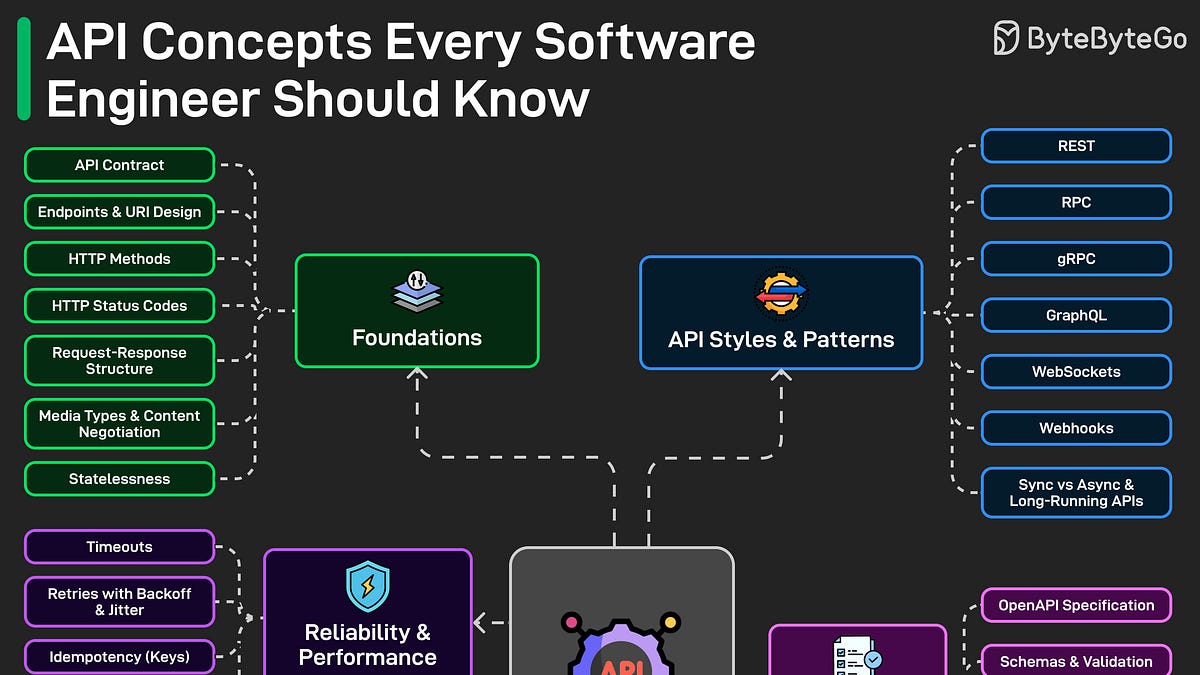
  1. EP226: API Concepts Every Software Engineer Should Know

    This article outlines essential API design considerations, covering HTTP fundamentals, architectural styles like REST and GraphQL, and critical aspects such as naming, versioning, security, and reliability. It serves as a high-level checklist for engineers designing or consuming APIs.

    ByteByteGobytebytego.com5 min
  2. Health Check-up for Your Jenkins

    Kohsuke Kawaguchi outlines a few low‑effort ways to keep a Jenkins instance healthy: use jconsole to watch old‑gen heap usage, the Monitoring plugin (or Nagios) to record HTTP latency and queue length, inspect thread dumps for slow pages, and review the built‑in load chart to spot agent under‑/over‑utilisation.

    Codeshipcloudbees.com3 min
  3. Best practices for handling cloud reliability incidents

    The article outlines a structured Verify→Investigate→Report→Resolve→Review workflow for GCP reliability incidents and stresses pre‑incident preparation across design, data, playbooks, and training. It lists concrete tools (Cloud Logging, Service Health, Gemini Assist) and reporting steps to help engineers reduce outage impact.

    Google Cloud Bloggoogle.com11 min
  4. Server Monitoring in the age of AI: What static thresholds miss and how adaptive monitoring fixes it?

    Static CPU/memory thresholds generate noise because workloads vary by time‑of‑day, day‑of‑week, and long‑term trends. Adaptive monitoring learns per‑server baselines (using simple ML on historic metrics) and creates dynamic thresholds plus anomaly alerts. ManageEngine OpManager’s Zia engine is presented as a turnkey AIOps solution that auto‑learns baselines, lets you set sensitivity, and adds ale…

    SitePointsitepoint.com6 min
  5. 6 Ways Traditional API Design Has Changed Forever

    API design is shifting from human‑centric, resource‑based REST toward machine‑friendly, capability‑oriented interfaces as AI agents become major consumers. This drives changes in rate limiting, just‑in‑time security, system‑wide reliability, and regulatory compliance.

    Nordic APIsnordicapis.com6 min