proomt

Search

Search posts, papers, and topics

All posts

HoneycombKale Bogdanovs9 min readintermediate
7 Best Datadog Alternatives for AI and Agent Observability

Summary

The article compares seven Datadog alternatives for AI and agent observability, focusing on investigation capabilities, telemetry economics, and OpenTelemetry support. It highlights Honeycomb’s event model, pricing model, and a case study showing 50% cost savings.

  • Honeycomb's event model lets you query high-cardinality fields without predefining dimensions, aiding AI agent debugging.
  • Pricing is based on event volume with unlimited custom fields, offering cost predictability as telemetry scales.
  • OpenTelemetry support enables portable instrumentation and exporting to multiple backends.
  • Birdie's switch from Datadog to Honeycomb saved ~50% on observability spend and reduced root‑cause time to ~5 minutes.

Teams building AI‑powered services should read this to compare observability platforms on cost, investigation depth, and OpenTelemetry portability.

5/10

Related reading

  1. Modernizing the Trade Lifecycle With Governed Data and AI

    Databricks argues that modernizing the trade lifecycle now hinges on building a governed, real‑time data foundation that spans research, trading, risk, ops and compliance, rather than isolated AI pilots. Starting with a few high‑value questions—execution cost, shock risk, exception rates—and using Unity Catalog and Agent Bricks lets firms achieve measurable speed and auditability gains before sca…

    Databricksdatabricks.com5 min
  2. Transform and route security logs to Microsoft Sentinel tables using Observability Pipelines

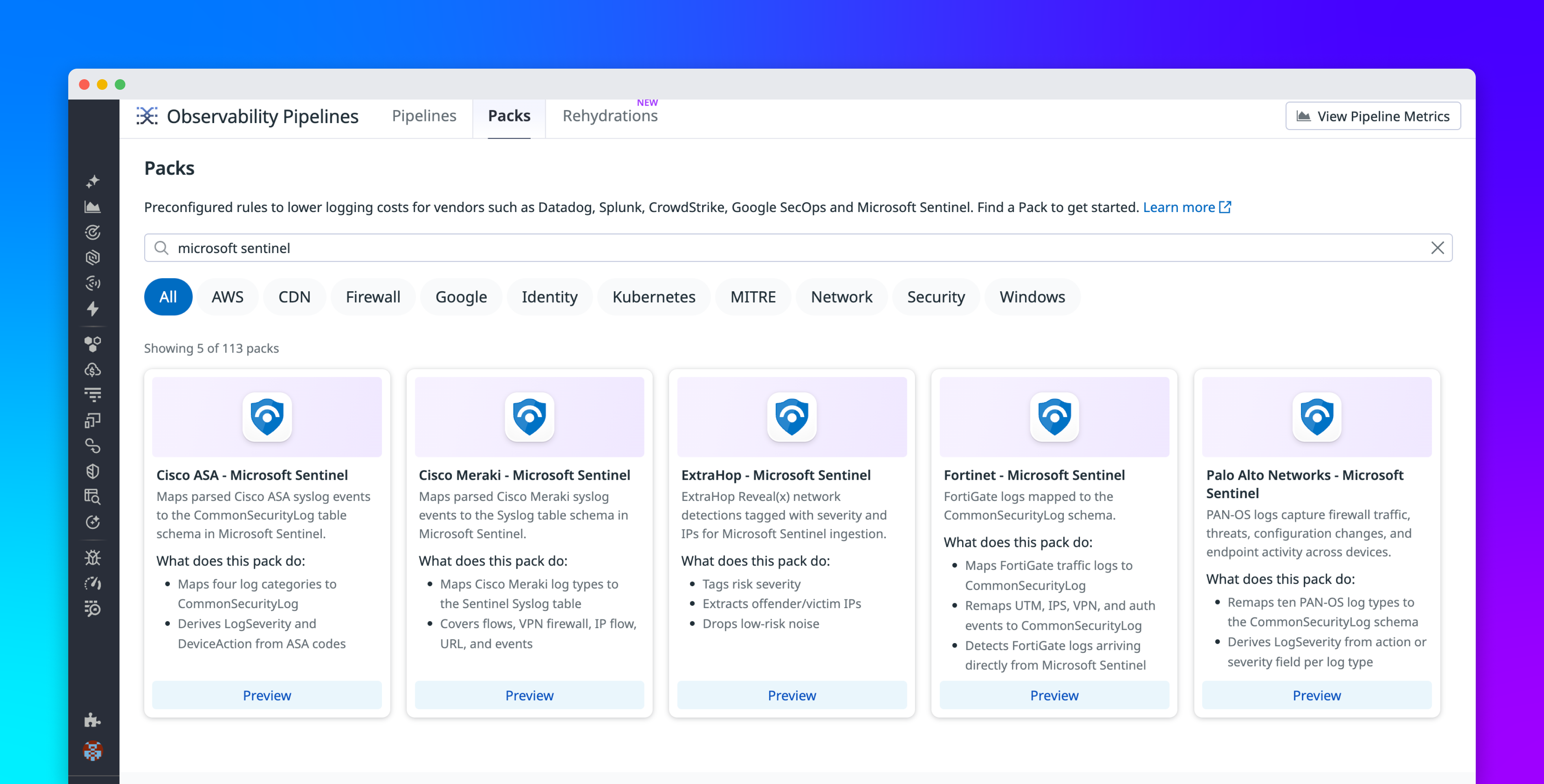
    Datadog Observability Pipelines now ships pre‑built Microsoft Sentinel Packs that map logs from Palo Alto, Fortinet, Cisco ASA, Cisco Meraki, and ExtraHop into Sentinel’s CommonSecurityLog or Syslog tables. Packs handle field extraction, severity derivation, and device‑action mapping, letting you filter or drop low‑value events before ingest, validate mappings with Live Capture, and reduce per‑GB…

    Datadogdatadoghq.com5 min
  3. Server Monitoring in the age of AI: What static thresholds miss and how adaptive monitoring fixes it?

    Static CPU/memory thresholds generate noise because workloads vary by time‑of‑day, day‑of‑week, and long‑term trends. Adaptive monitoring learns per‑server baselines (using simple ML on historic metrics) and creates dynamic thresholds plus anomaly alerts. ManageEngine OpManager’s Zia engine is presented as a turnkey AIOps solution that auto‑learns baselines, lets you set sensitivity, and adds ale…

    SitePointsitepoint.com6 min
  4. Manage Cursor costs with Datadog Cloud Cost Management

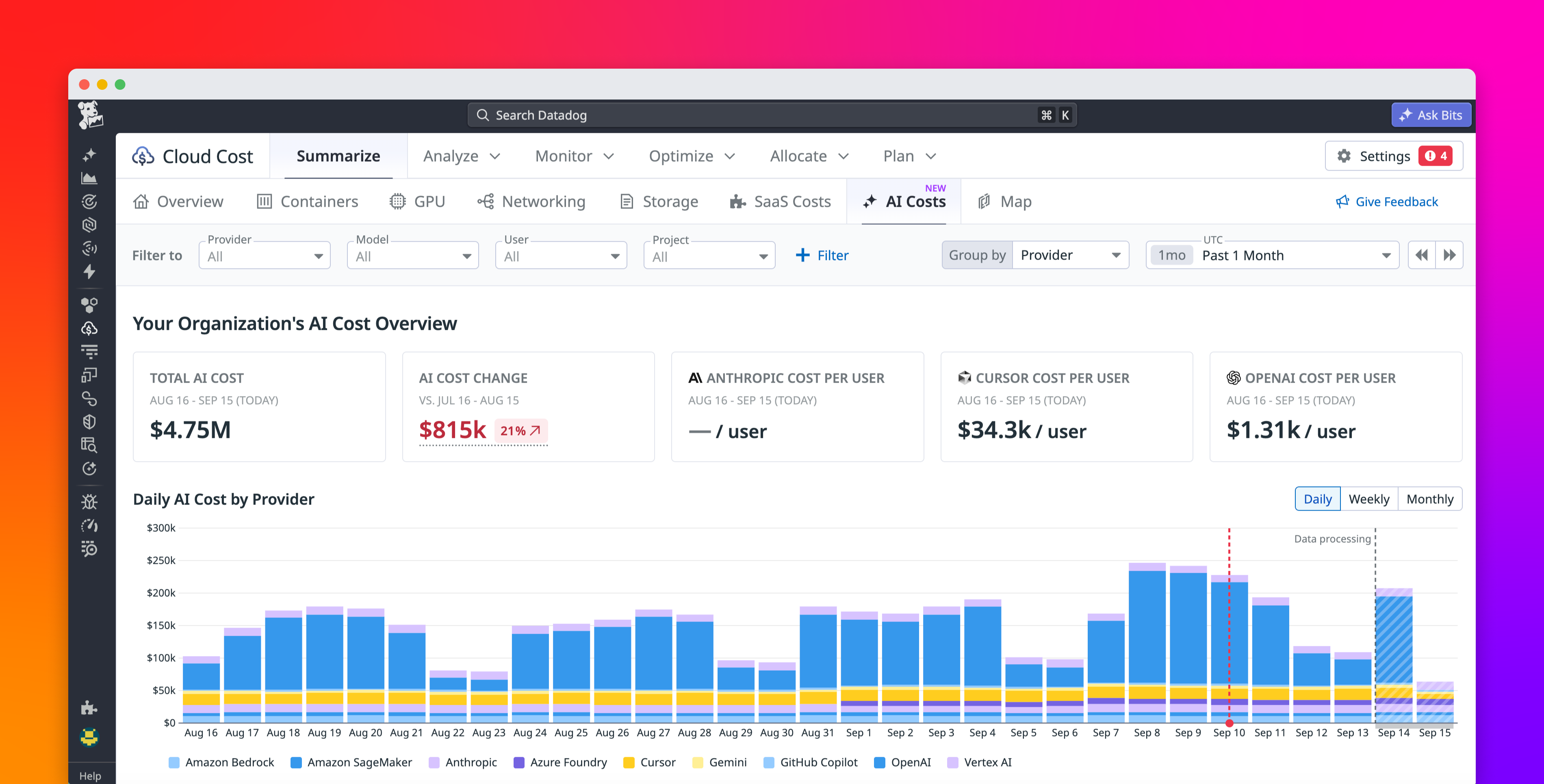
    Datadog Cloud Cost Management now integrates Cursor AI‑coding usage, exposing per‑user, per‑model, and mode breakdowns, out‑of‑the‑box dashboards, anomaly detection, and budget/monitoring tools so FinOps can track and control AI coding spend alongside other cloud and SaaS costs.

    Datadogdatadoghq.com5 min
  5. AI Model Drift: How to Keep Models Reliable

    Honeycomb’s guide explains the four main kinds of AI model drift (data, concept, upstream, and prompt/embedding/output), why drift is hard to spot in LLM‑based systems, and how to set up baselines and observability signals (distribution stats, evaluation scores, user feedback, retry rates, etc.) to catch it early.

    Honeycombhoneycomb.io9 min
  6. Database for AI Agents: 5 Evaluation Criteria

    Databricks outlines five criteria for a production‑ready database for AI agents—branch‑per‑agent isolation, serverless scale‑to‑zero, hybrid search, ACID guarantees, and a unified platform that eliminates ETL lag—illustrating each with features of its Lakebase offering and brief customer anecdotes.

    Databricksdatabricks.com10 min