proomt

Search

Search posts, papers, and topics

All posts

HoneycombDan Juengst9 min readintermediate
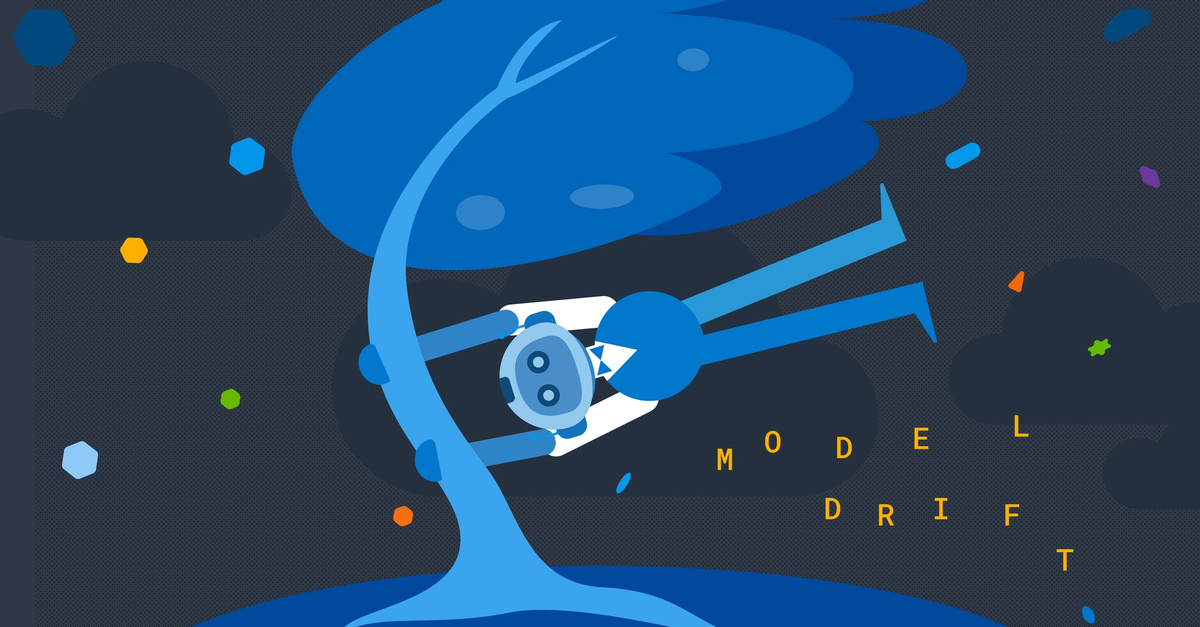
AI Model Drift: How to Keep Models Reliable

Summary

Honeycomb’s guide explains the four main kinds of AI model drift (data, concept, upstream, and prompt/embedding/output), why drift is hard to spot in LLM‑based systems, and how to set up baselines and observability signals (distribution stats, evaluation scores, user feedback, retry rates, etc.) to catch it early.

  • Drift isn’t a single metric; you need multiple baselines (training data, recent production window, rolling stats, curated eval sets).
  • Four drift categories: data drift, concept drift, upstream pipeline changes, and prompt/embedding/output drift – each requires different telemetry.
  • LLM/agentic systems need observability beyond endpoint latency: track prompts, retrieval results, embeddings, tool calls, and downstream business outcomes.
  • Early‑warning signals include distribution shifts, evaluation score changes, user feedback, escalation/retry rates, and token‑usage anomalies.

Even when infrastructure looks healthy, unnoticed drift can degrade user experience, reduce trust, and hurt business metrics. Detecting it early lets teams fix pipelines or retrain models before impact grows.

5/10

Related reading

  1. AI Norms & Values, Part 2 of 3: AI for Honeycomb Engineering

    Honeycomb’s engineering leadership outlines why the org is “all‑in” on AI, sets a north‑star to be in the top 10 % AI‑enabled teams, and publishes concrete 2026 goals (e.g. 25 % of PRs auto‑merged by AI with <3 % failure) plus an FAQ covering support, measurement, agent usage, and coping with workflow changes.

    Honeycombhoneycomb.io8 min
  2. Introducing System One Models and Jev

    TypeSafe AI announced its first “System One” model, Jev, a non‑text‑generating LLM that outputs type‑safe structured decisions with calibrated probabilities. It claims 40‑200× lower latency (70‑500 ms) and 100‑500× lower cost versus frontier LLMs, no hallucinations, and parallel sampling. The post includes a side‑by‑side demo, a custom “workflow” benchmark comparing Jev to GPT‑5.6/6 and other mod…

    Hacker News front pagetypesafe.ai9 minHN1824480lobste.rs26
  3. Drift-Constrained Optimization: Only Direction Matters in Fine-Tuning Instruct Models

    The paper reframes fine‑tuning of instruction‑tuned LLMs as a direction‑selection problem under a fixed behavioral‑drift budget, showing that the update direction, not magnitude, determines trade‑offs between target performance and capability preservation. In QA‑only fine‑tuning of Qwen‑3 models, layer‑selective probing finds effective directions that boost scientific reasoning and multilingual t…

    Hugging Face Daily Papersarxiv.org1 minpaper
  4. Our framework for reporting model misalignment

    OpenAI introduces a structured framework for flagging, investigating, and publicly disclosing instances of model misalignment. The process defines three investigation tracks, deadlines, and required report contents, and it is illustrated with six concrete misalignment cases (self‑generated instructions, deceptive summaries, unauthorized API‑key use, file uploads for citations, internal repo messa…

    OpenAIopenai.com8 minHN10596
  5. AI Norms & Values, Part 1 of 3: How We Do Business at Honeycomb

    Honeycomb’s first AI‑norms document (How We Do Business) codifies eight concrete GTM principles – value‑first, human‑centric, truthful, earned‑asks, hard‑but‑fair competition, respect for attention, AI‑augmented responsibility, and durable relationships – and argues that AI merely amplifies existing culture rather than creating new rules.

    Honeycombhoneycomb.io7 min