proomt

Search

Search posts, papers, and topics

All posts

ByteByteGo5 min readintermediate
EP228: How SSH Works

Summary

This article provides concise overviews of several engineering topics, including the SSH handshake and authentication process, six techniques for efficient AI system serving, the architectural components of an AI agent, and a three-step process for evaluating AI applications. It covers fundamental concepts across networking and AI/ML.

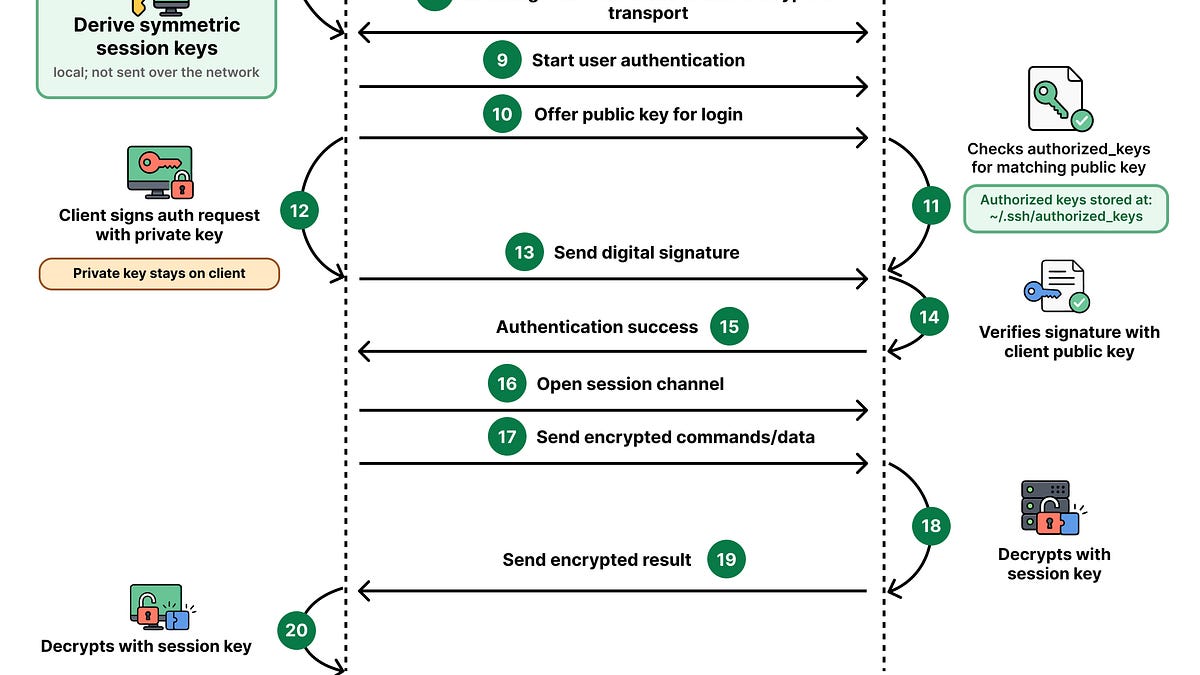
  • SSH uses a key exchange to derive session keys and public-key cryptography for client authentication, with the private key never leaving the client.
  • LLM serving efficiency techniques include streaming, quantization, continuous batching, prefix caching, paged KV cache, and speculative decoding.
  • AI agents are structured around an LLM 'brain' that uses planning, external tools, memory (short/long-term), and guardrails within a loop.
  • Evaluating AI applications involves picking a task, collecting relevant data, and developing graders (code-based, model-based, or human) for assessment.

This article offers quick, high-level refreshers on foundational concepts in secure networking and emerging practices in AI system design and evaluation, useful for engineers needing a broad understanding.

5/10

Related reading

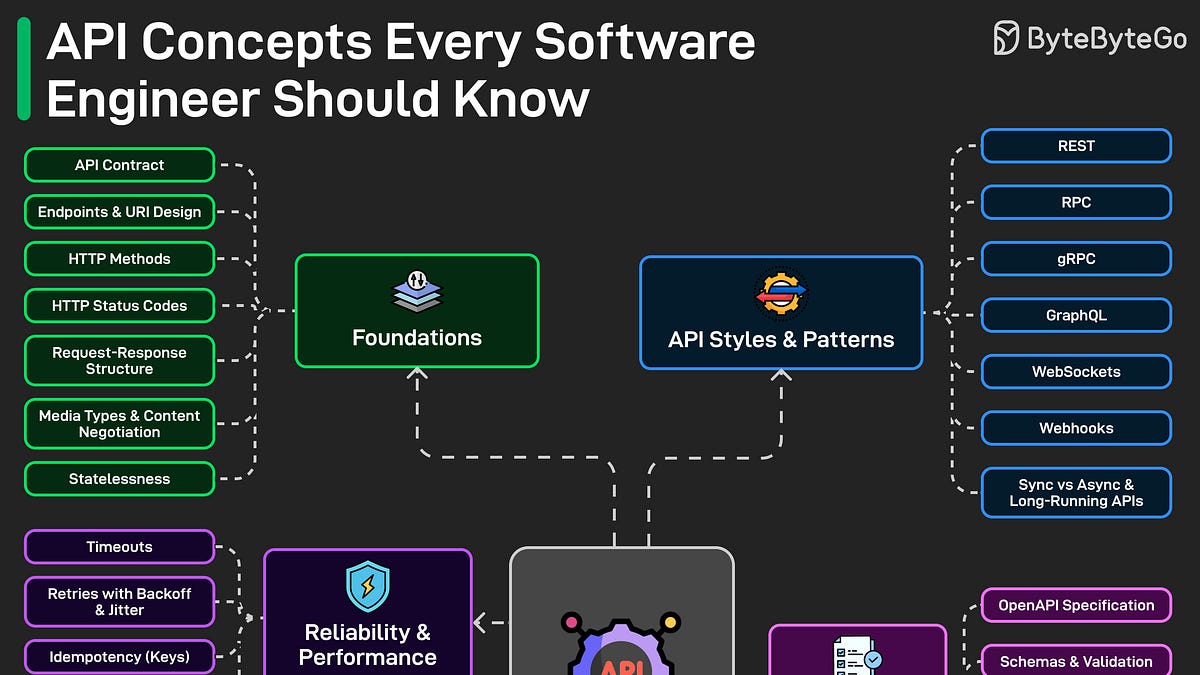
  1. EP226: API Concepts Every Software Engineer Should Know

    This article outlines essential API design considerations, covering HTTP fundamentals, architectural styles like REST and GraphQL, and critical aspects such as naming, versioning, security, and reliability. It serves as a high-level checklist for engineers designing or consuming APIs.

    ByteByteGobytebytego.com5 min
  2. Article: Architecting Secure and Scalable Facial Verification Systems

    A real‑world post‑mortem of a high‑volume face verification service that moved from a naïve synchronous API to an async, layered pipeline (edge validation, preprocessing, decoupled detection/verification, decision engine) to achieve 8.5k rpm, p99 < 1.8 s, 30 % cost savings, and strict privacy controls.

    InfoQinfoq.com15 min
  3. Replica-aware routing public beta

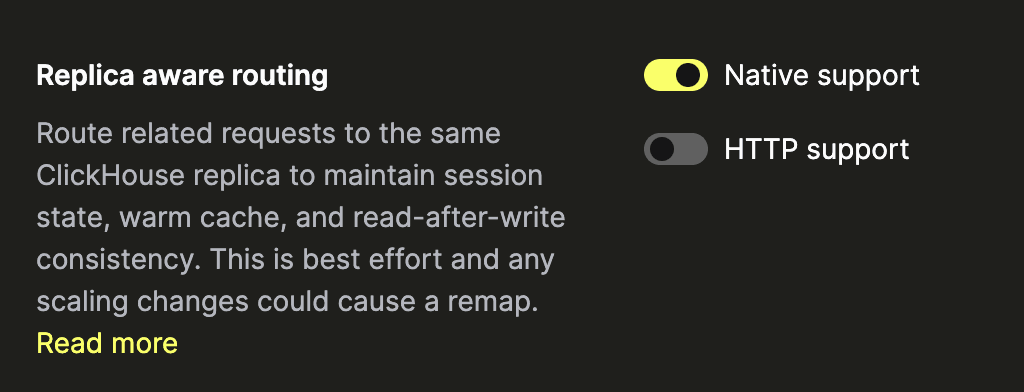
    Replica‑aware routing (public beta) lets ClickHouse Cloud users pin a query stream to a specific replica by sending a custom header (HTTP) or overriding the TLS SNI (native). The proxy (Envoy) hashes the tag and consistently forwards all requests with the same tag to that replica, giving read‑after‑write consistency for temporary tables, session objects, and warm replica caches. Stickiness is bes…

    ClickHouseclickhouse.com6 min