1

I Don't Like LLMs
Martin Fowler shares a personal, skeptical take on LLMs, noting their usefulness but criticizing their hallucinations, cultural bias, and the discomfort of interacting with them as if they were human.
Search posts, papers, and topics
Martin Fowler shares a personal, skeptical take on LLMs, noting their usefulness but criticizing their hallucinations, cultural bias, and the discomfort of interacting with them as if they were human.
Dan Luu argues that turning off your brain and letting LLMs write code unchecked doesn’t work; while agents can help, they still need human oversight, especially on out‑of‑distribution problems, and cannot replace skilled engineers for most production work.
This empirical study dissects coding agent harness components like planning, action space, and context management. It finds context management is critical for tight windows, rule-based elision is efficient, and planning shifts from accuracy to cost savings for stronger models.
Mark Seemann reflects on learning to program in the era of LLMs, sharing personal history, doubts about AI‑driven development, and advice to focus on fundamentals and ask verifiable questions of models.
The paper presents RecreationWorld, a five‑platform framework that lets hybrid computer‑use agents learn by recreating the behavior of a running reference, and introduces RecreationBench, a 250‑task benchmark with programmatic and visual assertions. Experiments show GPT‑6 Astra reaches 58.1% overall but struggles with deeper programmatic tests, highlighting gaps in current agents.
ProgramDistill is a new benchmark that automatically extracts 1,975 replay‑verified feature behaviors from 26 real web apps, builds 4,063 coding‑agent tasks, and measures how well state‑of‑the‑art agents (e.g., GPT‑6 Astra, Claude Opus 5) can reconstruct full or partial applications, revealing steep drops in success as restoration depth grows.
Code2Skill is an automated pipeline that mines popular GitHub repositories to extract verifiable, implementation‑anchored procedural “skills”. It builds a bank of ~1 M skill records (atomic ops, workflows, patterns) with provenance metadata, verifies each via blind reconstruction, and shows that augmenting LLM‑based agents with these skills yields an average 11.7% performance lift across 72 proto…
A speculative opinion piece comparing the rise of AI‑assisted "vibe coding" to the evolution of internet dating, arguing that as AI becomes the default coding partner the term will become obsolete.
A new engineer observes that a big company's reliance on AI for all artifacts (code, specs, tickets) leads to human bottlenecks. Despite AI generating everything, engineers work long hours because nobody understands the output, making the team slow.
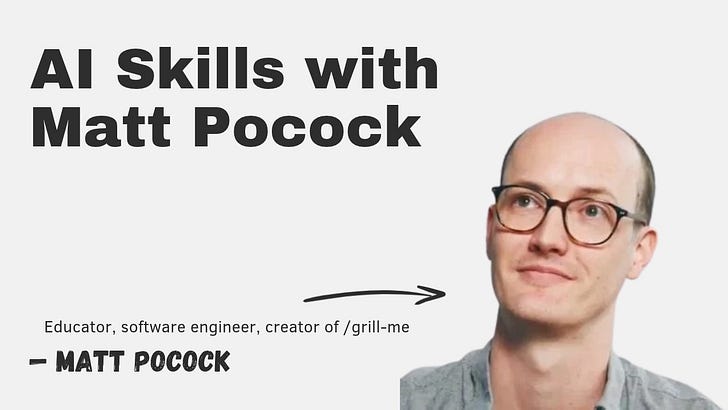
Matt Pocock explains how he uses AI agents for software development, emphasizing "strategic programming" and guiding agents with "leading words" from classic engineering texts. He argues that this approach makes engineering fundamentals more critical than ever for creating agent-optimized codebases.
Phillip Mortimer argues that AI‑generated code makes all software effectively "write‑only" due to volume, and proposes managing this by treating tests as the sole specification, automating code reviews with LLMs, and decoupling intent from implementation.
Avant replaced many personal AI‑assistant setups with a single, organization‑wide Claude Code configuration that embeds the company’s coding standards, project‑tracking links, and documentation. Treated as an internal product, the setup is versioned, owned by delivery engineers, and iteratively improved. The shared tool speeds routine tasks (scaffolding, tests, migrations, docs) and enforces cons…
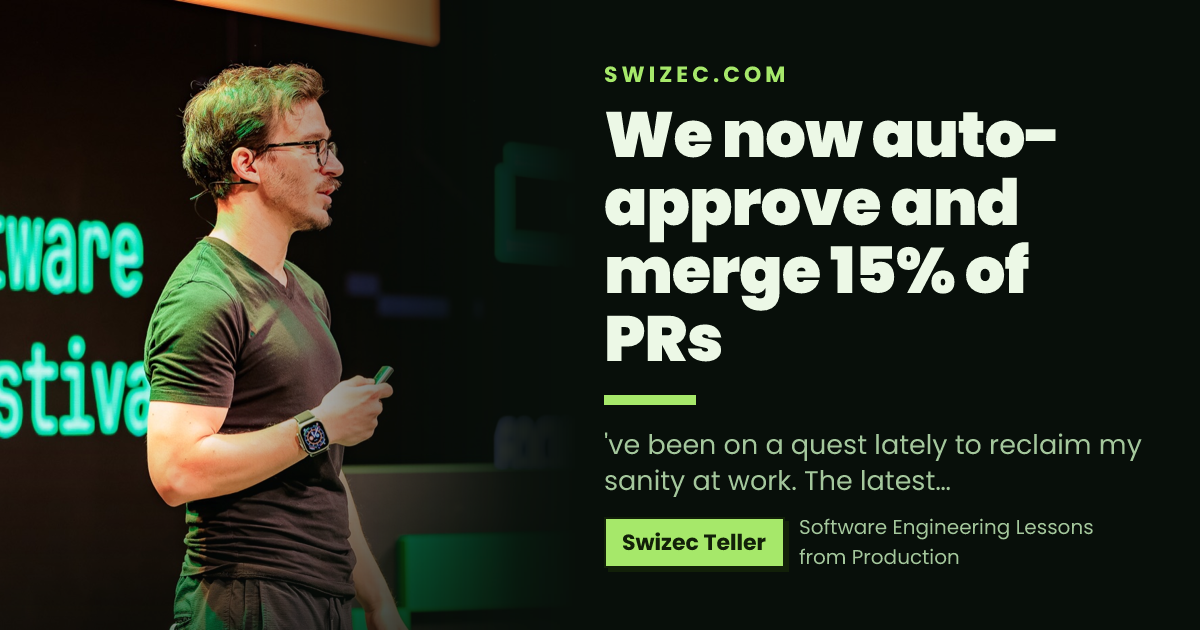
This article describes how a team implemented a bot to auto-approve and merge 15% of low-risk pull requests, aiming to reduce code review bottlenecks and improve development velocity. The system relies on custom deterministic linters, basic end-to-end tests, and a risk scoring mechanism to identify safe changes.
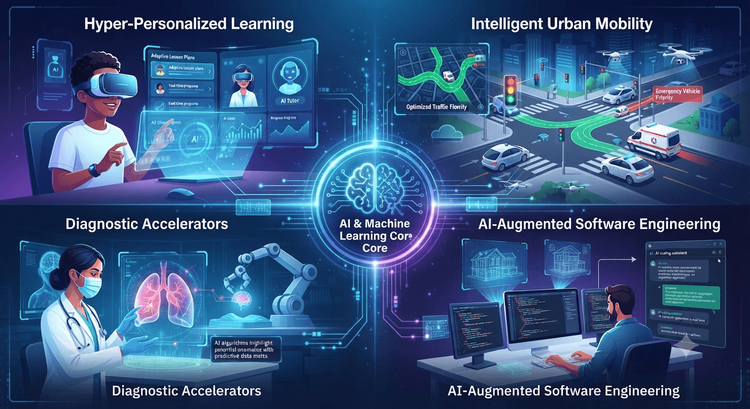
A high‑level, marketing‑style overview of how AI is being applied to education, traffic management, healthcare, and software development. The piece offers broad claims and a few illustrative snippets but lacks concrete data, code depth, or actionable engineering insights.