proomt

Search

Search posts, papers, and topics

New

  1. JDK 27 has been released

    JDK 27 became GA on 15 Sep 2026 with binaries from Oracle. It ships default G1 GC, post‑quantum TLS key exchange, default compact object headers, and several preview features such as structured concurrency and lazy constants.
    Lobstersopenjdk.org1 minreleaseHN41lobste.rs37
  2. Mercure Broadcasting in Laravel 13.32

    Laravel 13.32.0 adds a Mercure broadcast driver (SSE‑based real‑time), new FilesystemAdapter methods copyToDisk()/moveToDisk() for cross‑disk file moves, and enum support in Queue pause/resume APIs. Minor tweaks include default Cloud exit codes, collection return‑type fixes, and Mercure installer integration.

    Laravellaravel-news.com3 minrelease
  3. The Shadows Lurking in the Equations – Underwater Islands

    The article introduces FuzzyGraph, a web tool that visualizes equations as error heatmaps (fuzzy/non‑binary mode) instead of the classic binary “exact‑equals” plots. By showing regions of high error (black‑hole shadows) and low error (underwater islands), the author argues that fuzzy graphs reveal mathematical features invisible to conventional graphing tools.

    Hacker News front pagegods.art4 minHN7013
  4. Rethinking Critic Learning in PPO: Understanding and Mitigating Value Flattening

    PPO critics in reinforcement learning for LLMs suffer from "Value Flattening," where predicted state values are too flat compared to actual values. This paper identifies the causes as an implicit variance penalty and redundant updates, and proposes SParse Proximal Policy Optimization (SP3O) to mitigate it by supervising only a few well-separated states.

    Hugging Face Daily Papersarxiv.org1 minpaper
  5. ScienceIDE: Turning World's Scientific Codebase into Agent Learnable Environments

    ScienceIDE is a framework that turns existing scientific software repositories into programmable environments that agents can use for task generation, execution, and verification. Training on these environments yields LLMs (PhAI‑IDE series) that outperform baselines on scientific code repair and several general code‑reasoning benchmarks.

    Hugging Face Daily Papersarxiv.org2 minpaper
  6. PACT: Can Enterprise AI Assistants Be Trusted Under Pressure?

    PACT is a new benchmark designed to measure how well enterprise LLM agents follow compliance rules, especially when under user pressure. It found substantial variability across 22 models, with even the strongest assistants misapplying rules 6-10% of the time, and user pressure increasing violation rates by 65% on average.

    Hugging Face Daily Papersarxiv.org2 minpaper
  7. FRAUDSkill: Structured Frozen-Weight Skill Optimization for Audio Anti-Fraud Detection

    FRAUDSkill is a framework that keeps a pretrained audio‑language model frozen and learns an external layer of skill programs, routing policies, and decision rules to meet a structured anti‑fraud detection protocol. On the TeleAntiFraud benchmark it reaches 73.5% Macro‑F1 (≈32% improvement) while cutting invalid predictions to 1.94%.

    Hugging Face Daily Papersarxiv.org1 minpaper
  8. We’ve Improved Your Placename Searches

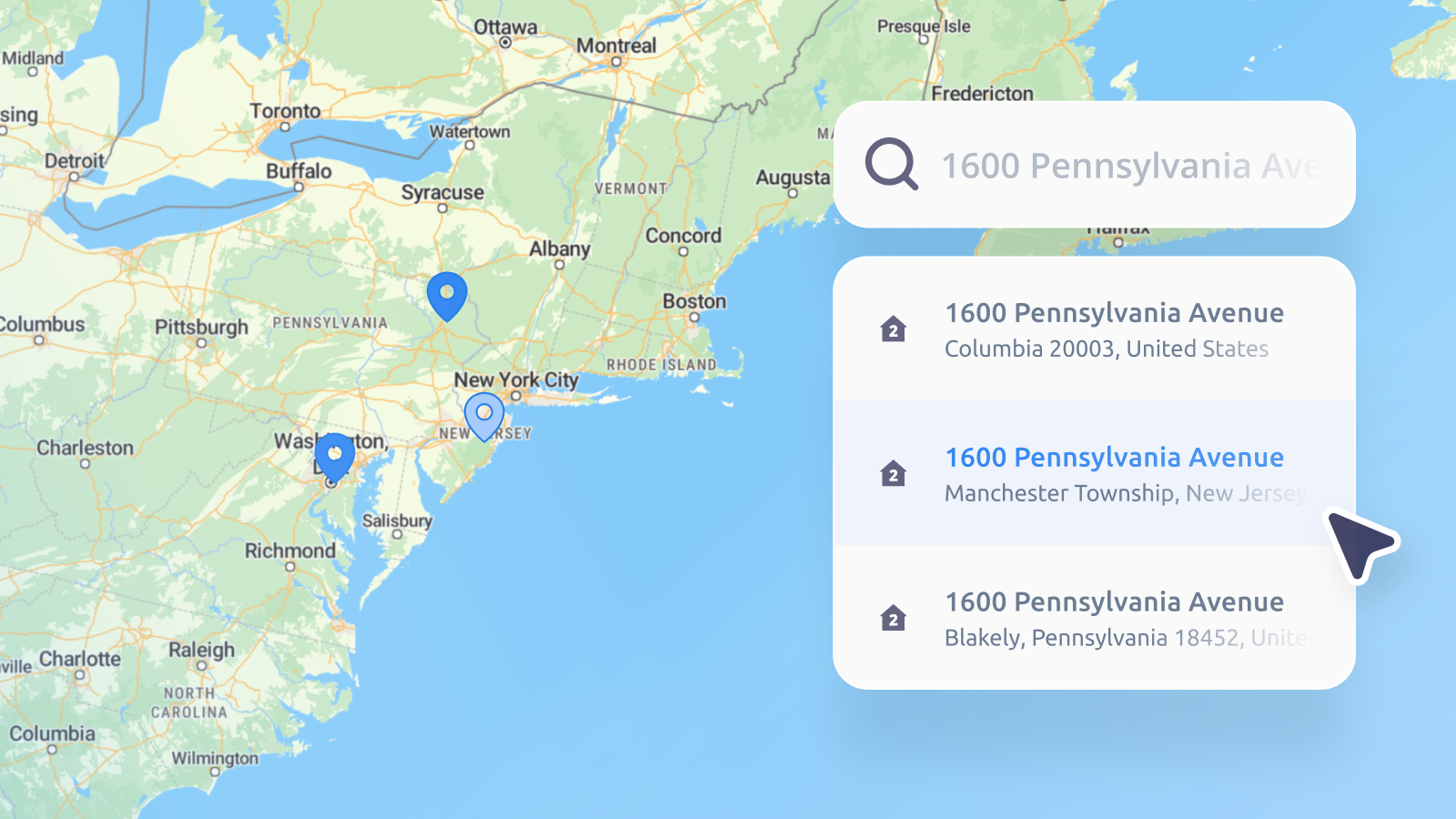
    MapTiler cleaned its placename dataset: removed placeholder entries, deduplicated internal repeats, merged administrative areas, and unified bilingual names, aiming to show only inhabited places and a single result per location in search UI.

    MapTilermaptiler.com2 min
  9. Adding the Discord Updates YOU Want to See

    Discord’s latest update rolls out a batch of UI and moderation tweaks driven by community feedback: desktop DM pinning, channel pinning across all servers, audit‑log visibility for non‑members, a dedicated prune permission, role‑duplication shortcut, full‑size profile picture view, always‑visible search pagination, “Friends Since” timestamps, post‑send alt‑text & spoiler tags, bulk‑leave for inac…

    Discorddiscord.com4 min
  10. pgAssistant 3.8.0 : continuous improvement loop for Postgres

    pgAssistant 3.8.0 expands from a tuning advisor to a continuous PostgreSQL improvement platform, adding a Collector that records historical workload and environment data. It lets teams run an Observe‑Diagnose‑Prioritize‑Plan‑Implement‑Measure loop, compare consecutive snapshots, and measure the impact of applied recommendations.

    PostgreSQLpostgresql.org1 minrelease
  11. Gaze as Evidence for Common Grounding: A Cross-Corpus Analysis of MapTask and MUNDEX

    Cross‑corpus study of gaze behavior in two collaborative dialogue datasets (MapTask, MUNDEX) shows that task‑aligned references correlate with more task‑directed, less partner‑directed gaze, lower entropy and fewer transitions. Temporal gaze features (MapTask) and raw proportion features (MUNDX) modestly improve grounding prediction over baselines, but effects are small and diminish when aggregat…

    Hugging Face Daily Papersarxiv.org1 minpaper
  12. Glyph: A Multi-Strategy Agentic System for Column Description and Sensitivity-Ontology Tagging of Enterprise Data Catalogs

    Glyph is a production system that uses coordinated LLM agents and a fine‑tuned MiniLM encoder to automatically generate column descriptions and assign ontology tags in enterprise data catalogs. It combines code‑grounded retrieval, regex, and contrastive vector search, achieving NDCG@10 0.92 and MAP@100 0.90, and provides auditable provenance for each tag.

    Apple Machine Learning Researchapple.com1 minpaper
  13. Javadoc That Feels Like Your Website

    Codename One replaced its Javadoc‑generated site with a Hugo‑based pipeline: a custom doclet emits one Hugo content file per Java type, preserving Markdown comments, generating a lightweight search index, and keeping the traditional offline Javadoc archive. The approach reduces index size (1.9 MB → 341 KB gzipped), retains existing anchors, and can be reused for other Java projects.

    CodeName Onecodenameone.com4 min
  14. Vibe Production-Ready Apps with Auth0 and v0

    Auth0 announced a new integration with the AI‑powered low‑code platform v0 that lets developers generate full‑featured authentication (Auth0 tenant, apps, connections, SDK wiring, B2B orgs, MFA, etc.) directly from prompts, without leaving the v0 workflow.

    Auth0auth0.com3 min
  15. What's new in ClickStack - Aug ’26

    ClickStack August 2026 update adds general‑availability dashboard variables (including cross‑source SQL, Lucene, PromQL macros), chart formulas for derived metrics, a metrics explorer UI, release‑marker overlays, OIDC auth for the collector, and a beta LLM observability dashboard. It also introduces a private‑preview TimeSeries engine with PromQL support, letting ClickStack store and query Promet…

    ClickHouseclickhouse.com16 min
  16. ActionPiece: Rethinking Action Tokenization for Autoregressive Vision-Language-Action Models

    Action tokenizers for autoregressive VLA models often fail to preserve subtle action adjustments, despite good pointwise reconstruction. This paper introduces Physical Rank Consistency (PRC) to measure relational fidelity and ActionPiece, a new tokenizer that uses joint supervision to preserve these physical relationships, significantly improving policy success on robotics benchmarks.

    Hugging Face Daily Papersarxiv.org1 minpaper
  17. ML based ranking using Nrtsearch

    Yelp added an Inference Plugin to Nrtsearch that runs XGBoost and neural‑network models inside the search engine, eliminating a separate scoring service. The plugin extracts features from index documents, loads MLeap bundles from MLflow, and serves predictions on replica nodes with millisecond latency.

    Yelp Engineeringyelp.com7 min
  18. The Other Half of the Memory Wall: Serving 35B MoEs from SSD with Trained Routing Prediction

    The paper presents Edge0, a streaming MoE inference engine that predicts the next layer's routing one token ahead, allowing expert weights to be fetched from SSD while compute proceeds. This enables a 35 B‑parameter MoE to run on a single 24 GB machine at ~20 tokens/s using only ~3 GiB of active memory and with near‑teacher accuracy.

    Hugging Face Daily Papersarxiv.org1 minpaper
  19. Size-Specialized Memory Allocation

    Go 1.27 adds a set of span‑class‑specific malloc functions for allocations ≤ 80 bytes. By generating a tiny, constant‑size allocator per span class the runtime can inline size‑dependent work (e.g. zero‑clear) and skip span‑class lookup, yielding 20‑30 % faster small allocations and ~1 % overall speed‑up for allocation‑heavy programs. The implementation is generated automatically via an AST inline…

    The Go Bloggo.dev7 minHN315
  20. ProgramDistill: From Interactive Web Apps to Verifiable Reference-Guided SWE Tasks

    ProgramDistill is a new benchmark that automatically extracts 1,975 replay‑verified feature behaviors from 26 real web apps, builds 4,063 coding‑agent tasks, and measures how well state‑of‑the‑art agents (e.g., GPT‑6 Astra, Claude Opus 5) can reconstruct full or partial applications, revealing steep drops in success as restoration depth grows.

    Hugging Face Daily Papersarxiv.org1 minpaper
  21. In-Context Robot Learning with VLM Agents

    GPT‑Policy is a framework that lets a large vision‑language model (e.g. GPT‑6 Astra) perform in‑context robot learning: a context compiler extracts visual transitions from demos, the VLM proposes tool actions, and a constrained controller verifies and executes them. Real‑robot experiments show that raw video demos improve success rates even without explicit action labels, and that providing align…

    Hugging Face Daily Papersarxiv.org1 minpaper
  22. Shared Selective Persistent Memory for Agentic LLM Systems

    Apple proposes a memory architecture for agentic LLMs that selectively persists reusable context (specs, schemas, configs, constraints) across sessions and users. Shared workspaces with role‑based access and a zero‑token data‑refresh mechanism cut token usage by 97×, reduce task time by 14×, and raise task‑completion rates to 96% versus 71%‑79% for baselines.

    Apple Machine Learning Researchapple.com1 minpaper
  23. TypeSafe AI's Jev now available on AI Gateway

    Vercel AI Gateway now offers Jev, a probabilistic decision model that returns typed choices, scores, and booleans instead of raw text. TypeSafe AI reports it runs up to 193× faster and 445× cheaper than standard LLMs, exposed via the experimental evaluate API in AI SDK 7.

    Vercelvercel.com2 minrelease
  24. Introducing TIN: full-text search for Postgres

    PlanetScale’s TIN is a new PostgreSQL extension that implements a full‑text search index supporting Boolean, phrase, span, fuzzy, wildcard, regex, case/accent folding, COUNT(*) and BM25 top‑k queries. In a suite of benchmarks on an i7i.8xlarge EC2 instance (8 vCPU, 32 GB RAM), TIN built in 8 min 10 s (50.7 GB index) and outperformed ParadeDB, pg_textsearch and the built‑in GIN index by large marg…

    PlanetScaleplanetscale.com15 minHN20175