proomt

Search

Search posts, papers, and topics

New

  1. DataFlex-RL: An Evaluation Platform for RLVR Data Policies

    The paper introduces DataFlex‑RL, a platform to benchmark how different data‑selection policies affect reinforcement‑learning‑with‑verifiable‑rewards training. Across extensive experiments on Qwen2.5‑7B and Llama‑3.1‑8B, uniform sampling is the only method that consistently improves performance, and no alternative policy yields a statistically significant gain.

    Hugging Face Daily Papersarxiv.org1 minpaper
  2. Beyond Top-k Skill Retrieval: Diversity-Aware Skill Routing for LLM Agents

    Beyond Top‑k Skill Retrieval: Diversity‑Aware Skill Routing (DSR) applies a Determinantal Point Process with a query‑residual diversity kernel to rerank skill candidates, balancing relevance and redundancy. On the SkillRouter benchmark it raises recall and full‑coverage, especially for multi‑skill queries, showing that skill routing benefits from set‑selection rather than independent ranking.

    Hugging Face Daily Papersarxiv.org1 minpaper
  3. Online Learning with LLM Experts from Limited Feedback

    The paper models prompt routing to multiple LLM experts as a bandit problem with limited feedback and proposes algorithms that achieve sublinear regret in both full‑information and bandit settings. Experiments demonstrate that the methods learn effective routing strategies across diverse LLMs using only a small feedback budget.

    Hugging Face Daily Papersarxiv.org2 minpaper
  4. A Dialog Can Now Be a Native Desktop Window

    Codename One now supports native desktop windows for dialogs, fixing a bug where dialogs appeared on the wrong surface in multi-window applications. This allows dialogs to participate correctly in desktop window ordering and focus, with options for global or per-instance native mode.

    CodeName Onecodenameone.com3 min
  5. Five models pass the easy code reviews. Then the diffs get hard.

    A hands‑on benchmark of five LLM code‑review models (Claude Opus 5, GPT 5‑6 Sol, Grok 4.6, Kimi 3, GLM 5.3, Qwen 3.8 Max, DeepSeek v4 Pro) shows that all models ace tiny 15‑line diffs but diverge sharply on 100‑300‑line, cross‑file changes. The author built a deterministic harness (single HTTP call, fixed system prompt, JSON output) and measured detection rate, false‑positives, latency, token usa…

    Bjørn Johansenbjornjohansen.com16 min
  6. Announcing Project Zenith: The ready-to-code Windows experience on developer-class devices

    Microsoft announced Project Zenith, a Windows 11 configuration bundled with high‑end developer PCs (64 GB+ unified memory, ≥250 GB/s bandwidth) that ships with VS Code, Windows Terminal and tuned settings for a distraction‑free coding workspace. It also adds built‑in WSL container support and MXC security, enabling on‑device execution of 30B‑parameter AI models without cloud token costs.

    Microsoft Edgewindows.com4 minHN143
  7. Two Claude accounts, one session

    claude-swap is a CLI tool that watches your Claude usage and automatically swaps to a secondary account when the active account hits 90% of its quota. Install via pipx, add accounts, and run `cswap auto` (or its dashboard) to keep sessions alive, though each swap incurs a cold‑cache cost.

    Bjørn Johansenbjornjohansen.com1 min
  8. Grounded Skill Synthesis from Code at Scale for Agentic Intelligence

    Code2Skill is an automated pipeline that mines popular GitHub repositories to extract verifiable, implementation‑anchored procedural “skills”. It builds a bank of ~1 M skill records (atomic ops, workflows, patterns) with provenance metadata, verifies each via blind reconstruction, and shows that augmenting LLM‑based agents with these skills yields an average 11.7% performance lift across 72 proto…

    Hugging Face Daily Papersarxiv.org1 minpaper
  9. VoIP, VPN, and the Build System Behind Them

    Codename One’s new builder pipeline can automatically generate the native plumbing required for VoIP call integration, managed VPN profiles, and packet‑tunnel extensions on iOS and Android. By inspecting which Java packages an app imports, the builder adds the necessary frameworks, entitlements, services, and even a separate signed Network Extension for iOS, letting developers keep their signalin…

    CodeName Onecodenameone.com10 min
  10. Introducing PerfCompare’s Simple View

    PerfCompare now defaults to a simplified results table that shows only the key metrics (platform, base/new values, median shift, status and change size) while hiding detailed statistics behind an “Advanced options” dropdown. The view state—including selected columns, filters, and sorting—is encoded in the URL for easy sharing.

    Mozilla Automation Teammozilla.org3 min
  11. Qubika Strengthens Its Position in Financial Services with Databricks Specialization

    Qubika announced its Databricks Financial Services Specialization, highlighting past engagements modernizing data lakes, migrations, and AI foundations for banks, fintechs, and lenders. The post lists partner credentials, analyst recognitions, and generic benefits of a unified data‑AI platform but provides no technical details, code, or measurable outcomes.

    Moove-itqubika.com4 min
  12. Building and Evaluating Fixed-Voice Thai TTS from Synthetic Speech

    Researchers train a compact 82 M‑parameter Thai fixed‑voice TTS model using synthetic speech generated by a large voice‑cloning teacher, requiring only a 15‑second real reference. The student achieves 68.2% keyword accuracy and 91.4% pause precision, outperforming its teacher on pause placement and enabling on‑device inference.

    Hugging Face Daily Papersarxiv.org1 minpaper
  13. Stop restarting your tests

    This article proposes using Temporal to orchestrate large, flaky end-to-end test suites, treating each test execution as a durable unit of work. This approach allows retrying only failed individual tests or browser configurations, significantly reducing wasted CI time from transient failures.

    Temporaltemporal.io11 minHN1
  14. How Far Can Synthetic Data Take Thai OCR?

    The paper dissects which aspects of synthetic Thai OCR data (typeface diversity, 2‑D layout, real handwriting glyphs) actually help transfer to real documents. Using those insights they train Wayu-Paxa-OCR-Zero without any real OCR labels and achieve character error rates comparable to or better than supervised baselines.

    Hugging Face Daily Papersarxiv.org1 minpaper
  15. Fixing Top-Level Await in Safari

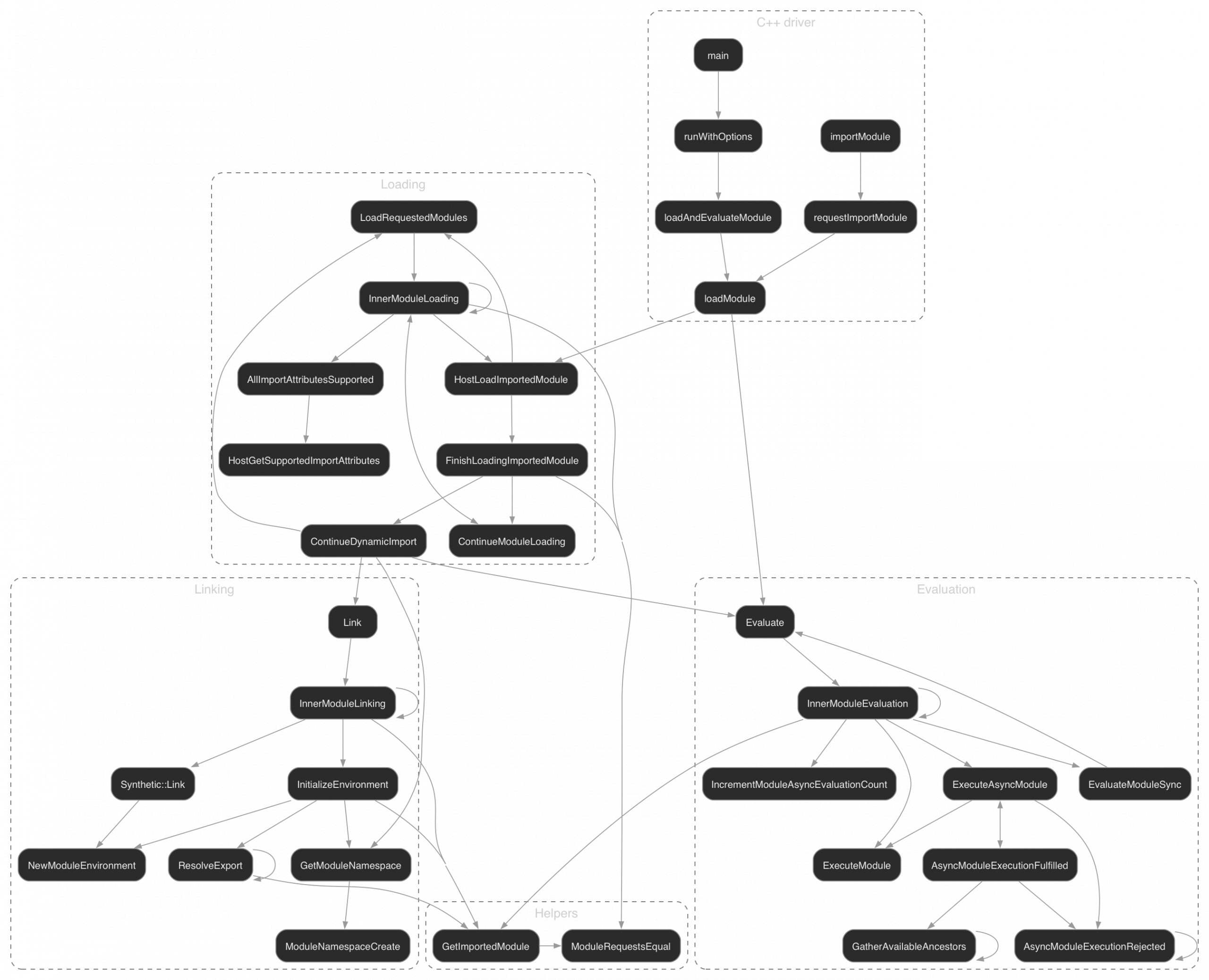
    Safari’s module loader was rewritten in C++ to follow the ECMAScript spec, fixing ordering and uninitialized‑export bugs that broke top‑level await. The new loader passes test262, WPT, and a custom fuzzer, and restores reliable module loading performance.

    WebKitwebkit.org7 minHN3
  16. AI on your terms: Firefox meets you where you are

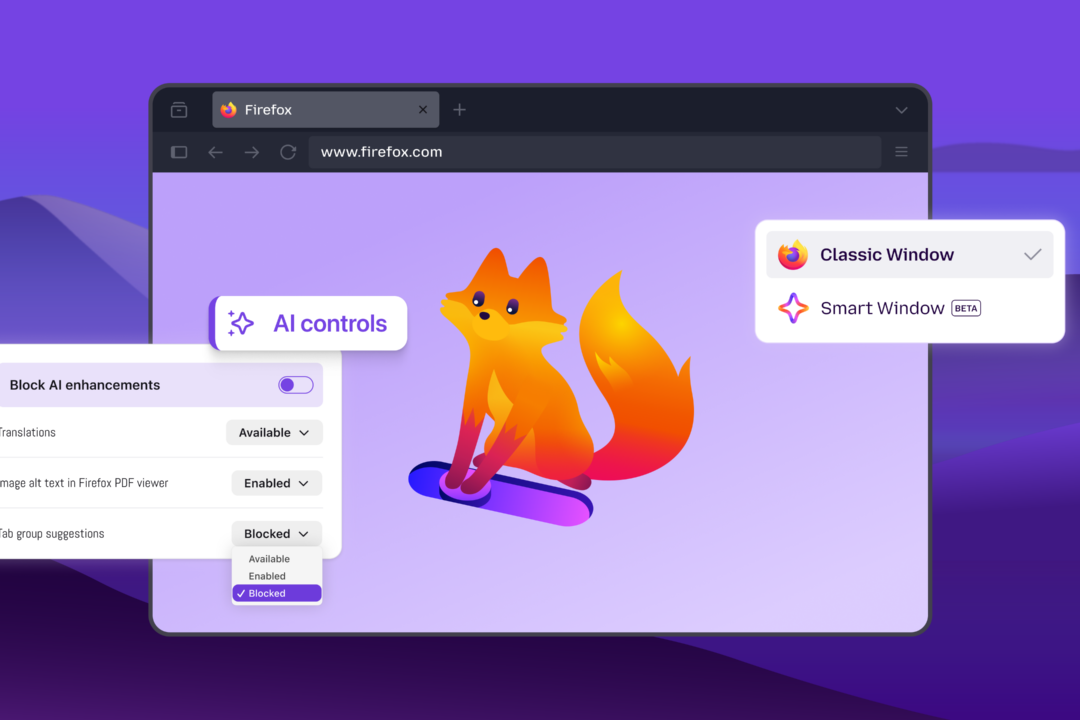
    Firefox adds an AI Controls panel letting users toggle all current and future AI features, pick individual capabilities (translation, alt‑text, tab suggestions, link‑preview key points), and choose from multiple chatbot providers (Claude, ChatGPT, Gemini, Mistral) in a sidebar. The new Smart Window beta integrates an AI assistant that can read open tabs, browsing history, group related tabs, show…

    Mozilla Automation Teammozilla.org4 min
  17. AI Norms & Values, Part 2 of 3: AI for Honeycomb Engineering

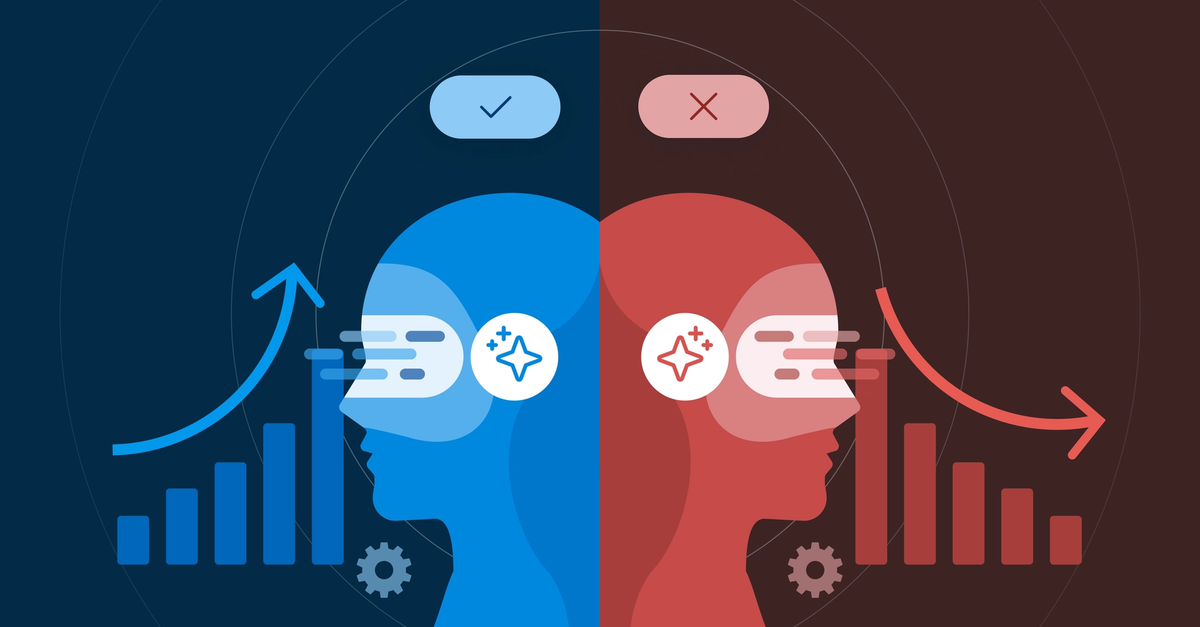
    Honeycomb’s engineering leadership outlines why the org is “all‑in” on AI, sets a north‑star to be in the top 10 % AI‑enabled teams, and publishes concrete 2026 goals (e.g. 25 % of PRs auto‑merged by AI with <3 % failure) plus an FAQ covering support, measurement, agent usage, and coping with workflow changes.

    Honeycombhoneycomb.io8 minHN1
  18. This Week in Rust 667

    This issue of *This Week in Rust* (2026‑09‑02) aggregates recent Rust ecosystem activity: rustup 1.29.1 release, new project directors, foundation hires, tooling updates (wasmi 2.0, Rustdoc 33 % faster, async FFI framework), observations on Cargo scheduling, safety‑certified Rust product, DNS cache memory savings, Rust vs Go concurrency, const‑fn compile‑time tricks, and a list of 522 merged PRs…

    Mozilla Automation Teamthis-week-in-rust.org10 min
  19. Measuring the Checker: Mutation Analysis for GPU-Kernel Benchmark Oracles

    The paper introduces mutation analysis as a quantitative adequacy metric for GPU‑kernel benchmark oracles. By injecting 10,303 deterministic faults into 188 verified CUDA kernels (7,384 with a known kill witness), they show the official KernelBench checker misses 16.9% of faults—especially 78.6% of precision‑related faults. Their analysis quantifies the impact of existing patches (e.g., KernelBen…

    Hugging Face Daily Papersarxiv.org1 minpaper
  20. Build Hints That Fail Before the Build Server

    Codename One moved 87 common build hints into Java annotations, so misspelled keys or wrong value types cause compile‑time errors instead of silent build‑server ignores. The annotations are processed back into the existing string protocol, keeping backward compatibility while improving validation and IDE support.

    CodeName Onecodenameone.com6 min
  21. Using coding agents on a migration: Three practices that mattered

    Coding agents proved most effective for cleaning up temporary code and legacy configurations during a migration, rather than for initial code construction. This effectiveness stemmed from three specific practices: documenting cleanup needs upfront, co-locating rules with code and their enforcement, and actively managing instruction staleness.

    Temporaltemporal.io7 min
  22. The Shadow Factory: Why Your CI/CD Sprawl is About to Move Faster Than You Can Think

    The article warns that unchecked CI/CD sprawl— orphaned pipelines, hard‑coded secrets, and permissive runners— creates a hidden attack surface, and that AI‑driven agents will amplify the problem. It recommends a governance layer with real‑time inventory, policy‑as‑code, and AI guardrails to bring the software factory under the same security rigor as production.

    Codeshipcloudbees.com3 min
  23. Why Releasing Software as an Application Beats Deploying Components

    This article argues that independent microservice deployments, while seemingly fast, often lead to complex and fragile releases due to environment drift and implicit dependencies. It advocates for "application-level releasing," where a consistent, validated snapshot of interdependent components is promoted together across environments to restore predictability and stability.

    Codeshipcloudbees.com5 min
  24. Firefox WebDriver Newsletter 155

    Firefox 155 WebDriver newsletter lists recent bug fixes and cleanup work, including fixing a DevTools conflict, removing a thin helper, correcting double‑click behavior, and simplifying subscription handling.

    Mozilla Automation Teamfxdx.dev1 min
  25. Introducing Ad Blocker for Firefox on iOS: More Control, Fewer Distractions

    Firefox for iOS now ships an optional built‑in ad blocker that leverages Apple’s WebKit Content Blocker API and the EasyList filter list. It blocks many third‑party ads and ad‑related trackers before they load, but leaves first‑party ads, search‑result ads, and Firefox‑provided sponsored content untouched. The feature is off by default and can be toggled in Settings → Browsing → Ad Blocker, and i…

    Mozilla Automation Teammozilla.org2 minreleaseHN590204