proomt

Search

Search posts, papers, and topics

New

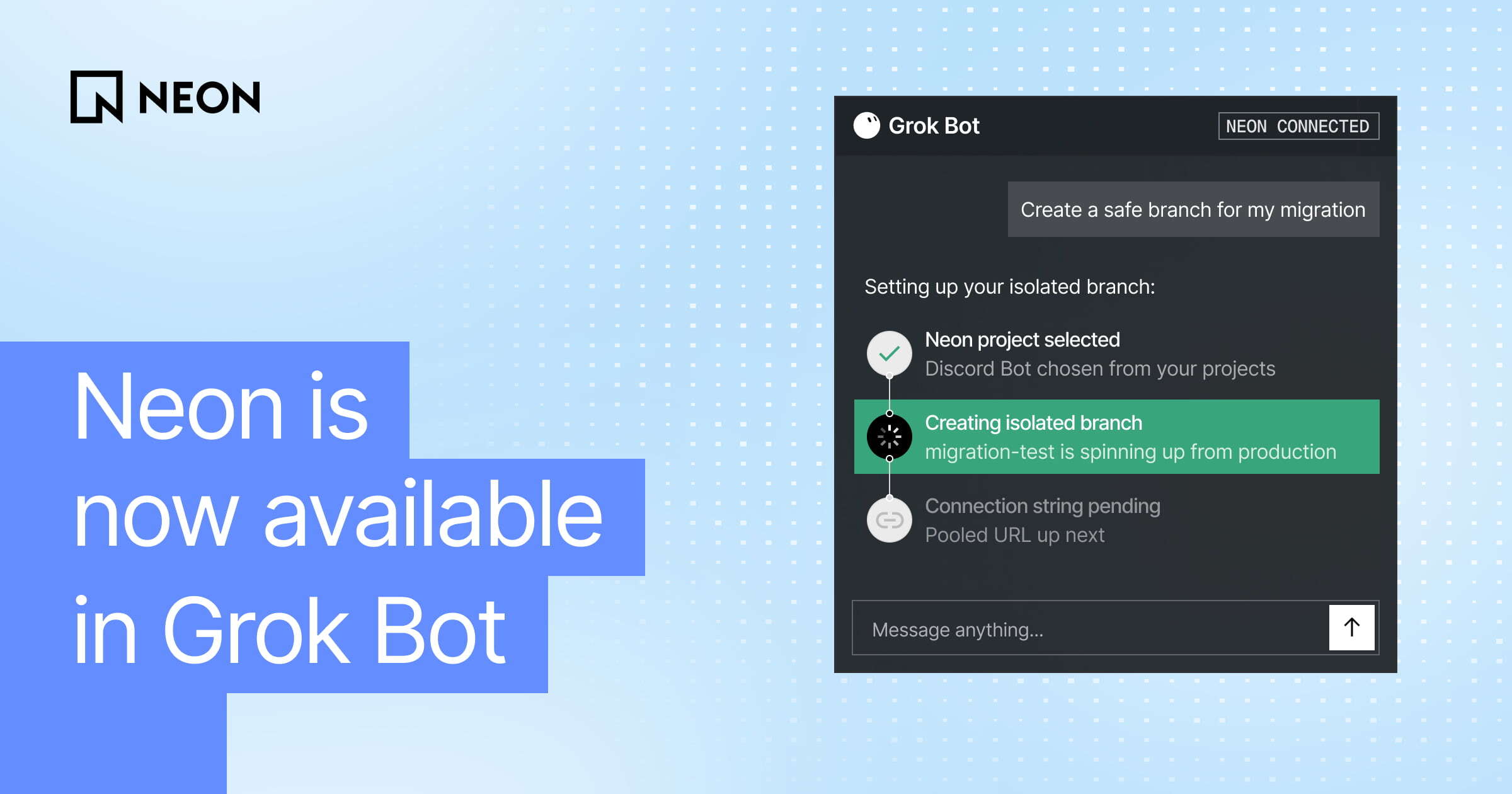
  1. Neon is now available in Grok Bot

    Neon released a Grok Bot plugin that lets the AI assistant manage Neon PostgreSQL databases. After a one‑time auth, the bot can create projects, spin up isolated branches, run SQL, list databases, and set up usage‑summary routines directly from chat.

    Neonneon.com1 min
  2. Rootless Jailbreak Detection: Updating the Signals, Not the Claim

    The blog explains how Codename One updated its iOS jailbreak detector to handle modern rootless jailbreaks (e.g., palera1n, Dopamine). It replaces old file‑system probes with lstat checks, mount scans, and dual‑opinion API calls (libc vs raw syscall) to spot hidden bootstraps and instrumentation. It also reorders package‑manager URL‑scheme probes to prioritize Sileo, adds a background‑resume gate…

    CodeName Onecodenameone.com5 min
  3. Learning Sparse Decision Trees via Transformer Variational Auto-Encoders

    The paper presents TREVIS, a method that encodes decision trees into a continuous latent space using a Tree Transformer VAE, allowing gradient-based optimization of both accuracy and structural sparsity. Experiments claim TREVIS matches the predictive performance of near-optimal algorithms while producing sparser trees.

    Hugging Face Daily Papersarxiv.org1 minpaper
  4. How LlamaIndex uses Temporal to scale reliable document orchestration

    LlamaIndex migrated from RabbitMQ to Temporal for orchestrating complex, multi-stage document processing workflows, scaling to tens of millions of pages daily. This shift enabled them to replace ad-hoc state management and concurrency controls with Temporal's durable execution and workflow primitives, improving reliability and resource efficiency.

    Temporaltemporal.io7 min
  5. Minding My Language: My Internship Story

    Internship recap from Mozilla’s Localization team. Built a Django‑REST API to replace public GraphQL endpoints, added GitHub‑style personal access tokens, created a cross‑product translation search UI, took over the Pontoon browser add‑on, rewrote the Android localization workflow, and delivered an automated project‑manager dashboard with alerts.

    Mozilla Automation Teammozilla.org6 min
  6. Temporal expands its Google Cloud Partnership with Gemini integration and pay-as-you-go pricing on Google Cloud Marketplace

    Temporal added a public‑preview integration with Google’s Gen AI Python SDK, letting Gemini calls survive crashes, and launched Temporal Cloud on Google Cloud Marketplace with pay‑as‑you‑go pricing and a $1,000 starter credit. The updates aim to simplify AI agent orchestration and procurement for teams already on Google Cloud.

    Temporaltemporal.io2 minrelease
  7. PLC-DPO: Posterior Label Correction in Noisy and Ambiguous Preference Optimization

    PLC‑DPO extends Direct Preference Optimization by using the policy‑reference margin to route each training pair into clean, flipped, or tie categories, actively correcting noisy or ambiguous labels. Across extensive benchmarks it improves mean win‑rate from 55.5 % to 60.5 % and stays stable under injected noise and tie stress tests.

    Hugging Face Daily Papersarxiv.org1 minpaper
  8. Agentic Skill Decay

    Addy Osmani warns that AI agents can short‑circuit the hands‑on practice (“reps”) that builds deep expertise and judgment. He recommends deliberately inserting hypothesis‑forming, “why” questioning, diff inspection, failure prediction, and occasional manual coding into the workflow, especially for junior engineers. A 2026 Anthropic study showed junior developers using AI scored 17 % lower on a fo…

    Addy Osmaniaddyosmani.com16 min
  9. Watch Follow-Through: Complications, Tiles, and a Companion Wear APK

    Codename One 6.5 adds full watch‑face support: surface declarations now generate Apple Watch WidgetKit extensions and Wear OS complication data sources plus ProtoLayout Tiles. A phone‑side `Surfaces.publish()` mirrors descriptors to the watch via WatchConnectivity/Data Layer. Android builds now emit both a phone APK and a Wear‑only APK (or a standalone watch APK). WatchOS build failures were fixe…

    CodeName Onecodenameone.com5 min
  10. Why Swift is introducing a warning for weak captures within nested closures

    Swift 6.4 adds a compiler warning when a nested closure captures `self` weakly while the outer closure implicitly captures `self` strongly. The warning surfaces a hidden retain‑cycle caused by the outer closure’s implicit strong capture, and the article shows three ways to fix or silence it: move the weak capture to the outer closure, add a second weak capture inside the inner closure, or explici…

    Swift by Sundellswiftbysundell.com3 min
  11. Put App Documents in the System File Browser

    Codename One adds a read‑only DocumentProvider API that lets apps publish a virtual file tree to iOS Files and Android’s storage picker. The tree is defined with `DocumentNode` objects, can include remote‑only entries, and is shared via an App Group container. The iOS extension runs in a separate process, so the model is serialized and read independently; Android uses the same model inside the ap…

    CodeName Onecodenameone.com4 min
  12. One App, More Than One Native Window

    Codename One now supports true native desktop windows via a new `Window` class that separates per‑surface state (paint queue, input routing, native peers) from the global `Display`. The change adds a `PaintSurface` abstraction, platform‑specific window back‑ends (AWT/Swing, Direct2D, GTK, UIWindowScene), and a migration path for components that assumed a single `Form`. Initial release has some UI…

    CodeName Onecodenameone.com11 min
  13. App Intents: One Java Declaration for Siri, Spotlight, and Shortcuts

    Codename One adds @AppIntent annotations that let a static Java method be exposed as a Siri, Spotlight, or Android shortcut. The build‑time processor generates native declarations, a reflection‑free dispatch table, and validates the intent metadata. Handlers can be headless, accept typed parameters, return results, and be invoked internally via Intents.invoke(). Entities enable system‑driven disa…

    CodeName Onecodenameone.com5 min
  14. Audit your Agent files

    Agent configuration files (CLAUDE.md, AGENTS.md, skill packs) accumulate stale rules, inflating token usage and hurting performance. Regular audits—using Claude’s /doctor, pruning to <200 lines, and encoding hard constraints in hooks—restore lean, effective agents.

    Addy Osmaniaddyosmani.com12 min
  15. Durable Digest: August highlights

    Temporal’s August digest rolls out a suite of new features: Serverless Workers for AWS Lambda (public preview), Projects for organizing Cloud resources, Standalone Nexus Operations, Google GenAI and Deep Agents integrations, Activity Operations and Workflow Pause controls, poller autoscaling GA, and .NET/TypeScript Nexus SDKs. It also adds a Web UI news feed, new tutorials, validated patterns, an…

    Temporaltemporal.io5 min
  16. Pros and Cons of Unified Build

    Unified (jumbo) builds concatenate multiple C++ source files to reduce header instantiation, often halving cold compile time. However, they hurt incremental rebuilds, cache efficiency, and can change program semantics, making reproducibility and correctness harder.

    Mozilla Automation Teamgithub.io8 minHN1
  17. Release Notes for Safari Technology Preview 251

    Safari Technology Preview 251 introduces new CSS features like `@supports at-rule()` and `object-view-box`, alongside new JavaScript capabilities including `Iterator.prototype.includes()` and WebAssembly Memory64. This release also includes numerous bug fixes across HTML, CSS, and Canvas, and deprecates several non-standard CSS properties.

    WebKitwebkit.org19 minrelease
  18. The Road to Better Performance Profiles – Part 2

    Mozilla’s Automation Team added native system‑wide profiling to their CI pipelines for Speedometer 3 on Windows, macOS, Linux, and Android, using xperf, perf, and simpleperf together with the samply toolchain, and modernized the mozgeckoprofiler symbolication stack by replacing the legacy Eliot service with samply and profiler‑edit.

    Mozilla Automation Teammozilla.org5 min
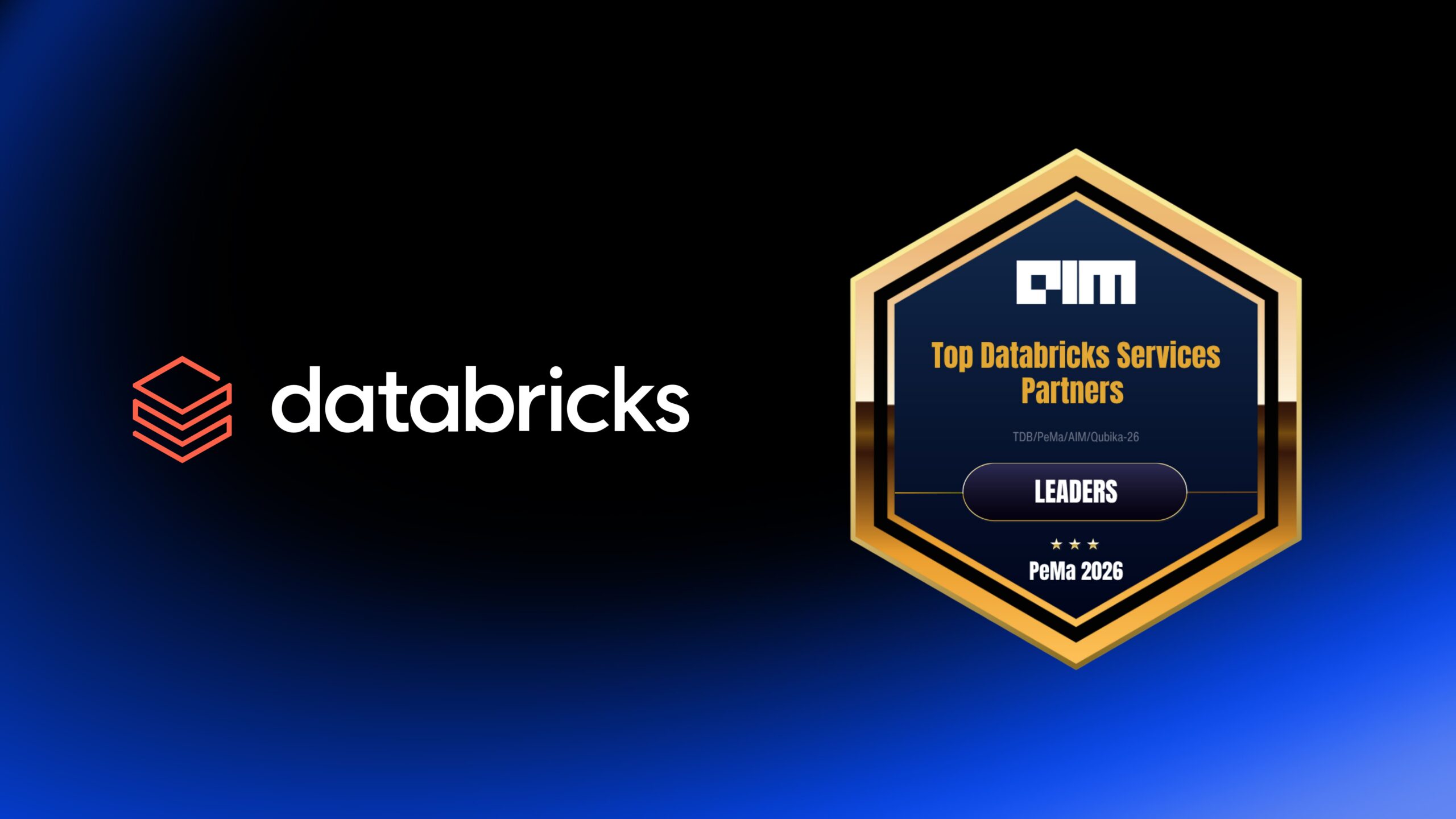
  19. What AIM Research’s Databricks Services Report Says About the Market in 2026

    AIM Research’s 2026 Databricks Services Partners report shows most partner work (50‑75% of projects) is still core lakehouse builds, data‑engineering modernization, and cloud migrations, with emerging focus on Unity Catalog governance, FinOps, and production‑grade agentic AI. Qubika ranks 5th in penetration (0.68) and 3rd in maturity (0.85), highlighted for its real‑time pipelines, reusable IP (Q…

    Moove-itqubika.com4 min
  20. Aperture GA: Building a home(lab) for agentic AI

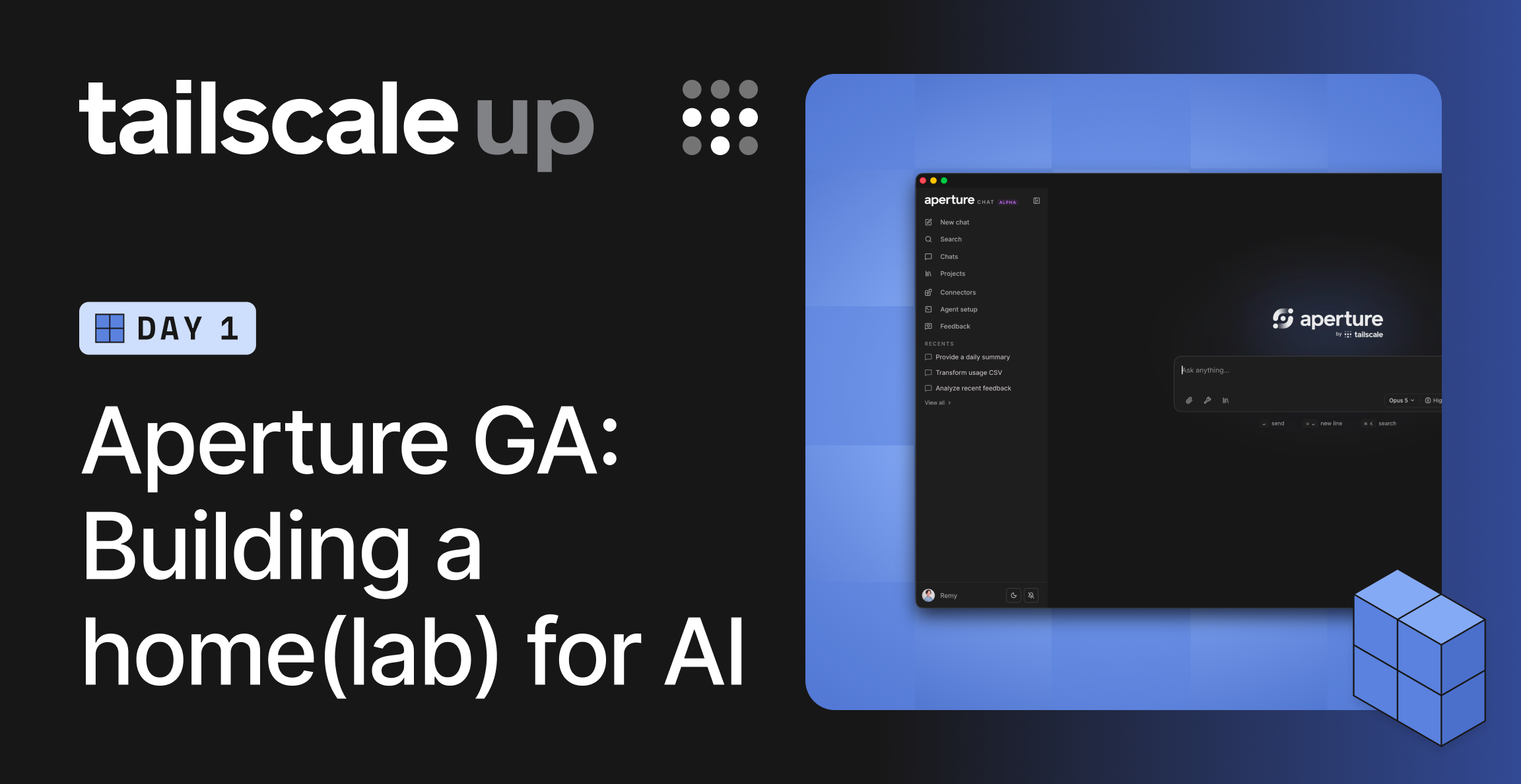
    Aperture, Tailscale’s AI gateway, is now generally available. It ships with starter tokens, in‑app token purchases, new Model Context Protocol (MCP) endpoints for adding Tailnet nodes and invoking Tailscale SSH, and an upgraded chat UI that supports Projects (shared context, tool access, node groups) and configurable default tool permissions. All agent actions respect Tailscale’s unidirectional A…

    Tailscaletailscale.com4 minreleaseHN41
  21. Introducing Neon Labs

    Neon Labs is a new experimental web app (Next.js + TypeScript) that offers two PostgreSQL upgrade tools: a live‑catalog Upgrade Assessment that flags version‑specific blockers, and a Migration Assistant that auto‑generates import, pg_dump/restore, or logical‑replication pipelines based on DB size and downtime needs. The tools run read‑only against a Neon project, never expose connection strings,…

    Neonneon.com6 minrelease
  22. This Week in Rust 666

    This issue of *This Week in Rust* (2026‑08‑26) aggregates community news: official Rust announcements (maintainers‑in‑residence, next‑gen trait solver, supply‑chain attack on arrayref, function‑overloading experiment), a Mozilla JPEG‑XL tooling update, several observations (AI‑assisted C/C++ rewrites, enum‑to‑word speedup, compilation metadata shaving, driver state handling, async vs sync for a r…

    Mozilla Automation Teamthis-week-in-rust.org9 min
  23. Why engineers should come to the SF Ruby Conference in 2026

    The SF Ruby Conference 2026 is a three‑day event for Ruby engineers, offering AI‑heavy and AI‑light tracks, talks from prominent contributors, and a networking format where every attendee gets a 60‑second mic slot. It provides direct access to experts, hiring opportunities, and community activities for anyone building or scaling Rails applications.

    Evil Martiansevilmartians.com6 min
  24. Everything in its place: Making agents write correct Temporal applications

    Use three Temporal‑specific resources to give LLM agents the right context and guardrails: the Temporal Developer Skill (curated instructions), the official SDK samples repos (executable recipes), and the Temporal Knowledge Base MCP (RAG‑powered, citation‑rich Q&A). Explicitly load the skill, add the sample directories, and wire the MCP so the agent can validate designs before emitting code. Keep…

    Temporaltemporal.io15 min