proomt

Search

Search posts, papers, and topics

New

  1. Icons! Lots of them! – These Weeks in Firefox: Issue 206

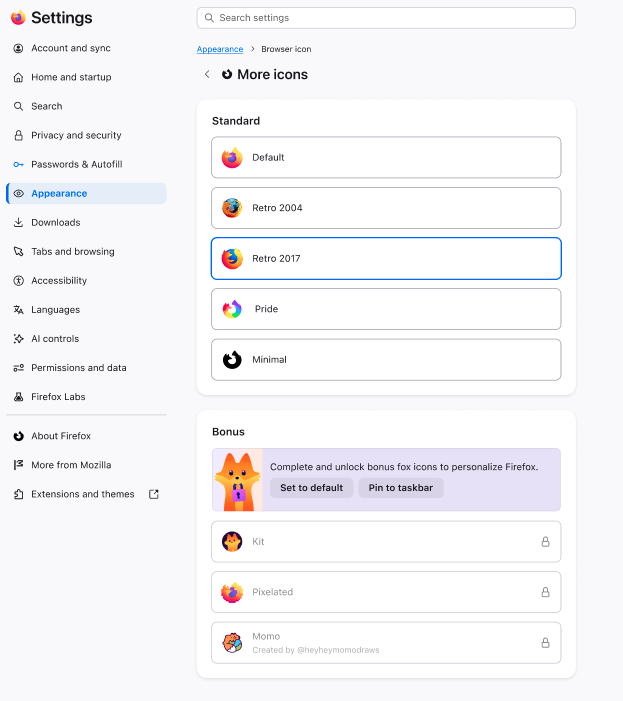
    Firefox 154 adds a Windows‑only UI to change the default browser icon, exposes a new Picture‑in‑Picture WebAPI, and ships a raft of small but concrete improvements across Add‑ons, DevTools, WebExtensions, WebDriver and the Rust‑based login storage component. Most changes are toggles or bug‑fixes (e.g., CSS handling in the Debugger, startup‑performance regression fix, storage.local auto‑reset, and…

    Mozilla Automation Teammozilla.org13 min
  2. Just landed in the Neon CLI

    Neon renamed its CLI to `neon` and added a suite of commands for agent onboarding, branch‑first development, diagnostics, credential management, schema diffing, API fallback, snapshots, auth, Data API, and a built‑in psql client. The post lists usage examples and flags for each new feature.

    Neonneon.com5 minrelease
  3. Taking advantage of the next acceleration curve

    The post argues that agentic AI can compress the Discovery and Alpha phases of agile delivery from 12‑20 weeks to 8‑12 weeks by automating research synthesis, documentation, and prototyping. However, the real challenge becomes organizational governance and decision‑making, which must evolve to keep pace with the faster technical output.

    Made Techmadetech.com4 min
  4. Tapjacking Protection: Rejecting Android Touches Behind an Overlay

    Codename One adds tapjacking protection to its Android runtime. It detects fully or partially obscured MotionEvents, offers four policies (OFF, REPORT, BLOCK, STRICT), can block the entire gesture, and on Android 12+ can request the system hide overlay windows. The API is exposed via `DeviceIntegrity.setTapjackingProtection` and a listener for state changes. iOS has no overlay threat, so the feat…

    CodeName Onecodenameone.com3 min
  5. The TailscaleUp-date

    Tailscale announced new features at its upcoming TailscaleUp event, including AI gateway Aperture enhancements, time‑bound privileged access, DNS‑level protection, and richer programmable APIs. These aim to give teams finer identity‑based control over access to internal and cloud resources.

    Tailscaletailscale.com3 min
  6. WAL + S3: Lakebase storage for the era of agents

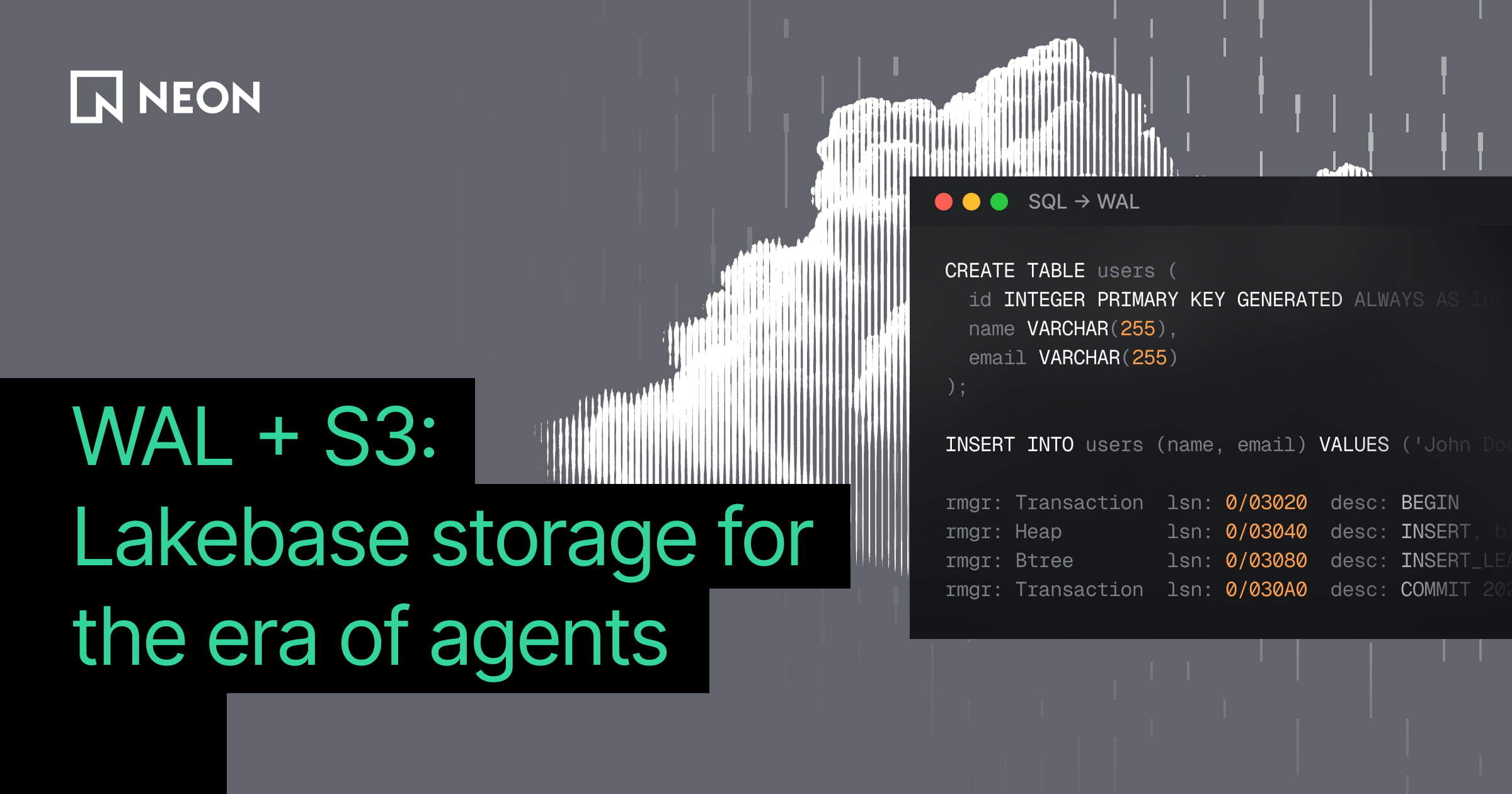
    Neon's Lakebase Postgres redefines database storage by making the WAL the source of truth, stored on S3, rather than data files. This transaction-centric approach enables instant branching, time travel, and scalable, decoupled compute and storage for Postgres.

    Neonneon.com14 minHN4
  7. Glean Dictionary + DuckDB

    A short post describing how the Mozilla Glean Dictionary JSON can be exported into a DuckDB file via a simple ETL script, enabling SQL queries and notebook‑driven analysis of metric types and growth over time.

    Mozilla Automation Teamwrla.ch2 min
  8. I still like writing websites by hand

    A personal blog post describing how the author hand‑crafted a single‑page site for a consultant using Astro, a custom CSS halftone background (leveraging `background‑repeat: space`) and a subtle neon glow via stacked box‑shadows. Includes a few concrete CSS snippets and design‑system references but no deep engineering analysis.

    Chen Hui Jingchenhuijing.com4 minHN2
  9. JavaScript Find in Page: DOM Text Above the Codename One Canvas

    The Codename One JavaScript port now projects eligible text runs from its canvas onto an absolute‑positioned DOM layer, restoring browser find‑in‑page, selection, and accessibility while keeping layout on the canvas. It also adds high‑DPI backing, incremental semantic diffing, and richer input attributes, with a few edge cases still rendered on the canvas.

    CodeName Onecodenameone.com4 min
  10. Watch Apps: One Codebase, Two Real Applications

    Codename One now lets you build an Apple Watch or Wear OS companion app from a single codebase by specifying a watchMain class and optional watchStandalone flag. The new WearableConnection API offers putData, sendMessage, and transferFile primitives for asynchronous phone‑watch communication, with simulator support for both platforms.

    CodeName Onecodenameone.com4 min
  11. Jenkins Configuration as Code: Documentation

    Jenkins Configuration as Code (JCasC) lets you define the Jenkins controller via declarative YAML that mirrors the UI model. The plugin can generate exhaustive documentation and a JSON schema for the YAML, enabling IDE assistance. It also offers a REST API to dry‑run configs before applying them. The post links to related series entries and community resources.

    Codeshipcloudbees.com2 min
  12. Blog: How to Build a DevOps Agent

    This blog walks through the open‑source DevOps Agent Kit, which lets Claude Code or Cursor act as a DevOps assistant by connecting to CloudBees Unify, Jira, and Slack via MCP servers and to GitHub via the CLI. It provides a repeatable setup (Docker, Node, env file) and seven slash commands for pipeline overview, triage, security, release readiness, flag management, CI health scoring, and Jira tic…

    Codeshipcloudbees.com10 min
  13. CloudBees CI Disaster Recovery(DR) proof of concept using Velero

    The post describes a proof‑of‑concept DR setup for CloudBees CI on EKS using Velero with custom patches for cross‑region EBS snapshot replication, achieving 15‑minute RPO and sub‑hour RTO. It also outlines the required backup of $JENKINS_HOME, metadata, DNS switch, and the experimental nature of the patches.

    Codeshipcloudbees.com12 min
  14. FileInputStream / FileOutputStream Considered Harmful

    FileInputStream and FileOutputStream implement finalize, which forces objects onto the finalizer queue and can cause long GC pauses in programs that open many files. Switching to Files.newInputStream and Files.newOutputStream (Java 7+) eliminates the finalizer overhead and improves I/O‑heavy workloads.

    Codeshipcloudbees.com2 min
  15. No, You're Not Behind. But the Stage 3 Governance Window Is Closing.

    A four‑stage model for adopting agentic AI in software delivery pipelines, warning that Stage 3 (bounded autonomous execution) is arriving faster than governance programs. The post explains the stages, required controls (scoped credentials, fail‑closed defaults, tamper‑evident logs), and uses the OpenClaw incident as a cautionary example.

    Codeshipcloudbees.com9 min
  16. Today I Learned: .gitconfig's includeIf

    Use Git's `includeIf` conditional includes to automatically load per‑directory `.gitconfig` files, letting you set different `user.email` and `signingkey` values for Apache, work, and personal repos without manual `git config` calls.

    Codeshipcloudbees.com1 min
  17. The Flaky Test Confession: “We All Know We’re Ignoring Test Failures”

    Flaky tests silently erode CI reliability, waste compute and developer time, and let real bugs slip into production. The post quantifies the cost (≈2.5 % of developer time, $5.67 per manual investigation vs $0.02 for auto‑rerun) and critiques common band‑aid approaches (retries, quarantine, manual triage). It argues that visibility—detecting flaky tests, predictive test selection, and automated t…

    Codeshipcloudbees.com5 min
  18. Introducing the DevOps Agent Kit

    The DevOps Agent Kit is an Apache‑2.0 open‑source starter kit that lets you plug an LLM‑based coding assistant into your existing CI/CD, security, and feature‑flag tooling via CloudBees Unify. It ships with seven read‑only example skills, enforces RBAC and audit trails, and normalises data from up to 63 tools so the agent can answer a single “are we good to ship?” question with verifiable evidenc…

    Codeshipcloudbees.com5 min
  19. Health Check-up for Your Jenkins

    Kohsuke Kawaguchi outlines a few low‑effort ways to keep a Jenkins instance healthy: use jconsole to watch old‑gen heap usage, the Monitoring plugin (or Nagios) to record HTTP latency and queue length, inspect thread dumps for slow pages, and review the built‑in load chart to spot agent under‑/over‑utilisation.

    Codeshipcloudbees.com3 min
  20. Copying Artifacts Between Builds in a Jenkins Workflow

    The copyartifact plugin now supports Jenkins Pipeline via a core step (v1.34). Use the generic `step([$class: 'CopyArtifact', …])` syntax to pull artifacts from another job, with all existing options available through the Snippet Generator. A native pipeline step is planned.

    Codeshipcloudbees.com1 min
  21. Setting Up Jenkins EC2 Agents

    The article walks through configuring Jenkins to launch EC2 instances as build agents on demand, covering AWS IAM setup, security groups, key pairs, AMI selection, and the Jenkins EC2 plugin configuration. It shows how idle termination can keep costs low while providing elastic build capacity.

    Codeshipcloudbees.com6 min
  22. The Credentials API in Jenkins

    The post explains the motivation behind Jenkins' Credentials API, recounts early design mistakes (duplicated username/password types, over‑reliance on the type system), introduces the “Oracles of Identity” concept, and shows how credential domains let users declaratively bind credentials to the right services.

    Codeshipcloudbees.com12 min
  23. Makefile performance: built-in rules

    GNU Make scans every built‑in implicit rule for each target, adding unnecessary overhead. Using the -r (or --no-builtin-rules) flag disables this scanning and can speed up large or no‑op builds by up to ~30%.

    Codeshipcloudbees.com4 min
  24. Skipping the first build on first branch indexing

    Jenkins now supports a build‑branch strategy to skip the initial build that runs when a multibranch job first indexes its branches. Install branch‑api 2.3.0+ and basic‑branch‑build‑strategies 1.3.0+, then enable **Skip initial build on first branch indexing** in the job’s Build strategies UI. The strategy works by overriding `BranchBuildStrategy.isAutomaticBuild` in the plugin code.

    Codeshipcloudbees.com2 min