proomt

Search

Search posts, papers, and topics

New

  1. What Continuous Security Is and What It Isn’t

    The article defines continuous security as an AI‑augmented, unified control plane that embeds security checks into CI/CD pipelines, contrasting it with fragmented tool sprawl that creates alert fatigue. It promotes CloudBees Unify as a solution that deduplicates findings, enforces policy‑as‑code, and automates audit evidence.

    Codeshipcloudbees.com4 min
  2. Introducing ElectricCommander 4.2

    ElectricCommander 4.2 adds a redesigned Resources UI, bulk agent install/upgrade, optional trusted SSL connections, zone‑based segmentation with gateways, new API commands, JSON transport, and a bundled standard license. The release is a typical product update with no deep technical analysis.

    Codeshipcloudbees.com3 minrelease
  3. Everything is green. Nothing is ready.

    CloudBees Unify is a control‑plane layer that aggregates data from existing CI/CD, security, and release tools to give a single delivery record. It claims to improve test efficiency (98 → 30 min) and enforce governance policies across pipelines, with an AI assistant for incident triage. The post is a product‑focused webinar recap with limited technical depth.

    Codeshipcloudbees.com5 min
  4. Fine-Grained Access Control Now Available for All Heroku Customers

    Heroku replaces its static role model with per‑app fine‑grained permissions (view, deploy, operate, manage). The new model is exposed via the Dashboard, Heroku CLI (v11.10+), and Platform API, enabling teams to enforce least‑privilege, improve compliance, and automate access provisioning.

    Herokuheroku.com3 minrelease
  5. SQLite Across Every Port: One Contract, One Encrypted File Format

    Codename One now ships a single, tested SQLite contract that works natively on Android, iOS, Windows, Linux, and in browsers via WebAssembly, with built‑in SQLCipher‑4 encryption supporting three key models. A conformance suite guarantees identical behavior across platforms, and migration helpers let legacy apps opt‑in. The update also adds a proper watch‑app model, DOM‑based text for JavaScript,…

    CodeName Onecodenameone.com11 min
  6. webaudio fingerprinting on alibaba

    Firefox made WebAudio output deterministic in v118, collapsing most variance to three CPU‑dependent buckets (x86 without FMA, x86/x64 with FMA, ARM NEON). Telemetry shows 99.24% of users fall into these buckets; a long tail of 23 distinct values affects <0.1% of users. Ongoing bugs aim to merge the remaining buckets. Alibaba’s fingerprint script was extracted (two SHA‑256 hashes) and shown to be…

    Mozilla Automation Teamritter.vg3 min
  7. Best GitLab Alternatives for Enterprise Teams (2026)

    The article is a vendor‑authored marketing piece that lists criteria for picking a GitLab alternative and then promotes CloudBees Unify as a cross‑tool governance layer, with brief mentions of other tools (GitHub, Jenkins, Azure DevOps, Harness, CircleCI). It contains a few quoted survey percentages but no technical deep‑dive, code, architecture diagrams, or independent evaluation.

    Codeshipcloudbees.com10 min
  8. CloudBees vs Harness: Why Migration Isn't the Fix

    The article argues that Harness’s “free migration” offer hides significant downstream costs (training, pipeline rebuilds, compliance recertification) and that even after migration you still lack unified governance across heterogeneous CI/CD tools. CloudBees positions its Unify control plane as a tool‑agnostic layer that adds visibility, continuous governance, AI‑driven test selection, and hybrid…

    Codeshipcloudbees.com5 min
  9. A New Framework for Open Source AI

    Mozilla and partners published a paper proposing a layered, gradient openness framework for foundation models, defining openness for data, code, weights, docs, and deployment. The framework gives developers, regulators, and civil society a common language to evaluate openness and safety beyond a binary label.

    Mozilla Automation Teammozilla.org3 min
  10. AI Norms & Values, Part 1 of 3: How We Do Business at Honeycomb

    Honeycomb’s first AI‑norms document (How We Do Business) codifies eight concrete GTM principles – value‑first, human‑centric, truthful, earned‑asks, hard‑but‑fair competition, respect for attention, AI‑augmented responsibility, and durable relationships – and argues that AI merely amplifies existing culture rather than creating new rules.

    Honeycombhoneycomb.io7 min
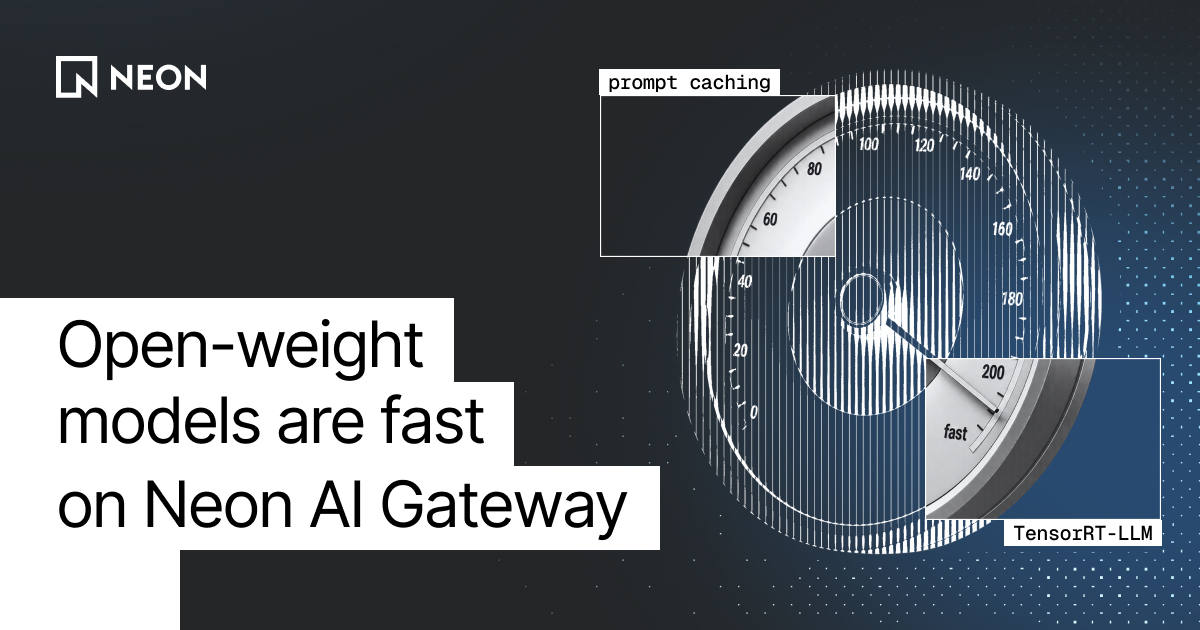
  11. Open-weight models are fast on Neon AI Gateway. Here's why

    Neon AI Gateway provides fast inference for open-weight LLMs by utilizing Databricks' optimized serving stack. This stack incorporates techniques like prompt caching, continuous batching with KV-cache paging, and a TensorRT-LLM backend, leading to significant improvements in throughput and latency.

    Neonneon.com6 min
  12. The CARE score: Measuring your organization's AI readiness

    CloudBees’ CARE Score is a proprietary 0‑100 rubric across six AI‑governance dimensions (cost visibility, budget predictability, productivity measurement, governance maturity, pipeline visibility, token governance). The post shows a gap between leaders’ self‑rated confidence (≈86‑92%) and operational reality (e.g., only ~30% can attribute AI spend to outcomes, ~27% enforce token limits). It offer…

    Codeshipcloudbees.com8 min
  13. Agentic DevOps World 2026: Key Takeaways

    Enterprise AI code generation is outpacing governance: 92% of leaders feel confident but 81% see more production issues; post‑generation stages (review, testing, deployment) are now the bottleneck. Successful adoption requires up‑skilling, end‑to‑end metrics, and tooling (e.g., CloudBees DevOps Agent Kit, PR‑auto‑approval agents).

    Codeshipcloudbees.com8 min
  14. The 2026 State of Code Abundance Report: Exposing the Enterprise AI Readiness Gap

    A report highlights a significant gap between enterprise confidence in AI-generated code and operational reality, with 81% of leaders reporting increased production issues despite high readiness scores. This "code abundance" means code is generated faster than organizations can effectively test, govern, and manage it, leading to challenges in cost attribution and governance.

    Codeshipcloudbees.com5 min
  15. OpenClaw Is a Preview of Why Governance Matters More Than Ever

    Autonomous AI agents like OpenClaw are shifting software development from AI-assisted to AI-executed, capable of committing code and orchestrating deployments without human approval. This necessitates robust governance to manage increased risks in security, compliance, and accountability, as traditional DevOps assumptions no longer hold.

    Codeshipcloudbees.com6 min
  16. One style guide for everything Claude Code writes

    A detailed walkthrough of forking the nbj‑write‑clearly Claude Code skill to enforce the Google Developer Documentation style guide across all developer‑facing prose (docs, comments, commit messages, review feedback). The fork expands the trigger set, vendors the 70‑page guide offline via a Bun sync script, and adds a layered approach (global CLAUDE.md rules, on‑demand skill, per‑agent preloaded…

    Bjørn Johansenbjornjohansen.com5 min
  17. Merge Conflict: Everything You Need to Know

    This article explains what Git merge conflicts are, why they occur when merging different changes to the same file locations, and how they manifest differently in standard merges versus rebases. It provides a strategy for resolving rebase conflicts in feature branches before merging them into a main branch.

    Codeshipcloudbees.com5 min
  18. Is CMMI Dead Yet? If Not, Can It Be?

    This article argues that CMMI (Capability Maturity Model Integration) is an outdated and ineffective methodology for software development. It contends that CMMI's focus on institutionalized process devalues individual talent, stifles innovation, and has failed to prove its worth in the broader technology space.

    Codeshipcloudbees.com6 min
  19. Using Docker Compose for NodeJS Development

    This tutorial demonstrates how to set up a Node.js application with a PostgreSQL database using Docker Compose for local development. It covers creating a Dockerfile for the Node.js app and defining both services in a docker-compose.yml file, including volume mounts and environment variables.

    Codeshipcloudbees.com9 min
  20. Using Docker Compose for PHP Development

    This tutorial demonstrates how to set up a PHP/Laravel/PostgreSQL development environment using Docker and Docker Compose. It covers creating a Dockerfile for the PHP application and defining services for NGINX, the PHP app, and PostgreSQL in a docker-compose.yml file.

    Codeshipcloudbees.com10 min
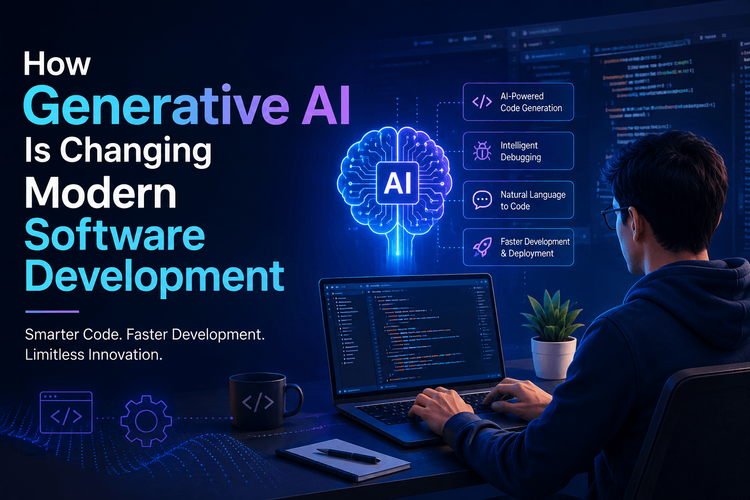
  21. How Generative AI Is Changing Modern Software Development

    Generative AI tools can assist developers by producing code snippets, tests, documentation, and debugging hints, but their output must be reviewed and validated. Engineers should adopt prompt‑writing skills and maintain core software‑engineering expertise to use AI safely and productively.

    SitePointsitepoint.com4 min