proomt

Search

Search posts, papers, and topics

All posts

Spotify7 min readpostmortemadvanced

AI Changed How Spotify Builds. What We Learned (and Fixed) About Quality at Higher Velocity

Summary

Spotify’s AI‑assisted development doubled change volume, exposing gaps in alerting, capacity planning, fleet‑update safety, and mobile quality signals. The team added end‑to‑end monitoring, priority‑based tiering, stronger rollback/observability, and expanded edge capacity. Data shows AI‑generated code isn’t a direct incident cause, but verification pipelines must scale with velocity.

  • Add end‑to‑end failure monitoring for content ingestion to catch silent processing errors before creators notice.
  • Implement workload tiering and priority‑based scheduling so critical uploads win capacity during spikes.
  • Strengthen fleet‑management safeguards: expand rollback capacity, schedule automated changes during owning teams’ hours, and add more safety checks.
  • Plan for compute scarcity (CPU/GPU) by reserving extra edge capacity and enabling manual traffic shifting during regional failovers.

At Spotify’s scale (3 000 services, 11 M requests/sec, 100 M concurrent clients), even minor verification gaps can affect millions. The post‑mortem shows concrete, data‑driven adjustments that keep quality high while leveraging AI‑driven velocity—a pattern other large tech orgs will need to emulate.

8/10

Related reading

  1. Every tool is green. Can you ship?

    A CloudBees blog post argues that existing CI, security, and QA tools don’t give release managers a complete view of AI‑generated code risk. It claims tool consolidation rarely helps and proposes a “control plane” (CloudBees Unify) that aggregates signals from multiple tools and adds AI‑driven test prioritization. The piece is largely promotional, with no concrete implementation details, metrics,…

    Codeshipcloudbees.com4 min
  2. Server Monitoring in the age of AI: What static thresholds miss and how adaptive monitoring fixes it?

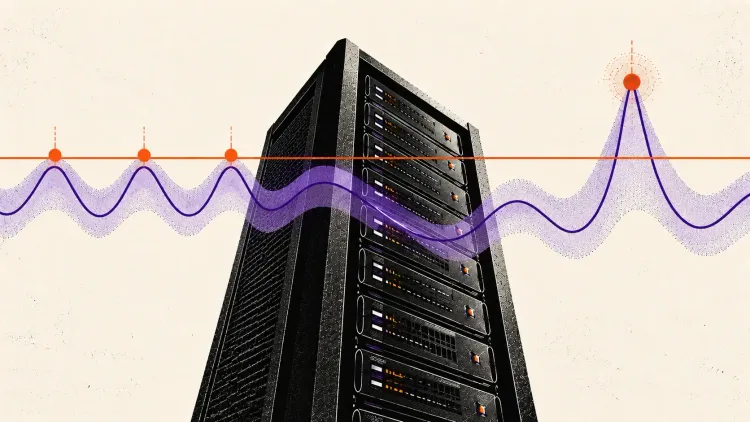
    Static CPU/memory thresholds generate noise because workloads vary by time‑of‑day, day‑of‑week, and long‑term trends. Adaptive monitoring learns per‑server baselines (using simple ML on historic metrics) and creates dynamic thresholds plus anomaly alerts. ManageEngine OpManager’s Zia engine is presented as a turnkey AIOps solution that auto‑learns baselines, lets you set sensitivity, and adds ale…

    SitePointsitepoint.com6 min
  3. Integrating AI Across Industries: A Developer’s Guide to Practical Frameworks

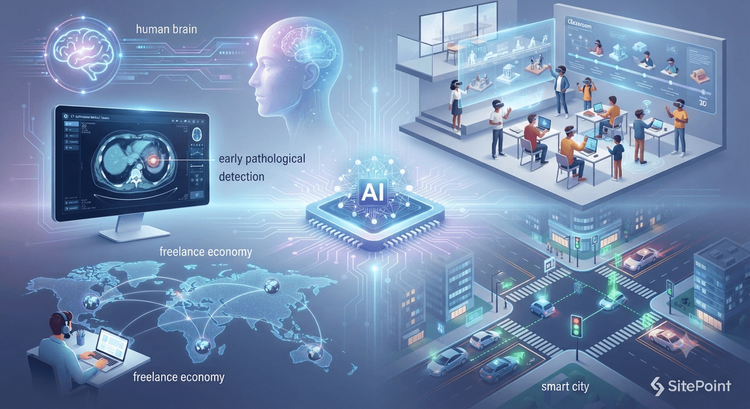
    The article surveys common AI integration patterns—high‑throughput streaming with Kafka/Kinesis, edge object detection on Jetson, CI/CD for full‑stack freelance apps, and security/bias safeguards—but offers only high‑level guidance. It outlines the technologies and best‑practice checkpoints developers should consider when building scalable, secure AI services.

    SitePointsitepoint.com1 min