proomt

Search

Search posts, papers, and topics

All posts

SitePoint7 min readintermediate

Website monitoring in the AI era: What's changed, what's fixed, and what your team should still be watching

Summary

AI‑driven monitoring replaces static thresholds with learned baselines, cutting noise and surfacing real user‑impact issues. However, teams still need to explicitly monitor DNS, SSL, content integrity, and multi‑region performance to avoid blind spots.

  • Anomaly detection learns normal traffic patterns per service and flags deviations, reducing false alerts compared to static thresholds.
  • Add explicit checks for DNS, SSL certificates, and page content against known baselines each cycle.
  • Track separate performance metrics (DNS lookup, connection, TTFB, total load) from multiple geographic nodes.
  • Correlate related alerts and route them by ownership with escalation policies to deliver actionable context.

Site reliability engineers need to bridge the gap between server uptime and actual user experience, and these practices directly reduce incident latency and noise.

5/10

Related reading

  1. Server Monitoring in the age of AI: What static thresholds miss and how adaptive monitoring fixes it?

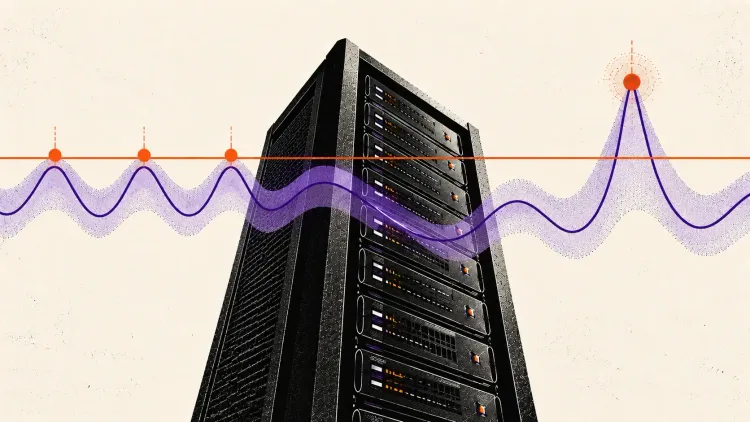
    Static CPU/memory thresholds generate noise because workloads vary by time‑of‑day, day‑of‑week, and long‑term trends. Adaptive monitoring learns per‑server baselines (using simple ML on historic metrics) and creates dynamic thresholds plus anomaly alerts. ManageEngine OpManager’s Zia engine is presented as a turnkey AIOps solution that auto‑learns baselines, lets you set sensitivity, and adds ale…

    SitePointsitepoint.com6 min
  2. AI Changed How Spotify Builds. What We Learned (and Fixed) About Quality at Higher Velocity

    Spotify’s AI‑assisted development doubled change volume, exposing gaps in alerting, capacity planning, fleet‑update safety, and mobile quality signals. The team added end‑to‑end monitoring, priority‑based tiering, stronger rollback/observability, and expanded edge capacity. Data shows AI‑generated code isn’t a direct incident cause, but verification pipelines must scale with velocity.

    Spotifyatspotify.com7 minpostmortemHN52
  3. What four people at Hostinger actually do with AI all day (and what happens when you have an agentic beef)

    Hostinger staff use custom AI agents to automate daily tasks—from code reviews to influencer lead sourcing—shifting their work from doing the work to managing the agents. Building reliable “harnesses” (prompt contexts, constraints) consumes most of the engineering effort, and agents still hallucinate, repeat work, or suggest unsafe fixes, so human oversight remains essential.

    Hostingerhostinger.com8 min