proomt

Search

Search posts, papers, and topics

All posts

InfoQOlimpiu Pop3 min readintermediate

Google Open-Sources AX a Kubernetes Style Orchestrator for Autonomous AI Agents

Summary

Google open‑sources AX, a Kubernetes‑style orchestrator for autonomous AI agents that treats each agent as a stateful actor, checkpointing idle sessions and resuming them in sub‑second latency. AX introduces four CRDs (Task, Workspace, Gateway, Model) and a Go CLI, runs on top of the Agent Substrate runtime, and uses gVisor sandboxes with Redis‑backed control plane. The design targets the bursty,…

  • AX models agents as isolated actor sandboxes with strict CPU/memory limits, checkpointing on idle to avoid idle compute costs.
  • Four declarative primitives (Task, Workspace, Gateway, Model) let users define execution, environment, network policies, and LLM provider configs via Kubernetes‑style CRDs.
  • Control plane deployed with ko and Redis; CLI (ax) offers apply, watch, ssh, suspend/resume commands for managing agent lifecycles.
  • Uses gVisor for sandbox isolation and supports secret injection, but early users report egress proxy issues and non‑trivial ops overhead.

Autonomous agents spend most of their time waiting on model calls or external tools, leading to massive under‑utilization in traditional container setups. AX’s checkpoint‑resume model and actor‑centric design aim to make large‑scale agent deployments economically viable, a growing need as LLM‑drive…

6/10

Related reading

  1. Agent Substrate brings high-density, scalable, trusted infrastructure to GKE

    Agent Substrate is an open‑source runtime for AI agents that runs on GKE. It uses Cloud Hypervisor microVMs or gVisor sandboxes to give kernel‑level isolation, a custom control‑ and data‑plane that can suspend/resume agents in <500 ms, and a “zero‑idle” model that packs >1 000 dormant agents per host (≈10× density vs. containers). GKE integration adds custom ComputeClasses, spot/on‑demand pools,…

    Google Cloud Bloggoogle.com6 min
  2. Monitor TAS and gang scheduling for AI training in Kubernetes

    Kubernetes’ default scheduler can’t satisfy AI training’s need for low‑latency GPU interconnects and simultaneous pod start‑up. The blog explains how the open‑source Kueue job queue adds topology‑aware placement (using node labels like `topology.kubernetes.io/rack`) and how the Coscheduling plugin adds a permit phase that only binds a gang of pods when the full set is ready, preventing idle GPU r…

    Datadogdatadoghq.com19 min
  3. Changing the game: How Google uses agentic AI to secure hundreds of millions of lines of code

    Google’s AI & Infrastructure team built an agentic pipeline (Mantis) that runs pre‑submit AI‑driven scans on every code check‑in, validates findings with a fast triage agent (AST + call‑graph analysis) achieving >92% precision in <1 min, then auto‑generates fixes via a bug‑fix agent. Localized threat models and a two‑step scan cut false‑positives to ~3% and prevent hundreds of vulnerabilities eac…

    Google Cloud Bloggoogle.com4 min
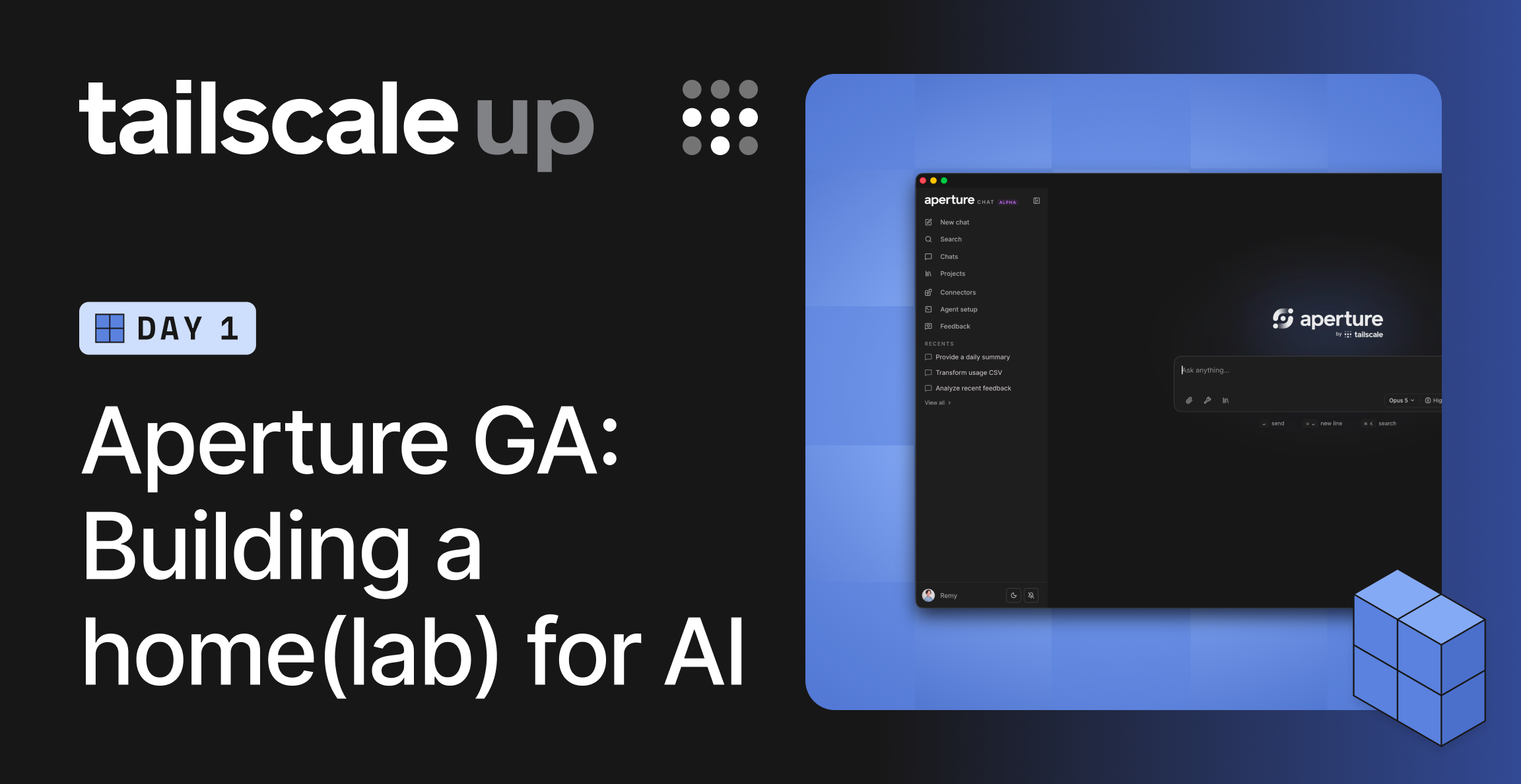
  4. Aperture GA: Building a home(lab) for agentic AI

    Aperture, Tailscale’s AI gateway, is now generally available. It ships with starter tokens, in‑app token purchases, new Model Context Protocol (MCP) endpoints for adding Tailnet nodes and invoking Tailscale SSH, and an upgraded chat UI that supports Projects (shared context, tool access, node groups) and configurable default tool permissions. All agent actions respect Tailscale’s unidirectional A…

    Tailscaletailscale.com4 minreleaseHN41