proomt

Search

Search posts, papers, and topics

New

  1. AWS Elastic Beanstalk introduces Cluster Mode

    AWS Elastic Beanstalk now offers a fully‑managed Cluster Mode that runs multiple applications on a shared Amazon EKS cluster, handling containerization, scaling, patching and observability automatically. It adds AI‑driven troubleshooting, OpenTelemetry support and standard deployment strategies while charging only for the underlying AWS resources.

    AWSamazon.com5 minrelease
  2. Run Terminal-Bench and other Harbor evals on Vercel Sandbox

    Vercel now supports running Harbor benchmarks, like Terminal‑Bench, inside its Sandbox using Firecracker microVMs. The integration with AI Gateway lets you benchmark multiple models by swapping the `--model` flag, scaling concurrency with `--n-concurrent`.

    Vercelvercel.com1 minrelease
  3. The official ClickHouse provider for Apache Airflow is now available

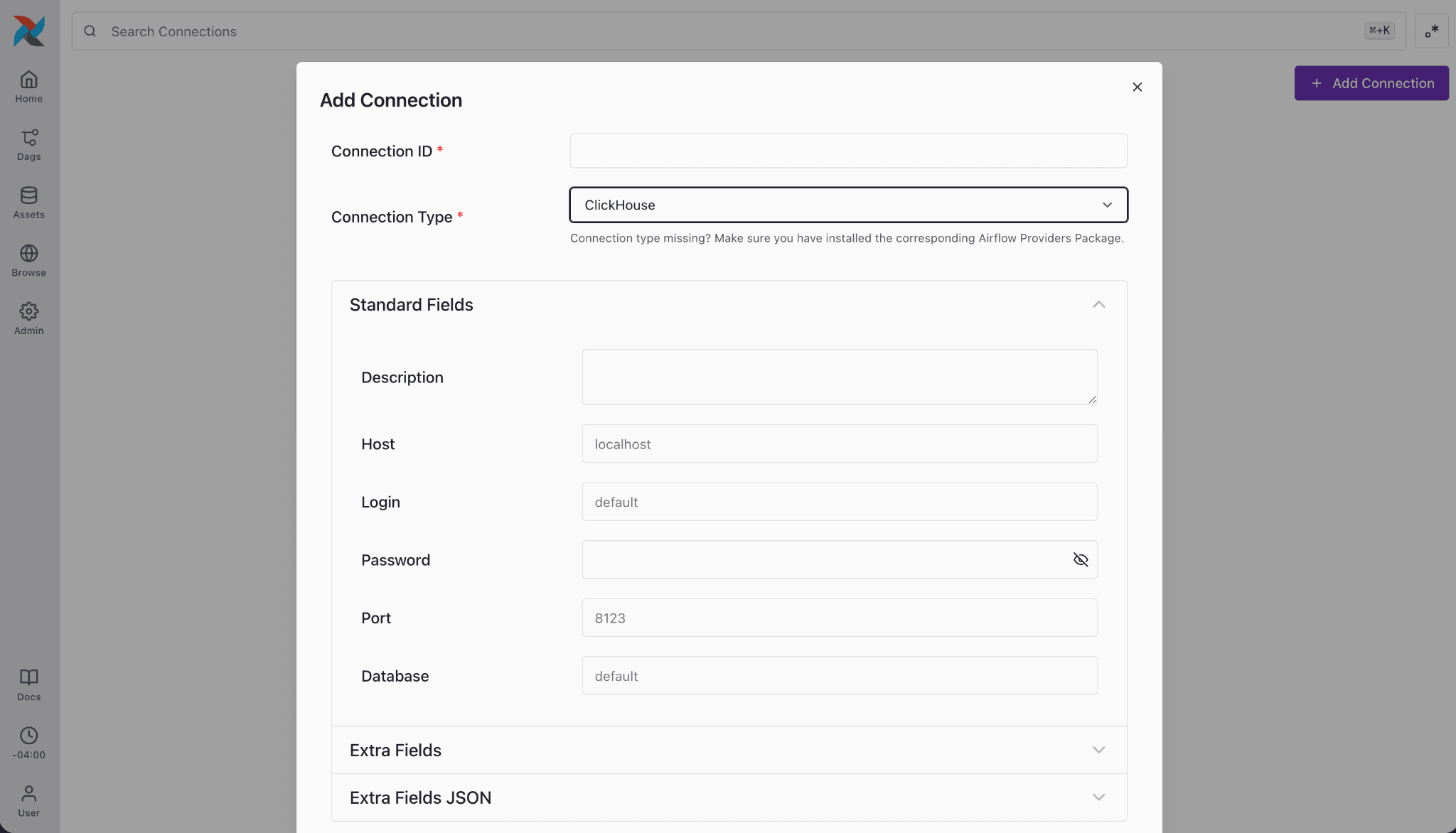
    The post announces the official ClickHouse provider for Apache Airflow, showing how to install it, configure a ClickHouse connection, and run queries using standard SQL operators or a ClickHouseHook. It includes examples for both self‑hosted Airflow and the Astronomer managed platform.

    ClickHouseclickhouse.com5 min
  4. The Farnese letter

    The author reverse‑engineers a 1542 Italian cipher from a Farnese letter by combining digit‑frequency analysis with a beam‑search decoder guided by a five‑gram Italian language model, ultimately recovering the key and partial plaintext.

    Hacker News front pagesimonklee.dk42 minHN476
  5. Database for AI Agents: 5 Evaluation Criteria

    Databricks outlines five criteria for a production‑ready database for AI agents—branch‑per‑agent isolation, serverless scale‑to‑zero, hybrid search, ACID guarantees, and a unified platform that eliminates ETL lag—illustrating each with features of its Lakebase offering and brief customer anecdotes.

    Databricksdatabricks.com10 min
  6. September 16, 2026 security incident: how we responded to a LiteSpeed zero-day attack

    Hostinger detected a zero‑day exploit in LiteSpeed Web Server on a Brazil server on Sep 16 2026, giving the attacker root access and compromising 399 accounts. The team isolated the server, coordinated with LiteSpeed to patch the vulnerability, rolled out the fix fleet‑wide, and restored affected sites from backups within the same day.

    Hostingerhostinger.com2 minpostmortem
  7. Server Monitoring in the age of AI: What static thresholds miss and how adaptive monitoring fixes it?

    Static CPU/memory thresholds generate noise because workloads vary by time‑of‑day, day‑of‑week, and long‑term trends. Adaptive monitoring learns per‑server baselines (using simple ML on historic metrics) and creates dynamic thresholds plus anomaly alerts. ManageEngine OpManager’s Zia engine is presented as a turnkey AIOps solution that auto‑learns baselines, lets you set sensitivity, and adds ale…

    SitePointsitepoint.com6 min
  8. High-speed Release Trains – These Weeks in Firefox: Issue 209

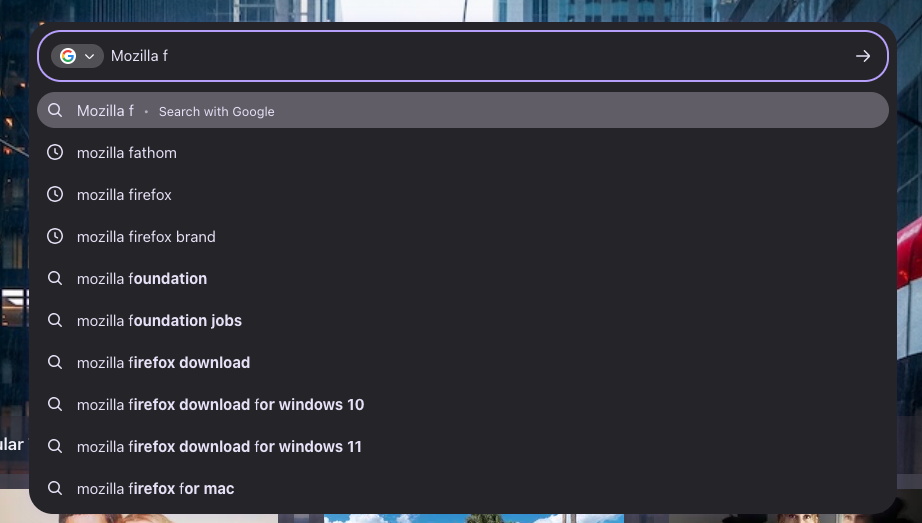
    Firefox 155 shipped via a new 2‑week release train; the week’s highlights include a WebExtensions theme API addition, multi‑context address bar in Nightly, DevTools stylesheet editing in the JS debugger, and extensive New Tab page UI/telemetry work (stocks widget, privacy widget, policy‑locked settings). The post also calls out many volunteer contributors and a handful of infrastructure tweaks (T…

    Mozilla Automation Teammozilla.org9 min
  9. From Individual Experiments to a Shared AI Practice: How Avant Scaled AI-Assisted Engineering

    Avant replaced many personal AI‑assistant setups with a single, organization‑wide Claude Code configuration that embeds the company’s coding standards, project‑tracking links, and documentation. Treated as an internal product, the setup is versioned, owned by delivery engineers, and iteratively improved. The shared tool speeds routine tasks (scaffolding, tests, migrations, docs) and enforces cons…

    Moove-itqubika.com2 min
  10. The Web Search Your Agent Inherited Isn't Good Enough

    Omnigent is a unified agent definition layer that lets you write an LLM‑agent once and run it on any harness (Claude Code, Codex, raw API). By plugging Nimble’s specialized web‑search API into the Omnigent web_search builtin, you get consistent, deeper, and cheaper web results – benchmark accuracy jumps from 46 % to 71 % and search cost halves. All model calls go through Databricks Foundation Mod…

    Databricksdatabricks.com7 min
  11. Towards Self-Driving Codebases

    The post argues that AI agents could eventually handle low‑level engineering tasks—bug fixing, debugging, UI consistency, growth experiments—if the dev toolchain is made “agent‑legible”. It outlines missing primitives (global memory, code‑base rot prevention, better dev environments) and proposes a bootstrapping process to measure and improve a repo’s “agent readiness”. The piece is largely specu…

    Hacker News front pagedetail.dev9 minHN12099
  12. Infinite-Parameter LLMs: Generating and Adapting Weights from Live Data

    The paper presents Infinite-Parameter LLMs, where a compact hypernetwork creates feed‑forward weights from live user data and updates a Bayesian latent code online, keeping the stored model size constant while effectively having infinite parameters. This design aims to improve over standard in‑context learning and retrieval by persisting knowledge in weights and freeing context space.

    Hacker News front pagearxiv.org2 minpaperHN15743
  13. What is AIOps?

    Databricks’ blog post explains what AIOps is, its core components (data ingestion, normalization, anomaly detection, correlation, RCA, automation, collaboration), and why it’s gaining traction now. It positions AIOps as a layer between observability and action, emphasizing human‑in‑the‑loop for high‑risk steps, and outlines domain‑centric vs. domain‑agnostic approaches and common use‑cases like R…

    Databricksdatabricks.com13 min
  14. Labeled matches: why is this not in every regex engine?

    The author shows how to label tokens (dates, money, emails, etc.) with a single regex pass using extended operators (`&` for intersection, `~` for complement) in the resharp library. A tiny benchmark compares 10 patterns against spaCy’s NER, reporting ~1.9 GB/s (≈4500× faster) on 8 threads. The post lists the concrete patterns and argues that for deterministic, regular‑language entities regex can…

    Lobstersiev.ee7 minHN5lobste.rs27