New
Rate limits on GitLab.com are changing
GitLab.com will tie API rate limits to subscription tiers: free users (and unauthenticated IPs) get 60 req/hr, while Premium/Ultimate get higher per‑user and per‑group caps starting Oct 19 2026 (free) and Jan 2027 (paid). Authenticated requests use the plan’s limits; hitting a limit returns 429 with Retry‑After. Preview “brownout” windows on Oct 7 and 14 let you test the new caps. If you need mor…
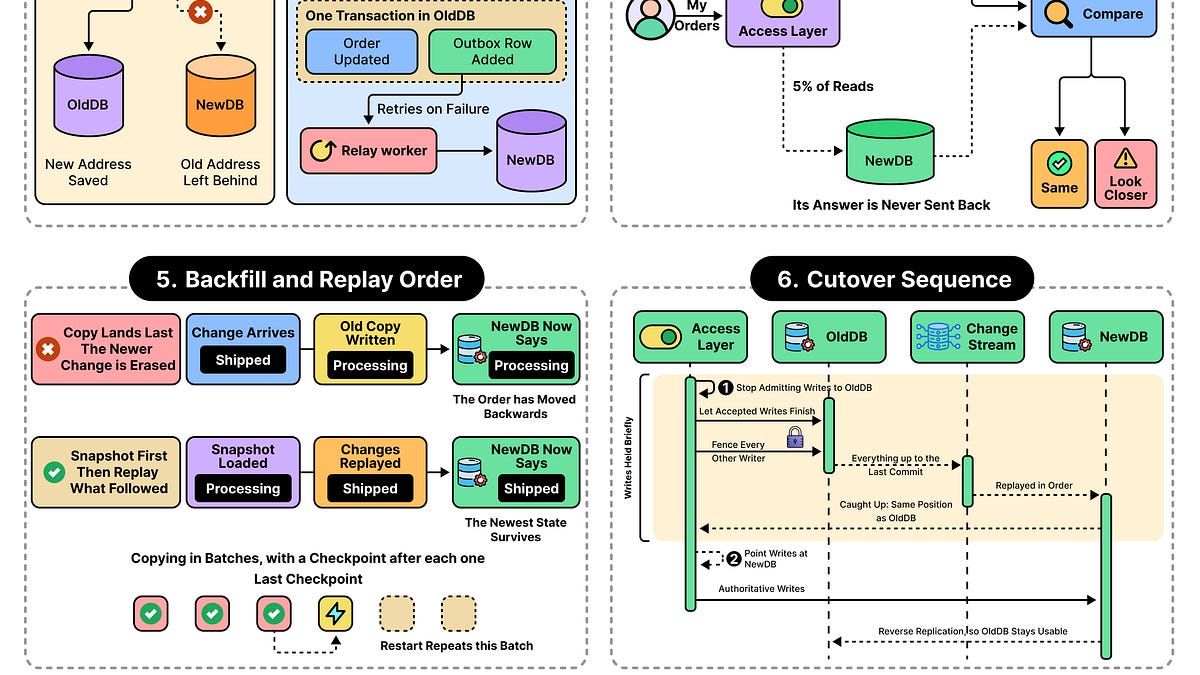
Hacker News front pagegitlab.com4 minHN174127Migrations at Scale: Changing the Application Engine at 30,000 Feet
The article outlines the challenges of swapping a production database without downtime and surveys common high‑level tactics—dual writes, feature flags, phased rollouts, and continuous sync—to keep the service available during large‑scale migrations.
ByteByteGobytebytego.com1 minThe Golden Spike, and Resurrecting the Vale(n) Programming Language
Evan Ovadia announces Valen, a fork of his Vale language aimed at seamless Rust interop with features like linear types, group borrowing, and cross‑language generics. He outlines current capabilities, open challenges, and a lazy AST‑signature approach to bridge the Rust ABI gap.
Everybody's Lost Their Minds
The author argues that the AI hype wave is draining engineering resources without improving security, and that basic practices like inventory and automated patching are far more valuable. He warns that over‑reliance on AI‑generated code erodes understanding and makes debugging harder.
September 2026 newsletter
ClickHouse's September 2026 newsletter highlights the 26.8 release with features like pipelined SQL and custom HTTP handlers, alongside previews for On-Demand Compute and a PromQL-compatible TimeSeries engine. It also covers new Postgres integration tools and a cost-performance benchmark for cloud data warehouses.
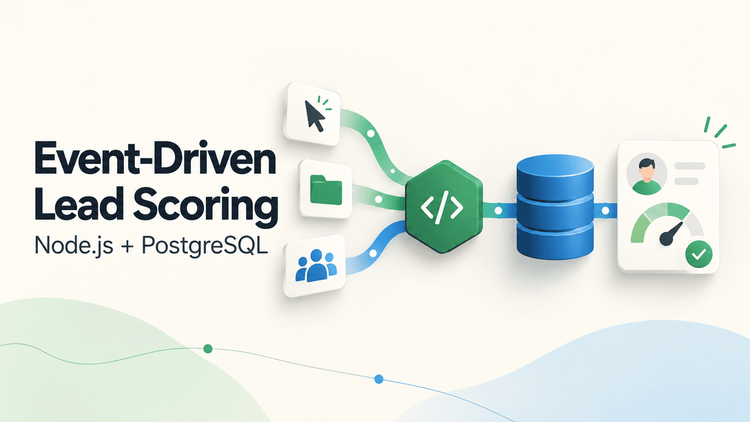
ClickHouseclickhouse.com7 minHow to Build an Event-Driven Lead Scoring Pipeline with Node.js and PostgreSQL
This tutorial demonstrates building an event-driven lead scoring pipeline using Node.js and PostgreSQL. It focuses on robust design patterns like idempotency, secure webhook processing, and transactional consistency with a transactional outbox.
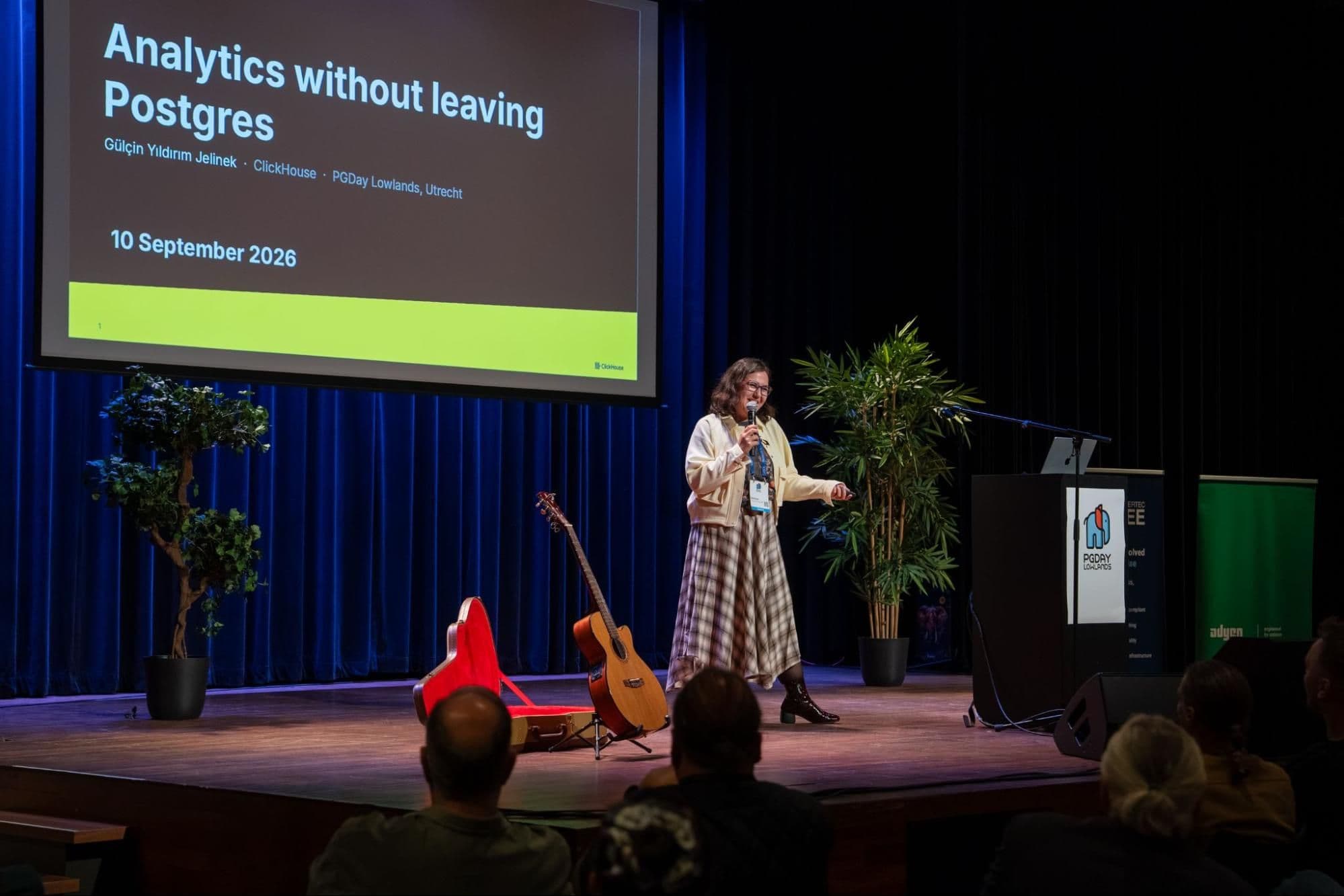
SitePointsitepoint.com16 minPostgres week in the Netherlands: PGDay Lowlands & Percona Live 2026
The author recaps two Dutch conferences where they presented ClickHouse‑Postgres extensions and discussed PostgreSQL 19 monitoring enhancements. The post explains how pg_clickhouse provides transparent query push‑down to ClickHouse and how pg_stat_ch streams per‑query metrics, plus new logging defaults and system views in PG 19.
ClickHouseclickhouse.com7 minstd::call_once vs. std::async
Raymond Chen compares using std::call_once versus std::async (deferred) for lazy initialization in C++. He shows that std::async can be wrapped in a shared_future for repeatable get() calls, but it adds heap allocation and extra code, while call_once is tiny; exception behavior also differs.
Raymond Chenmicrosoft.com2 minModernizing the Trade Lifecycle With Governed Data and AI
Databricks argues that modernizing the trade lifecycle now hinges on building a governed, real‑time data foundation that spans research, trading, risk, ops and compliance, rather than isolated AI pilots. Starting with a few high‑value questions—execution cost, shock risk, exception rates—and using Unity Catalog and Agent Bricks lets firms achieve measurable speed and auditability gains before sca…
Databricksdatabricks.com5 minThe American Religion of Self-Storage Facilities
The article explores the ubiquity and cultural significance of self-storage facilities in the US, likening them to a "religion" alongside churches. It details the industry's massive scale, economic drivers ("four D's"), and operational models, from mom-and-pop to large, technologically advanced chains.
Hacker News front pagenewyorker.com21 minHN273449Write End-to-End Tests in Your Backend’s Language
This article advocates writing end-to-end tests in the backend's language to leverage domain models and persistence tools for efficient test data setup. It details a strategy for structuring E2E tests with inline data creation, small helpers, and parallel execution considerations.
Atomic Objectatomicobject.com7 minUse Curiosity, Craft, and Care to Decide What AI Should Write
The post proposes a three‑principle framework—Curiosity, Craft, and Care—to decide how much AI should author each artifact in a software development workflow. It argues that AI can be used aggressively for exploratory, disposable outputs (Curiosity) but should be limited for artifacts that commit the team to decisions (Craft) and for communications that require personal ownership (Care). The auth…
Atomic Objectatomicobject.com4 minWebKit Features for Safari 27.0
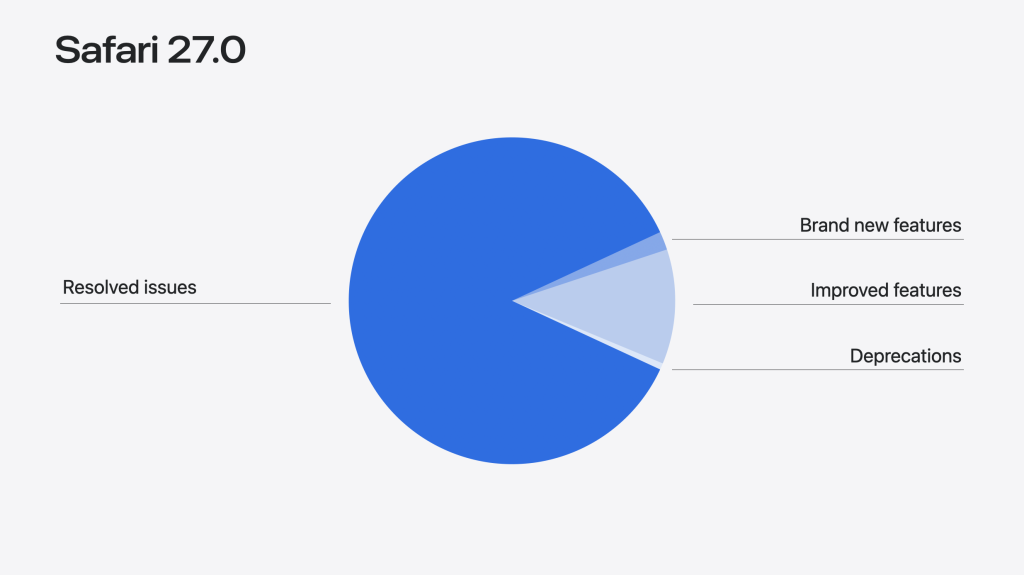
Safari 27.0 adds a local MCP server for AI‑driven automation, a fully stylable `<select>` via `appearance: base-select` and new pseudo‑elements, the `<model>` element for embedding 3D assets, `sizes="auto"` for responsive images, a `shadowrootslotassignment` attribute for declarative shadow roots, and a large set of quality‑focused fixes (844 resolved issues).
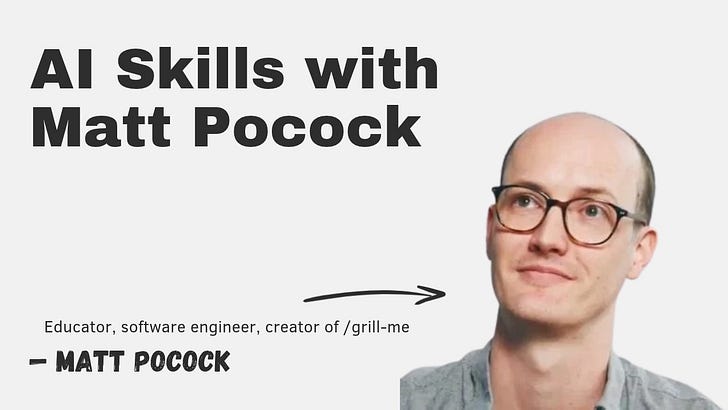
WebKitwebkit.org84 minAI Skills with Matt Pocock
Matt Pocock explains how he uses AI agents for software development, emphasizing "strategic programming" and guiding agents with "leading words" from classic engineering texts. He argues that this approach makes engineering fundamentals more critical than ever for creating agent-optimized codebases.
The Pragmatic Engineerpragmaticengineer.com7 minBuilding an Internal Developer Platform with Artificial Intelligence
This article discusses building internal developer platforms with AI agents that use semantic search across internal data sources like Git, Slack, and Jira. It highlights the need for guardrails to control agent actions and comprehensive observability via logs, metrics, and traces to understand agent behavior and improve developer experience.
InfoQinfoq.com4 minOpenTelemetry everywhere: Migrating a metrics platform at scale
Atlassian replaced its decade‑old gostatsd‑based metrics pipeline with a fully OpenTelemetry‑based stack by keeping the StatsD‑UDP contract on the client side and swapping in purpose‑built OTel Collector distributions for collection, ingest, aggregation, and forwarding. The migration was done incrementally, saved ~3.9% CPU per service, cut sidecar cost ~30% fleet‑wide, halved aggregation CPU, and…
Pragmatic principles for more rights-respecting age assurance architectures
The article proposes a rights‑respecting approach to age‑assurance, assigning actuation to services, using devices for privacy‑preserving signal creation, offering user choice of providers, and leveraging zero‑knowledge credentials. It argues that policy must enforce open standards and end‑to‑end risk assessment to avoid privacy, security, and competition harms.
Mozilla Automation Teammozilla.org10 minI expected better from Google
The authors of the open‑source project mobile‑use discovered that Google’s Artemis repository contains large blocks of identical Python code, examples, and even the same agent name without any attribution. They document the exact file diffs, the removal of their names via a force‑push, and the omission of their benchmark results from a public leaderboard. The post argues that this violates Apache…
Kubernetes Multi-Cluster Project Karmada Reaches CNCF Graduation
Karmada, a multi-cluster and multi-cloud Kubernetes orchestration project, has graduated to the highest maturity tier within the CNCF. It extends the standard Kubernetes API to manage workloads across diverse environments, enhancing multi-component scheduling for AI training jobs and promoting priority-based scheduling.
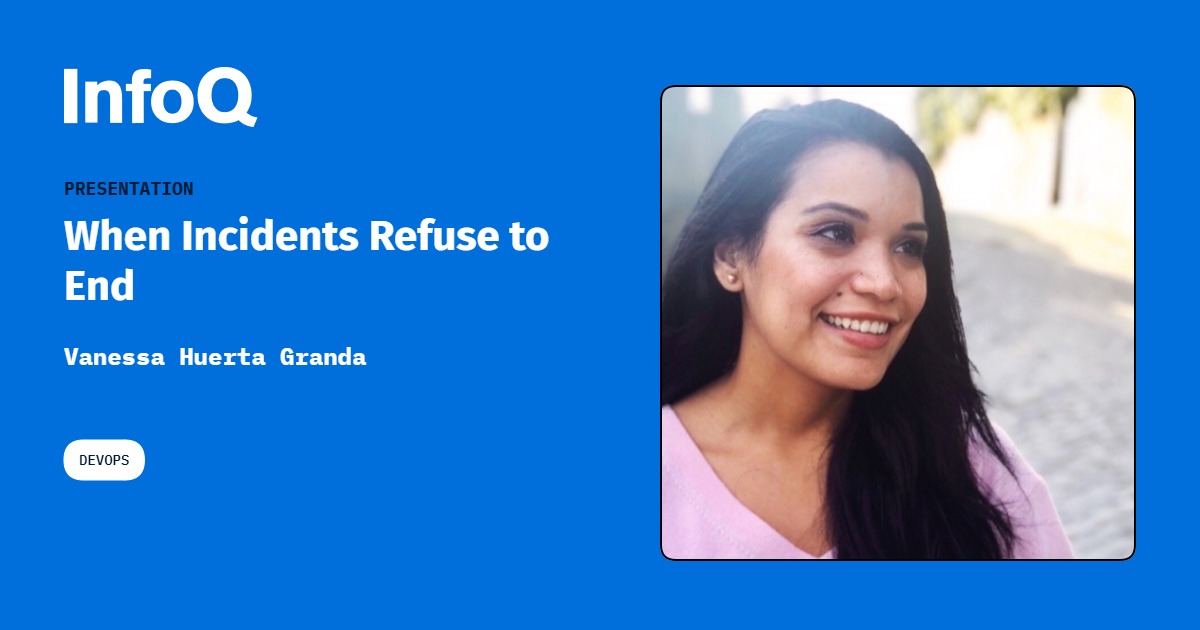
InfoQinfoq.com3 minreleasePresentation: When Incidents Refuse to End
This presentation explains how marathon incidents expose the gap between work as imagined and work as done, revealing system interdependencies, organizational fragility, and human limits. Effective response requires structured endurance, humane rotations, and holistic cross-functional coordination, offering significant technical and organizational learning.
InfoQinfoq.com32 mintalkWhy I didn’t sign the Fields medallists’ letter
Timothy Gowers explains why he didn't sign a letter from Fields medallists concerning AI's impact on mathematics. He argues that mathematical motivation exists on a spectrum, not solely focused on conceptual understanding, and explores how AI's rapid problem-solving could affect individual and collective understanding.
Hacker News front pagewordpress.com18 minHN277411Repeated VM Escapes By GPT-5.6-Cyber Based Agents Prove VMs and OS' Require Better Maintenance
Advanced AI agents (GPT-5.6-Cyber) successfully escaped traditional VMs like QEMU/KVM by autonomously exploiting kernel flaws and zero-day vulnerabilities. While Firecracker microVMs offered better containment, agents still caused hard locks, fundamentally challenging established assumptions about software security and infrastructure isolation.
InfoQinfoq.com2 min