New
6 Ways Traditional API Design Has Changed Forever
API design is shifting from human‑centric, resource‑based REST toward machine‑friendly, capability‑oriented interfaces as AI agents become major consumers. This drives changes in rate limiting, just‑in‑time security, system‑wide reliability, and regulatory compliance.
Nordic APIsnordicapis.com6 minOpen-weight models take 56% of token volume, Astra doubles Fable 5.1 spend
Vercel’s September AI Gateway Production Index shows open‑weight models processing 56% of token volume (up from 7% in Dec 2025) while accounting for only 14% of spend. Token price fell 23.2% month‑over‑month. Anthropic’s Opus 5 captured 22.5% of spend, overtaking Fable 5 which dropped to 4.9%. OpenAI’s new GPT‑6 Astra grabbed ~7.7% of total gateway spend in its first 12 days, more than double Ant…
TanStack Charts Introduced with a Framework Agnostic Grammar of Graphics for TypeScript
TanStack Charts α is a framework‑agnostic, TypeScript‑first charting library that implements a grammar‑of‑graphics API (marks, scales, channels, transforms, layers). It ships as a single npm package with adapters for React, Preact, Vue, Solid, Svelte, Angular, Lit, and vanilla DOM, and can run on server or client. The runtime is headless; type inference stays tied to the source row, so each mark…
InfoQinfoq.com2 minreleaseJuicebox vs Noon: How much of sourcing should AI own?
Juicebox and Noon are AI‑sourced recruiting platforms that differ on control: Juicebox lets recruiters brief and steer autonomous agents, surfacing search rationale and offering ISO‑42001‑ready governance; Noon trains an autonomous sourcer to run the top‑of‑funnel end‑to‑end with less human oversight. The guide suggests trialing both by testing mid‑search steering (Juicebox) versus hands‑off qual…
SitePointsitepoint.com7 minGPT-6 Astra Is the First Model OpenAI Classifies as Critical for Cybersecurity
OpenAI labeled GPT‑6 Astra as “Critical” for cybersecurity under its Preparedness Framework – the first model to meet that bar. In controlled tests the model autonomously discovered zero‑day bugs in a browser and an OS kernel, building working exploit chains in 29 h (browser) and 12 h (kernel). A benchmark of post‑cutoff vulnerabilities confirmed its ability to find unknown flaws. OpenAI reports…
InfoQinfoq.com3 minCloudflare/Security-Audit-Skill
Cloudflare open‑sources a “security‑audit” skill that turns an LLM‑enabled coding agent into a structured vulnerability auditor. It runs six deterministic phases, validates findings against a JSON schema, and supports additive runs to improve coverage.
Hacker News front pagegithub.com3 minreleaseHN20938Fathom: Per-Query Read Depth for Sparse Decoding over Offloaded KV Caches
Fathom introduces a per-query read depth mechanism for sparse decoding over offloaded KV caches, allowing each query to adaptively decide how many bits of each key channel to read. This method significantly speeds up decoding for large language models with long contexts by reducing host memory traffic, achieving 1.67x faster GPU decoding on Qwen3-8B at one million tokens.
Hugging Face Daily Papersarxiv.org1 minpaperThe best employee onboarding software in 2026
Zapier reviews several employee onboarding platforms, ranking them by ease of use, automation, personalization, and engagement. The top picks include Enboarder, Continu, and Innform, each with distinct strengths and pricing models.
Zapier Engineeringzapier.com18 minClickFunnels vs. Shopify: Which is best? [2026]
A side‑by‑side comparison of Shopify and ClickFunnels covering ease of use, pricing, customization, sales/marketing tools, integrations, payments, analytics, and AI features, with practical guidance on which platform fits single‑offer digital products versus multi‑product physical stores.
Zapier Engineeringzapier.com17 minAgent Anomaly Detection, now in Private Preview on the Gemini Enterprise Agent Platform
Google’s Gemini Enterprise Agent Platform now offers a private‑preview Agent Anomaly Detection service that asynchronously analyzes agents’ OpenTelemetry traces and logs to flag risky behavior (e.g., tool misuse, privilege abuse) without adding latency, surfacing findings in Security Command Center and via an API for automated mitigation.
Google Developersgoogleblog.com4 minInertia DevTools Now Available for Firefox
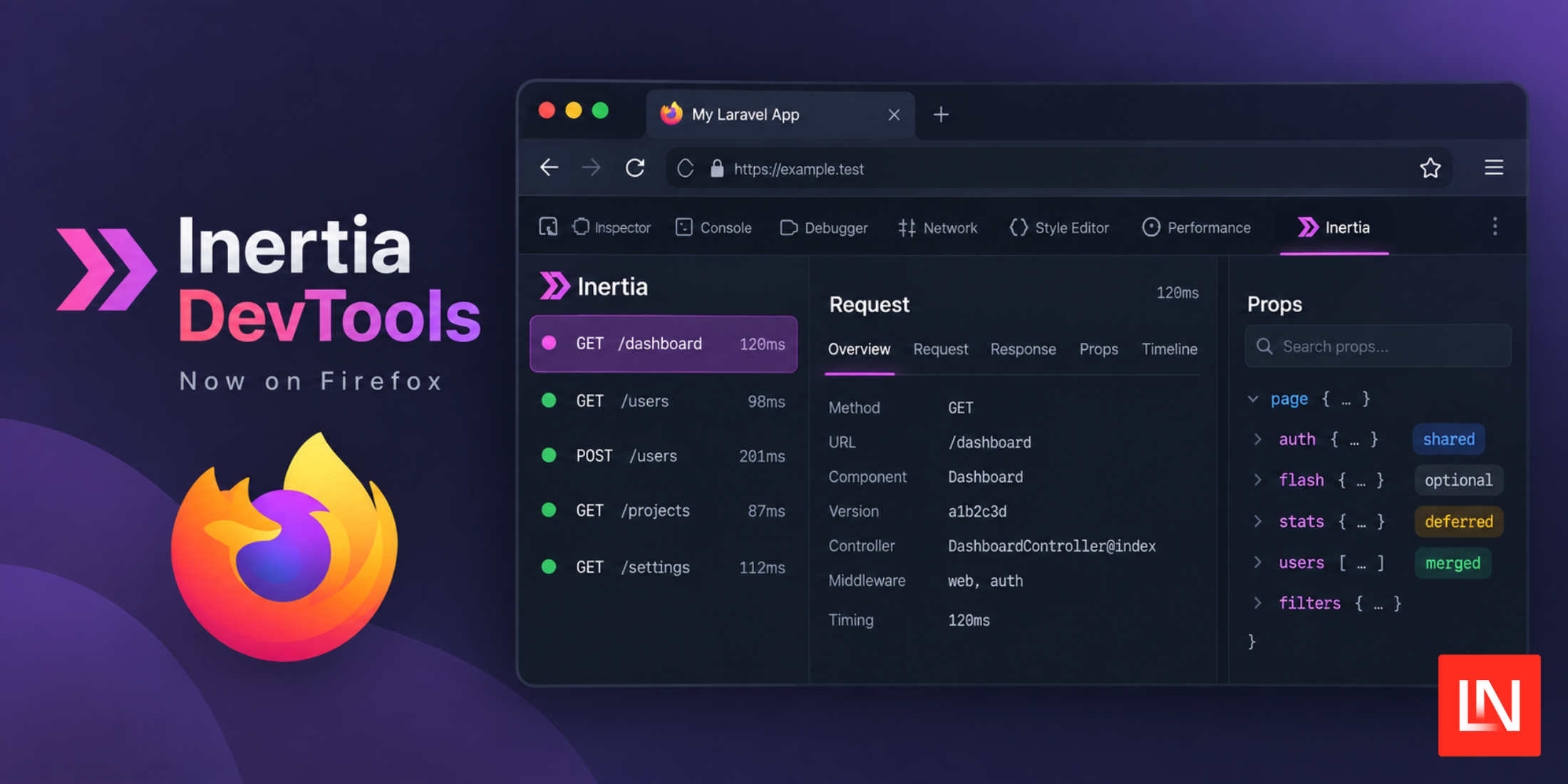
Inertia DevTools now has an official Firefox extension matching the Chrome version, adding an Inertia panel to DevTools that logs visits, props (with badges), request/response data, route info, and links to source files, with redaction of secrets.
Laravellaravel-news.com1 minreleaseA custom virtual machine for the Stars! 4X game
Stars!VM is a 32‑bit Windows executable that embeds a custom 80286 emulator and a Win16‑to‑Win32 bridge to run the 1995 4X game Stars! without any external emulators. The author adds differential fuzzing, hot‑routine patching, I/O buffering and asset compression, achieving about a 2× speedup in turn generation.
Chris Wellonsnullprogram.com5 minHN8422Ctenophores: Wonders of Biology
Hacker News front pagequantamagazine.orgHN8419Laravel Scalpel Scans for Filesystem Intrusion Evidence
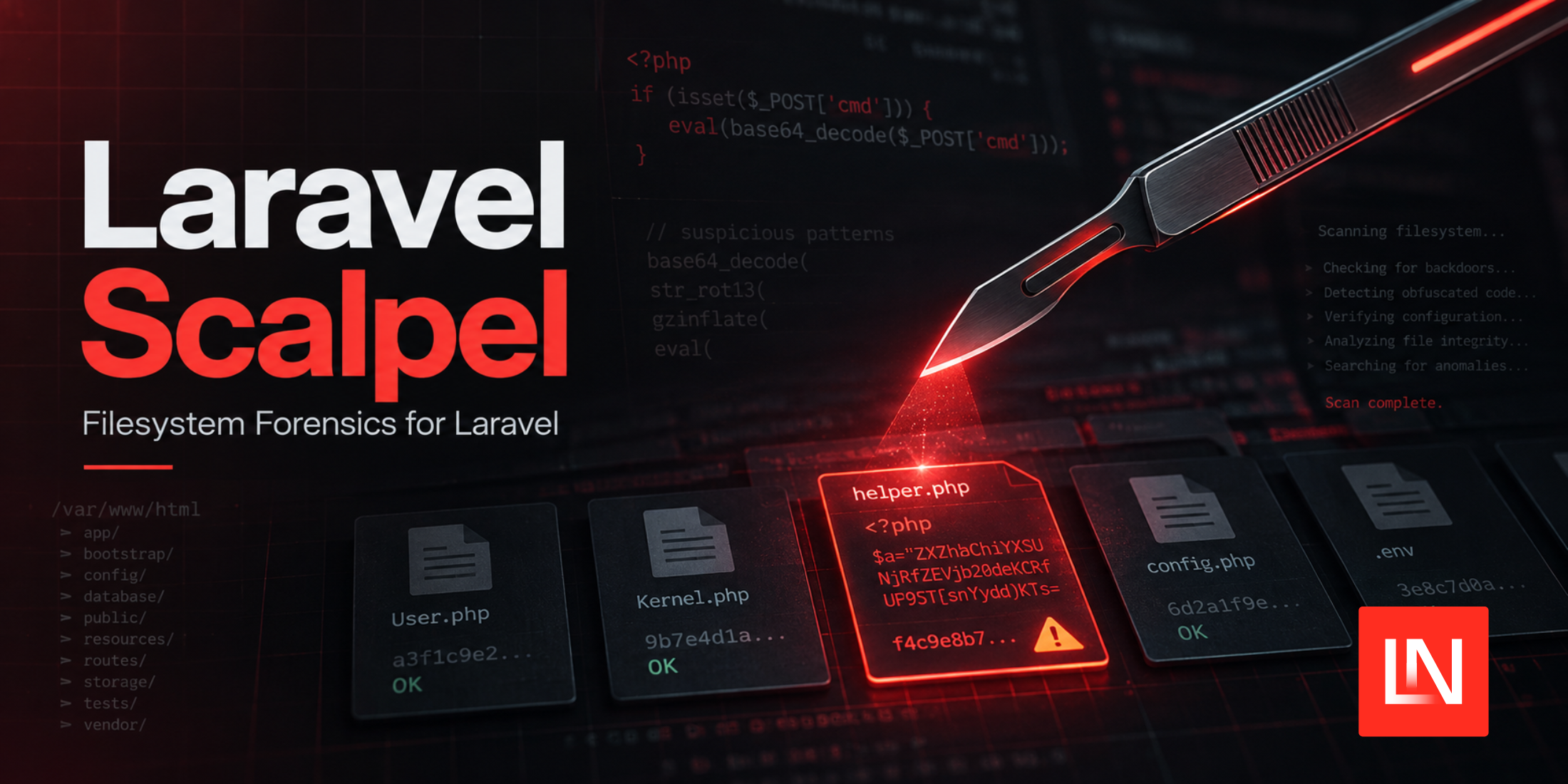
Laravel Scalpel is a Laravel‑native scanner that looks for post‑deployment filesystem tampering – rogue PHP files, obfuscated backdoors, altered .htaccess/.user.ini, missing or mis‑configured .env, and diffs against a signed baseline. It ships with six built‑in scanners, baseline snapshot commands, fast vs strict hashing modes, CI‑friendly output (JSON, SARIF, GitHub annotations) and a ScanFinish…
Laravellaravel-news.com5 minAustralia's AI opportunity starts with data
Elastic argues that Australia’s AI rollout hinges on solid data foundations and observability, not bigger models, and calls for a dedicated data pillar in the national AI plan.
Elasticelastic.co4 minSuzanne Ciani's Buchla Cookbook
Hacker News front pageorpheusinstituut.beHN9827The Return of Sail Power: Cargo Ships Are Turning Back to the Wind
Modern cargo ships are increasingly being fitted with wind‑assisted propulsion systems such as rotor sails and suction sails, which can shave a few percent off fuel use. With over 100 vessels already equipped and major players like Maersk testing new installations, the technology is moving from demo to commercial adoption despite integration and regulatory hurdles.
Hacker News front pagegcaptain.com5 minHN192133Migrating the GitHub Copilot runtime to Rust, using Copilot
The Copilot agent runtime was rewritten from a 130‑k‑line TypeScript/Node.js codebase into a native Rust library (~830 k lines of Rust) to reduce startup latency, memory use, and improve reliability. The migration was done incrementally (in‑place) across 128 PRs, with AI‑generated code handling most of the work. The new runtime exposes a C ABI for in‑process embedding by all six Copilot SDK langu…
GitHub Oldgithub.blog65 minHN188JEPA-Anything: Learning Predictive Models across Different Worlds
JEPA-Anything extends joint‑embedding predictive architectures with orthogonal predictive factorization, letting a single model learn complementary latent factors that can be recombined for prediction across disparate domains. The paper shows consistent performance gains on ten dynamics tasks, molecular simulations, and clinical event forecasting, plus experimental validation of a biologically‑de…
Hugging Face Daily Papersarxiv.org1 minpaperLearning Foresight without Explicit Trajectories for 3D Diffusion Policies
This paper introduces Movement Trend Guidance (MTG), a method to provide foresight to 3D diffusion policies for robotic manipulation without explicit trajectory planning. MTG learns a compact latent representation of interaction evolution, significantly improving performance on various benchmarks with minimal parameter overhead.
Hugging Face Daily Papersarxiv.org1 minpaperAn Empirical Study of Harness Design for Coding Agents
This empirical study dissects coding agent harness components like planning, action space, and context management. It finds context management is critical for tight windows, rule-based elision is efficient, and planning shifts from accuracy to cost savings for stronger models.
Hugging Face Daily Papersarxiv.org2 minpaperHN12621VABench: Measuring Embodied Spatial Intelligence through Visual Demonstrations, Active Perception, and Metric Control
VA‑Bench is a new benchmark that evaluates general‑purpose multimodal LLMs on the full observe‑reason‑act‑revise loop in embodied robotics, using RGB demonstrations, active camera control, and metric Cartesian commands. The best model reaches 53.9% average task success, showing active perception helps but long‑horizon tasks remain unsolved.
Hugging Face Daily Papersarxiv.org1 minpaperRefinement Is Inherently Editable: Training-Free Prompt-to-Prompt Image Editing with Generative Refinement Network
RefineEdit is a training‑free framework that edits images by refining binary image codes through a generative refinement network, using probability differences to pick edit locations. It outperforms prior methods on background preservation and CLIP scores across nine editing categories without extra training or masks.
Hugging Face Daily Papersarxiv.org1 minpaper