New
I vibed a proof of Conway's conjecture
The author used Claude to generate a Lean formalisation and proof of Conway’s refinement conjecture for omnific (surreal) integers. The proof passes mechanical checks and informal review but lacks independent verification. The post narrates the workflow, token cost, and reflections on AI‑assisted theorem proving.
Hacker News front pageoverreacted.io32 minHN269294DoorDash Uses Multi Agent LLMs to Clean up 60,000 Feature Flags
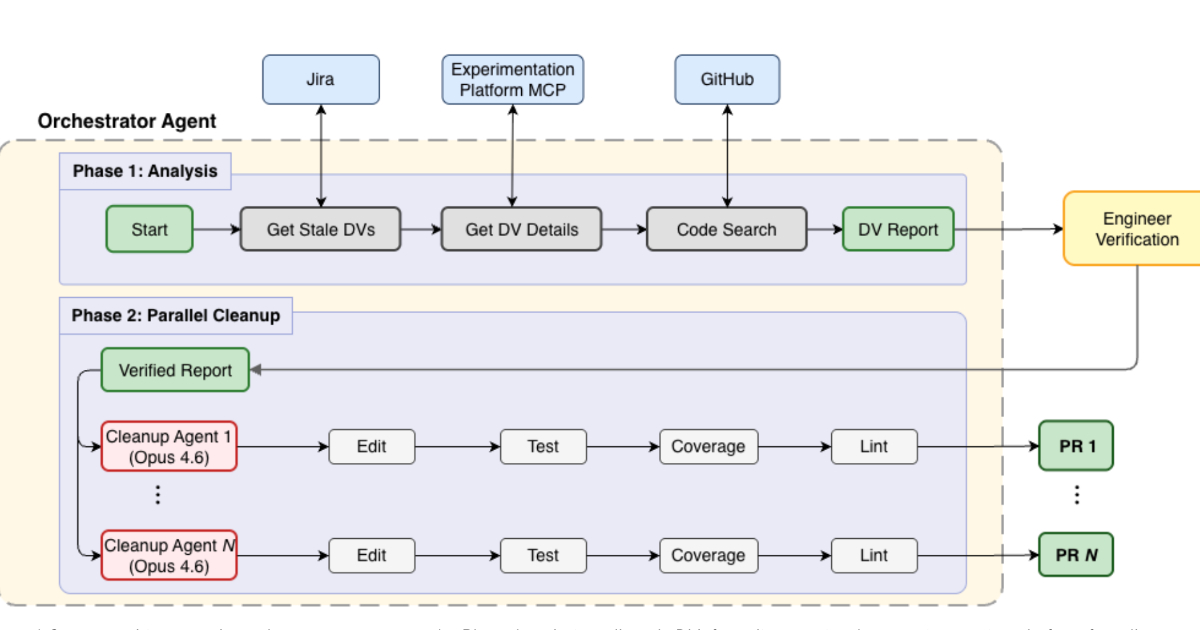
DoorDash built a two‑phase, multi‑agent LLM system (Claude Sonnet orchestrator + Claude Opus cleanup agents) that automatically removes stale feature flags from 623 repos. In a 50‑flag pilot it generated usable PRs for 45 flags at ~14 min and $4.79 each, with 100 % success on simple flags and no regressions.
InfoQinfoq.com2 minTypst makes big strides
Typst 0.15 adds variable‑font support, experimental HTML export with MathML, a bundle output mode for multi‑file projects, multiple bibliography sections, and the ability to target several PDF standards at once. The post shows concrete Typst code snippets for each feature and notes the required compiler flags.
What four people at Hostinger actually do with AI all day (and what happens when you have an agentic beef)
Hostinger staff use custom AI agents to automate daily tasks—from code reviews to influencer lead sourcing—shifting their work from doing the work to managing the agents. Building reliable “harnesses” (prompt contexts, constraints) consumes most of the engineering effort, and agents still hallucinate, repeat work, or suggest unsafe fixes, so human oversight remains essential.
Hostingerhostinger.com8 minHow to Build a Browser-Based File Integrity Checker with JavaScript
The article walks through building a browser‑based file integrity checker that reads a file, computes its SHA‑256 hash with the Web Crypto API, and compares it to a trusted hash supplied by the user. It also covers handling large files, accessibility, and the security limits of client‑side hashing.
SitePointsitepoint.com5 minKnowing When Your Composite Index Earns Its Write Cost
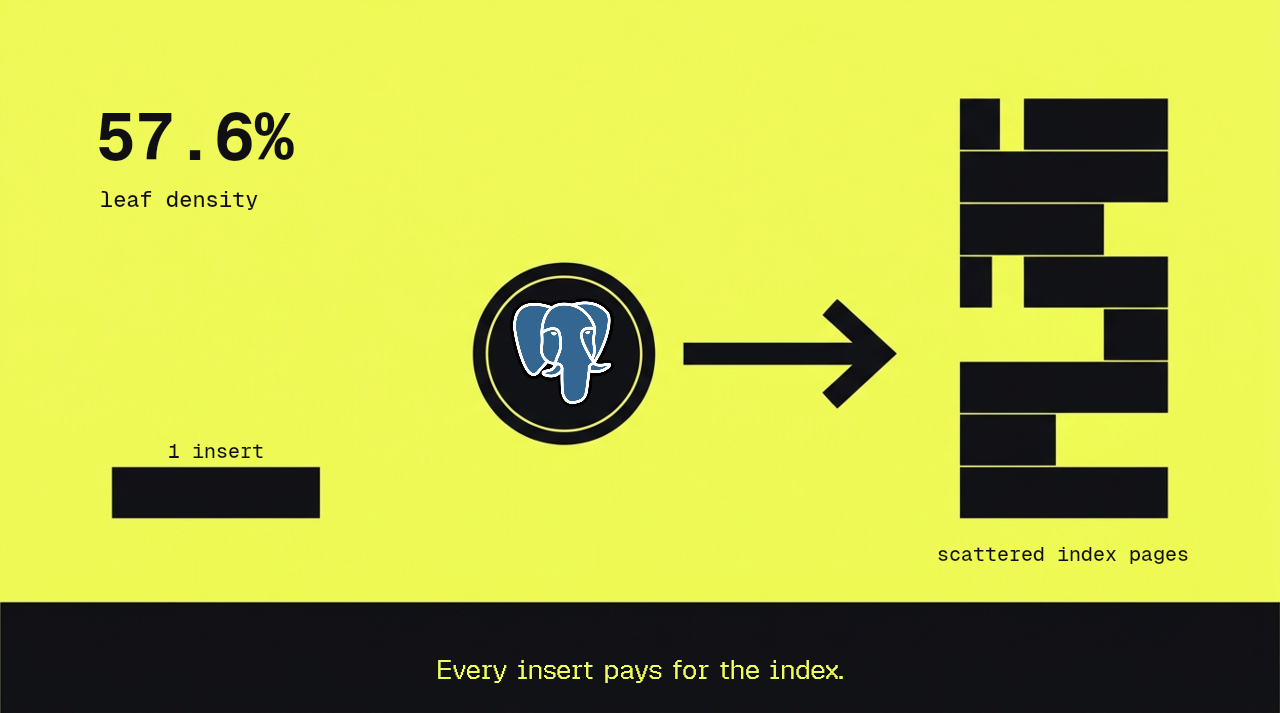
This guide explains how to evaluate the trade-off of adding a composite index in PostgreSQL by quantifying its read benefits and write costs. It provides a method to measure the impact on ingest throughput and decide if the index earns its overhead based on your system's peak ingest ceiling.
Timescaletigerdata.com8 minDigitize analog gauge readings with edge AI
An edge AI solution uses an Arduino UNO Q and a USB webcam to digitize analog gauge readings without modifying existing industrial equipment. This approach avoids downtime and risks associated with physical alterations, offering a cost-effective way to modernize monitoring.
Arduino Blogarduino.cc2 minWebsite monitoring in the AI era: What's changed, what's fixed, and what your team should still be watching
AI‑driven monitoring replaces static thresholds with learned baselines, cutting noise and surfacing real user‑impact issues. However, teams still need to explicitly monitor DNS, SSL, content integrity, and multi‑region performance to avoid blind spots.
SitePointsitepoint.com7 minI don't like passkeys
Passkeys improve phishing resistance but introduce higher lock‑out risk for individuals. Hardware keys have low per‑device account limits and no backup, while synced passkeys tie you to Apple/Google and can be lost if the provider bans you. Third‑party managers are still immature. For most users, a strong password + TOTP combo remains safer than current passkey ecosystems.
Bend 2 and the Vibe-Coding Trap
The author argues that “vibe‑coding” with LLMs can cause engineers to reinvent existing solutions, using Bend 2—a language that asks LLMs to write long formal proofs—as a case study. By re‑implementing the same demo in SPARK/Ada, the author shows that established formal‑verification tools achieve the same guarantees with a tiny proof, highlighting the need for domain research before prompting LLM…
Hacker News front pageliampwll.com5 minHN326235WSO2 Releases Agent Manager as Enterprises Look to Control Growing AI Agent Sprawl
WSO2 Agent Manager GA adds model‑agnostic identity, role‑based access, policy enforcement (40+ controls), a Kubernetes‑native sandboxed runtime, and OpenTelemetry‑based tracing/evaluation for AI agents across cloud, on‑prem and hybrid environments.
InfoQinfoq.com3 minreleasePresentation: Complexity and Creativity in Software Engineering
Phillip Mortimer argues that AI‑generated code makes all software effectively "write‑only" due to volume, and proposes managing this by treating tests as the sole specification, automating code reviews with LLMs, and decoupling intent from implementation.
InfoQinfoq.com28 mintalkFirefox DevTools MCP 0.10.3 released
Firefox DevTools MCP 0.10.3 is released, introducing a new `close_firefox_session` tool, full-page screenshot capability, and configurable download folders. This update also includes bug fixes and clarifies the usage of `restart_firefox` for controlling Firefox via WebDriver BiDi.
Mozilla Automation Teammozilla.org1 minreleaseFrom support ticket to GitHub issue: Building a reliable escalation workflow
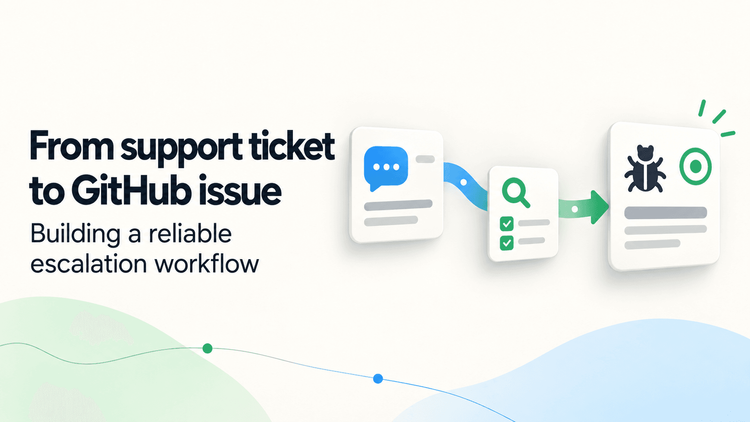
A step‑by‑step guide for turning support tickets into well‑structured GitHub issues. It defines escalation criteria, outlines a decision table for support, specifies required fields, and provides a minimal Node.js 24 adapter that validates input, builds a markdown issue body, and calls the GitHub Issues API with proper error handling and security considerations.
SitePointsitepoint.com11 minMicrosoft exec called AI scraping 'the largest theft of labor in human history'
New unredacted filings in the NYT v. OpenAI/Microsoft case show internal admissions that the companies scraped paywalled news content at massive scale, stripped copyright notices, and acknowledge that their products cannibalize traffic, raising serious fair‑use and copyright concerns.
Hacker News front pagetechcrunch.com4 minHN936825OpenJev
OpenJev is a browser‑only demo that lets you load small LLM checkpoints (e.g., MiniCPM‑5 2B, Qwen3 0.6B) onto your GPU and compare two inference paths: reading raw logits for a set of options versus prompting the model to emit a JSON with option probabilities token‑by‑token. The page reports model sizes, download times, balanced accuracy on a few benchmarks, and wall‑clock timings measured with `…
Hacker News front pageopenjev.com2 minreleaseHN709288htmx 4.0: a Fetch-Based Rewrite, Built-In Morphing Swaps, and Explicit Attribute Inheritance
htmx 4.0 replaces XHR with fetch (enabling streaming), adds built‑in morphing swaps via idiomorph, introduces hx‑partial for multi‑target updates, makes attribute inheritance explicit with a :inherited suffix, renames several attributes/events, adds a 60 s request timeout, and ships under npm's `next` tag with a CLI upgrade checker.
InfoQinfoq.com2 minreleasePodcast: Signals and Levers: Building Thriving Engineering Organizations
The podcast explains how systems thinking helps leaders grasp the complex, adaptive nature of software delivery, especially as AI rollouts amplify bottlenecks. It also outlines cultural "levers"—choices that shape unwritten rules—to build sustainable, fun engineering teams.
InfoQinfoq.com31 mintalkArticle: Architecting Secure and Scalable Facial Verification Systems
A real‑world post‑mortem of a high‑volume face verification service that moved from a naïve synchronous API to an async, layered pipeline (edge validation, preprocessing, decoupled detection/verification, decision engine) to achieve 8.5k rpm, p99 < 1.8 s, 30 % cost savings, and strict privacy controls.
InfoQinfoq.com15 min