New
Build anywhere, stay in flow: How Windows 365 is redefining the developer experience
The post outlines how Windows 365 Cloud PCs aim to simplify developer onboarding and provide scalable compute, AI‑agent isolation, and enterprise security controls, positioning the service as a replacement for Microsoft Dev Box. It cites customer anecdotes but offers few concrete technical details.
Microsoft Edgewindows.com5 minPCB is brought to you by Fable 5
The author used the AI tool Fable 5 to generate a 4‑layer RP2350 development board for an E‑ink display from a short English description and ordered it from JLCPCB. While the AI handled component placement, it left many DRC errors and routing gaps, requiring manual fixes and highlighting the limits of current AI‑driven PCB design.
Hacker News front pagea6mzero.com6 minHN159106Python in operator: How __contains__ speeds up membership tests
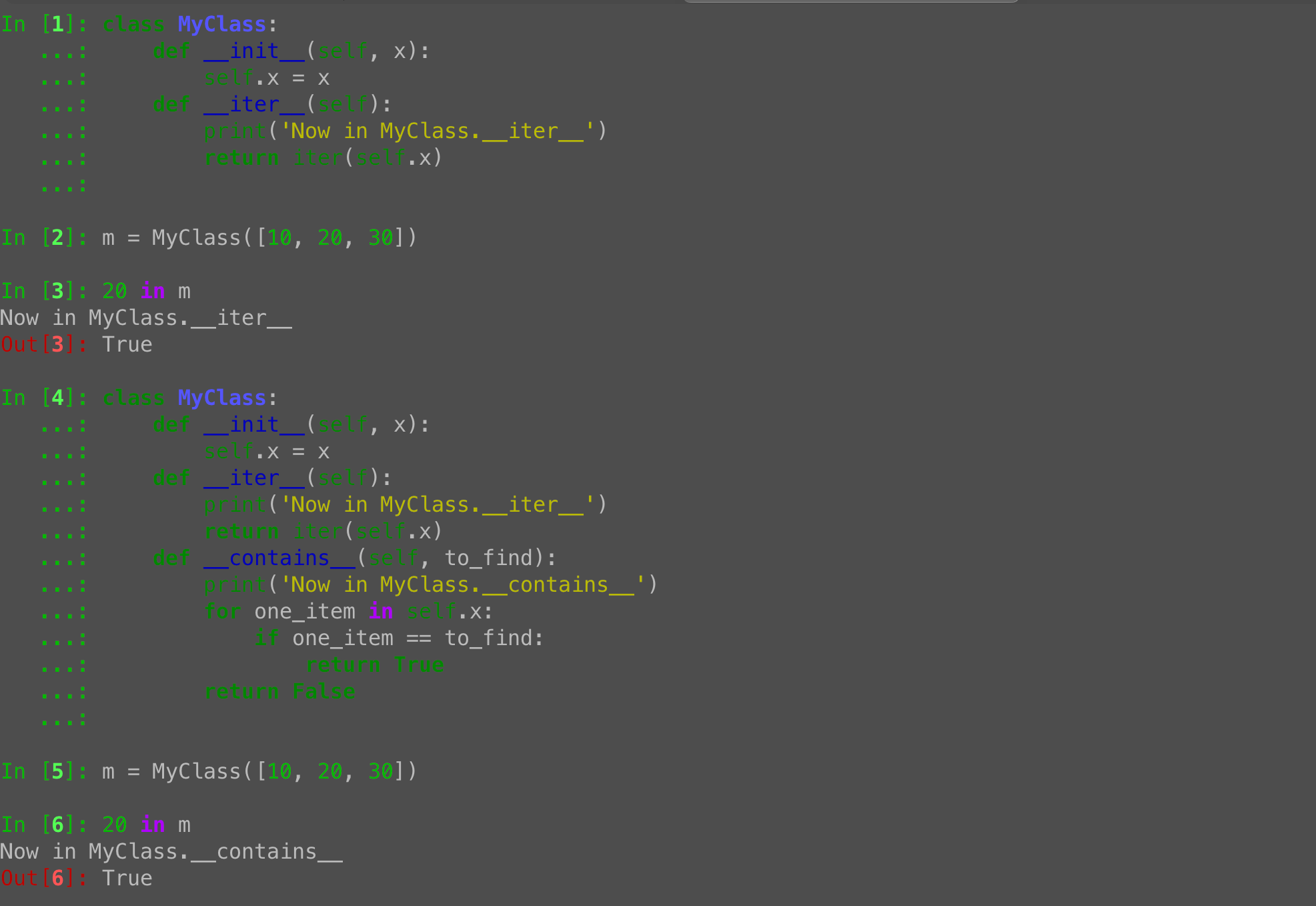
The post explains that Python’s `in` operator first looks for a `__contains__` method on the object and uses its boolean result; if absent it falls back to iterating via `__iter__`. Implementing `__contains__` can make membership checks faster, especially for large collections, by avoiding full iteration.
Lerner Consulting Bloglernerpython.com1 minThe Router Within: Eliciting Native Skill Routing from a Frozen LLM
The paper introduces Gavel, a method that extracts a frozen LLM's internal routing signal via two trained linear maps, eliminating the need to embed skill descriptions in the prompt. Experiments on Qwen3‑32B show up to 13.4‑point improvements on task benchmarks and higher skill‑use accuracy compared to larger retrieval‑based systems.
Hugging Face Daily Papersarxiv.org1 minpaperFaster Starts, Less JavaScript Overhead
Codename One reduced startup latency and JavaScript overhead by publishing screen state atomically, indexing style lookups, avoiding unnecessary artwork generation, and refining suspension analysis, yielding measurable speedups.
CodeName Onecodenameone.com7 minCheckout a Github pull request from one-off contributions
Adds a git alias that fetches and checks out a branch from a contributor’s fork in one command, avoiding dependence on the GitHub `gh` CLI.
Mozilla Automation Teamjonalmeida.com2 minHarnessVLN: Unifying Training-Free Embodied Navigation through an Agent Harness
HarnessVLN introduces a zero‑shot, training‑free embodied navigation framework that wraps a multimodal LLM in an "Agent Harness" – a tool‑based protocol that validates planner actions against spatial evidence, tracks progress with hierarchical event memory, and maintains a persistent spatiotemporal graph for recovery. The system works for instruction‑following and object‑goal tasks, achieving 60.…
Hugging Face Daily Papersarxiv.org1 minpaperMoME: Mixture-of-Memory Embeddings for Context-Aware Sparse Lookup
The paper proposes Mixture of Memory Embeddings (MoME), a context‑aware sparse lookup that replaces each token’s single memory row with a gated mixture of multiple slots. Experiments on Llama‑3, MobileLLM and Qwen3 show MoME outperforms existing memory‑embedding baselines at equal parameter and FLOP budgets and exhibits interpretable routing for polysemous tokens.
Hugging Face Daily Papersarxiv.org1 minpaperBrownfield Agentic Engineering
Addy Osmani outlines a pragmatic framework for safely introducing AI‑driven agents into legacy (brownfield) codebases. He proposes zoning code by risk, documenting non‑code knowledge, preserving research in durable memos, building a reusable “harness” of tools and rules, and starting with zero‑risk, characterization‑test‑driven work.
Addy Osmaniaddyosmani.com13 minDecoy Direction Optimization: A Post-Hoc Defense Against LLM Abliteration
Decoy Direction Optimization (DDO) is a post‑hoc weight‑editing defense for open‑weight LLMs that injects a high‑magnitude nonlinear decoy into MLP neurons, corrupting contrastive estimators used by Refusal Feature Ablation (RFA) attacks. The paper proves a spectral bound on the effect, evaluates DDO on six model families (including Llama‑3‑8B‑Instruct), and shows <10 % attack success rate (ASR)…
Hugging Face Daily Papersarxiv.org1 minpaperMind2Dialogue: Training Human-Aware Language Models by Simulating User Mental States
Mind2Dialogue introduces a psychology‑guided simulator that generates user mental states and uses privileged distillation to train LLM assistants on Oracle responses that know those states. The resulting models improve personalization and theory‑of‑mind metrics by up to 41 percentage points versus standard instruction‑tuned baselines.
Hugging Face Daily Papersarxiv.org2 minpaperVC-Attention: Value Smoothing and Softmax Casting for Low-bit Attention
VC-Attention introduces a training‑free low‑bit attention pipeline for diffusion transformers. It smooths value tensors via lightweight online clustering (V‑Smooth) and quantizes only the residual after subtracting block means, restoring the mean from the softmax row sum. It also replaces the FP32 softmax exponential with a fused FP8 cast (ExpCast‑FP8) that maps log‑scores directly to E4M3 probab…
Hugging Face Daily Papersarxiv.org1 minpaperGSoC 2026: Extending Clang API Notes for C++: Overload-Specific Annotations for Functions and Methods
Clang’s API Notes now support overload‑specific selectors via a new optional `Where` block that can match parameter lists and implicit object qualifiers. The implementation adds YAML parsing, binary serialization, Sema integration and diagnostics while preserving existing name‑only behavior.
LLVM Project Blogllvm.org8 minCADWorld: Computer-Use Benchmark for Long-Horizon Computer-Aided Design
CADWorld is a new benchmark suite of 200 long‑horizon mechanical CAD tasks in FreeCAD, covering sketching, part modeling, assembly, CAM, FEM, and more. Agents interact via screenshots and GUI actions; success is checked by executable validation of the saved CAD artifacts. Seven existing agents achieve at most 17.5 % success versus an 87 % expert baseline, highlighting the gap between GUI competen…
Hugging Face Daily Papersarxiv.org1 minpaperModularRSI: Modular and Generalizable Recursive Harness Self-Improvement
ModularRSI proposes a contrastive, modular approach to evolve agent harnesses by independently updating five functional modules and aggregating evidence across 2,000 benchmark‑disjoint tasks. Experiments on TB2.0 and SWE‑Bench Verified show consistent gains on unseen tasks and cross‑model transfer.
Hugging Face Daily Papersarxiv.org1 minpaperHypoEvolve: Genetic Algorithms Enable Multi-Agent LLMs to Discover Scientific Hypotheses
The paper presents HypoEvolve, a generational genetic algorithm that coordinates specialized LLM agents to iteratively propose, critique, and refine scientific hypotheses. On a drug‑repurposing benchmark across 34 cancer types, it outperforms six baselines, achieving a DepMap selectivity of 0.171 versus 0.115.
Hugging Face Daily Papersarxiv.org1 minpaperDisentangling Representation Evolution in Transformers through Directional Decomposition
The paper decomposes transformer representation updates into parallel and perpendicular components, showing that parallel updates beyond the residual path are significant. Suppressing parallel updates during pretraining improves validation loss and downstream metrics.
Hugging Face Daily Papersarxiv.org1 minpaperA letter from Samar: a year of achievements, and what’s next for us
Temporal’s CEO reports a year of rapid growth—200% YoY revenue, 1.9 trillion monthly actions, and 570 staff—while positioning durable execution as the reliability layer for AI agents and announcing GA of OpenAI and Vercel SDK integrations.
Temporaltemporal.io3 minTemporal raises $550M at a $12.55B valuation as demand grows for reliable AI infrastructure
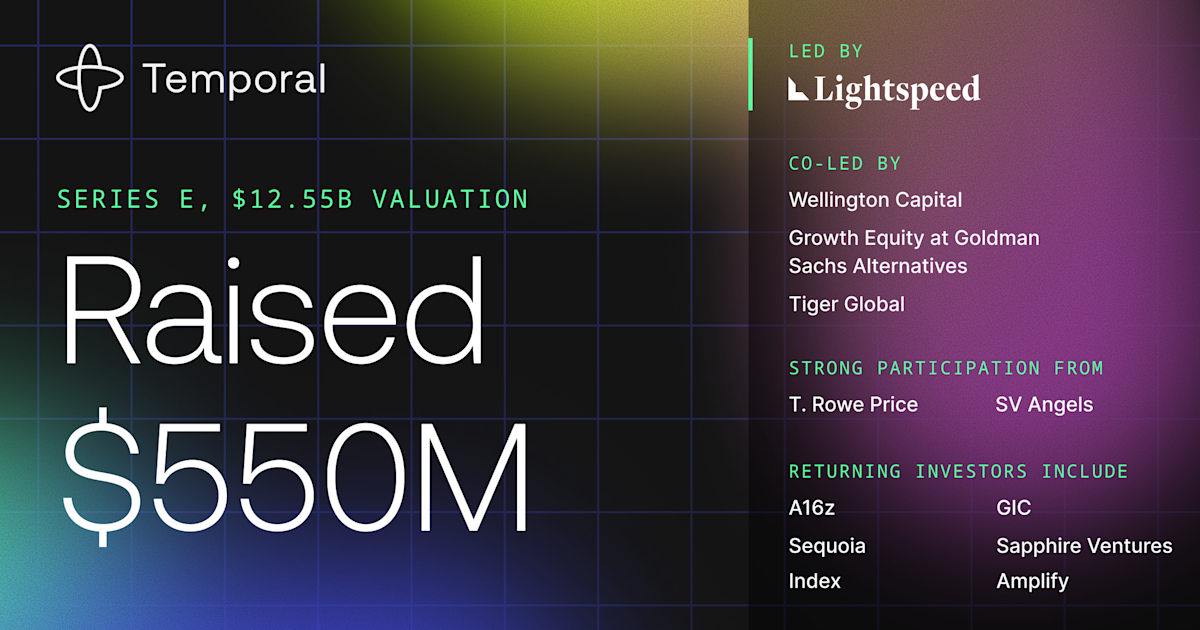
Temporal announced a $550M Series E at a $12.55B valuation, citing >200% YoY revenue growth, 1.9 trillion billable actions processed, and 4.3k paying customers. The round funds further work on its durable execution platform for long‑running AI workflows.
Register Tokens for Bounded-State Reasoning in Diffusion Language Models
Register tokens are fixed‑position embeddings that store a compact hidden state across diffusion‑based language model generation chunks, enabling bounded‑state reasoning without retaining all prior text. Post‑training on LLaDA and Dream shows up to +8.5 math and +19.5 code benchmark points versus plain text carry, and RL fine‑tuning further improves long‑horizon tasks.
Hugging Face Daily Papersarxiv.org1 minpaperHow Lossless Is Lossless Speculative Decoding? The Role of Numerical Precision in Orthrus
This paper investigates the "lossless" claim of Orthrus, a hybrid architecture for accelerating LLM inference. It finds that under BF16 precision, Orthrus diverges from the exact autoregressive output trajectory in over 50% of cases, though FP32 maintains exact matching. Despite BF16 divergence, downstream task performance was not systematically degraded.
Hugging Face Daily Papersarxiv.org1 minpaperModaLens: Measuring Image Sensitivity in Report-Conditioned Medical VLMs
ModaLens introduces a paired image-swap audit to measure how radiology report availability affects image sensitivity in medical VLMs. It found that MedGemma-27B's answers changed significantly more often when the image was swapped if the report was not available, indicating reports reduce image reliance.
Hugging Face Daily Papersarxiv.org1 minpaperAssessing nnU-Net Generalization across Brain Tumor Populations in BraTS-GoAT 2026
Paper evaluates a standard 3‑D nnU‑Net on the new BraTS‑GoAT benchmark, training on 1,351 cases with five‑fold cross‑validation and test‑time mirroring. It reports Dice scores of 0.78/0.83/0.89 (ET/TC/WT) and shows a ~0.07 drop on heterogeneous validation, with limited benefit from ensembling or mirroring and failure linked to small, fragmented tumors.
Hugging Face Daily Papersarxiv.org1 minpaper