proomt

Search

Search posts, papers, and topics

New

  1. Zing-0.5: Toward Playable Worlds with Real-Time Joint Action and Text Control

    Zing‑0.5 is a 5 B autoregressive world model that lets users control generated environments in real time using both keyboard actions and text prompts. The paper introduces unified action‑text conditioning, segment‑level teacher distillation, and a low‑cost streaming inference pipeline that runs at 24 FPS (832×480) for about $0.009 per minute, achieving 81 % overall and 88.5 % consistency on a nav…

    Hugging Face Daily Papersarxiv.org1 minpaper

  2. What is CIAM in 2026 and why does it matter?

    CIAM in 2026 has moved from static login checks to a continuous trust layer that must handle AI agents, deep‑fake attacks, and zero‑friction authentication, requiring a split between an identity authority and a real‑time trust orchestration layer.

    Twiliotwilio.com9 min
  3. Native Drag and Drop Meets Cross-Device Continuity

    Codename One 8.0 adds two user‑experience primitives: **Cross‑Device Continuity** (state checkpointing + Apple Handoff + custom HTTP relay) and **Native Drag‑and‑Drop** (OS‑level drag using the same ClipboardContent model). The post shows the API (StateProvider, Continuity.checkpoint, NativeDragOperation), platform support tables, and practical advice on payload size, security, thread handling, a…

    CodeName Onecodenameone.com7 min
  4. How to operate shared platforms safely at agent scale

    Datadog explains how scaling AI agents turns isolated executions into shared‑platform risk and outlines a systematic approach to model agent trajectories, monitor per‑dependency constraints, and enforce workload‑specific capacity policies. The result is proactive detection of bottlenecks and protection against noisy‑neighbor failures.

    Datadogdatadoghq.com11 min
  5. FLAT: Resampling Image and Text into 1D Flexible-Length Aligned Transmodal Tokens for Retrieval and Generation

    FLAT is a pre‑training framework that encodes images and text into a shared 1D token sequence with variable length via nested dropout, enabling the same embeddings for cross‑modal retrieval and generation. It attains state‑of‑the‑art scores on COCO and Flickr30K for captioning, retrieval, and text‑to‑image generation, and supports interpolation and zero‑shot composed retrieval.

    Hugging Face Daily Papersarxiv.org1 minpaper

  6. The only perfect Endpoint Prevention and Response (EPR) score in 2026 belongs to Elastic

    Elastic Security achieved a perfect 100% score in AV‑Comparatives’ 2026 Endpoint Prevention and Response (EPR) test, stopping all 50 attack scenarios at the prevention stage with zero false positives or workflow delays. The test measured active prevention, passive detection, operational accuracy, and workflow impact across 14 vendors. Elastic’s claim is backed by open‑source protection rules and…

    Elasticelastic.co5 min
  7. Reflect, Revise, Reuse: Training-Free Skill Evolution for GUI Agents

    EvoSkill‑GUI lets GUI agents revise their procedural skills on‑the‑fly without extra training by using a reflect‑revise‑reuse loop that edits skill packages during execution. The approach yields up to +16.2% improvement on MobileWorld and similar gains on AndroidWorld and OSWorld, and the evolved skills transfer to related tasks.

    Hugging Face Daily Papersarxiv.org1 minpaper
  8. RiskChainBench: A Benchmark for Obfuscated Platform Message Restoration and Evidence-Grounded Web Investigation

    RiskChainBench is a new benchmark that pairs synthetic obfuscated message restoration inputs with human‑labeled local web environments, requiring models to both decode malicious instructions and investigate the linked site. Across ten models, restoration accuracy varies widely and web‑agent failures dominate the error budget.

    Hugging Face Daily Papersarxiv.org1 minpaper

  9. EventEgoHands++: Event-based Egocentric 3D Hand Mesh Reconstruction with Real Dataset

    EventEgoHands++ adds an instance‑aware hand detector and an Adaptive Attention module to event‑camera egocentric hand‑mesh reconstruction, distinguishing left/right hands and modeling their interaction. The authors also release EEH‑R, a ~1 M‑frame real dataset, and report consistent gains over prior baselines on synthetic and real tests.

    Hugging Face Daily Papersarxiv.org1 minpaper

  10. Gemini 3.8 Live models now available on AI Gateway

    Vercel AI Gateway now offers Google’s Gemini 3.8 Live and Live Extended Thinking models through its realtime WebSocket API, enabling real‑time spoken interactions with audio output and parallel reasoning. The post includes a short TypeScript example for token acquisition, WebSocket setup, and handling of realtime events.

    Vercelvercel.com1 minrelease
  11. Confidence Comes from Experience: Experiential Confidence Estimation from Reasoning to Agents

    XConf (eXperiential Confidence) is a novel method for estimating language model confidence by leveraging the model's accumulated experience from past graded episodes. It significantly outperforms existing methods like self-consistency in discrimination and calibration, at a fraction of the computational cost, across various tasks.

    Hugging Face Daily Papersarxiv.org2 minpaper
  12. PhysStream: Streaming Physics-Grounded Video Generation with Structured Scene Memory and Fine-Grained Motion Control

    PhysStream introduces a two‑stage autoregressive video generator that uses online‑derived positional and tracking maps (structured scene memory) and sparse velocity‑increment signals to enable fine‑grained, physics‑grounded control of multi‑object tabletop scenes. It cuts motion distribution error by 33 % and trajectory error by 12 % versus strong baselines, and wins 85 % of human preference test…

    Hugging Face Daily Papersarxiv.org1 minpaper

  13. Fingers as Legs: Learning Self-Supported Locomotion and Manipulation with an Anthropomorphic Hand

    The authors train an anthropomorphic robotic hand to crawl, steer, and recover from falls using its fingers for both support and manipulation, via a reinforcement‑learning reward formulation tuned to the hand's asymmetry. Sim‑to‑real experiments show faster locomotion than quadruped‑style rewards and successful untethered tasks without onboard vision.

    Hugging Face Daily Papersarxiv.org1 minpaper

  14. Monitor TAS and gang scheduling for AI training in Kubernetes

    Kubernetes’ default scheduler can’t satisfy AI training’s need for low‑latency GPU interconnects and simultaneous pod start‑up. The blog explains how the open‑source Kueue job queue adds topology‑aware placement (using node labels like `topology.kubernetes.io/rack`) and how the Coscheduling plugin adds a permit phase that only binds a gang of pods when the full set is ready, preventing idle GPU r…

    Datadogdatadoghq.com19 min
  15. Verifiable Social Reasoning for LLM Assistants

    The paper introduces Fuse, a multi‑agent simulation that gives LLM assistants a verifiable ground‑truth task for social reasoning by hiding a target agent’s motive and letting a user‑mediated conversation infer it. Experiments on 12 LLMs show user mediation makes reasoning harder, models are biased by user framing, need more detail than humans, and longer chats don’t always help.

    Hugging Face Daily Papersarxiv.org1 minpaper
  16. ImpossibleRubrics: Stress-Testing Generated Rubrics as Reward Signals

    ImpossibleRubrics introduces a 169‑task benchmark of “impossible” prompts, each with a formal oracle certificate defining what an honest answer can claim. The authors generate rubrics downstream and test them adversarially, finding that many rubric generators are exploitable (8‑36% of the time) and that a single generic rubric (“be decisive, penalize hedging”) is exploited 64% of the time, while…

    Hugging Face Daily Papersarxiv.org1 minpaper
  17. ScienceBuddy: Recursive-in-Recursive Self-Improvement for Interactive Scientific Agents

    ScienceBuddy is an interactive workspace that converts researcher prompts, feedback, and execution traces into continual‑learning tasks for AI agents. It introduces a "recursive‑in‑recursive" self‑improvement loop that alternates harness refinement and model training, and showcases case studies across four scientific task families.

    Hugging Face Daily Papersarxiv.org1 minpaperHN2
  18. 9 top conversational AI platforms in 2026

    Twilio’s blog lists the nine leading conversational‑AI platforms for 2026, highlighting how the market consolidated and what capabilities matter when choosing a vendor. It details Twilio’s own infrastructure tools—ConversationRelay, Agent Connect, Orchestrator, and Memory—showing sub‑second latency and full‑stack reliability for voice and messaging.

    Twiliotwilio.com12 min
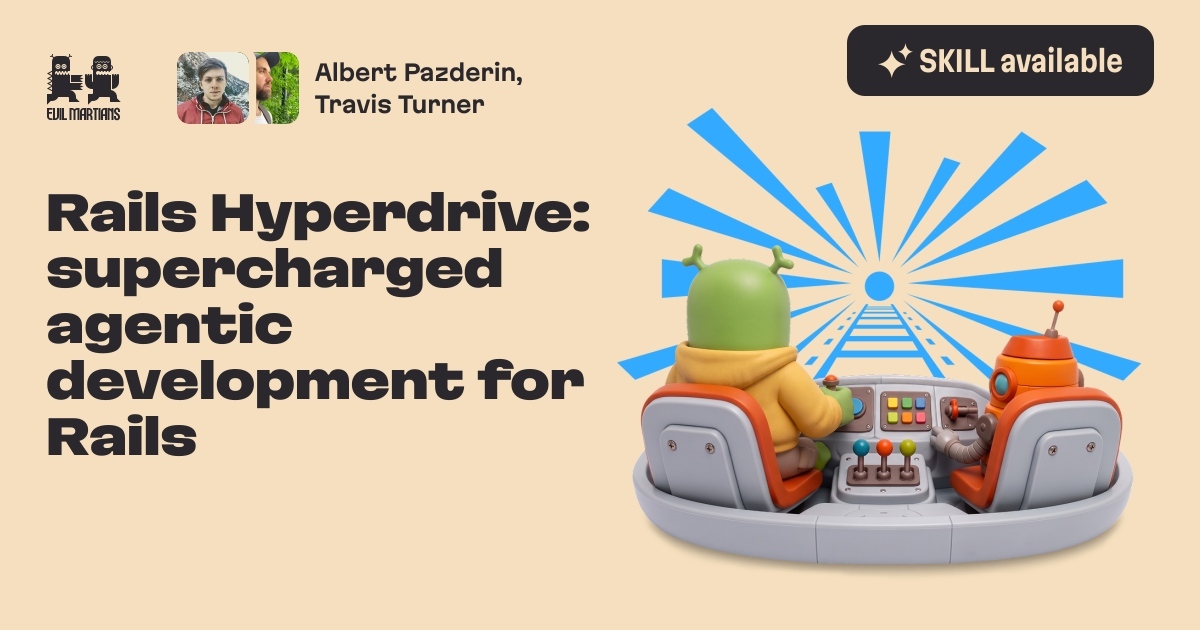
  19. Rails Hyperdrive: supercharged agentic development for Rails

    Rails Hyperdrive is a development‑only Rails engine that mounts a Model Context Protocol (MCP) server and lets any gem ship agent knowledge (skills, agents, commands, guidelines) as markdown files. The engine adds no knowledge itself; companion gems provide the context‑aware artifacts that agents can query at runtime, avoiding token‑heavy guessing and stale schema reads. Installation is a single…

    Evil Martiansevilmartians.com22 min
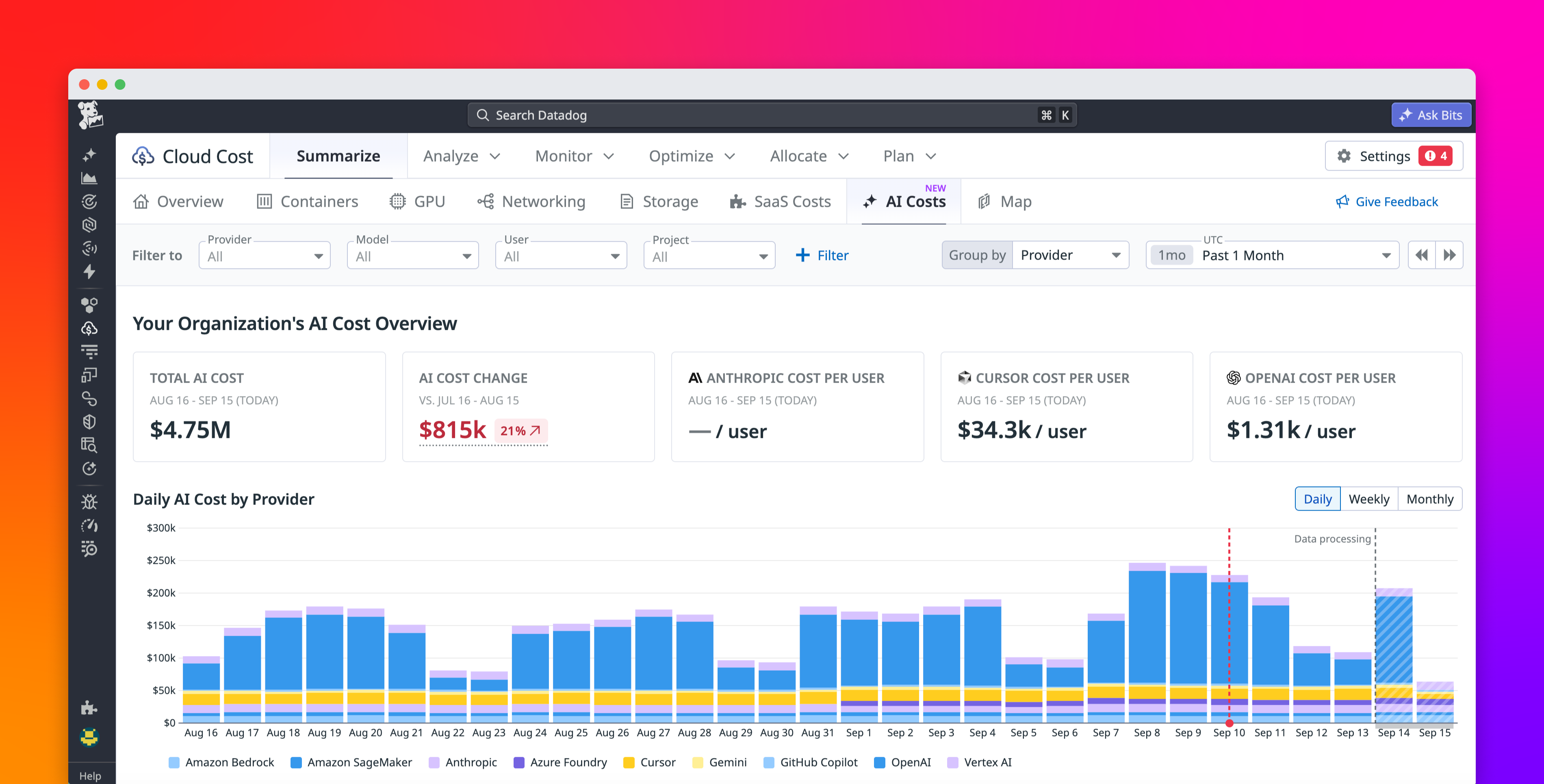
  20. Manage Cursor costs with Datadog Cloud Cost Management

    Datadog Cloud Cost Management now integrates Cursor AI‑coding usage, exposing per‑user, per‑model, and mode breakdowns, out‑of‑the‑box dashboards, anomaly detection, and budget/monitoring tools so FinOps can track and control AI coding spend alongside other cloud and SaaS costs.

    Datadogdatadoghq.com5 min
  21. AI for Games in the Foundation Model Era

    The paper surveys how foundation models are used across six roles in the game development lifecycle—from playing agents to design assistance and runtime adaptation. It highlights limited transferability due to game-specific interfaces and notes that evaluation is mature for bounded play but weak for adaptive and testing scenarios.

    Hugging Face Daily Papersarxiv.org1 minpaper
  22. TAPe+ML: A Compact Structured Representation for Multi-Task Computer Vision

    TAPe+ML v3 is a compact multi‑task vision system that replaces raw‑pixel processing with a structured TAPe representation. Using <100 k parameters, it achieves 84.7 mAP50 (65.3 mAP50‑95) on COCO detection, 80.7 mask mAP50 (58.4 mask mAP50‑95) on COCO segmentation, 92 % top‑1 on Imagenette and 89.9 % on ImageNet‑Real, while also showing robustness to distribution shift in video scene detection.

    Hugging Face Daily Papersarxiv.org1 minpaper
  23. LimiX-2: A Contextual Mechanism Network Towards General Structured-Data Intelligence

    LimiX-2 is a new tabular foundation model that replaces the usual target‑centric in‑context learning objective with a joint‑distribution objective via Contextual Mechanism Networks (CMNs). Trained on synthetic causal graphs using Context‑Conditional Masked Modeling, it outperforms prior tabular PFNs on TabArena, TALENT, and BCCO and can recover causal skeletons from attention patterns.

    Hugging Face Daily Papersarxiv.org2 minpaper
  24. Migrating to Java 17: The Hows, Whys, and Whens

    A product‑focused overview of CloudBees CD/RO’s new integration with Argo Rollouts, describing the supported blue‑green and canary strategies, service‑mesh compatibility, and UI/analytics features. No deep technical walkthrough or performance data.

    Codeshipcloudbees.com6 min