proomt

Search

Search posts, papers, and topics

New

  1. Building a Reliable Script-to-Video Pipeline for Modern Web Applications

    A practical guide to building a reliable, observable script‑to‑video pipeline. It advocates a staged architecture (scene manifest → asset generation → voice → rendering → encoding), validates AI‑generated JSON with Zod, persists project and scene state, uses explicit workflow states, runs heavy work in background queues, limits concurrency, and stores voice, captions, and assets separately to ena…

    SitePointsitepoint.com11 min

  2. IBM Built the Cold War’s Most Powerful Code Breaker for the NSA

    IBM’s Harvest (IBM 7950) was a 1960s NSA‑dedicated streaming coprocessor attached to an IBM Stretch mainframe. It ran up to 200× faster than contemporary machines, used a custom bit‑addressable memory model, pipelined parallel streams (P, Q → R), and introduced the world’s first automated tape library. IBM also created a domain‑specific language, Alpha, for cryptanalytic programmers. The article…

    Lobstersieee.org13 minHN10125lobste.rs8
  3. Microservices vs Monolithic Architecture: What Nobody Tells You Until You've Lived Through Both

    The article walks through the hidden costs of both monoliths and microservices, showing that the choice isn’t about hype but about concrete trade‑offs like deployment coordination, observability, data consistency, and team structure. It recommends a modular monolith as a pragmatic middle ground when the organization isn’t ready for full service sprawl.

    SitePointsitepoint.com9 min
  4. The 6 best AI writing generators in 2026

    Zapier’s blog post reviews six AI‑writing generators (Jasper, Anyword, Writer, Writesonic, Rytr, Sudowrite), explains how they work on top of LLMs, and outlines the author’s evaluation criteria (dedicated writing focus, control over output, ease of use, price, anti‑spam stance). The write‑up is a high‑level overview with no code, benchmarks, or deep technical analysis.

    Zapier Engineeringzapier.com19 min
  5. A theoretical separation between quantum computers & LLMs

    The IBM research blog explains two new theoretical results that prove shallow constant‑depth quantum circuits can outperform decoder‑only transformers on a functional task (iterated index) and diffusion language models on a sampling task (parity‑sampling). The proofs give asymptotic separations but are not yet practical.

    IBM Researchibm.com6 min
  6. The 7 best QuickBooks alternatives in 2026

    Zapier’s roundup lists seven QuickBooks alternatives, summarizing each tool’s standout feature, pricing, and pros/cons for freelancers and small businesses. The guide helps readers pick a free or low‑cost accounting solution based on specific needs.

    Zapier Engineeringzapier.com13 min
  7. Claude for small business: What it is and how to use it

    Claude for Small Business is a Zapier plugin that runs inside Claude Cowork, offering 40+ pre‑built workflows and direct connections to tools like QuickBooks, HubSpot and Slack. After installing the desktop app and linking your apps (individually or via Zapier), you can ask Claude to handle invoices, payments, marketing drafts, and more, with user approval and usage limits.

    Zapier Engineeringzapier.com6 min
  8. Kit vs. Mailchimp: Which is best? [2026]

    Kit (formerly ConvertKit) targets creators with built‑in monetization tools and a generous free tier, while Mailchimp offers a broader marketing suite and more powerful automation for small businesses. The choice hinges on whether you need creator‑centric revenue features or an all‑in‑one multi‑channel platform.

    Zapier Engineeringzapier.com14 min
  9. Integrating AI Across Industries: A Developer’s Guide to Practical Frameworks

    The article surveys common AI integration patterns—high‑throughput streaming with Kafka/Kinesis, edge object detection on Jetson, CI/CD for full‑stack freelance apps, and security/bias safeguards—but offers only high‑level guidance. It outlines the technologies and best‑practice checkpoints developers should consider when building scalable, secure AI services.

    SitePointsitepoint.com1 min
  10. How Databricks’ marketers use data 3x more with Genie, an AI analytics assistant

    Databricks built Marge, a Genie‑powered conversational analytics assistant on a governed Marketing Lakehouse. By starting with a single high‑value use case (email campaign performance), documenting data, encoding verified answers, teaching business terminology, and embedding the tool in existing ticket workflows, they achieved 85% adoption, 3× higher data usage in decisions, 50% QoQ usage growth,…

    Databricksdatabricks.com10 min
  11. Doing Everyone Else's Job

    The author argues that taking on tasks outside your formal role gives insight and can accelerate delivery, but warns that such “charity” can hide deeper organizational problems like misaligned incentives around buy‑vs‑build and centralization.

    Hacker News front pageyosefk.com5 minHN210107
  12. 1 points

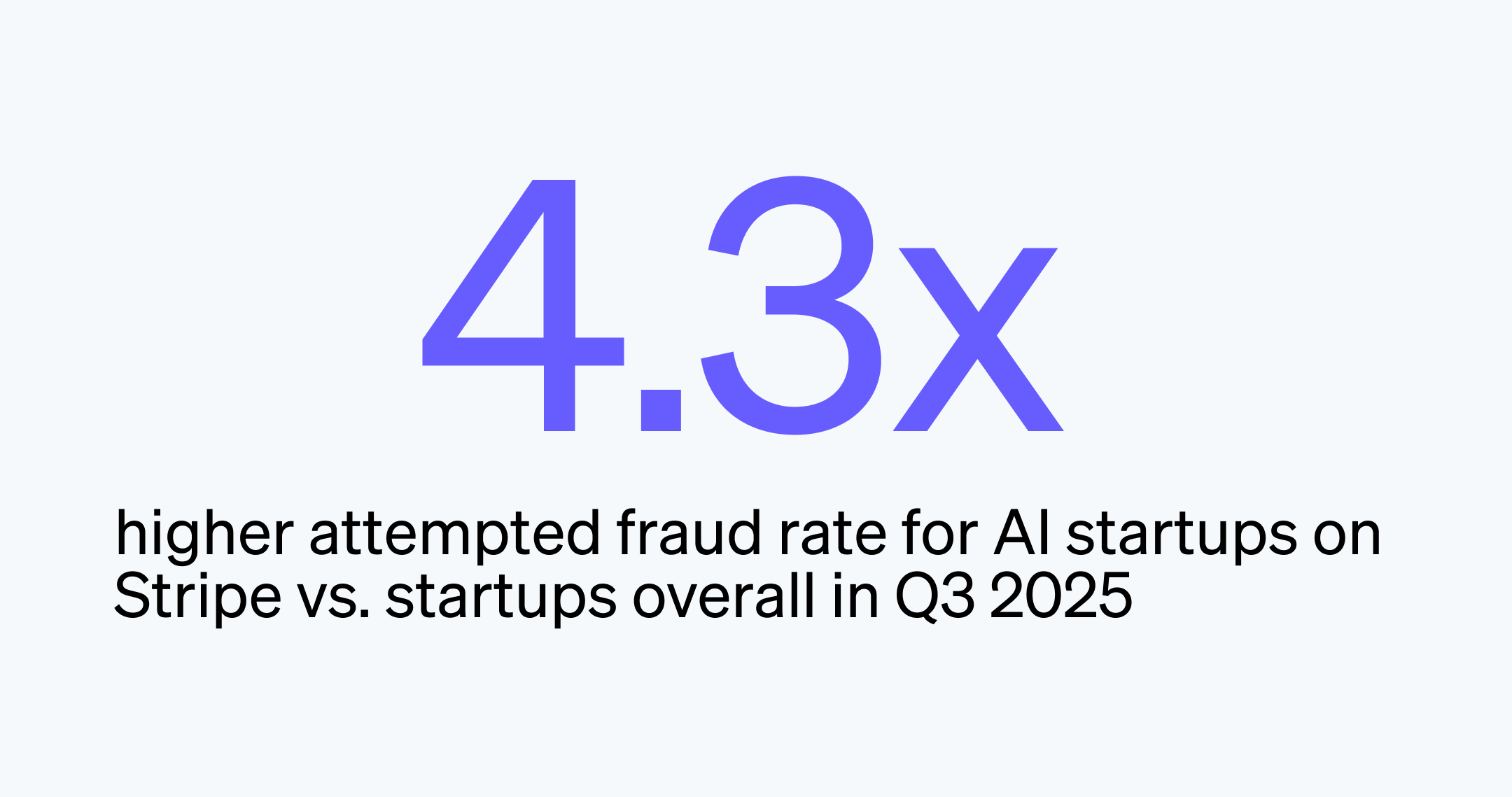
    What Stripe data shows about fraud at AI startups

    Stripe’s data shows AI startups face far higher fraud rates than other startups—up to 4.3× more attempted transaction fraud and a 40% rise in multi‑account abuse over six months. The post explains these patterns and how Stripe Radar’s network‑wide signals can block fraud early in the customer lifecycle.

    Stripestripe.com3 minHN2
  13. Modality-Autoregressive World-Action Models

    ModAR is a world‑action model that autoregressively denoises multiple future modalities (depth, DINO features, point tracks) before predicting actions, letting each prediction condition on earlier outputs. It outperforms prior WAMs, achieving higher success rates with ~20× fewer training FLOPs and no pretraining.

    Hugging Face Daily Papersarxiv.org1 minpaper
  14. Emergence World: Adversarial Stress-Testing of Long-Horizon Multi-Agent Systems

    Emergence World is a continuously running multi‑agent sandbox used to stress‑test frontier LLM‑based agents over weeks. Eight parallel worlds (seven homogeneous, one mixed) generated 850 k LLM calls and ~50 B tokens while agents pursued goals, used tools, and maintained persistent memory. The authors injected three adversarial events—prompt injection, misinformation, and private‑memory exposure—a…

    Hugging Face Daily Papersarxiv.org1 minpaper