proomt

Search

Search posts, papers, and topics

ml infra

RSS
  1. 62

    How LLMs Can Find a Needle in a Haystack

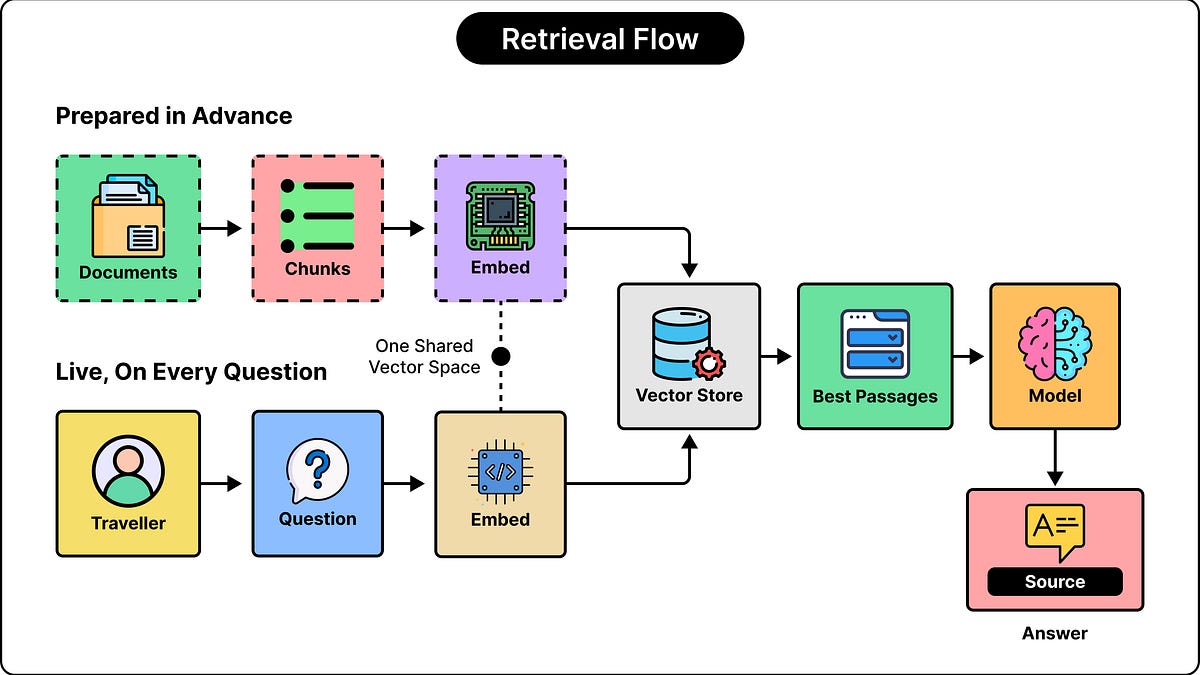
    The post explains how retrieval‑augmented generation (RAG) lets LLM‑based assistants answer questions from private corpora. It covers chunking documents into passages, embedding queries and chunks, similarity metrics, and the trade‑offs of different vector indexes (flat, IVF, HNSW). The focus is on practical design choices rather than new research.

    ByteByteGobytebytego.com12 min
  2. 64

    Agent Anomaly Detection, now in Private Preview on the Gemini Enterprise Agent Platform

    Google’s Gemini Enterprise Agent Platform now offers a private‑preview Agent Anomaly Detection service that asynchronously analyzes agents’ OpenTelemetry traces and logs to flag risky behavior (e.g., tool misuse, privilege abuse) without adding latency, surfacing findings in Security Command Center and via an API for automated mitigation.

    Google Developersgoogleblog.com4 min
  3. 65

    AI Security Is an Engineering Problem — How to Solve It at Every Layer of the Agent Stack

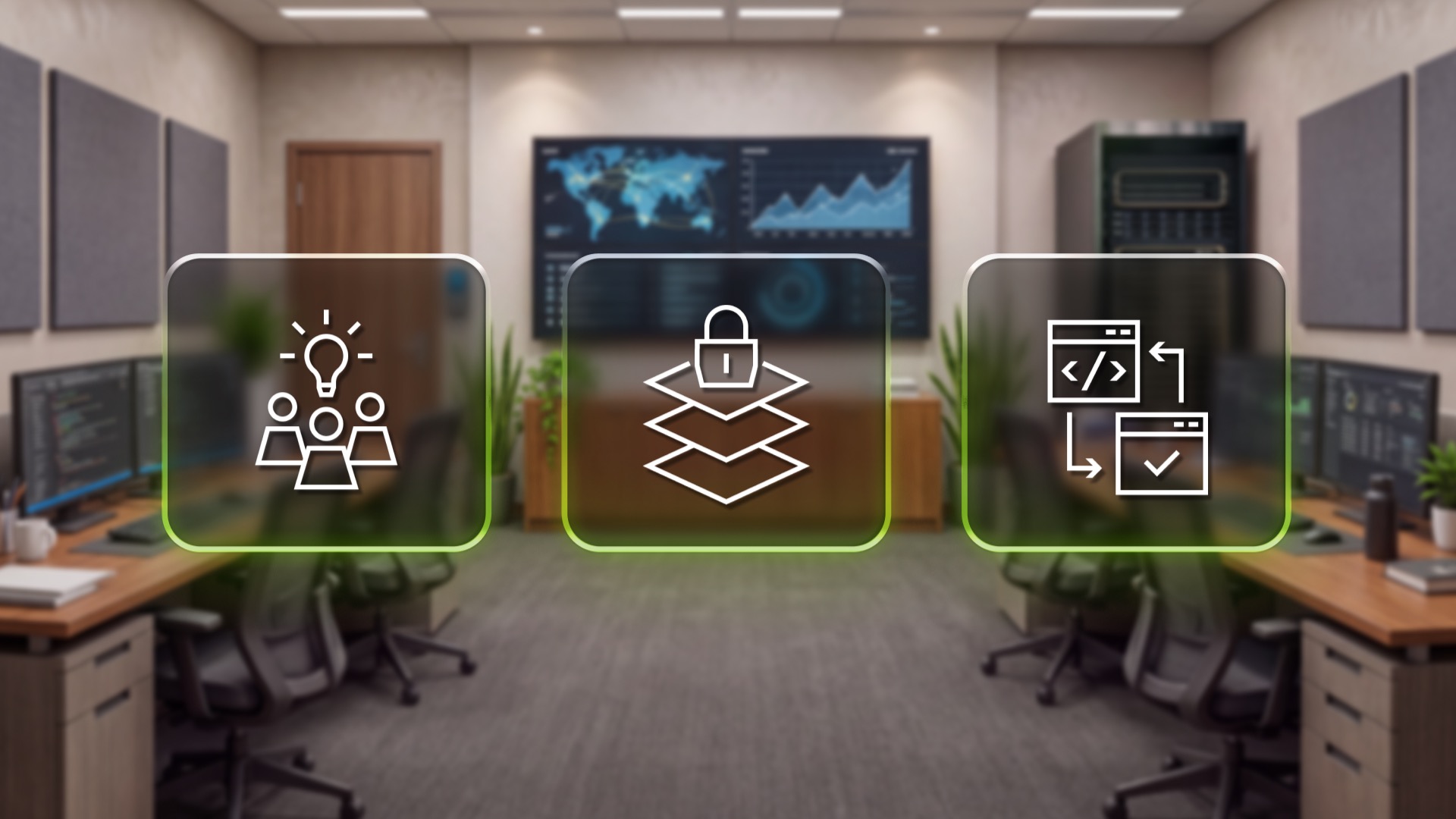
    Nvidia frames AI security as an engineering discipline, outlining required controls across the AI agent stack (model, harness, runtime) and advocating for enforceable boundaries, traceable identities, and evidence‑based testing. It highlights OpenShell as a sandboxed runtime, the Open Secure AI Alliance, and several vendor tools for testing and red‑team exercises.

    Nvidianvidia.com4 min
  4. 66

    ‘Now We Can Know Everything and Do Anything,’ Jensen Huang Says at Dreamforce

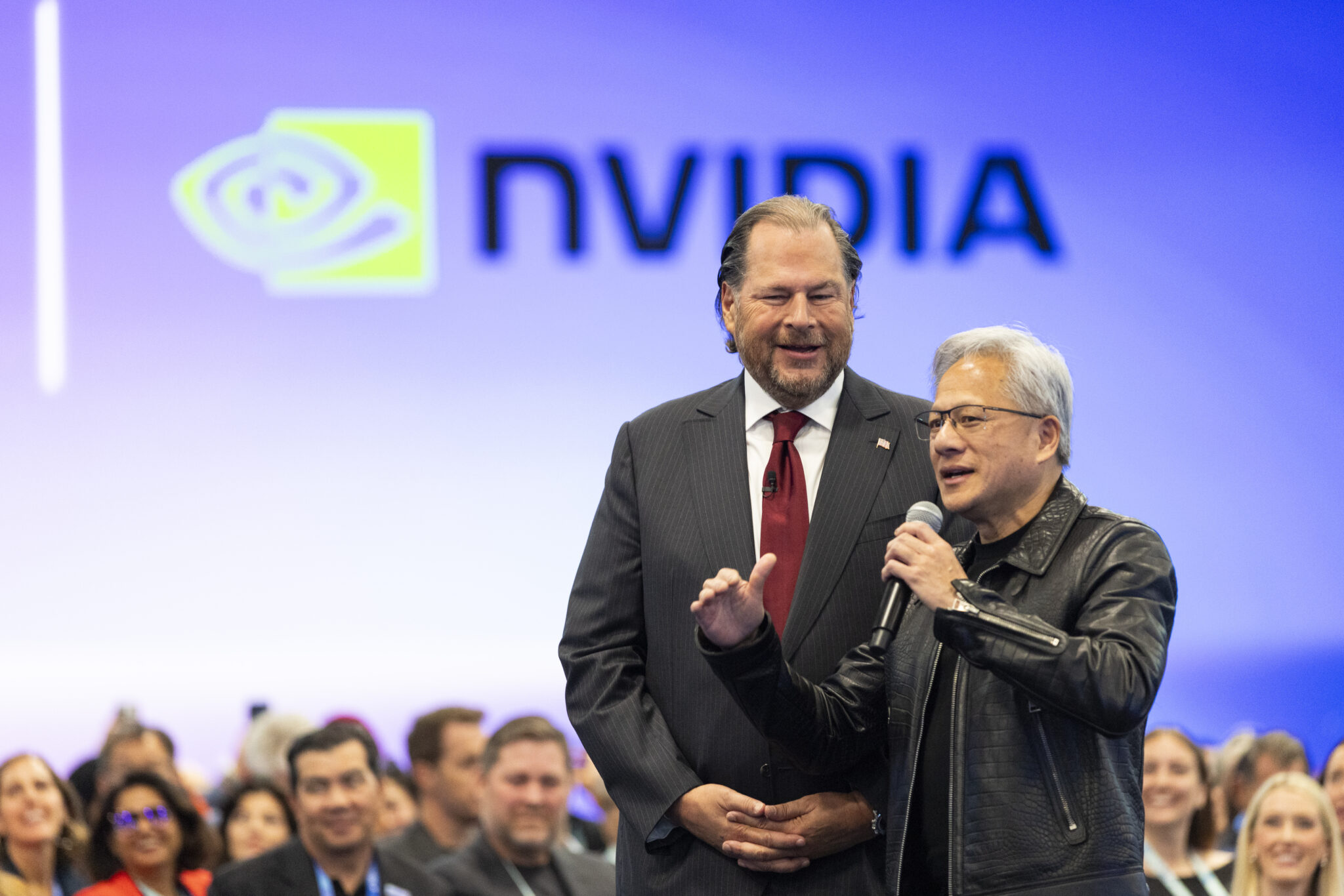
    Nvidia’s Jensen Huang announced Salesforce’s Koa, a CRM‑reasoning LLM built by fine‑tuning Nvidia Nemotron 3 Super on a synthetic, three‑decade‑spanning dataset. Koa uses supervised fine‑tuning plus RL (NeMo RL, Gym, AutoModel), covers 14+ industries, and claims 3× fewer errors on Salesforce’s CRM‑Bench versus leading models. It’s already in internal Slack agents and slated for limited customer p…

    Nvidianvidia.com3 min
  5. 67

    Dropbox Evolves Riviera Content Processing Platform to Support AI Workloads

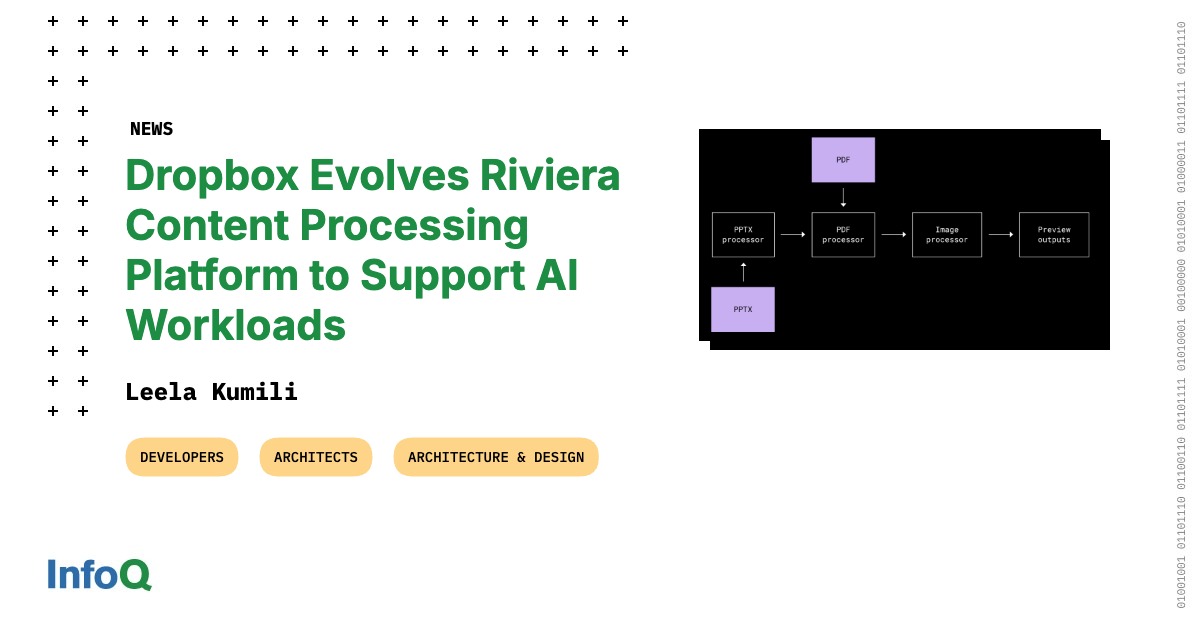
    Dropbox’s Riviera platform has been expanded from a preview service into a universal, composable content‑processing system that now handles hundreds of thousands of transformations per second across 300+ file types. The architecture separates orchestration from execution, adds a plugin model, and offers async public APIs so internal and external AI workloads can reuse cached transformations.

    InfoQinfoq.com2 min
  6. 70

    How Databricks’ marketers use data 3x more with Genie, an AI analytics assistant

    Databricks built Marge, a Genie‑powered conversational analytics assistant on a governed Marketing Lakehouse. By starting with a single high‑value use case (email campaign performance), documenting data, encoding verified answers, teaching business terminology, and embedding the tool in existing ticket workflows, they achieved 85% adoption, 3× higher data usage in decisions, 50% QoQ usage growth,…

    Databricksdatabricks.com10 min
  7. 71

    Microsoft Open-Sources TauGrid to Simplify AI Workload Management on Kubernetes

    Microsoft open‑sourced TauGrid, a Helm‑installable platform that bundles Kueue, KubeRay and other components to schedule, monitor and checkpoint AI workloads on GPU‑enabled Kubernetes clusters. Engineers define jobs in a simple `tau.yaml`, and TauGrid handles queuing, health checks, and observability, simplifying AI workload management.

    InfoQinfoq.com2 min
  8. 72

    Five models pass the easy code reviews. Then the diffs get hard.

    A hands‑on benchmark of five LLM code‑review models (Claude Opus 5, GPT 5‑6 Sol, Grok 4.6, Kimi 3, GLM 5.3, Qwen 3.8 Max, DeepSeek v4 Pro) shows that all models ace tiny 15‑line diffs but diverge sharply on 100‑300‑line, cross‑file changes. The author built a deterministic harness (single HTTP call, fixed system prompt, JSON output) and measured detection rate, false‑positives, latency, token usa…

    Bjørn Johansenbjornjohansen.com16 min
  9. 73

    Cloudflare Introduces the Agent Development Lifecycle to Replace Traditional SDLC

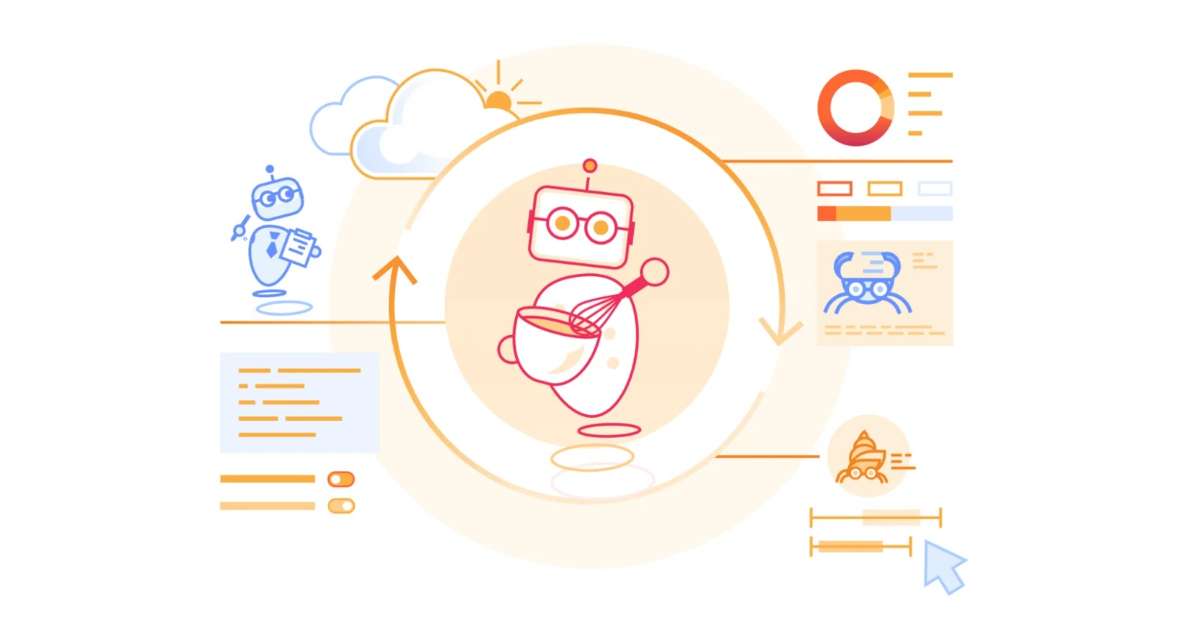
    Cloudflare’s Agent Development Lifecycle (ADLC) replaces the classic SDLC with an autonomous, event‑driven workflow system that lets AI agents handle code generation, testing, deployment, and maintenance. The platform builds on Cloudflare Workflows and the new @cloudflare/ci library to spin up containers, run headless browsers, and chain steps with caching and credential support. Observability is…

    InfoQinfoq.com2 min
  10. 74

    ML based ranking using Nrtsearch

    Yelp added an Inference Plugin to Nrtsearch that runs XGBoost and neural‑network models inside the search engine, eliminating a separate scoring service. The plugin extracts features from index documents, loads MLeap bundles from MLflow, and serves predictions on replica nodes with millisecond latency.

    Yelp Engineeringyelp.com7 min
  11. 75

    How energy teams turn theft detection into governed action with Genie and AI business processes

    Databricks shows how to turn energy‑theft ML scores into a governed, end‑to‑end workflow using a Databricks App, Lakebase for live case state, Unity Catalog for data governance, and Genie One for natural‑language executive reporting. The pattern lets utilities act on alerts faster while staying compliant, and can be reused for other fraud‑type use cases.

    Databricksdatabricks.com6 min
  12. 76

    GLM 5.3 FlashX now available on AI Gateway

    Vercel AI Gateway now offers the GLM‑5.3‑FlashX model, a fast (~200 tps) multimodal coding LLM. The post includes a TypeScript streaming example, notes the model’s fit for coding agents and interactive tools, and lists AI Gateway features (unified API, usage tracking, retries/failover, custom reporting, key budgets, routing rules) with no platform fee.

    Vercelvercel.com1 minrelease
  13. 77

    The 6 best AI writing generators in 2026

    Zapier’s blog post reviews six AI‑writing generators (Jasper, Anyword, Writer, Writesonic, Rytr, Sudowrite), explains how they work on top of LLMs, and outlines the author’s evaluation criteria (dedicated writing focus, control over output, ease of use, price, anti‑spam stance). The write‑up is a high‑level overview with no code, benchmarks, or deep technical analysis.

    Zapier Engineeringzapier.com19 min
  14. 78

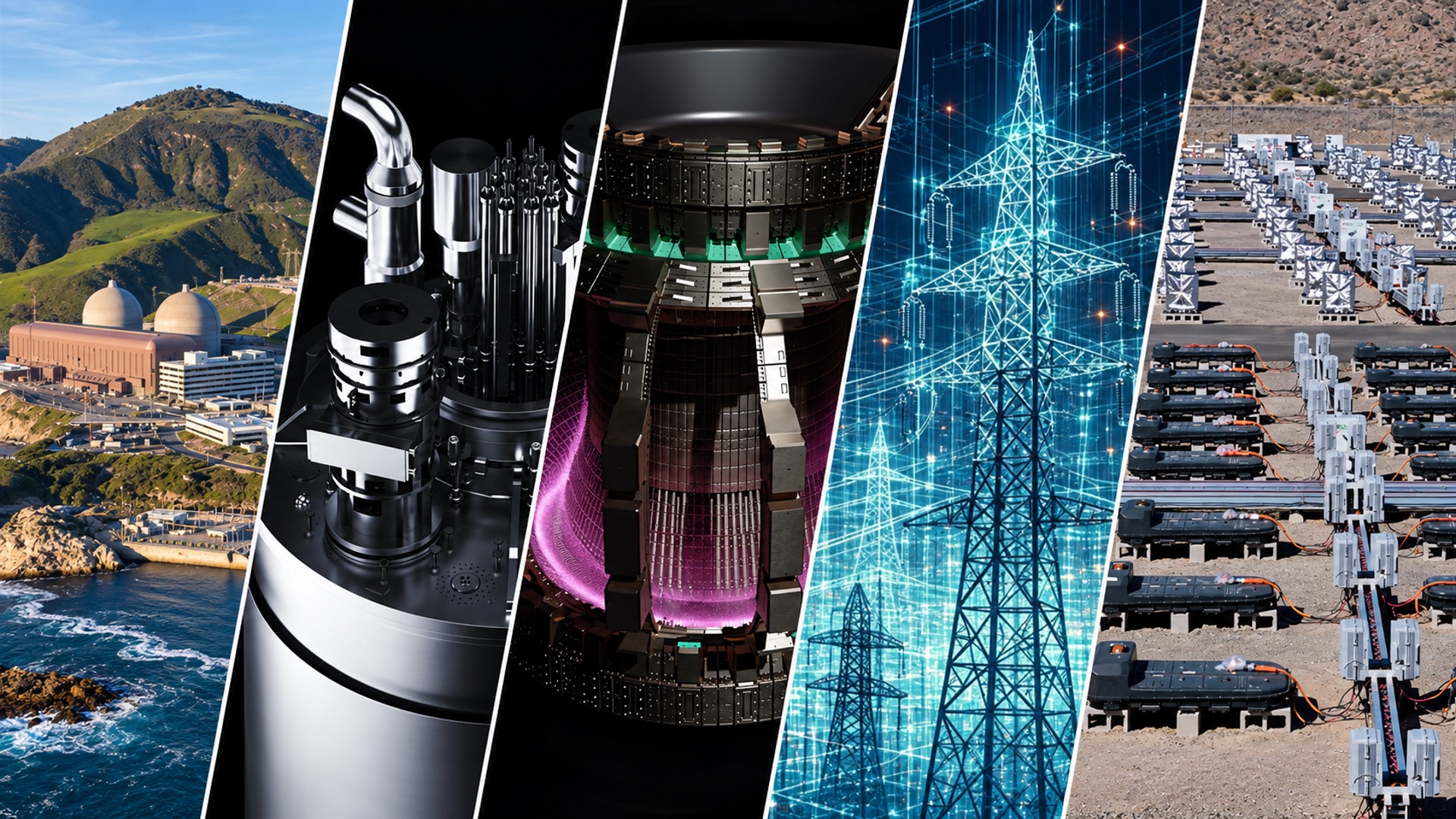
    5 Companies Using NVIDIA AI for Clean Energy

    Nvidia’s blog spotlights five companies that are using Nvidia AI platforms to accelerate clean‑energy projects—from grid interconnection and nuclear plant operations to off‑grid AI data‑center power, advanced reactors, and fusion tokamaks. The article is a marketing summary and provides few technical details.

    Nvidianvidia.com4 min
  15. 80

    No, You're Not Behind. But the Stage 3 Governance Window Is Closing.

    A four‑stage model for adopting agentic AI in software delivery pipelines, warning that Stage 3 (bounded autonomous execution) is arriving faster than governance programs. The post explains the stages, required controls (scoped credentials, fail‑closed defaults, tamper‑evident logs), and uses the OpenClaw incident as a cautionary example.

    Codeshipcloudbees.com9 min
  16. 81

    Mila and Mozilla announce new initiative to build trustworthy open source AI for everyone, with Canadian government support

    Mozilla and Mila, backed by $5 M from Mozilla and $1 M from Hypertec plus Canadian government support, announce an open‑source AI foundation layer aimed at letting small organisations run private AI models. The post describes the high‑level vision (open standards + reference implementation) and a two‑year rollout plan, but provides no technical details, design rationale, or measurable results.

    Mozilla Automation Teammozilla.org5 min
  17. 82

    Quiz: How to Get Started With Ollama

    This is a 10‑question quiz that checks your grasp of installing Ollama, pulling models, choosing between chat and generate APIs, and managing multi‑turn conversations in Python. It reinforces the basics of running LLMs on your own hardware for privacy and offline use.

    Real Pythonrealpython.com1 min
  18. 84

    What AIM Research’s Databricks Services Report Says About the Market in 2026

    AIM Research’s 2026 Databricks Services Partners report shows most partner work (50‑75% of projects) is still core lakehouse builds, data‑engineering modernization, and cloud migrations, with emerging focus on Unity Catalog governance, FinOps, and production‑grade agentic AI. Qubika ranks 5th in penetration (0.68) and 3rd in maturity (0.85), highlighted for its real‑time pipelines, reusable IP (Q…

    Moove-itqubika.com4 min