proomt

Search

Search posts, papers, and topics

ml infra

RSS
  1. 31

    WeVisDoc: From Coverage to Capability for Robust End-to-End Document Parsing

    WeVisDoc introduces a two‑stage data‑centric pipeline for end‑to‑end document parsing. Stage I expands coverage using heterogeneous data and structure‑preserving degradations. Stage II probes the Stage I model with a held‑out set, clusters residual errors, and directs targeted data creation and token‑budget reallocation. The 4‑billion‑parameter model reaches 95.38 Overall on OmniDocBench v1.6 and…

    Hugging Face Daily Papersarxiv.org1 minpaper
  2. 32

    The Other Half of the Memory Wall: Serving 35B MoEs from SSD with Trained Routing Prediction

    The paper presents Edge0, a streaming MoE inference engine that predicts the next layer's routing one token ahead, allowing expert weights to be fetched from SSD while compute proceeds. This enables a 35 B‑parameter MoE to run on a single 24 GB machine at ~20 tokens/s using only ~3 GiB of active memory and with near‑teacher accuracy.

    Hugging Face Daily Papersarxiv.org1 minpaper
  3. 34

    RiskChainBench: A Benchmark for Obfuscated Platform Message Restoration and Evidence-Grounded Web Investigation

    RiskChainBench is a new benchmark that pairs synthetic obfuscated message restoration inputs with human‑labeled local web environments, requiring models to both decode malicious instructions and investigate the linked site. Across ten models, restoration accuracy varies widely and web‑agent failures dominate the error budget.

    Hugging Face Daily Papersarxiv.org1 minpaper
  4. 35

    Reflect, Revise, Reuse: Training-Free Skill Evolution for GUI Agents

    EvoSkill‑GUI lets GUI agents revise their procedural skills on‑the‑fly without extra training by using a reflect‑revise‑reuse loop that edits skill packages during execution. The approach yields up to +16.2% improvement on MobileWorld and similar gains on AndroidWorld and OSWorld, and the evolved skills transfer to related tasks.

    Hugging Face Daily Papersarxiv.org1 minpaper

  5. 36

    In-Context Robot Learning with VLM Agents

    GPT‑Policy is a framework that lets a large vision‑language model (e.g. GPT‑6 Astra) perform in‑context robot learning: a context compiler extracts visual transitions from demos, the VLM proposes tool actions, and a constrained controller verifies and executes them. Real‑robot experiments show that raw video demos improve success rates even without explicit action labels, and that providing align…

    Hugging Face Daily Papersarxiv.org1 minpaper
  6. 37

    How do Traffic Signals Work (2019)

    A high‑level overview of how traffic signals are designed and operated: basic phases, timing rules, actuated detection, coordination between adjacent lights, and emerging adaptive‑control systems that use centralized data and ML. The piece stays at the level of civil‑engineering concepts and does not dive into implementation details relevant to software engineers.

    Hacker News front pagepractical.engineering9 minHN5636
  7. 38

    OmniVBench: A Benchmark and Large-Scale Dataset for Omni Reference-to-Video Generation

    OmniVBench is a new benchmark and the Omni‑R2V Dataset, offering 7 task families, 18 fine‑grained reference‑to‑video generation tasks and a factor‑grounded evaluation checklist of over 12 k items. The dataset provides 340 k industrial‑grade video samples and pipelines for constructing reference‑target pairs, exposing large performance gaps in current R2V models.

    Hugging Face Daily Papersarxiv.org2 minpaper
  8. 39

    TypeSafe AI's Jev now available on AI Gateway

    Vercel AI Gateway now offers Jev, a probabilistic decision model that returns typed choices, scores, and booleans instead of raw text. TypeSafe AI reports it runs up to 193× faster and 445× cheaper than standard LLMs, exposed via the experimental evaluate API in AI SDK 7.

    Vercelvercel.com2 minrelease
  9. 40

    Your Agent Aced the Task. Will It Do It Again?

    The post introduces the Consistency Analyzer, a cheap black‑box diagnostic that flags flip‑prone decision steps in LLM agent traces, and shows how feeding the resulting consistency guidelines back into ALTK‑Evolve halves the gap between mean success and all‑run success (Pass⁵) on the AppWorld benchmark without hurting average accuracy.

    Hugging Facehuggingface.co8 minHN21
  10. 43

    FRAUDSkill: Structured Frozen-Weight Skill Optimization for Audio Anti-Fraud Detection

    FRAUDSkill is a framework that keeps a pretrained audio‑language model frozen and learns an external layer of skill programs, routing policies, and decision rules to meet a structured anti‑fraud detection protocol. On the TeleAntiFraud benchmark it reaches 73.5% Macro‑F1 (≈32% improvement) while cutting invalid predictions to 1.94%.

    Hugging Face Daily Papersarxiv.org1 minpaper
  11. 45

    tokenizers v1: encode, decode and scaling, measured

    Hugging Face has released `tokenizers` v1, a major performance update that achieves 3-30x faster encoding than v0.23 while maintaining identical output and API compatibility. Key optimizations include a SIMD-accelerated splitter, a thread-local word cache, and an allocation-free BPE merge loop, ensuring tokenization doesn't bottleneck ML workflows.

    Hugging Facehuggingface.co10 min
  12. 46

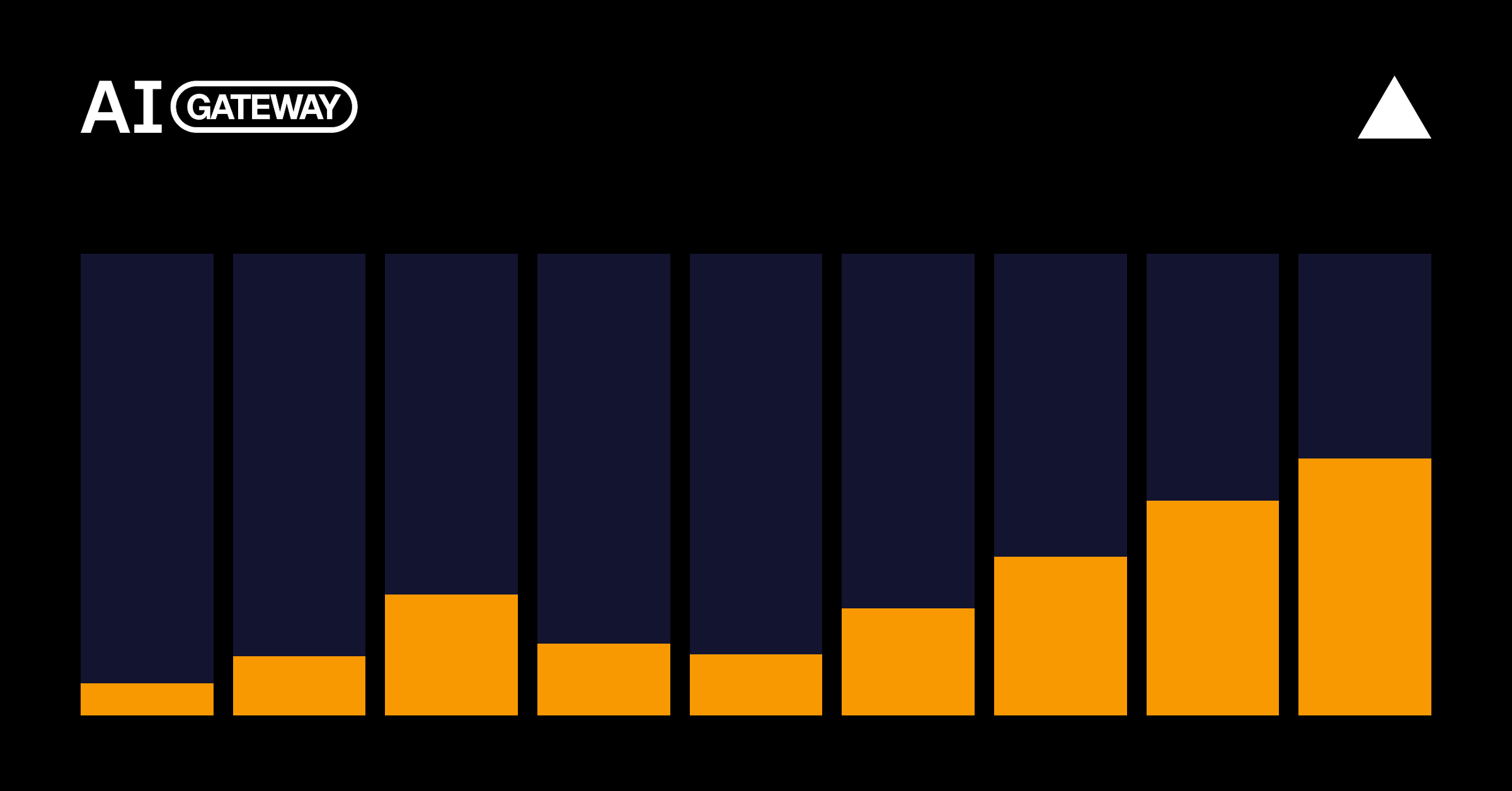
    Open-weight models take 56% of token volume, Astra doubles Fable 5.1 spend

    Vercel’s September AI Gateway Production Index shows open‑weight models processing 56% of token volume (up from 7% in Dec 2025) while accounting for only 14% of spend. Token price fell 23.2% month‑over‑month. Anthropic’s Opus 5 captured 22.5% of spend, overtaking Fable 5 which dropped to 4.9%. OpenAI’s new GPT‑6 Astra grabbed ~7.7% of total gateway spend in its first 12 days, more than double Ant…

    Vercelvercel.com6 minHN2
  13. 47

    PhysStream: Streaming Physics-Grounded Video Generation with Structured Scene Memory and Fine-Grained Motion Control

    PhysStream introduces a two‑stage autoregressive video generator that uses online‑derived positional and tracking maps (structured scene memory) and sparse velocity‑increment signals to enable fine‑grained, physics‑grounded control of multi‑object tabletop scenes. It cuts motion distribution error by 33 % and trajectory error by 12 % versus strong baselines, and wins 85 % of human preference test…

    Hugging Face Daily Papersarxiv.org1 minpaper

  14. 48

    Shared Selective Persistent Memory for Agentic LLM Systems

    Apple proposes a memory architecture for agentic LLMs that selectively persists reusable context (specs, schemas, configs, constraints) across sessions and users. Shared workspaces with role‑based access and a zero‑token data‑refresh mechanism cut token usage by 97×, reduce task time by 14×, and raise task‑completion rates to 96% versus 71%‑79% for baselines.

    Apple Machine Learning Researchapple.com1 minpaper
  15. 49

    Mind2Dialogue: Training Human-Aware Language Models by Simulating User Mental States

    Mind2Dialogue introduces a psychology‑guided simulator that generates user mental states and uses privileged distillation to train LLM assistants on Oracle responses that know those states. The resulting models improve personalization and theory‑of‑mind metrics by up to 41 percentage points versus standard instruction‑tuned baselines.

    Hugging Face Daily Papersarxiv.org2 minpaper
  16. 50

    Your AI coding agent evaluation is only as good as its sandbox

    Evaluating AI coding agents requires a robust sandbox to prevent agents from retrieving answers from the environment, which can invalidate tests of internal knowledge. A correct answer doesn't guarantee a valid measurement if the agent accessed information it shouldn't have, highlighting the need to define sandboxes by information boundaries rather than just tool restrictions. Always review agent…

    Microsoft for Developersmicrosoft.com5 min
  17. 52

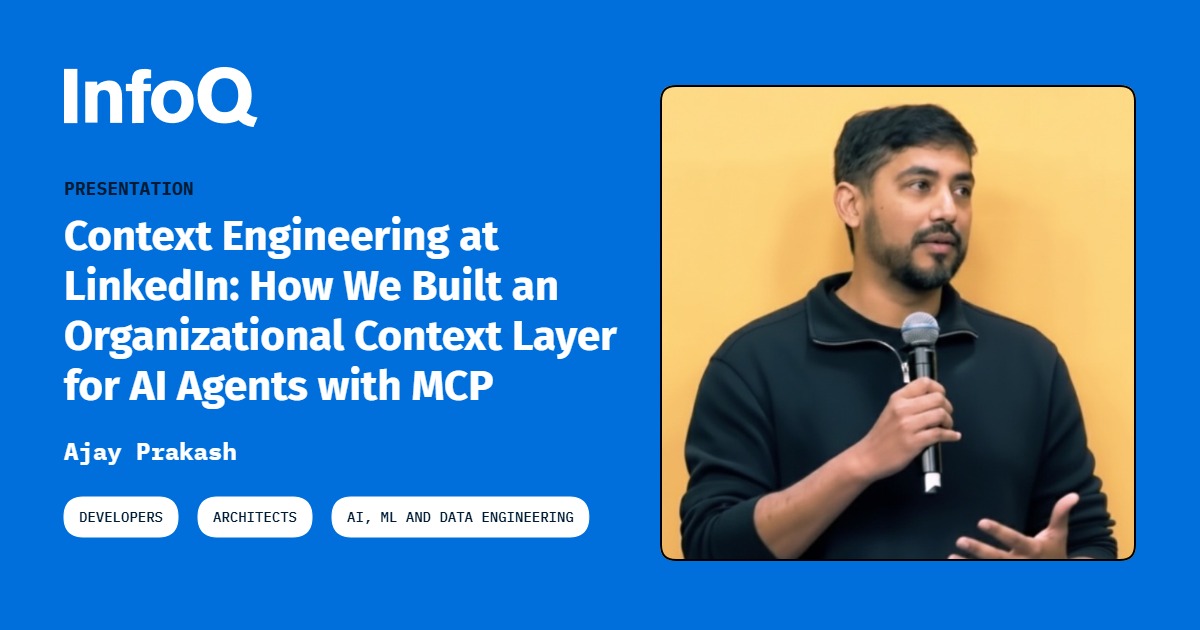
    Presentation: Context Engineering at LinkedIn: How We Built an Organizational Context Layer for AI Agents with MCP

    LinkedIn built a “Contextual Agent Playbooks and Tools” layer that wraps internal services (code search, docs, feature flags, etc.) behind the open‑source Model Context Protocol (MCP). By feeding LLM‑powered coding agents the exact internal artifacts they need, the agents can diagnose incidents, generate PRs, and update incident tickets in minutes, delivering a reported 20 % productivity gain wit…

    InfoQinfoq.com28 mintalk
  18. 53

    Decoy Direction Optimization: A Post-Hoc Defense Against LLM Abliteration

    Decoy Direction Optimization (DDO) is a post‑hoc weight‑editing defense for open‑weight LLMs that injects a high‑magnitude nonlinear decoy into MLP neurons, corrupting contrastive estimators used by Refusal Feature Ablation (RFA) attacks. The paper proves a spectral bound on the effect, evaluates DDO on six model families (including Llama‑3‑8B‑Instruct), and shows <10 % attack success rate (ASR)…

    Hugging Face Daily Papersarxiv.org1 minpaper

  19. 54

    OmniHarness: Harnessing Generalizable Visual Generation via Symbolic Policy Learning

    OmniHarness introduces a symbolic‑policy framework that extracts reusable procedural knowledge from multimodal LLM‑driven visual generation runs. By decoupling task logic from instance inputs, the system can instantiate, adapt, and compose policies for new visual tasks, using intermediate verification for on‑the‑fly refinement while keeping the underlying model frozen. Self‑directed practice task…

    Hugging Face Daily Papersarxiv.org1 minpaper

  20. 55

    Article: Your Next DSL Author Is a Language Model

    Typed Domain Grounding (TDG) embeds a DSL inside a mainstream language the LLM already knows (e.g., Kotlin) and uses the host compiler as an oracle. The author describes five building blocks—embedding, choosing a host language with high training‑data frequency, compiler‑driven type safety, a generate‑compile‑repair loop, and an on‑demand teaching tool—and shows measured results from kUML, a Kotli…

    InfoQinfoq.com18 min
  21. 56

    Glyph: A Multi-Strategy Agentic System for Column Description and Sensitivity-Ontology Tagging of Enterprise Data Catalogs

    Glyph is a production system that uses coordinated LLM agents and a fine‑tuned MiniLM encoder to automatically generate column descriptions and assign ontology tags in enterprise data catalogs. It combines code‑grounded retrieval, regex, and contrastive vector search, achieving NDCG@10 0.92 and MAP@100 0.90, and provides auditable provenance for each tag.

    Apple Machine Learning Researchapple.com1 minpaper
  22. 57

    Beyond Top-k Skill Retrieval: Diversity-Aware Skill Routing for LLM Agents

    Beyond Top‑k Skill Retrieval: Diversity‑Aware Skill Routing (DSR) applies a Determinantal Point Process with a query‑residual diversity kernel to rerank skill candidates, balancing relevance and redundancy. On the SkillRouter benchmark it raises recall and full‑coverage, especially for multi‑skill queries, showing that skill routing benefits from set‑selection rather than independent ranking.

    Hugging Face Daily Papersarxiv.org1 minpaper
  23. 58

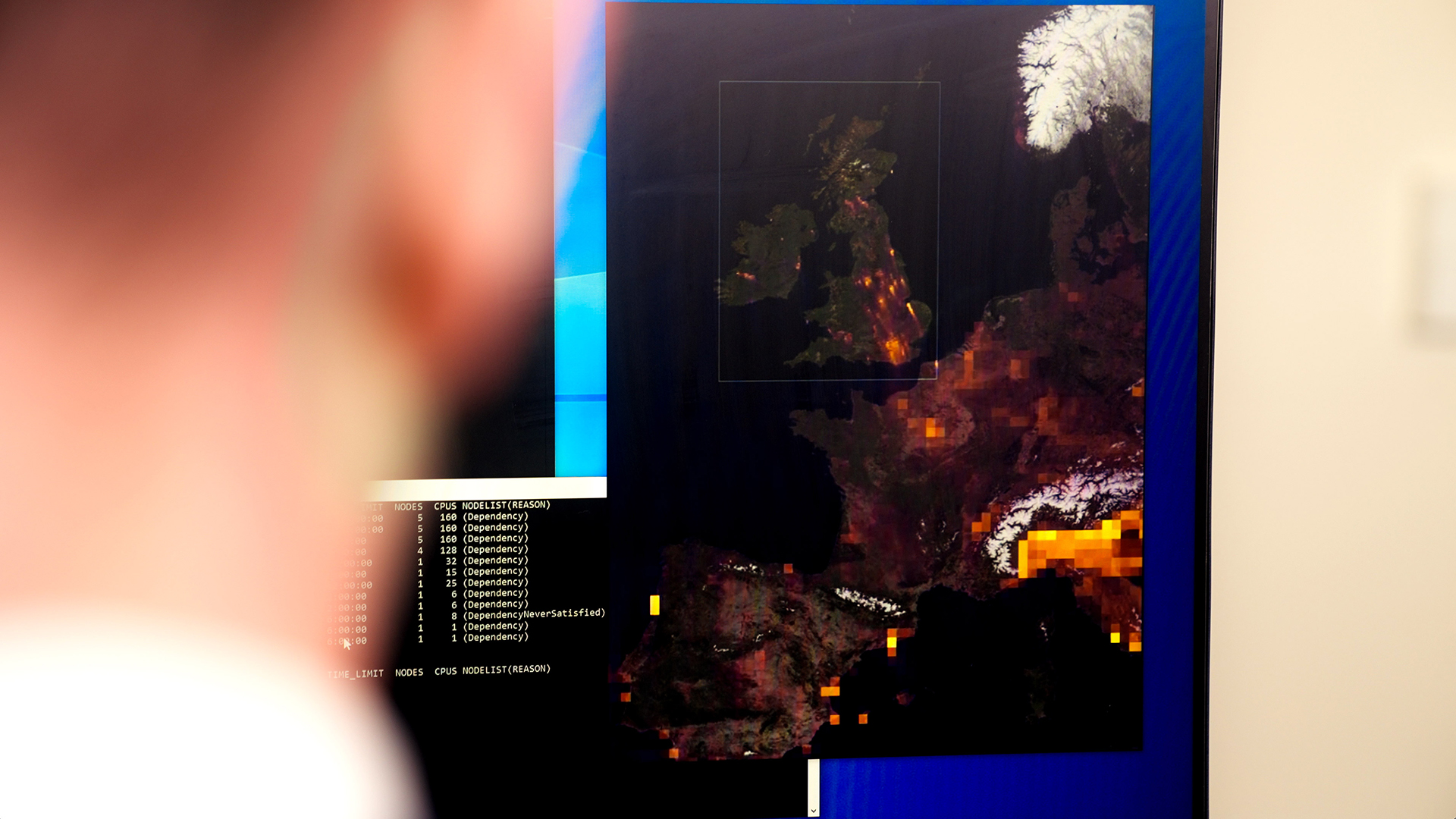
    University of Manchester Uses NVIDIA Earth-2 to Forecast Air Pollution Across the UK

    University of Manchester used NVIDIA Earth‑2 CorrDiff and StormCast generative models to downscale UK‑wide air‑pollution simulations. Training on the Isambard‑AI supercomputer (5,448 GH200 chips, 21 EFLOPS) took two days on an eight‑GPU node, producing a 2‑3 km resolution model. Inference runs on a desktop‑class DGX Spark, enabling rapid scenario forecasting and potential real‑time health alerts.…

    Nvidianvidia.com4 min
  24. 59

    From Megawatts to Tokens: How NVIDIA Maximizes AI Factory Production

    NVIDIA’s DSX platform lets AI data‑centers shift workloads in response to grid signals, squeezing ~24% more token throughput (4 M→5 M tps) and ~23% better performance‑per‑watt on a fixed megawatt budget. The first production demo used Emerald AI’s Conductor to drop a 4 MW load to 3 MW in under a minute without interrupting high‑priority jobs. DSX MaxLPS reallocates headroom across HGX B200 server…

    Nvidianvidia.com5 min
  25. 60

    MilleMiglia: A realistic instance generator for middle-mile logistics

    MilleMiglia is an open‑source C++ generator that creates realistic, privacy‑preserving middle‑mile logistics instances (space‑time graphs with fixed schedules, throughput limits, and synchronization constraints). It uses data‑driven spatial, demand, and rotation distributions, serializes with protobuf, and ships small files for small‑toy to continent‑scale problems, enabling both exact/heuristic…

    Google Researchresearch.google7 min