541
Top
- 542
Reproducing, disclosing, and fixing the libheif vulnerability with Hacktron and the maintainers
Hacktron reported an RCE in libheif, an AVIF decoder used by Next.js image optimization. Vercel and Hacktron reproduced the issue, then coordinated with upstream maintainers (sharp, libvips, libheif) to deploy platform-wide mitigations and release fixes across the ecosystem.
Vercelvercel.com4 min - 543
- 544
From Memory-Hungry HNSW to Quantized SPANN: The Technical Evolution of Pinterest's Manas Platform
Pinterest reengineered its Manas search platform to replace memory‑heavy HNSW with scalar and product quantization, cutting index size by up to 93% while keeping recall above 70% and achieving 20‑30% cost savings. They also moved ANN storage to SSD using SPANN, gaining 3× query throughput over DiskANN with modest latency and recall impact.
InfoQinfoq.com2 min - 545
Shopify Drops React Native for Swift and Kotlin as AI Changes Cross-Platform Development Tradeoffs
Shopify is abandoning React Native for native Swift and Kotlin development, driven by the improved quality of AI coding models and a looming refactor to React Native's New Architecture. This shift resulted in significant performance and stability gains for their flagship app, challenging previous cross-platform development tradeoffs.
InfoQinfoq.com4 min - 546
- 547
MilleMiglia: A realistic instance generator for middle-mile logistics
MilleMiglia is an open‑source C++ generator that creates realistic, privacy‑preserving middle‑mile logistics instances (space‑time graphs with fixed schedules, throughput limits, and synchronization constraints). It uses data‑driven spatial, demand, and rotation distributions, serializes with protobuf, and ships small files for small‑toy to continent‑scale problems, enabling both exact/heuristic…
Google Researchresearch.google7 min - 548
- 549
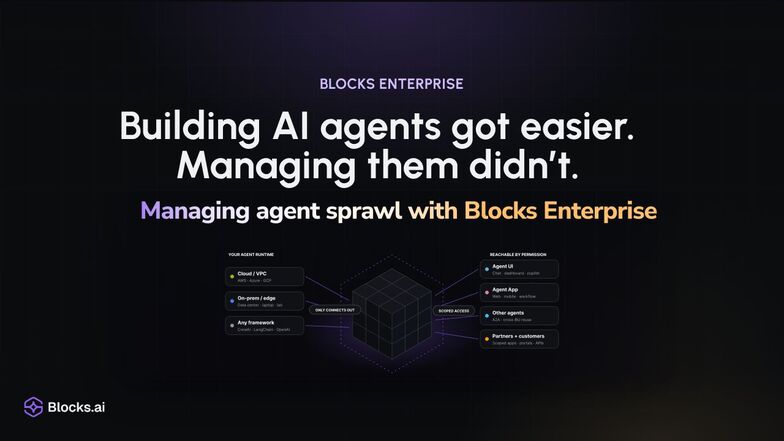
Building AI Agents got easier; managing them didn’t: Managing agent sprawl with Blocks Enterprise
Building AI agents is now easy, but as deployments grow into dozens or hundreds, companies lose visibility into ownership, usage, and cost—a problem called agent sprawl. Blocks Enterprise offers a private network that lets heterogeneous agents be discovered, permissioned, and audited across clouds without forcing a single framework.
PubNub:pubnub.com4 min - 550
GSoC 2026: Improving HLSL Support in clangd
The GSoC 2026 project identified and closed numerous gaps in clangd’s HLSL support. By performing a systematic gap analysis, the author authored an RFC, opened 11 GitHub issues, and landed multiple PRs that improve hover (semantic annotations, out/inout parameters, swizzles, RootSignature, register ranges) and code‑completion (attributes, register, semantic annotations, swizzle). The work also ex…
LLVM Project Blogllvm.org8 min - 551
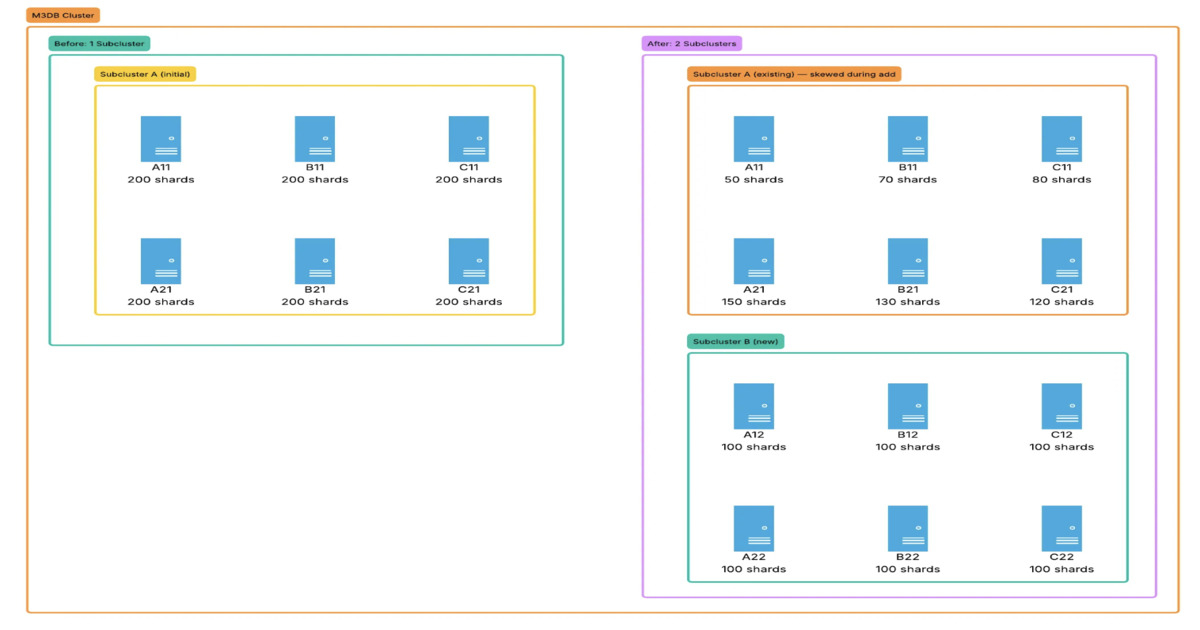
Uber Redesigns M3DB Sharding with Subclusters to Limit Failure Impact
Uber reworked M3DB's shard placement by grouping nodes into fixed-size subclusters, each owning a disjoint shard range, to bound the blast radius of node failures. A greedy shard‑move algorithm (O(S log S) + O(S×N)) handles scaling while preserving existing placement tooling.
InfoQinfoq.com2 min - 552
GPT-Live 1 now available on AI Gateway
Vercel AI Gateway now offers OpenAI’s GPT‑Live 1, a full‑duplex voice model that can listen and speak simultaneously. The SDK lets you start a voice session and optionally delegate work to any text model, with code examples for both patterns.
Vercelvercel.com1 minrelease - 553
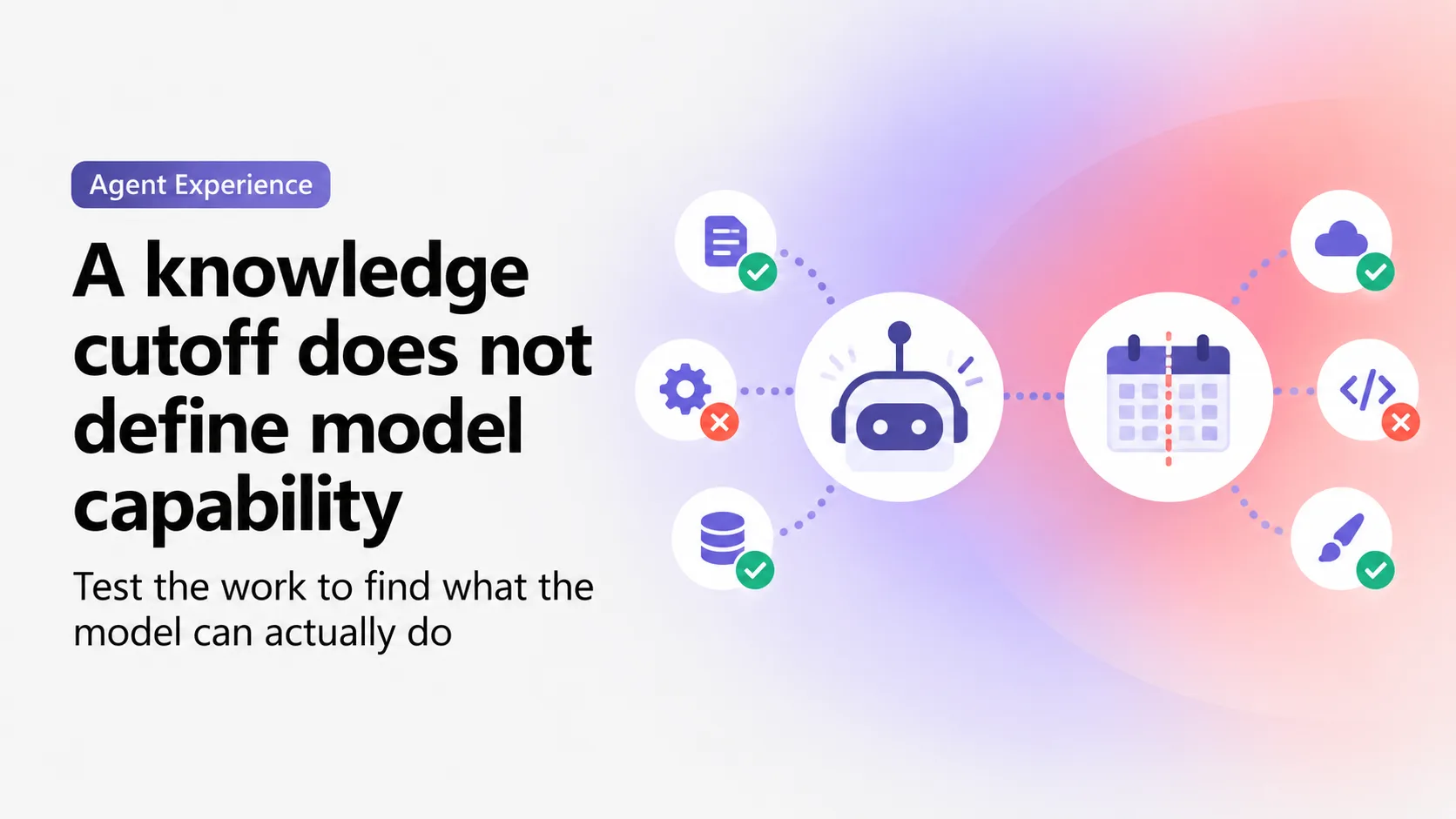
Knowledge cutoff is a poor proxy for model capability
A study found that an LLM's stated knowledge cutoff date is a poor indicator of its actual capability regarding specific product versions. Models showed inconsistent knowledge, failing on older features while sometimes inferring correctly about newer, post-cutoff features.
Microsoft for Developersmicrosoft.com6 min - 554
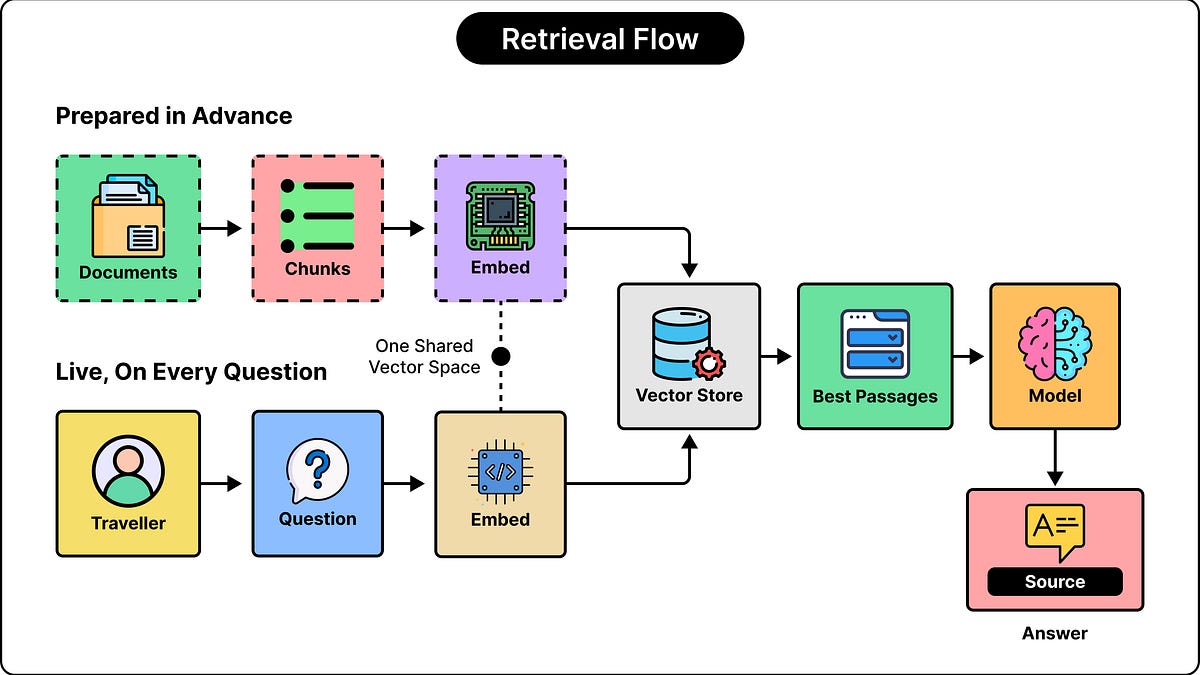
How LLMs Can Find a Needle in a Haystack
The post explains how retrieval‑augmented generation (RAG) lets LLM‑based assistants answer questions from private corpora. It covers chunking documents into passages, embedding queries and chunks, similarity metrics, and the trade‑offs of different vector indexes (flat, IVF, HNSW). The focus is on practical design choices rather than new research.
ByteByteGobytebytego.com12 min - 555
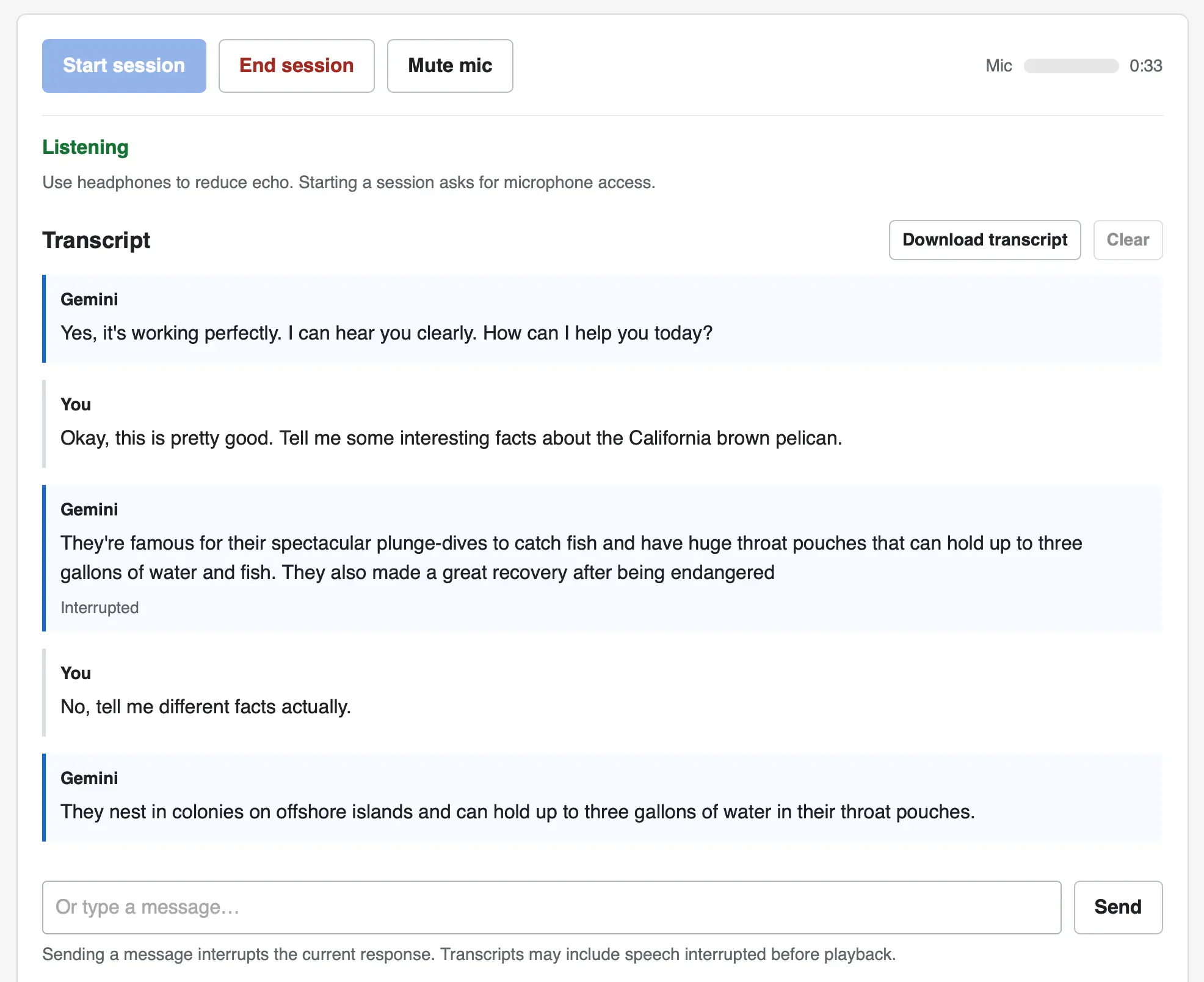
Gemini Live audio
Simon Willison shows a minimal JavaScript UI that talks to Google’s Gemini 3.8 Live speech‑to‑speech models via a WebSocket API, using the Web Audio API for capture/playback and no external libraries.
Simon Willisonsimonwillison.net1 min - 556
- 557
Google Agent Development Kit for Kotlin Reaches Feature Parity with Python, Supports On-Device AI
Google's ADK for Kotlin 1.0 is a production-ready framework for building AI agents across Kotlin, Android, and JVM applications. It achieves feature parity with Python ADK, offering idiomatic Kotlin APIs for orchestration, tools, and memory, alongside new Android-specific on-device and hybrid AI capabilities.
InfoQinfoq.com2 minrelease - 558
A First Futamura Projection
Lobstersveitheller.delobste.rs8 - 559
Write End-to-End Tests in Your Backend’s Language
This article advocates writing end-to-end tests in the backend's language to leverage domain models and persistence tools for efficient test data setup. It details a strategy for structuring E2E tests with inline data creation, small helpers, and parallel execution considerations.
Atomic Objectatomicobject.com7 min - 560
- 561
Dropbox Outlines How Focusing on Existing Infrastructure Efficiency Can Create Headroom for AI
Dropbox details how a decade‑long program of infrastructure efficiency—forecasting, deep‑sleep servers, workload rebalancing, higher‑density storage, reliability‑based hardware refresh, and rack‑level power upgrades—has cut storage power use by >50% and created headroom for AI workloads without new data‑center builds.
InfoQinfoq.com2 min - 562
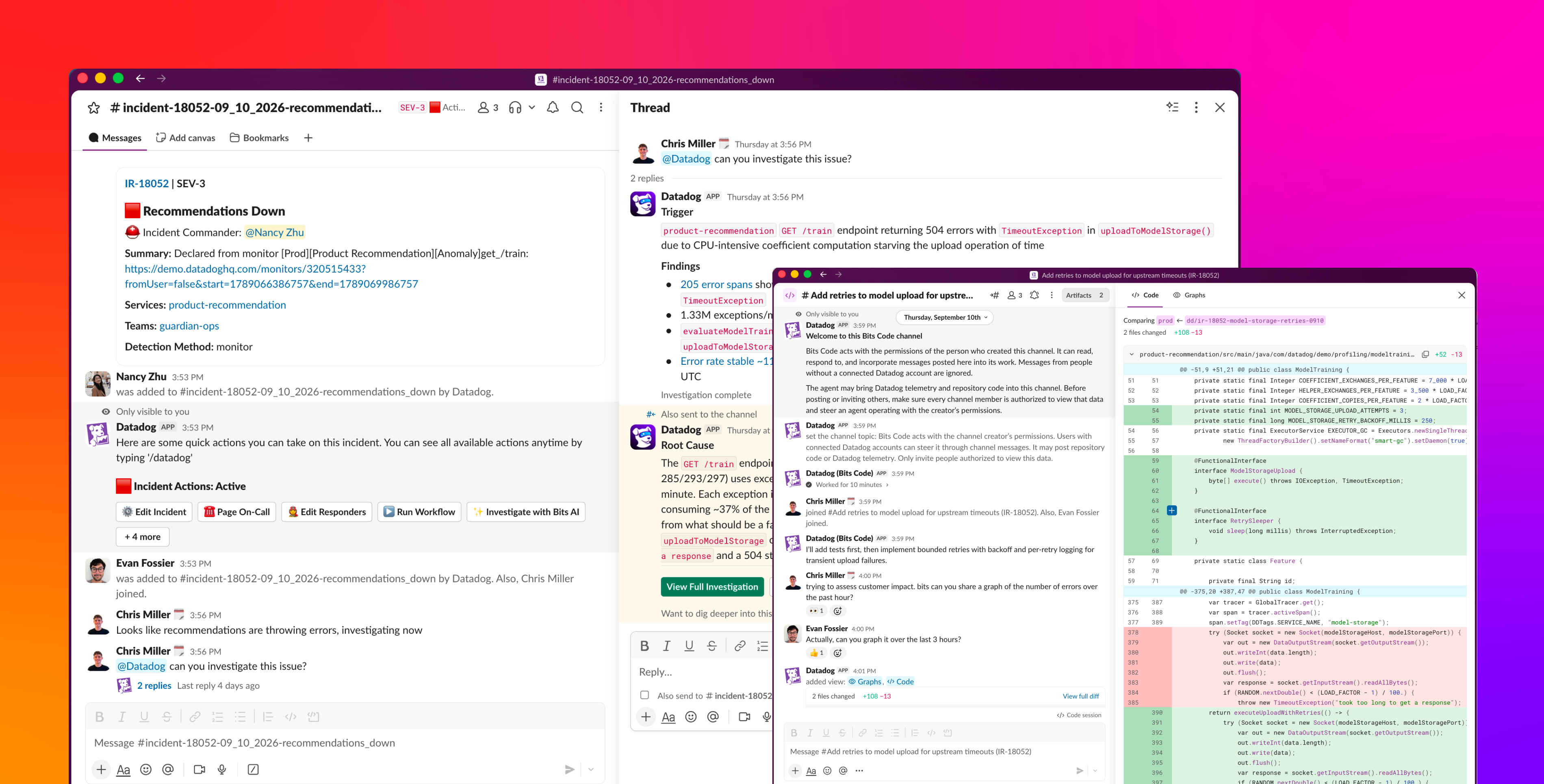
From alert to resolution: Manage incidents with Bits Chat in Slack
Datadog’s Bits Chat adds a natural‑language interface to Slack, letting responders start investigations, get root‑cause analysis, generate code fixes, and close incidents without leaving the channel. The post walks through a sample e‑commerce outage to show the end‑to‑end workflow.
Datadogdatadoghq.com4 min - 563
Improving synthesis prediction of small molecules at scale with RetroChimera
RetroChimera is an open‑source retrosynthesis system that ensembles a Transformer‑based de‑novo model and a GNN template selector with a learned ranking layer. In blind expert evaluations it achieved a 90 % route acceptance rate, far above prior models.
Microsoft Researchmicrosoft.com5 min - 564
- 565
Authenticity's Triumph
Hacker News front pagesmalleycreative.comHN174 - 566
- 567
Diagnosing PostgreSQL Index Bloat, Write Amplification, and Buffer Cache Hit Ratios
This article details how to diagnose PostgreSQL index bloat, write amplification, and buffer cache inefficiency using SQL tools like pgstattuple and pg_buffercache. It provides a reusable SQL toolbox and a Docker environment to identify and understand performance bottlenecks caused by MVCC-related index fragmentation.
SitePointsitepoint.com18 min - 568
Vibe coding security: How to be sure your vibe-coded apps are safe to use
This article addresses common security vulnerabilities in AI-generated "vibe-coded" applications, such as exposed API keys and data breaches. It provides practical steps and agent skills to build securely from the start, perform security reviews, and protect sensitive data and keys.
Zapier Engineeringzapier.com17 min - 569
What We Know About Laravel 14
Laravel 14 (Q1 2027) raises the PHP minimum to 8.4 and adds several concrete API changes: a new `Route::query()` method, `$user->authorize()`, context support for `report()`, `Storage::fake()` for on‑demand disks, extended `whereKey*()` helpers, and fixes to queue‑pause signatures, non‑mutating `lazy()`/`chunk()`, array handling in `Cache::has/forget`, and `MassPrunable` soft‑delete behavior. The…
Laravellaravel-news.com5 min - 570
Advancing AI for biology: Teaching models to design and characterize antibodies
Amazon Bio Discovery developed three AI models: MochiBind for fast, sequence-based antibody binding ranking, CA-MAP for context-aware developability prediction robust to batch effects, and an agent-guided system for de novo antibody design. These advancements aim to accelerate and improve the accuracy of antibody drug discovery, with experimental validation for a novel cancer target.
Amazon Scienceamazon.science10 min