481
Top
- 482
Android Bench 2.0: Pushing the frontier with challenging long-horizon tasks
Android Bench 2.0 adds a set of long‑horizon tasks (multi‑day Android development problems) and introduces agent‑based evaluation. Scoring is now continuous, with the best model achieving a 28 % pass rate on these tasks, far lower than the ~91 % on earlier short tasks. The post lists new models on the leaderboard and points to updated methodology and GitHub repo.
- 483
- 484
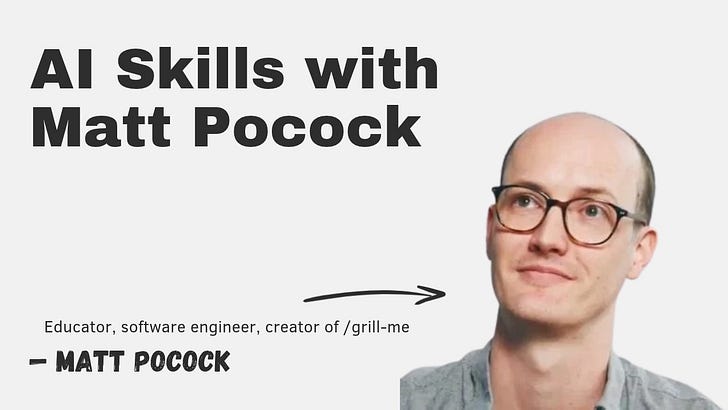
AI Skills with Matt Pocock
Matt Pocock explains how he uses AI agents for software development, emphasizing "strategic programming" and guiding agents with "leading words" from classic engineering texts. He argues that this approach makes engineering fundamentals more critical than ever for creating agent-optimized codebases.
The Pragmatic Engineerpragmaticengineer.com7 min - 485
Cloudflare Measures Origin TLS Preferences, Cutting Handshake Retries from 52% to 3.7%
Cloudflare replaced a static assumption about origin TLS preferences with per-origin measurement, significantly reducing HelloRetryRequests (HRR) during TLS 1.3 handshakes. This optimization cut HRR from 52% to 3.7% for scanned origins and improved p90 handshake latency by over 150ms.
InfoQinfoq.com5 min - 486
Article: Your Next DSL Author Is a Language Model
Typed Domain Grounding (TDG) embeds a DSL inside a mainstream language the LLM already knows (e.g., Kotlin) and uses the host compiler as an oracle. The author describes five building blocks—embedding, choosing a host language with high training‑data frequency, compiler‑driven type safety, a generate‑compile‑repair loop, and an on‑demand teaching tool—and shows measured results from kUML, a Kotli…
InfoQinfoq.com18 min - 487
Glyph: A Multi-Strategy Agentic System for Column Description and Sensitivity-Ontology Tagging of Enterprise Data Catalogs
Glyph is a production system that uses coordinated LLM agents and a fine‑tuned MiniLM encoder to automatically generate column descriptions and assign ontology tags in enterprise data catalogs. It combines code‑grounded retrieval, regex, and contrastive vector search, achieving NDCG@10 0.92 and MAP@100 0.90, and provides auditable provenance for each tag.
Apple Machine Learning Researchapple.com1 minpaper - 4881 points
MiniCPM5-2B Ranks First Among Open-Weight Models Under 4B
MiniCPM5-2B, a 2.6 B‑parameter dense Llama‑style model, tops the Artificial Analysis GDPval‑AA v2 benchmark (831 Elo) and sits on the Pareto frontier of the Intelligence Index v4.2 despite being far smaller than competing models. The post breaks down its capability density, token‑cost efficiency, architecture, and three‑stage training (SFT, RL, on‑policy distillation) to explain why it outperform…
SitePointsitepoint.com10 min - 489
Lyft Moves Streaming Fleet to Apache Flink Kubernetes Operator
Lyft migrated its hundreds of production Flink jobs from a home‑grown Kubernetes operator to the Apache Flink Kubernetes Operator, gaining last‑state upgrades, in‑place autoscaling, and resource autotuning while cutting typical deployment downtime to 3–6 minutes. The switch also enabled Flink 1.19 features, saved millions in over‑provisioned capacity, and required workload‑specific scaling strate…
InfoQinfoq.com3 min - 490
Kubernetes v1.37: Hardening Container Storage with Bind Mount Options and EmptyDir Permissions
Kubernetes v1.37 adds two alpha‑level storage hardening knobs: per‑volume `bindMountOptions` (e.g. noexec, nosuid, nodev) that affect the bind‑mount the runtime creates, and an `emptyDir` `mode` field to set Unix permission bits (including the sticky bit). Together they let you enforce least‑privilege policies on writable volumes without init‑containers or CSI tricks.
Kuberneteskubernetes.io8 minHN3 - 491
Build a Typed Context Compaction Gate for AI Agents
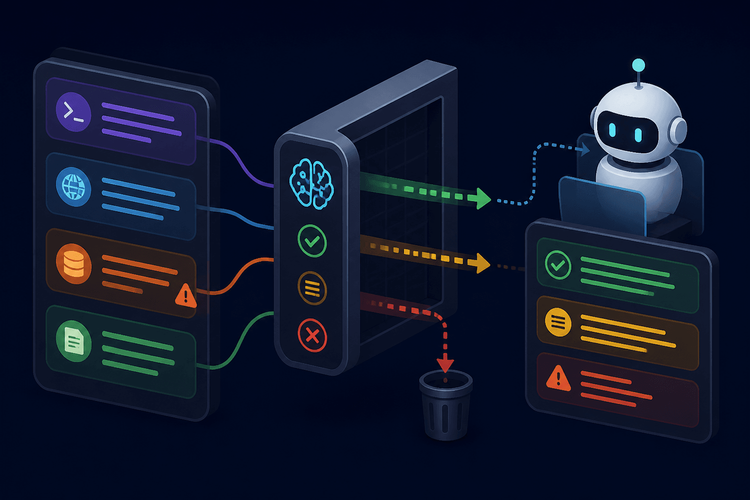
A step‑by‑step tutorial showing how to build a typed context‑compaction gate for AI agents in TypeScript using LangChain and Zod. It defines a discriminated‑union schema for keep/summarize/discard actions, implements a fast gpt‑4o‑mini classifier, validates decisions at runtime, and wires the gate as middleware in an agent loop, with testing and production‑grade tuning advice.
SitePointsitepoint.com16 min - 492
- 493
- 494
APort Vault: Benchmarking AI Agent Payment Authorization with the Open Agent Passport
APort Vault is a benchmark that replays 4,371 human‑written attacks against a live payment‑handling AI agent across 14 models and multiple policy configurations, generating 225,964 evaluations. Adding the Open Agent Passport pre‑action check eliminated all unauthorized transfers in the test, showing a per‑session breach upper bound of 0.38%.
Hugging Face Daily Papersarxiv.org2 minpaper - 495
- 496
The future of practice: Enabling teachers to create learning interactives with generative UI
Google Research demonstrates a generative‑UI system that lets teachers author interactive, game‑style learning modules. The pipeline uses pedagogical guardrails, iterative self‑correcting loops (including automated solvability checks), and teacher vetting. A pilot library of 30+ STEM interactives is publicly available, and early teacher studies report good‑to‑excellent ratings.
Google Researchresearch.google8 minHN4 - 497
WebKit Features for Safari 27.0
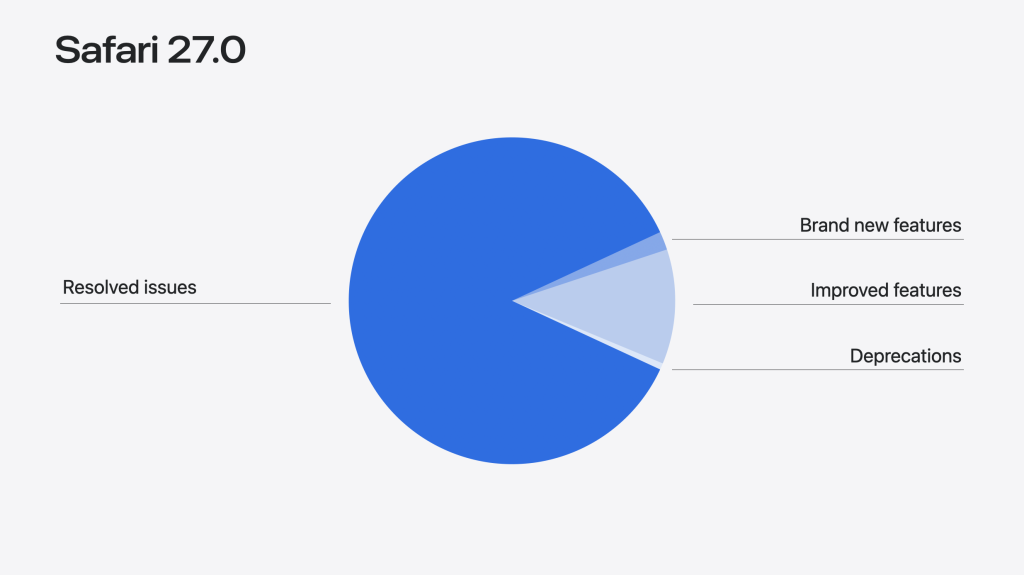
Safari 27.0 adds a local MCP server for AI‑driven automation, a fully stylable `<select>` via `appearance: base-select` and new pseudo‑elements, the `<model>` element for embedding 3D assets, `sizes="auto"` for responsive images, a `shadowrootslotassignment` attribute for declarative shadow roots, and a large set of quality‑focused fixes (844 resolved issues).
- 498
- 499
How To Write With An LLM
Simon Willison argues that LLMs should be used as copyeditors, not as writers, and proposes a strict rule never to reuse any phrase they suggest. He shares a prompt for building a personal LLM proofreading tool.
Simon Willisonsimonwillison.net1 min - 500
Introducing Lead: TIN-compatible full-text search for CI
Lead is a Postgres full‑text search extension compatible with TIN, intended for CI and testing environments. It offers the same SQL and TINQL features but runs as a full table scan, making it orders of magnitude slower, so it’s only practical for small datasets.
PlanetScaleplanetscale.com2 min - 501
Dynamically Scaled Activation Steering
Dynamically Scaled Activation Steering (DSAS) is a method‑agnostic framework that learns per‑token, per‑layer scaling factors to turn existing activation‑steering interventions on only when a model is likely to produce undesired output (e.g., toxic text). The scaling can be optimized jointly with any steering function, improves the toxicity‑utility trade‑off on language models, transfers to text‑…
Apple Machine Learning Researchapple.com1 minpaper - 502
- 503
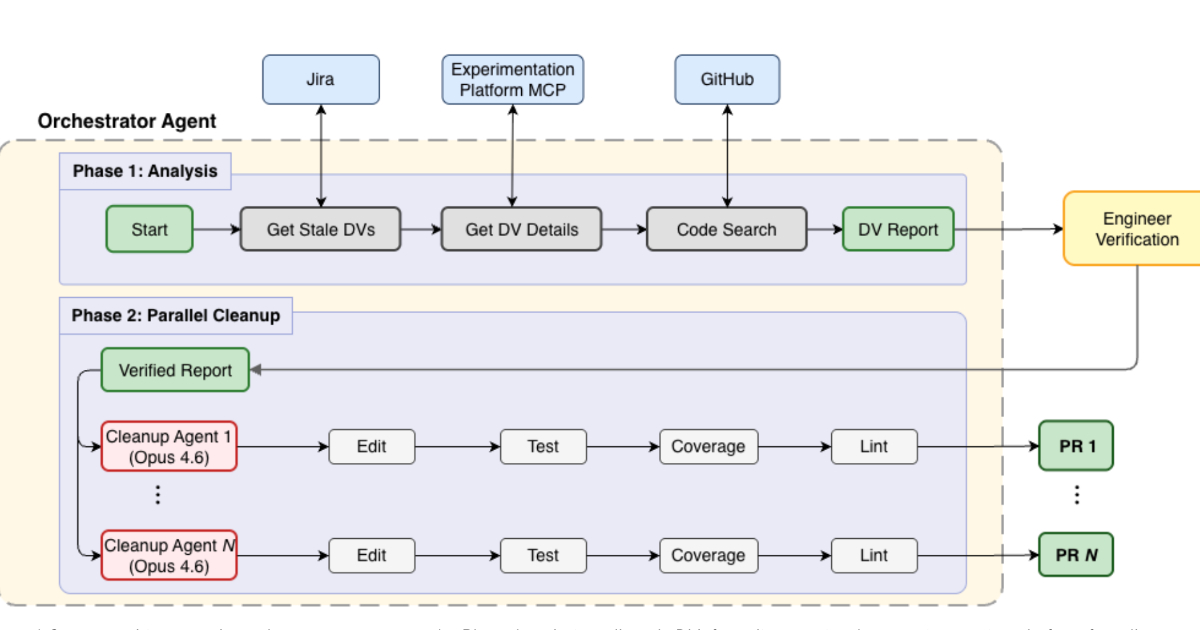
DoorDash Uses Multi Agent LLMs to Clean up 60,000 Feature Flags
DoorDash built a two‑phase, multi‑agent LLM system (Claude Sonnet orchestrator + Claude Opus cleanup agents) that automatically removes stale feature flags from 623 repos. In a 50‑flag pilot it generated usable PRs for 45 flags at ~14 min and $4.79 each, with 100 % success on simple flags and no regressions.
InfoQinfoq.com2 min - 504
Alibaba Open Sources OpenCodeReview for AI-Assisted Code Review
Alibaba open-sourced OpenCodeReview, an AI-powered code review CLI that combines deterministic pipelines for file selection and rule matching with an LLM agent for dynamic analysis. Used internally for two years, it claims higher precision and F1 scores than Claude Code with fewer tokens, though external reviews note recall limitations.
InfoQinfoq.com2 min - 505
Accelerating the borderless Lakehouse: Announcing preview of cross-cloud caching
Google Cloud previewed cross‑cloud caching for its Borderless Lakehouse. The feature caches sub‑file Parquet blocks in Google Cloud, encrypts them with GMEK, isolates cache per tenant/region, and validates freshness via metadata checks. In tests it can reduce cross‑cloud data transfer to <5% of the original size, lowering query latency and cost for Iceberg tables stored in other clouds. BigQuery…
Google Cloud Bloggoogle.com3 minrelease - 506
NVIDIA Vera Rubin NVL72 Delivers Leading Performance in MLPerf Inference v6.1 Debut
NVIDIA’s Vera Rubin NVL72 AI inference system shows up to 3.7× higher throughput than the prior GB300 NVL72 on MLPerf v6.1 benchmarks (Qwen3‑VL, DeepSeek‑R1), achieves 99% scaling efficiency across 288 GPUs, and benefits from software optimizations (NVFP4 precision, kernel fusion, disaggregated serving). The post is a product announcement with concrete benchmark numbers but limited technical dept…
Nvidianvidia.com4 min - 507
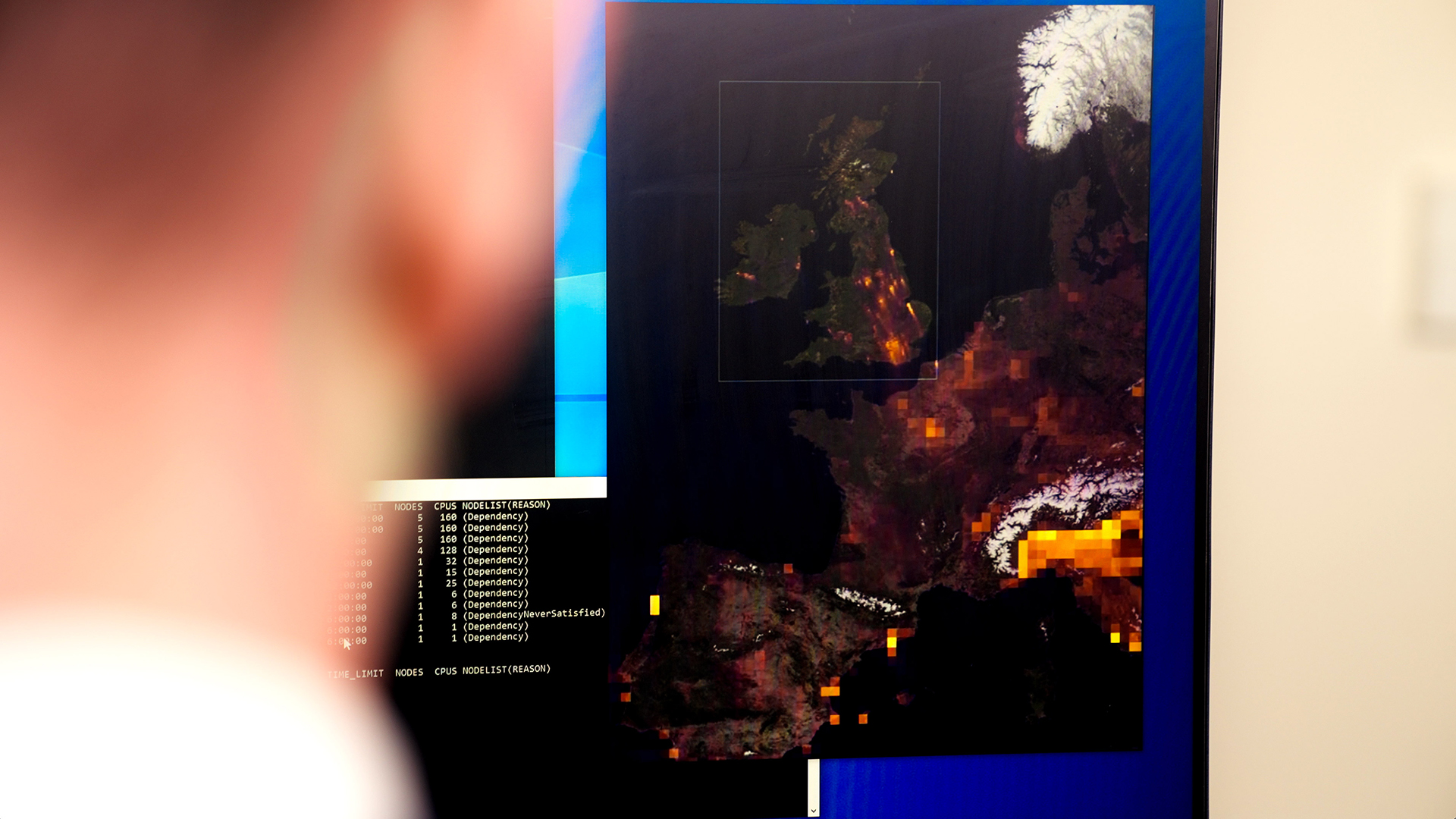
University of Manchester Uses NVIDIA Earth-2 to Forecast Air Pollution Across the UK
University of Manchester used NVIDIA Earth‑2 CorrDiff and StormCast generative models to downscale UK‑wide air‑pollution simulations. Training on the Isambard‑AI supercomputer (5,448 GH200 chips, 21 EFLOPS) took two days on an eight‑GPU node, producing a 2‑3 km resolution model. Inference runs on a desktop‑class DGX Spark, enabling rapid scenario forecasting and potential real‑time health alerts.…
Nvidianvidia.com4 min - 508
From Megawatts to Tokens: How NVIDIA Maximizes AI Factory Production
NVIDIA’s DSX platform lets AI data‑centers shift workloads in response to grid signals, squeezing ~24% more token throughput (4 M→5 M tps) and ~23% better performance‑per‑watt on a fixed megawatt budget. The first production demo used Emerald AI’s Conductor to drop a 4 MW load to 3 MW in under a minute without interrupting high‑priority jobs. DSX MaxLPS reallocates headroom across HGX B200 server…
Nvidianvidia.com5 min - 509
- 510