571
Top
- 572
Article: Architecting Secure and Scalable Facial Verification Systems
A real‑world post‑mortem of a high‑volume face verification service that moved from a naïve synchronous API to an async, layered pipeline (edge validation, preprocessing, decoupled detection/verification, decision engine) to achieve 8.5k rpm, p99 < 1.8 s, 30 % cost savings, and strict privacy controls.
InfoQinfoq.com15 min - 573
- 574
Modernizing the Trade Lifecycle With Governed Data and AI
Databricks argues that modernizing the trade lifecycle now hinges on building a governed, real‑time data foundation that spans research, trading, risk, ops and compliance, rather than isolated AI pilots. Starting with a few high‑value questions—execution cost, shock risk, exception rates—and using Unity Catalog and Agent Bricks lets firms achieve measurable speed and auditability gains before sca…
Databricksdatabricks.com5 min - 575
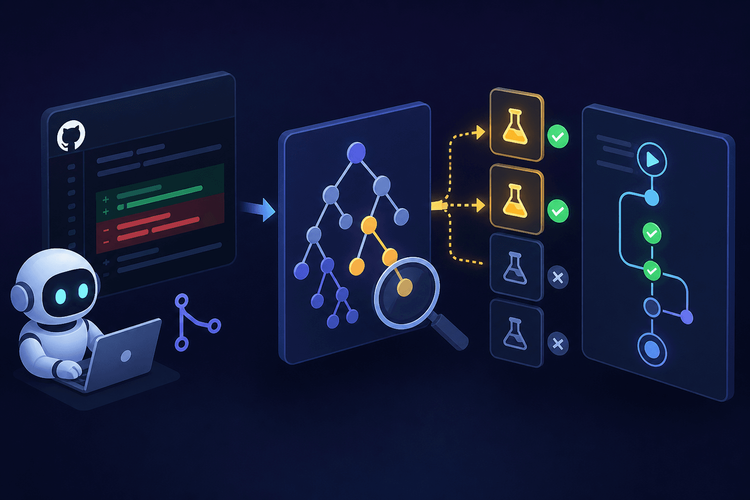
Optimizing GitHub Actions for Agent PRs: Speculative Test Slicing and AST Impact Analysis
A step‑by‑step guide for handling the flood of pull requests generated by code‑generation agents. It builds a TypeScript CLI that uses ts‑morph to do AST‑level change‑impact analysis, maps affected symbols to tests, and runs only those tests in a “speculative” GitHub Actions job while a full‑suite verification runs in the background. The article includes concrete CLI code, dependency choices, con…
SitePointsitepoint.com17 min - 576
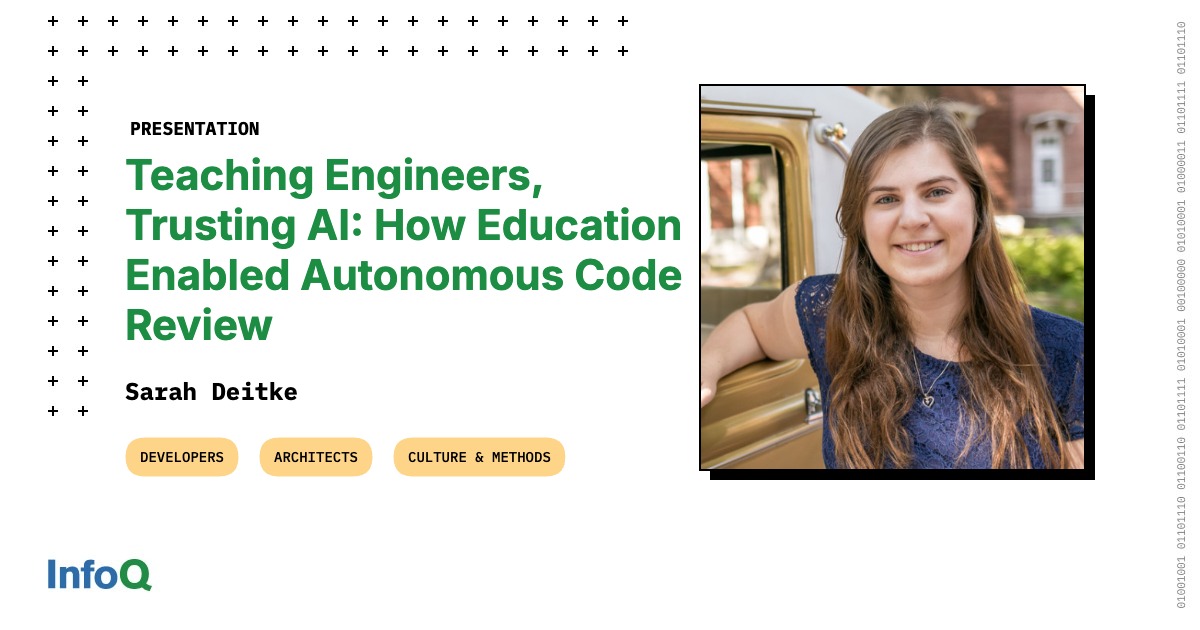
Presentation: Teaching Engineers, Trusting AI: How Education Enabled Autonomous Code Review
Duolingo’s DevEx AI team built a program of AI‑literacy workshops, observability dashboards, office‑hours, and vendor partnerships to get engineers comfortable with LLM‑based tools. With that foundation they launched a PR‑risk‑assessment bot that auto‑approves low‑risk pull requests, cutting review bottlenecks while keeping defect rates flat.
InfoQinfoq.com24 mintalk - 577
6.3x Faster Testing with Retroactive Logging
Antithesis developed "retroactive logging" to address the performance overhead of verbose debugging logs during deterministic fuzz testing. By initially sinking most logs within the hypervisor and replaying runs with full logging only on failure, they achieved 6.3x faster testing.
Antithesisantithesis.com4 min - 578
Inside Petal: Building the World’s First Petabit-Class Transoceanic Subsea Cable
Meta announced Petal, the first petabit-class transoceanic subsea cable, connecting France and the US over 7,000 km. It's the first to deploy multi-core fiber technology at scale, doubling capacity per fiber without a proportional increase in power or physical infrastructure.
- 579
- 580
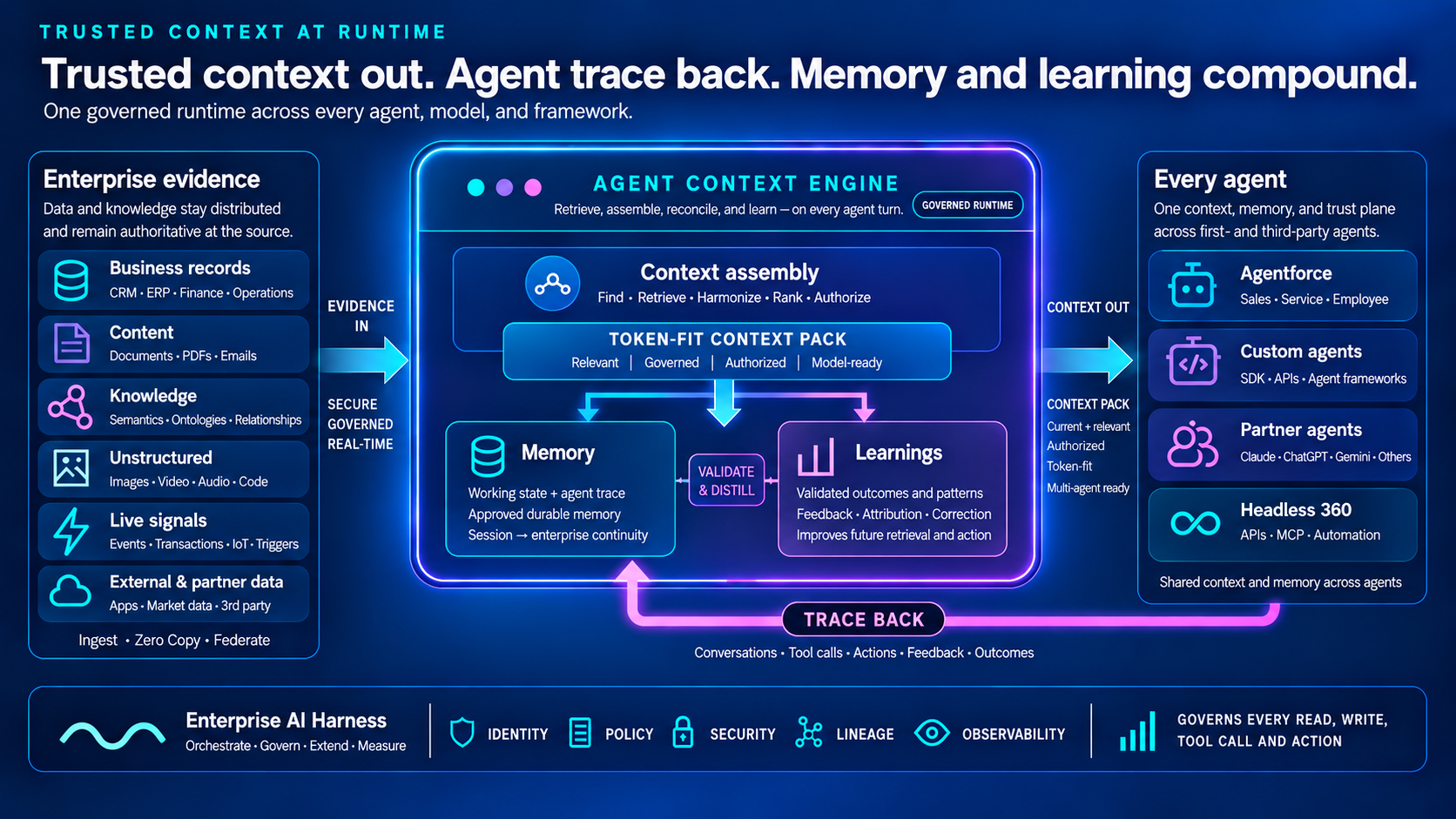
How Data 360 Builds Trusted Context: The Enduring Layer for Enterprise AI
Salesforce’s Data 360 provides a shared runtime that assembles the minimal, authorized slice of enterprise data (“Trusted Context”) for each AI‑agent turn. A six‑stage Agent Context Engine (Resolve, Plan, Reconcile, Govern, Compile, Learn) pulls data from structured, unstructured, and streaming sources across Salesforce, Snowflake, Databricks, etc., applies fine‑grained policy, and returns a toke…
Salesforce Engineeringsalesforce.com11 min - 581
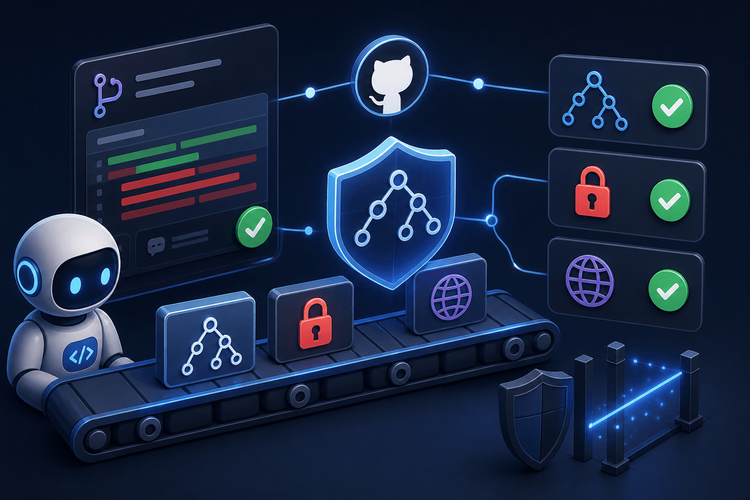
Securing AI Pull Requests: Building a Deterministic AST Audit Harness in GitHub Actions
A step‑by‑step tutorial for building a deterministic AST‑based security scanner that runs in GitHub Actions to catch prototype‑pollution, high‑entropy secrets, and unauthorized network egress in AI‑generated pull requests.
SitePointsitepoint.com19 min - 582
Agent Anomaly Detection, now in Private Preview on the Gemini Enterprise Agent Platform
Google’s Gemini Enterprise Agent Platform now offers a private‑preview Agent Anomaly Detection service that asynchronously analyzes agents’ OpenTelemetry traces and logs to flag risky behavior (e.g., tool misuse, privilege abuse) without adding latency, surfacing findings in Security Command Center and via an API for automated mitigation.
Google Developersgoogleblog.com4 min - 583
- 584
Grok 4.7 now available and 40% off on AI Gateway, fx, and eve
Vercel AI Gateway now offers Grok 4.7, a 500K‑token LLM with configurable reasoning levels, and a 40% discount through Sep 27. The model integrates across the AI SDK, OpenAI‑compatible API, and coding agents, with zero‑data‑retention and built‑in cost controls.
Vercelvercel.com1 minrelease - 585
How to Review AI-Generated Python Code Efficiently
A practical five‑step workflow for reviewing AI‑generated Python code, covering intent clarification, automated quality checks (linters, type checkers, security scanners, tests), risk‑first manual reading, a checklist of common AI mistakes, and fix‑verify loops, plus a ready‑to‑use dev‑environment setup.
Real Pythonrealpython.com26 min - 586
How to upskill enterprise AI builders by using daily micro habits
Google Cloud Consulting proposes a four‑pillar micro‑learning framework for enterprise AI upskilling: 5‑minute browser‑based exercises, pre‑configured sandboxes, daily streaks, and delivering runnable code each session. A pilot (Advent of Agents) showed >150k participants, 859k code runs, and a 31% daily return rate, suggesting short, frictionless tasks improve engagement versus traditional bootc…
Google Cloud Bloggoogle.com3 min - 587
Reimagining service delivery in the agentic era with Google Public Sector
Google Public Sector’s blog post outlines how several U.S. state and local agencies are using Google Cloud’s AI services (BigQuery, Gemini, document‑analysis models) to replace manual data‑entry pipelines, consolidate data silos, and accelerate specific projects. Reported outcomes include mapping 52 k parcels in <1 yr vs. a 33.5‑yr estimate (UT DOT), $1.3 M cost savings for real‑time translation…
Google Cloud Bloggoogle.com4 min - 588
AI Security Is an Engineering Problem — How to Solve It at Every Layer of the Agent Stack
Nvidia frames AI security as an engineering discipline, outlining required controls across the AI agent stack (model, harness, runtime) and advocating for enforceable boundaries, traceable identities, and evidence‑based testing. It highlights OpenShell as a sandboxed runtime, the Open Secure AI Alliance, and several vendor tools for testing and red‑team exercises.
Nvidianvidia.com4 min - 589
World Wide Words
Hacker News front pageworldwidewords.orgHN201 - 590
Why client SDK generation belongs in the open
Google partnered with Speakeasy to open‑source their OpenAPI‑based multi‑language SDK generator, covering Python, TypeScript, Go, Java, C#, PHP, and Ruby. The move replaces a now‑defunct proprietary generator, reduces maintenance overhead to ~1 engineer, and adds a CLI and documentation server generator under AGPLv3.
Google Developersgoogleblog.com3 min - 591
M4N VM family, now GA: Highest per-core IOPS and throughput for I/O and memory-bound workloads
Google Cloud’s GA‑available M4N VM family pairs 5th‑gen Intel Xeon CPUs with Google’s custom Titanium offload to deliver up to 1 M IOPS, 25 GiB/s block‑storage throughput, 400 Gbps VM‑to‑VM bandwidth, and a 26 GB/vCPU memory ratio (up to 5.9 TiB RAM). The design targets memory‑bound, I/O‑intensive workloads (Oracle, SAP HANA, vector search, real‑time analytics) and claims >20 % TCO reduction for…
Google Cloud Bloggoogle.com5 min - 592
How we AI-updated 1,138 Error-code Docs Pages
Twilio built a two‑phase pipeline that first scores each error‑code doc with a deterministic script, then feeds only low‑scoring pages to an LLM (gpt‑5.4) using a strict prompt. The model’s diff is applied via git, linted, and opened as a PR for a reviewer. In 12 weeks they updated 1,138 pages (≈34.6 s/page) with a human reviewing every change, cutting manual effort from an estimated 18 k hours a…
Twiliotwilio.com11 min - 593
The Weakest Leg
A life insurance company, TruStage, suffered a severe cybersecurity incident in July 2026, leading to months-long operational paralysis, inability to process payments, and policy lapses. This failure cascaded through its partner network, culminating in a public humiliation of a partner's representative at an industry conference.
The Daily WTFthedailywtf.com4 min - 594
- 595
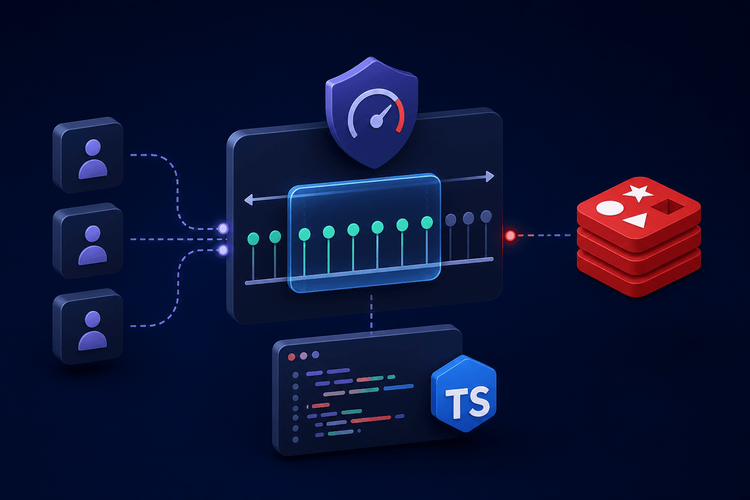
Building Distributed Sliding-Window Rate Limiters in TypeScript and Redis
This guide details building a distributed sliding-window rate limiter using TypeScript and Redis. It leverages Redis sorted sets and an atomic Lua script to prevent race conditions and over-admission under high concurrency, supporting dual RPM/TPM quotas.
SitePointsitepoint.com18 min - 596
AI in HR: Benefits, types, and 7 use cases worth running
This article explains how AI is applied in HR, detailing types like generative AI and AI agents. It provides seven concrete use cases, including recruiting, onboarding, and performance management, with examples and metrics from Zapier's own implementations.
Zapier Engineeringzapier.com12 min - 597
The Web Search Your Agent Inherited Isn't Good Enough
Omnigent is a unified agent definition layer that lets you write an LLM‑agent once and run it on any harness (Claude Code, Codex, raw API). By plugging Nimble’s specialized web‑search API into the Omnigent web_search builtin, you get consistent, deeper, and cheaper web results – benchmark accuracy jumps from 46 % to 71 % and search cost halves. All model calls go through Databricks Foundation Mod…
Databricksdatabricks.com7 min - 598
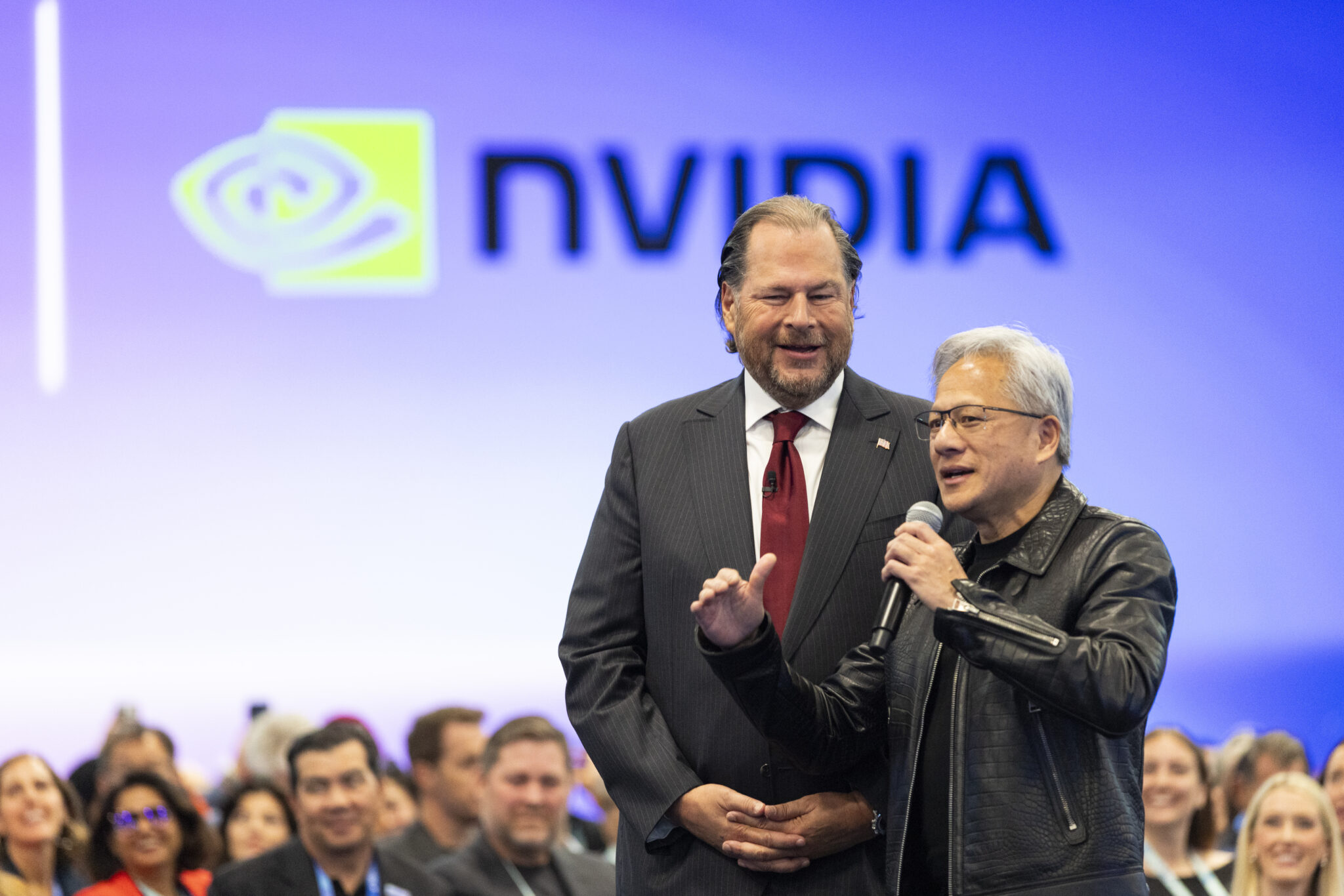
‘Now We Can Know Everything and Do Anything,’ Jensen Huang Says at Dreamforce
Nvidia’s Jensen Huang announced Salesforce’s Koa, a CRM‑reasoning LLM built by fine‑tuning Nvidia Nemotron 3 Super on a synthetic, three‑decade‑spanning dataset. Koa uses supervised fine‑tuning plus RL (NeMo RL, Gym, AutoModel), covers 14+ industries, and claims 3× fewer errors on Salesforce’s CRM‑Bench versus leading models. It’s already in internal Slack agents and slated for limited customer p…
Nvidianvidia.com3 min - 599
We Didn't Want to Build Another Java Server
Codename One introduced an experimental native Java backend that compiles Java controllers to a tiny native executable via ParparVM. Benchmarks show sub‑millisecond startup, 10‑40 MiB memory, and up to 20 % higher request throughput than a Go fasthttp server.
CodeName Onecodenameone.com15 min - 600
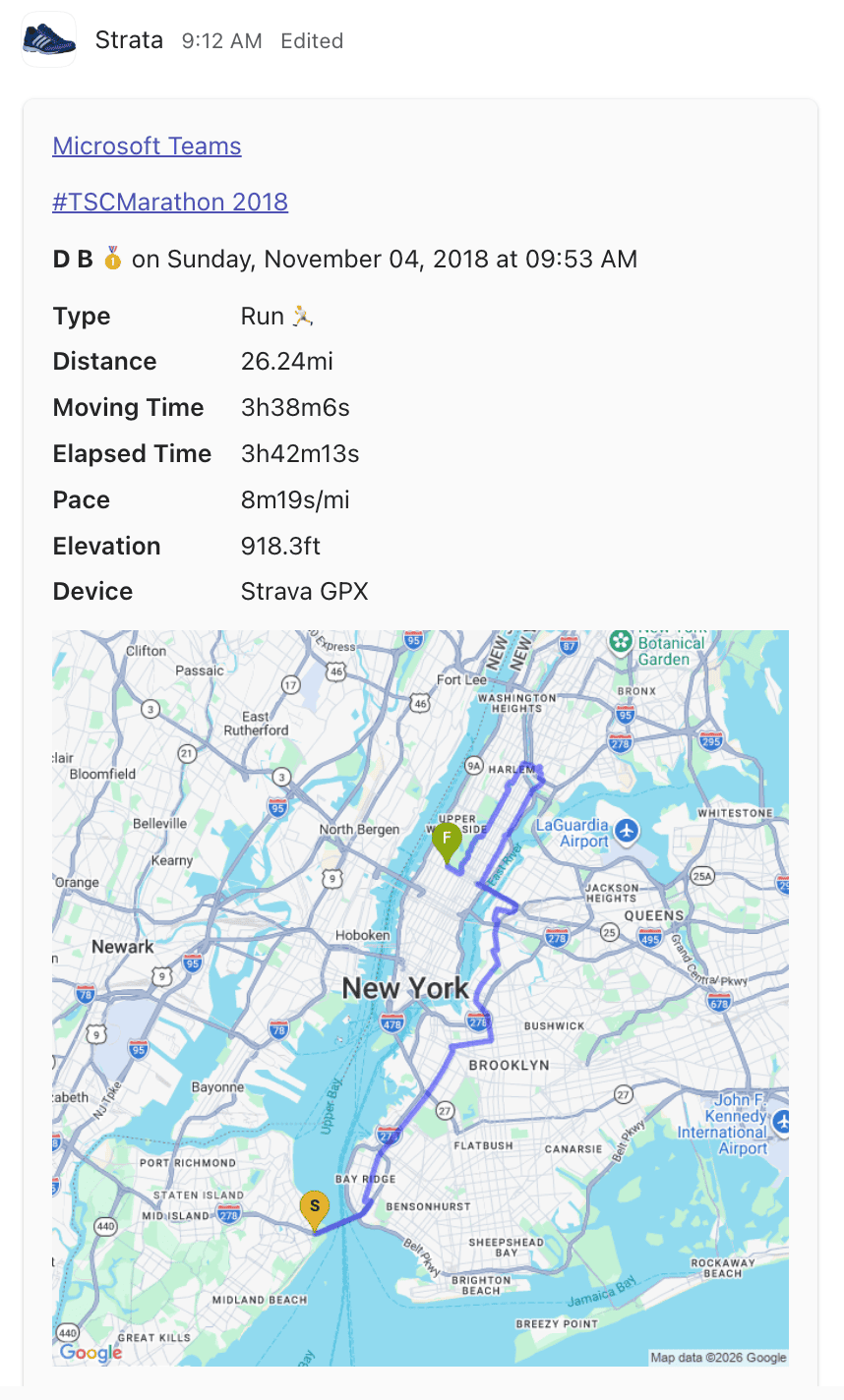
Porting a Discord Bot to Microsoft Teams, Entirely With AI
The author used GitHub Copilot CLI to port a Strava bot from Discord to Microsoft Teams in three days, a ~7× speedup over the three‑week manual effort. The post details token usage, cost, bugs that slipped through, and stresses that good test coverage is still essential.
Daniel Doubrovkine (dB.)dblock.org5 min