proomt

Search

Search posts, papers, and topics

All posts

DatadogCandace Shamieh, T Zhang, Gabriele Baldoni11 min readintermediate

How to operate shared platforms safely at agent scale

Summary

Datadog explains how scaling AI agents turns isolated executions into shared‑platform risk and outlines a systematic approach to model agent trajectories, monitor per‑dependency constraints, and enforce workload‑specific capacity policies. The result is proactive detection of bottlenecks and protection against noisy‑neighbor failures.

  • Map the full agent trajectory as an inventory of triggers, model calls, tool invocations, queues, CI jobs, and downstream APIs.
  • Monitor the true limiting signals per dependency (RPM, TPM, concurrency, queue depth, latency, quota headroom) rather than aggregate request counts.
  • Tag each request with workload, owner, environment, service class, and task to enable quota and priority enforcement.
  • Define workload‑class policies that reserve capacity for critical traffic and isolate evaluation workloads via separate provider accounts or rate‑limit buckets.

Platform engineers building shared AI‑agent services need concrete methods to prevent resource contention and maintain reliability as usage scales.

6/10

Related reading

  1. Why Deploying Physical AI at Scale Demands Safety at Every Layer

    NVIDIA’s Halos platform is a full‑stack safety system for physical AI (autonomous vehicles and industrial robots). It bundles safety‑engineered hardware (DRIVE AGX Thor, IGX Thor), an ASIL‑D certified OS (Halos OS), middleware for isolation and monitoring, AI models for explainability (Alpamayo), and simulation/validation tools (Isaac Lab, Omniverse). The blog argues that scaling physical AI requ…

    Nvidianvidia.com5 min
  2. Building Deterministic Multi-Agent State Machines in TypeScript

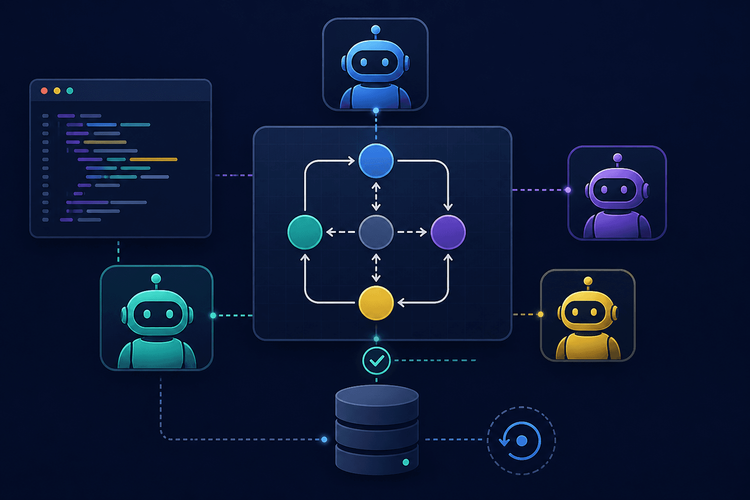
    The article shows how to build a deterministic, checkpoint‑backed finite state machine engine in TypeScript for orchestrating multi‑agent AI workflows. It uses Zod for schema validation, better‑sqlite3 for atomic persistence, and a pure transition function to make workflows traceable and recoverable in serverless environments.

    SitePointsitepoint.com18 min
  3. How Data 360 Builds Trusted Context: The Enduring Layer for Enterprise AI

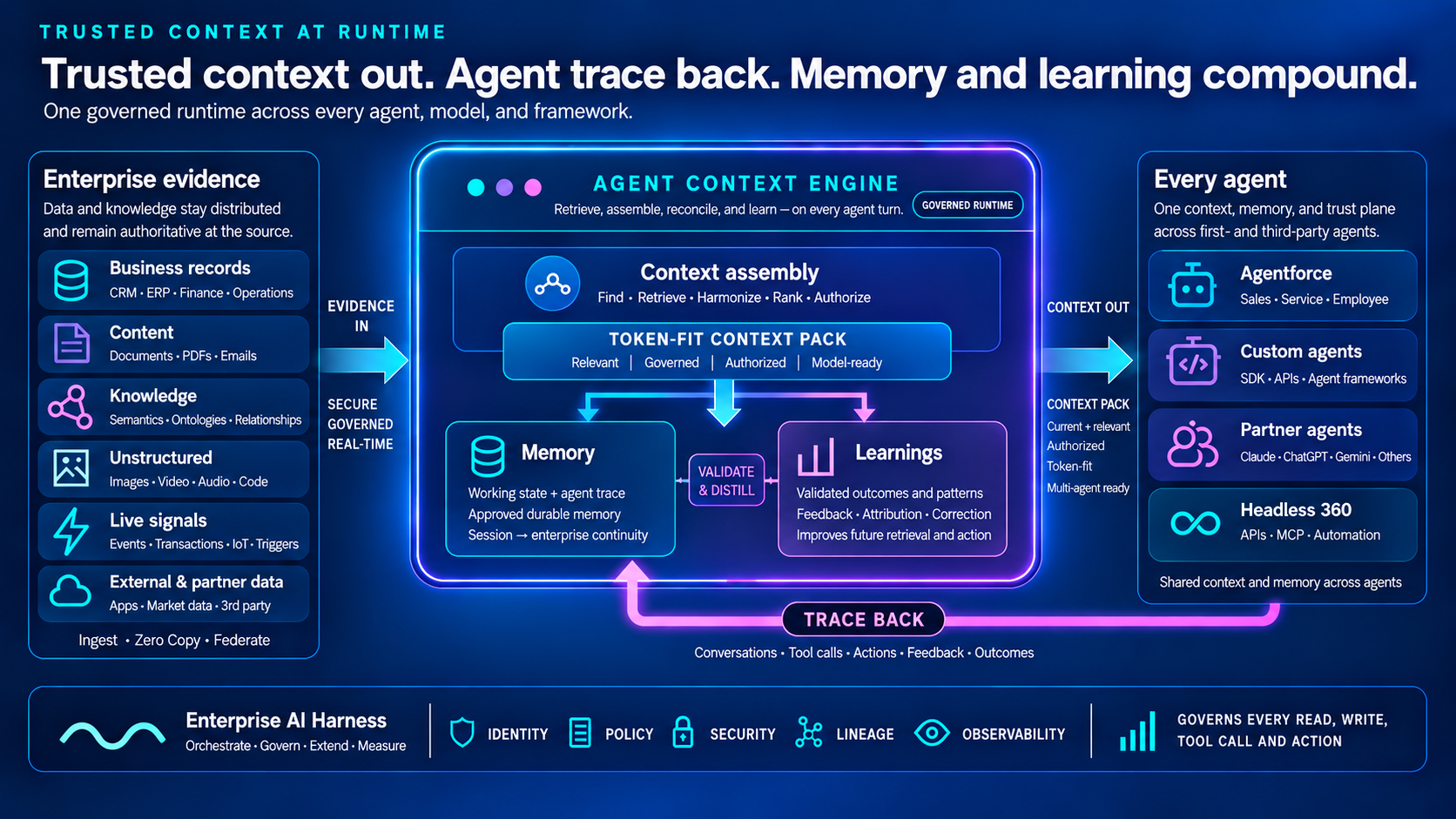
    Salesforce’s Data 360 provides a shared runtime that assembles the minimal, authorized slice of enterprise data (“Trusted Context”) for each AI‑agent turn. A six‑stage Agent Context Engine (Resolve, Plan, Reconcile, Govern, Compile, Learn) pulls data from structured, unstructured, and streaming sources across Salesforce, Snowflake, Databricks, etc., applies fine‑grained policy, and returns a toke…

    Salesforce Engineeringsalesforce.com11 min
  4. Agent Substrate brings high-density, scalable, trusted infrastructure to GKE

    Agent Substrate is an open‑source runtime for AI agents that runs on GKE. It uses Cloud Hypervisor microVMs or gVisor sandboxes to give kernel‑level isolation, a custom control‑ and data‑plane that can suspend/resume agents in <500 ms, and a “zero‑idle” model that packs >1 000 dormant agents per host (≈10× density vs. containers). GKE integration adds custom ComputeClasses, spot/on‑demand pools,…

    Google Cloud Bloggoogle.com6 min