proomt

Search

Search posts, papers, and topics

machine learning

RSS
  1. 61

    CERA-MoA: Co-Evolving Routing Mechanisms with Continually Learning LLM Agents

    CERA-MoA proposes a reinforcement‑learning loop where a router and a set of LLM agents are trained together. A “familiarity” estimator reads mid‑layer hidden states to predict each agent’s competence on a query, letting the router activate only a minimal subset of agents that meet a cumulative confidence threshold. The system also feeds targeted training examples to agents based on their evolving…

    Hugging Face Daily Papersarxiv.org1 minpaper

  2. 62

    PhysStream: Streaming Physics-Grounded Video Generation with Structured Scene Memory and Fine-Grained Motion Control

    PhysStream introduces a two‑stage autoregressive video generator that uses online‑derived positional and tracking maps (structured scene memory) and sparse velocity‑increment signals to enable fine‑grained, physics‑grounded control of multi‑object tabletop scenes. It cuts motion distribution error by 33 % and trajectory error by 12 % versus strong baselines, and wins 85 % of human preference test…

    Hugging Face Daily Papersarxiv.org1 minpaper
  3. 63

    Training Specialist Models without Reasoning Trajectories for Domain Expert Distillation

    The paper shows that when specialist LLMs are trained only on QA pairs (no explicit reasoning supervision), their optimization implicitly selects a latent distribution of reasoning trajectories. By treating the distilled student as an agnostic probe—since it inherits only the sampled trajectories—the authors empirically demonstrate a strong correlation (across 27 specialist‑student pairs) between…

    Hugging Face Daily Papersarxiv.org1 minpaper
  4. 64

    Mind2Dialogue: Training Human-Aware Language Models by Simulating User Mental States

    Mind2Dialogue introduces a psychology‑guided simulator that generates user mental states and uses privileged distillation to train LLM assistants on Oracle responses that know those states. The resulting models improve personalization and theory‑of‑mind metrics by up to 41 percentage points versus standard instruction‑tuned baselines.

    Hugging Face Daily Papersarxiv.org2 minpaper
  5. 65

    CADWorld: Computer-Use Benchmark for Long-Horizon Computer-Aided Design

    CADWorld is a new benchmark suite of 200 long‑horizon mechanical CAD tasks in FreeCAD, covering sketching, part modeling, assembly, CAM, FEM, and more. Agents interact via screenshots and GUI actions; success is checked by executable validation of the saved CAD artifacts. Seven existing agents achieve at most 17.5 % success versus an 87 % expert baseline, highlighting the gap between GUI competen…

    Hugging Face Daily Papersarxiv.org1 minpaper
  6. 66

    Trajectory as the Teacher: Few-Step Discrete Flow Matching via Energy-Navigated Distillation

    Apple researchers propose Trajectory‑Shaped Discrete Flow Matching (TS‑DFM), a training‑time distillation method that replaces blind stochastic jumps in discrete flow‑matching with an energy‑based compass to select higher‑quality intermediate tokens. On a 170 M‑parameter language model, the 8‑step student outperforms the 1 024‑step teacher by 32 % perplexity while being 128× faster, beating basel…

    Apple Machine Learning Researchapple.com1 minpaper
  7. 67

    Refinement Is Inherently Editable: Training-Free Prompt-to-Prompt Image Editing with Generative Refinement Network

    RefineEdit is a training‑free framework that edits images by refining binary image codes through a generative refinement network, using probability differences to pick edit locations. It outperforms prior methods on background preservation and CLIP scores across nine editing categories without extra training or masks.

    Hugging Face Daily Papersarxiv.org1 minpaper

  8. 68

    Decoy Direction Optimization: A Post-Hoc Defense Against LLM Abliteration

    Decoy Direction Optimization (DDO) is a post‑hoc weight‑editing defense for open‑weight LLMs that injects a high‑magnitude nonlinear decoy into MLP neurons, corrupting contrastive estimators used by Refusal Feature Ablation (RFA) attacks. The paper proves a spectral bound on the effect, evaluates DDO on six model families (including Llama‑3‑8B‑Instruct), and shows <10 % attack success rate (ASR)…

    Hugging Face Daily Papersarxiv.org1 minpaper
  9. 69

    OmniHarness: Harnessing Generalizable Visual Generation via Symbolic Policy Learning

    OmniHarness introduces a symbolic‑policy framework that extracts reusable procedural knowledge from multimodal LLM‑driven visual generation runs. By decoupling task logic from instance inputs, the system can instantiate, adapt, and compose policies for new visual tasks, using intermediate verification for on‑the‑fly refinement while keeping the underlying model frozen. Self‑directed practice task…

    Hugging Face Daily Papersarxiv.org1 minpaper

  10. 70

    GameHorizon Suite: Multi-Horizon Data and Evaluation in Gameplay

    The paper presents GameHorizon, a unified suite comprising an automated annotation pipeline, a 5,000‑hour multi‑horizon gameplay dataset from 21 AAA titles, and reproducible offline and online benchmarks. Using it, the authors evaluate 47 models, exposing a hierarchy of task difficulty and gaps in long‑term planning.

    Hugging Face Daily Papersarxiv.org1 minpaper

  11. 71

    ImpossibleRubrics: Stress-Testing Generated Rubrics as Reward Signals

    ImpossibleRubrics introduces a 169‑task benchmark of “impossible” prompts, each with a formal oracle certificate defining what an honest answer can claim. The authors generate rubrics downstream and test them adversarially, finding that many rubric generators are exploitable (8‑36% of the time) and that a single generic rubric (“be decisive, penalize hedging”) is exploited 64% of the time, while…

    Hugging Face Daily Papersarxiv.org1 minpaper
  12. 72

    Convergent Emergence of In-Context Learning Across Modalities

    The paper proposes the Convergent Emergence Hypothesis that few‑shot in‑context learning (ICL) shares a common difficulty profile across domains. Using a unified task suite, the authors evaluate ICL on six modalities—language, genome, integer sequences, time‑series, images, and proteins—showing that paired‑mapping ICL emerges in all and that per‑task benefits correlate across five modalities, sup…

    Hugging Face Daily Papersarxiv.org1 minpaper
  13. 73

    Dynamically Scaled Activation Steering

    Dynamically Scaled Activation Steering (DSAS) is a method‑agnostic framework that learns per‑token, per‑layer scaling factors to turn existing activation‑steering interventions on only when a model is likely to produce undesired output (e.g., toxic text). The scaling can be optimized jointly with any steering function, improves the toxicity‑utility trade‑off on language models, transfers to text‑…

    Apple Machine Learning Researchapple.com1 minpaper
  14. 74

    ModaLens: Measuring Image Sensitivity in Report-Conditioned Medical VLMs

    ModaLens introduces a paired image-swap audit to measure how radiology report availability affects image sensitivity in medical VLMs. It found that MedGemma-27B's answers changed significantly more often when the image was swapped if the report was not available, indicating reports reduce image reliance.

    Hugging Face Daily Papersarxiv.org1 minpaper
  15. 76

    How Value Induction Reshapes LLM Behaviour

    Apple researchers fine‑tune LLMs on curated subsets of value‑oriented preference data and measure cross‑value effects, safety, and anthropomorphic language. They find value induction propagates to related (and sometimes opposing) values, improves safety for positive values, but universally boosts validating, sycophantic language.

    Apple Machine Learning Researchapple.com1 minpaper
  16. 78

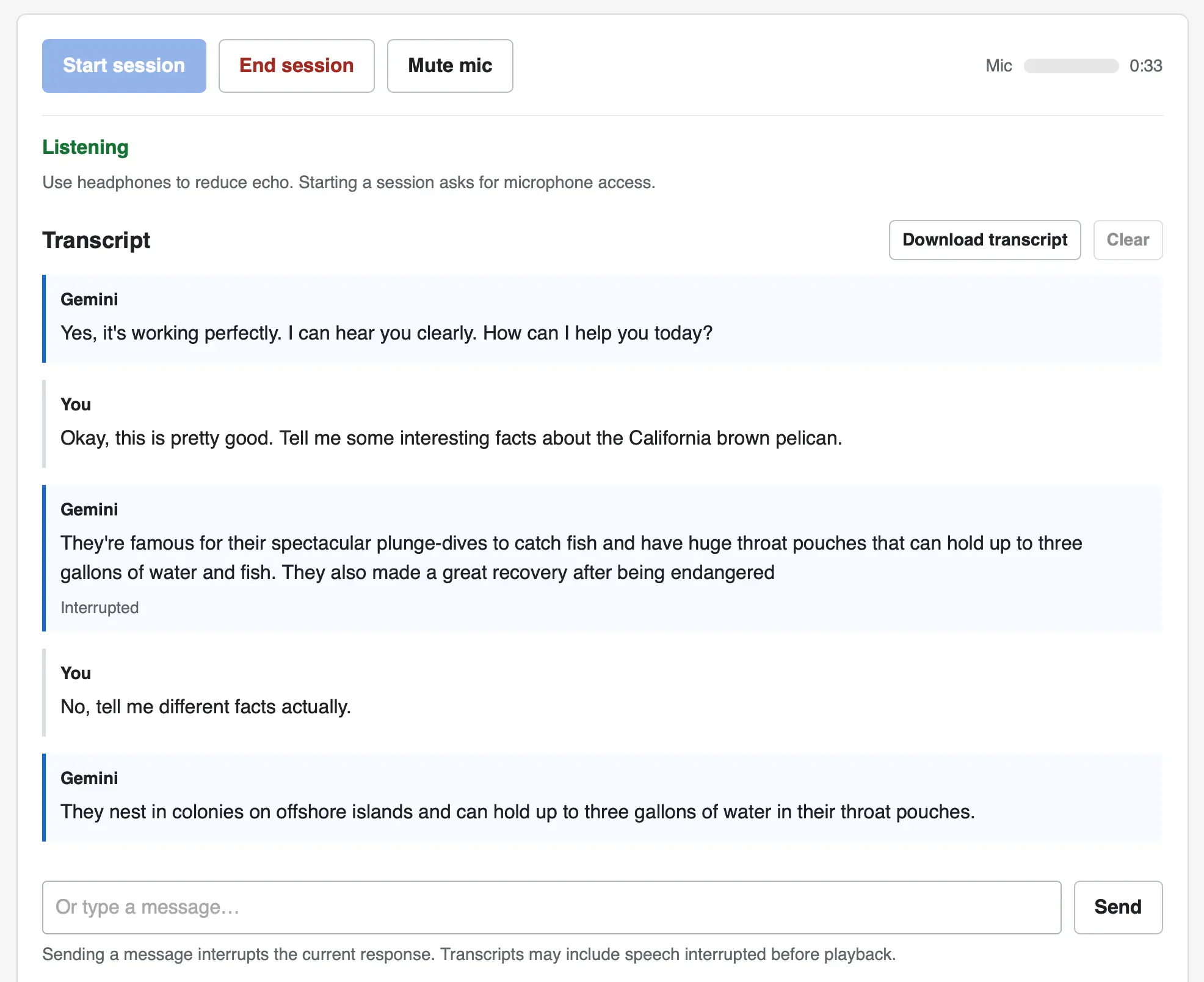
    Gemini Live audio

    Simon Willison shows a minimal JavaScript UI that talks to Google’s Gemini 3.8 Live speech‑to‑speech models via a WebSocket API, using the Web Audio API for capture/playback and no external libraries.

    Simon Willisonsimonwillison.net1 min
  17. 80

    Advancing AI for biology: Teaching models to design and characterize antibodies

    Amazon Bio Discovery developed three AI models: MochiBind for fast, sequence-based antibody binding ranking, CA-MAP for context-aware developability prediction robust to batch effects, and an agent-guided system for de novo antibody design. These advancements aim to accelerate and improve the accuracy of antibody drug discovery, with experimental validation for a novel cancer target.

    Amazon Scienceamazon.science10 min
  18. 81

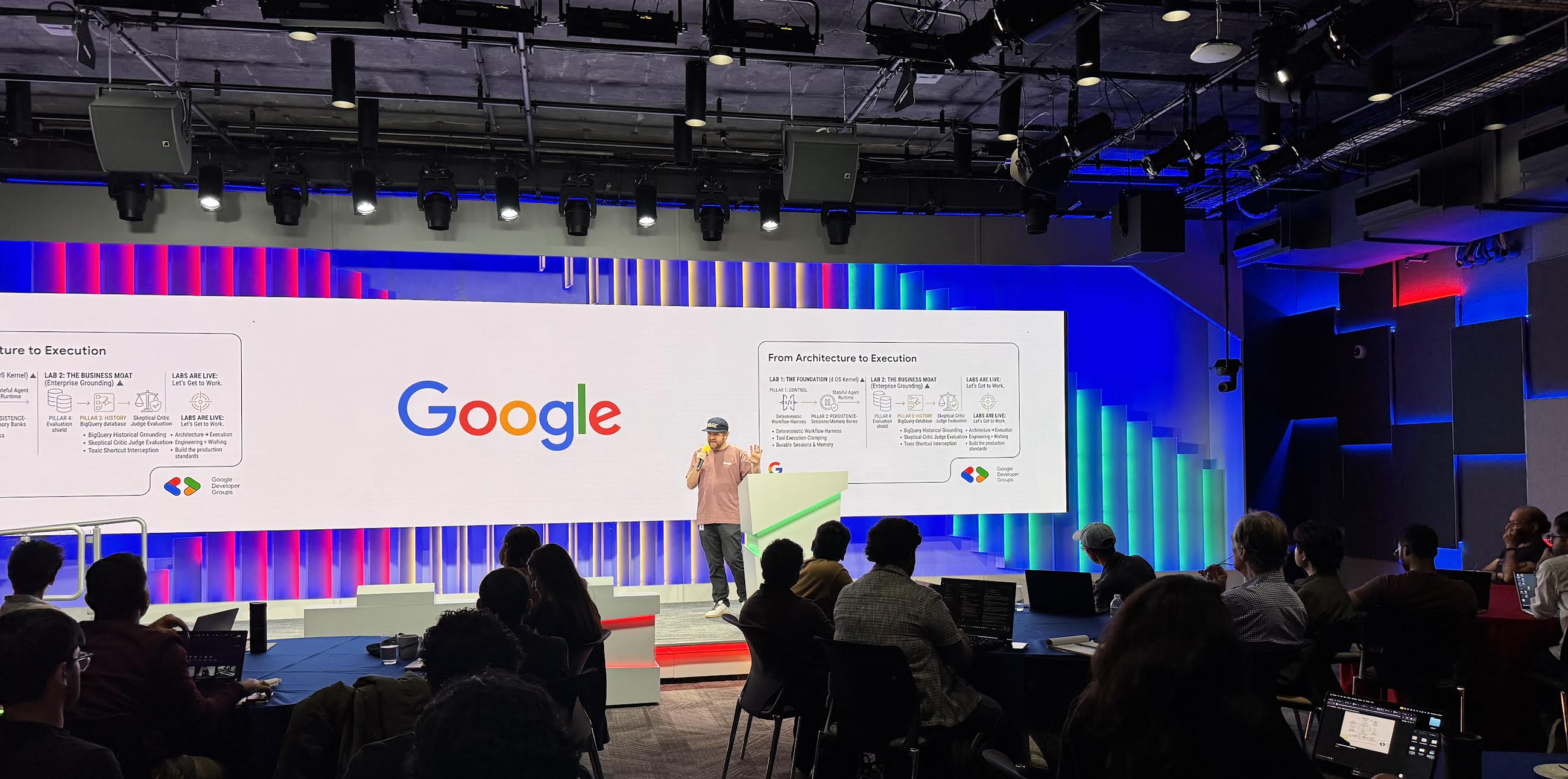
    The DevFest Community Workshop Experience: Building Real Agents Together

    Google’s DevFest Community Workshop introduced a “Workbench” format that emphasizes architectural mental models over copy‑paste code, guiding engineers to build long‑running, self‑evolving multi‑agent systems with the Agent Development Kit and Gemini Enterprise platforms. Attendees learned state‑separation, workflow pausing, and self‑patching pipelines, and the series will continue in five more c…

    Google Cloud Bloggoogle.com2 min
  19. 82

    Learning Sparse Decision Trees via Transformer Variational Auto-Encoders

    The paper presents TREVIS, a method that encodes decision trees into a continuous latent space using a Tree Transformer VAE, allowing gradient-based optimization of both accuracy and structural sparsity. Experiments claim TREVIS matches the predictive performance of near-optimal algorithms while producing sparser trees.

    Hugging Face Daily Papersarxiv.org1 minpaper

  20. 83

    How energy teams turn theft detection into governed action with Genie and AI business processes

    Databricks shows how to turn energy‑theft ML scores into a governed, end‑to‑end workflow using a Databricks App, Lakebase for live case state, Unity Catalog for data governance, and Genie One for natural‑language executive reporting. The pattern lets utilities act on alerts faster while staying compliant, and can be reused for other fraud‑type use cases.

    Databricksdatabricks.com6 min
  21. 85

    The 6 best AI writing generators in 2026

    Zapier’s blog post reviews six AI‑writing generators (Jasper, Anyword, Writer, Writesonic, Rytr, Sudowrite), explains how they work on top of LLMs, and outlines the author’s evaluation criteria (dedicated writing focus, control over output, ease of use, price, anti‑spam stance). The write‑up is a high‑level overview with no code, benchmarks, or deep technical analysis.

    Zapier Engineeringzapier.com19 min